Artwork
The Thames
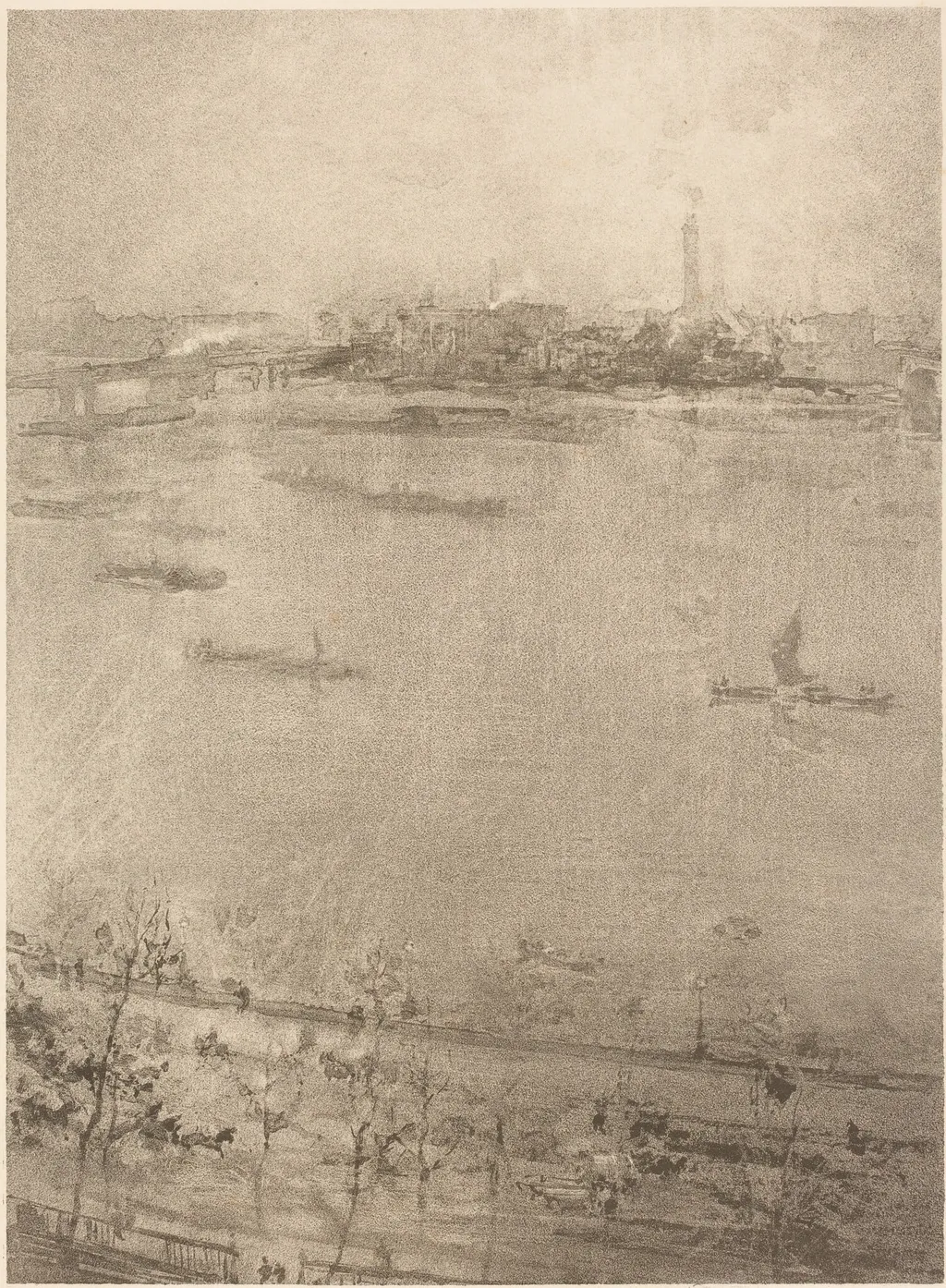
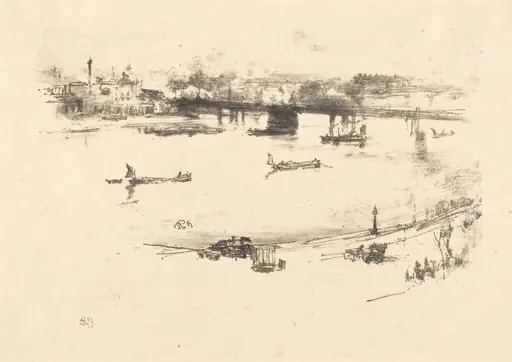
The Thames is an ink print by the Impressionist artist James McNeill Whistler. It dates from 1896 and is held in the collection of the National Gallery of Art.
About this work
Overview
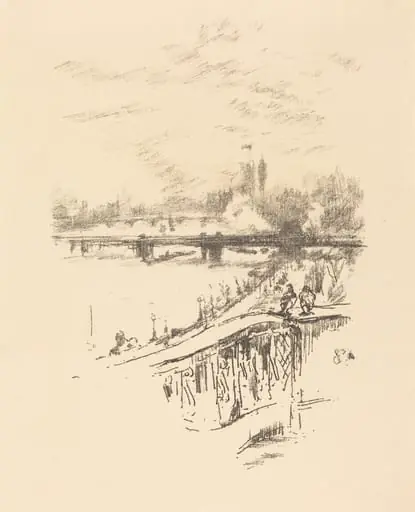
James McNeill Whistler’s 1896 lithograph *The Thames* presents a muted view of London’s riverfront. Executed entirely in black on wove paper, the image captures a hazy skyline, faint structures, and a few small boats drifting near the shore, all rendered with delicate, sketch‑like lines.
Subject & Meaning
The work depicts the River Thames framed by distant, softly blended buildings and a line of leafless trees along the bank. By reducing the scene to tonal values and minimal detail, Whistler emphasizes atmosphere over narrative, inviting contemplation of the river’s quiet expanse.
Technique & Style
Created with lithographic printing, the piece relies on fine black linework and subtle shading, characteristic of Whistler’s restrained aesthetic. The absence of color and the loose, almost spontaneous drawing quality reflect his preference for composition and tonal harmony rather than elaborate illustration.
History & Provenance
Produced during Whistler’s mature period in Britain, the lithograph aligns with his broader output of prints that explored tonal nuance. It was issued in 1896, a time when the artist was actively promoting the “art for art’s sake” ethos through both paintings and graphic works.
Artist & collection
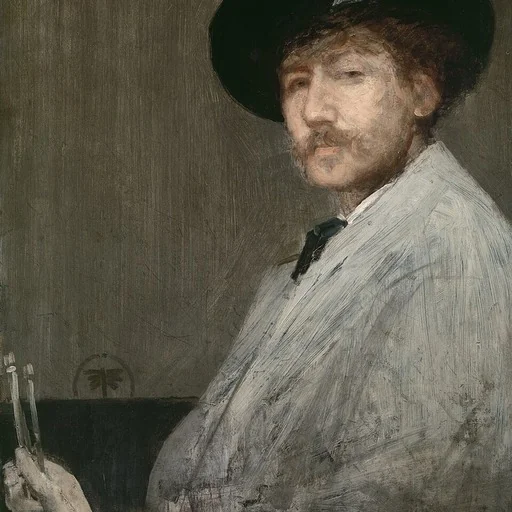
Artist
James Abbott McNeill Whistler was an American painter in oils and watercolor, and printmaker, active during the American Gilded Age and based primarily in the United Kingdom.

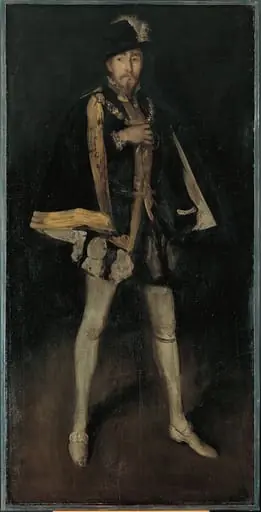 Arrangement in Black, No. 3: Sir Henry Irving as Philip II of Spain
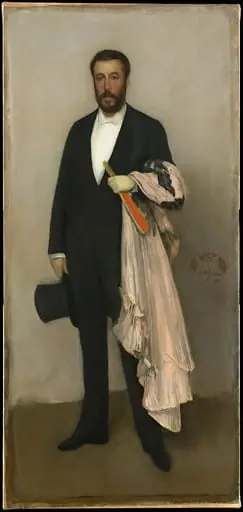 Arrangement in Flesh Colour and Black: Portrait of Theodore Duret
 Gold and Brown: Self-Portrait
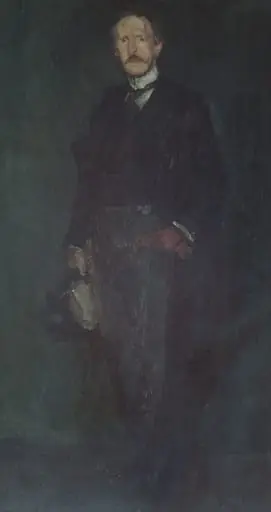 Edward Guthrie Kennedy
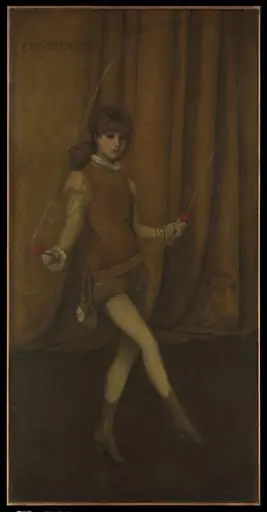 Harmony in Yellow and Gold: The Gold Girl—Connie Gilchrist
 George W. Vanderbilt
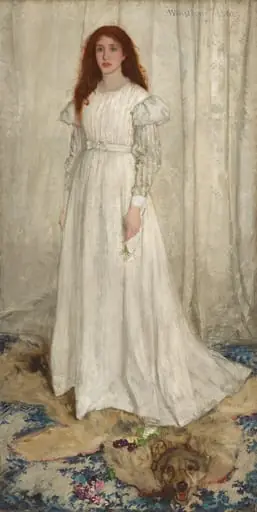 Symphony in White, No. 1: The White Girl
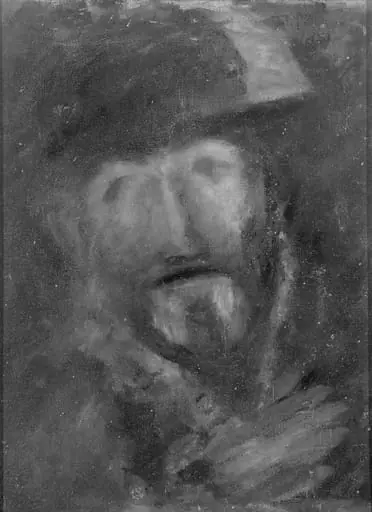 Henry Irving as Philip II of Spain