Artwork
The Thames Towards Erith
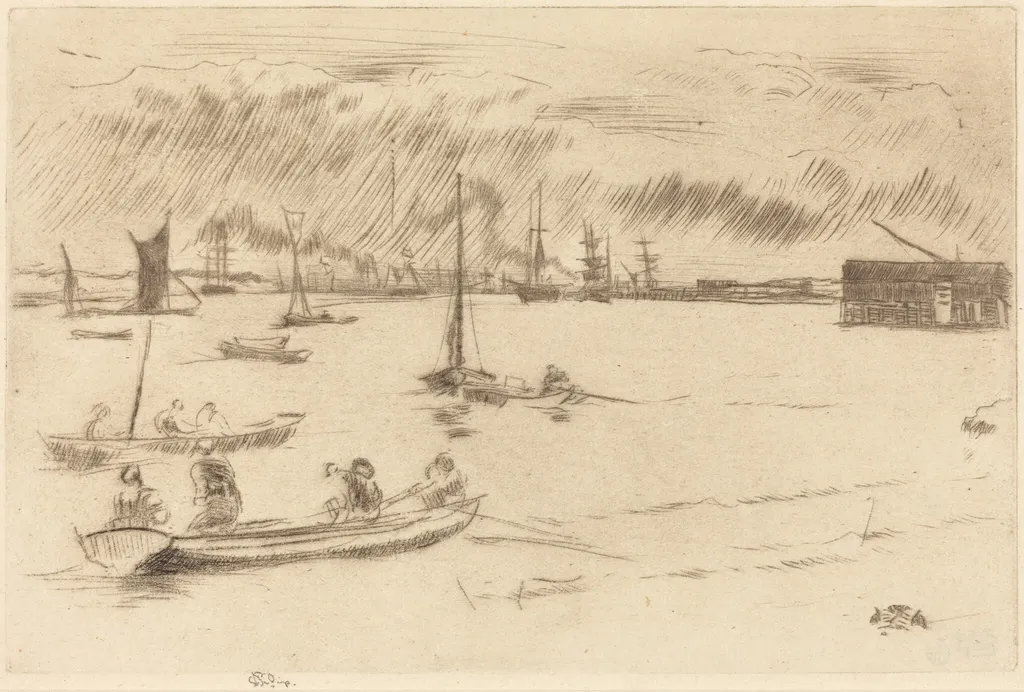
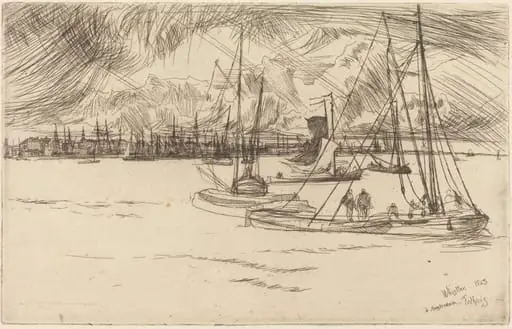
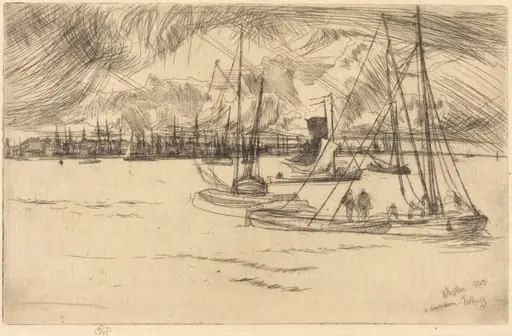
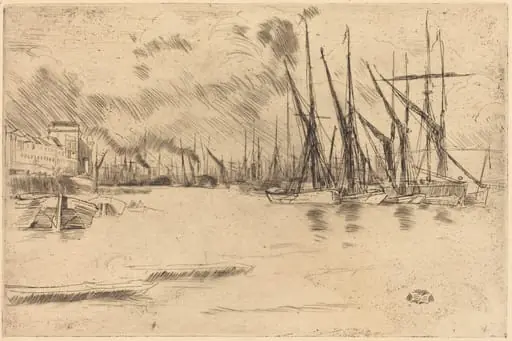
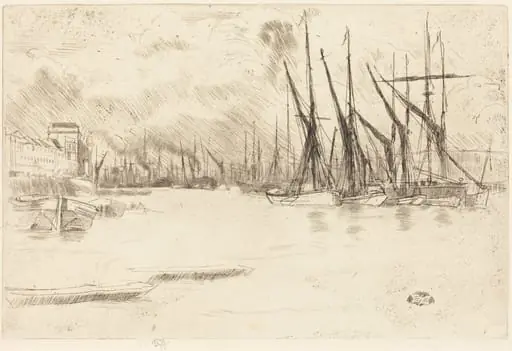
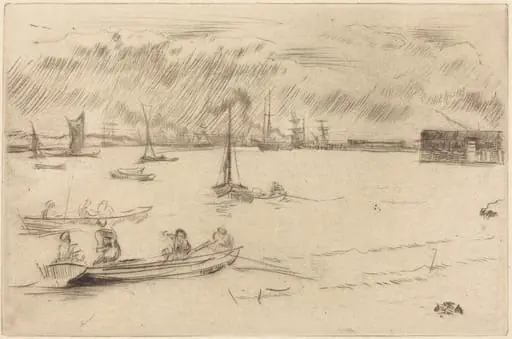
The Thames Towards Erith is an ink print by the Impressionist artist James McNeill Whistler. It dates from 1877 and is held in the collection of the National Gallery of Art.
About this work
Overview
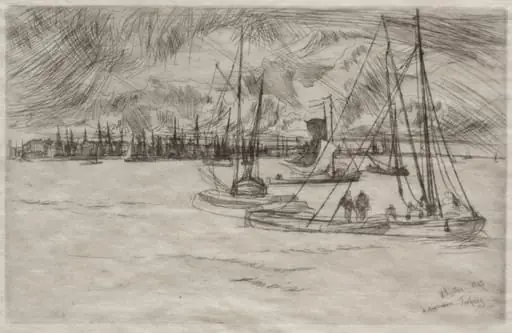
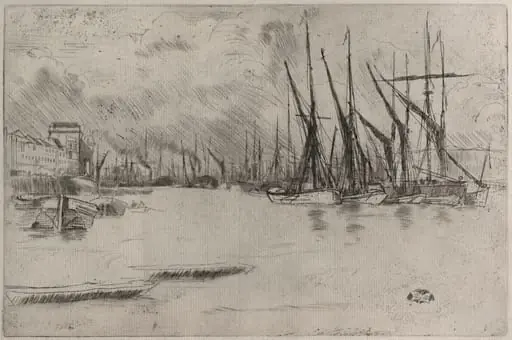
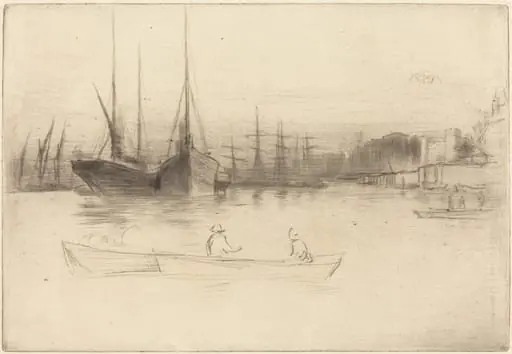
Created circa 1877, James McNeill Whistler’s drypoint *The Thames Towards Erith* captures a tranquil segment of the River Thames near the town of Erith. Executed on laid paper, the print employs a restrained palette of tones to convey atmosphere rather than narrative, reflecting Whistler’s late‑19th‑century preoccupation with visual harmony.
Subject & Meaning
The composition presents a modest river scene populated by rowboats and distant larger vessels, with a thatched‑roofed hut anchored on the bank. The sky is suggested by a series of swift, slanted lines that imply wind or rain, emphasizing the fleeting quality of light and weather over any specific story.
Technique & Style
Whistler employed drypoint, incising the image directly into the paper’s surface to achieve delicate, velvety lines. The hand‑drawn, sketch‑like quality of the marks conveys movement and immediacy, while the subtle gradations of tone create a quiet, atmospheric effect characteristic of his tonal approach.
Context
As an American expatriate working in Britain, Whistler produced this print during a period when he was refining his tonal experiments across media. The work remains a representative example of his printmaking output from the late 1870s, illustrating his shift toward abstraction of mood and light in landscape subjects.
Own this work as a print
Artist & collection

Artist
James Abbott McNeill Whistler was an American painter in oils and watercolor, and printmaker, active during the American Gilded Age and based primarily in the United Kingdom.

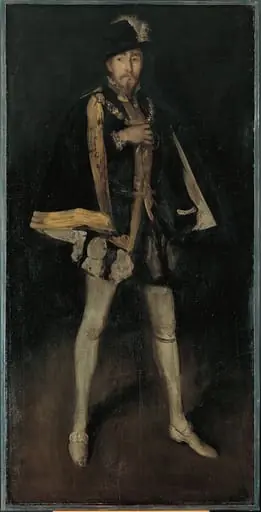 Arrangement in Black, No. 3: Sir Henry Irving as Philip II of Spain
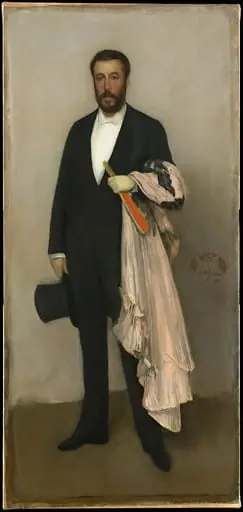 Arrangement in Flesh Colour and Black: Portrait of Theodore Duret
 Gold and Brown: Self-Portrait
 Edward Guthrie Kennedy
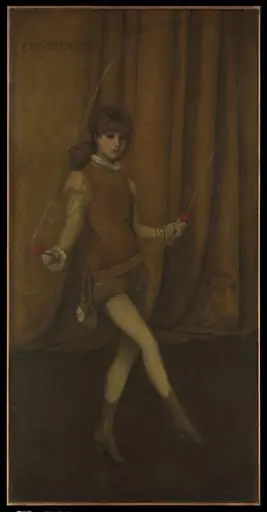 Harmony in Yellow and Gold: The Gold Girl—Connie Gilchrist
 George W. Vanderbilt
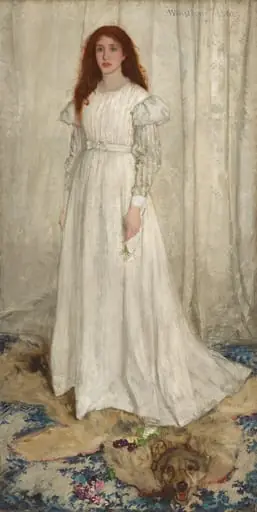 Symphony in White, No. 1: The White Girl
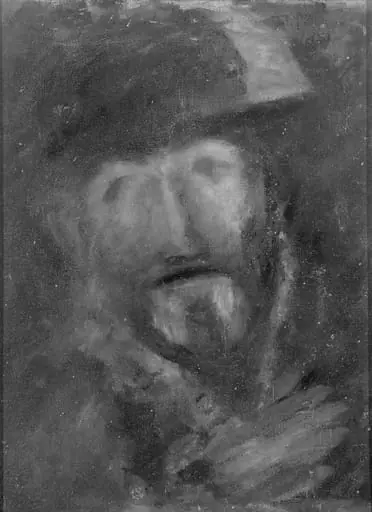 Henry Irving as Philip II of Spain