Artwork
Woods's Fruit Shop
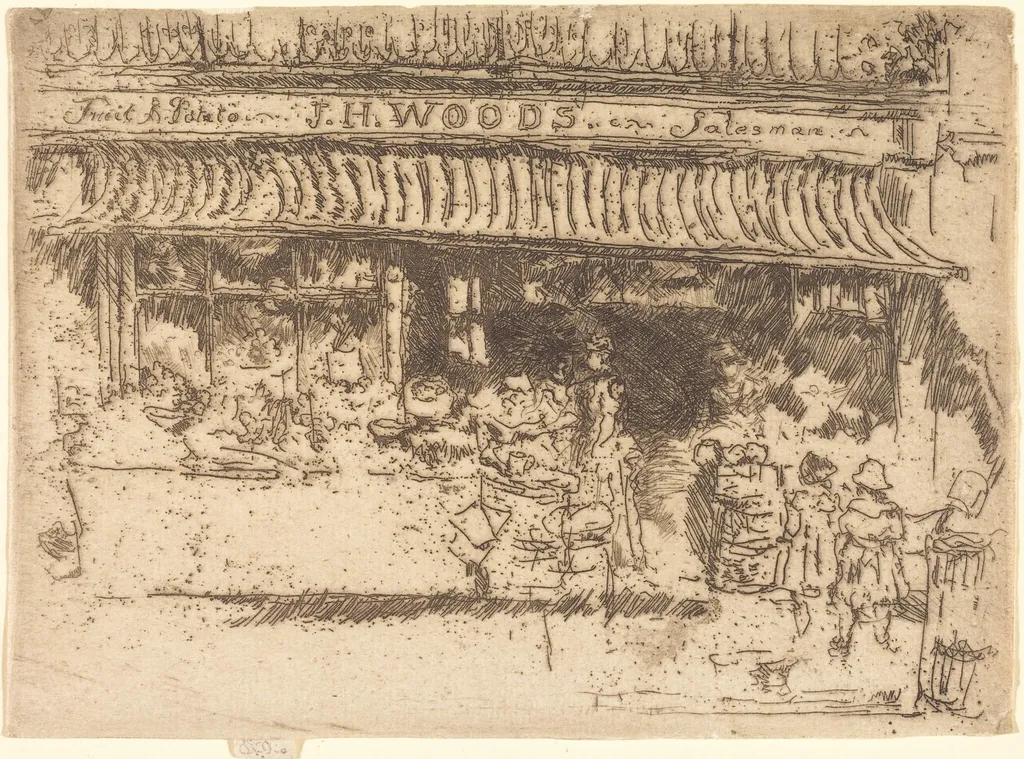
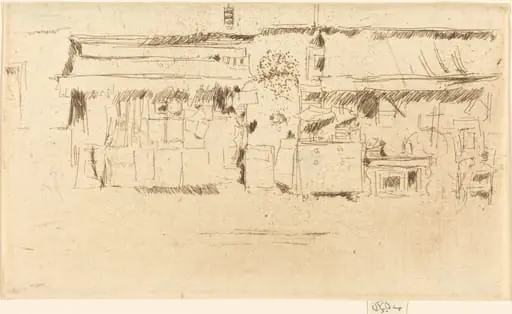
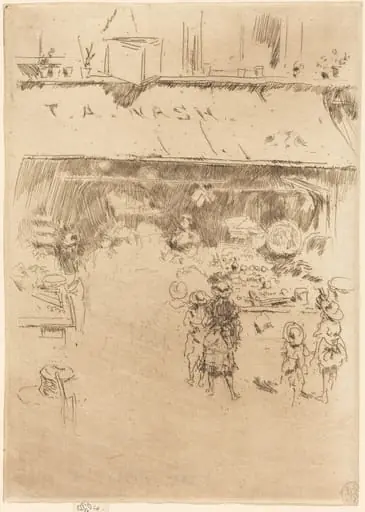
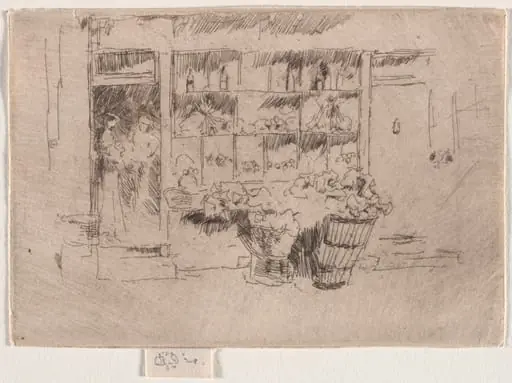
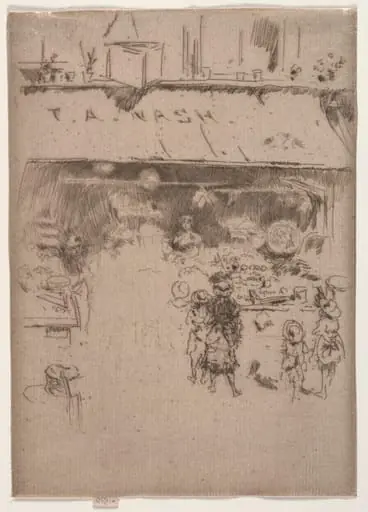
Woods's Fruit Shop is an ink print by the Impressionist artist James McNeill Whistler. It dates from 1887 and is held in the collection of the National Gallery of Art.
About this work
Overview
Created around 1887, *Woods’s Fruit Shop* is an etching and drypoint on laid paper by James Abbott McNeill Whistler, an American artist based in London.
Created around 1887, *Woods’s Fruit Shop* is an etching and drypoint on laid paper by James Abbott McNeill Whistler, an American artist based in London. The work belongs to a series of urban scenes Whistler produced during his time in the city, capturing ordinary street life with quiet precision. Unlike grand historical narratives, this print focuses on a modest commercial space, reflecting Whistler’s interest in the rhythms of daily existence rather than dramatic storytelling.
Subject & Meaning
The scene centers on a fruit and potato vendor’s shop bearing the sign 'J.H. Woods' and 'Fruit & Potatoes,' with the word 'Salesman' noted nearby. Figures move in and out of the shop, suggesting commerce and routine activity. Whistler avoids idealization; the composition presents a candid slice of London street life, emphasizing the unremarkable yet vital interactions of working-class urban dwellers without sentiment or moralizing.
Technique & Style
Whistler employed etching and drypoint to achieve fine linear detail and subtle tonal variation. The drypoint’s burr creates soft, velvety shadows, while etched lines define architectural elements and figures with economy. The composition is deliberately uncluttered despite the crowded setting, using atmospheric perspective and selective focus to guide the viewer’s eye. His technique prioritizes mood over narrative, aligning with his principle of art as an arrangement of form and tone.
History & Provenance
The print was made during Whistler’s mature period in London, when he was deeply engaged in printmaking alongside his painting. It was likely produced for private circulation among collectors and fellow artists rather than mass distribution. No documented public exhibition history exists for this specific impression, but it appears in several institutional collections today, preserved as part of Whistler’s broader print oeuvre.
Context
In the late 1880s, London’s streets were dense with small vendors and market stalls, reflecting the city’s expanding working-class population. Whistler’s interest in such scenes paralleled broader artistic movements that turned away from academic subjects toward contemporary life. His focus on transient urban moments aligned with emerging modernist sensibilities, even as he resisted overt social commentary, favoring aesthetic harmony over political or moral messaging.
Legacy
Though less celebrated than his nocturnes or portraits, *Woods’s Fruit Shop* exemplifies Whistler’s commitment to the etching medium and his quiet revolution in printmaking. His influence on later generations of printmakers lies in his emphasis on tonal subtlety, compositional restraint, and the elevation of everyday subjects. The work remains a quiet testament to his belief that art’s value resides in its formal integrity, not its subject matter.
Artist & collection
Artist
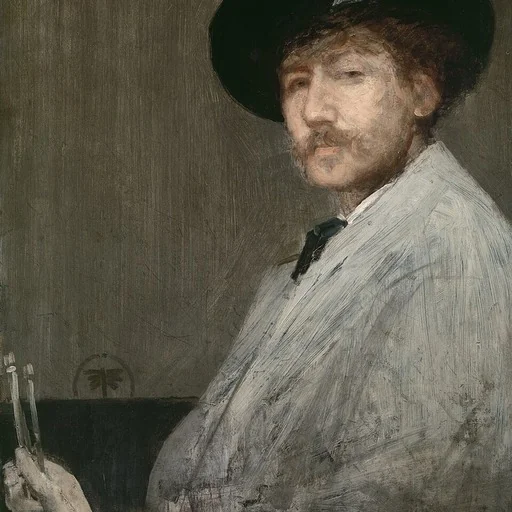
James Abbott McNeill Whistler was an American painter in oils and watercolor, and printmaker, active during the American Gilded Age and based primarily in the United Kingdom.

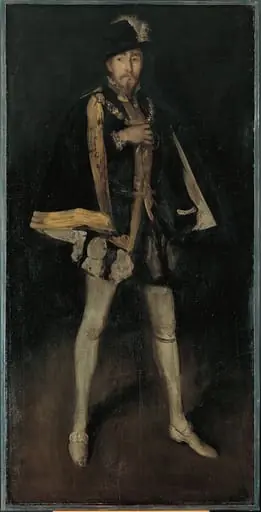 Arrangement in Black, No. 3: Sir Henry Irving as Philip II of Spain
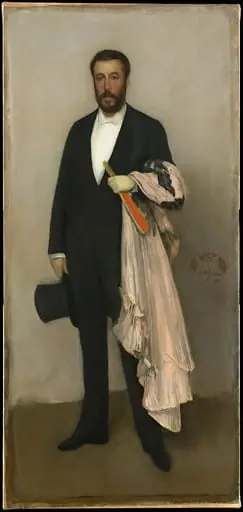 Arrangement in Flesh Colour and Black: Portrait of Theodore Duret
 Gold and Brown: Self-Portrait
 Edward Guthrie Kennedy
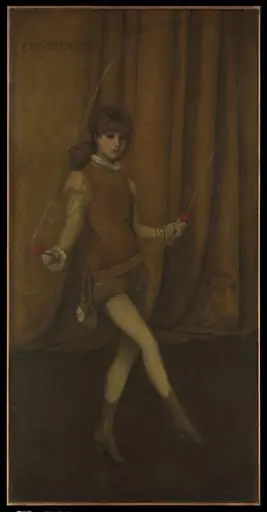 Harmony in Yellow and Gold: The Gold Girl—Connie Gilchrist
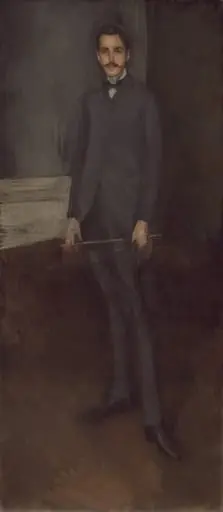 George W. Vanderbilt
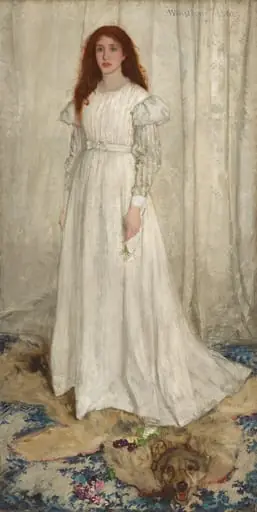 Symphony in White, No. 1: The White Girl
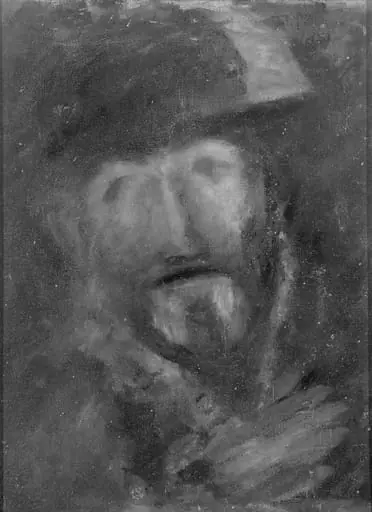 Henry Irving as Philip II of Spain