Artwork
Yellow House, Lannion
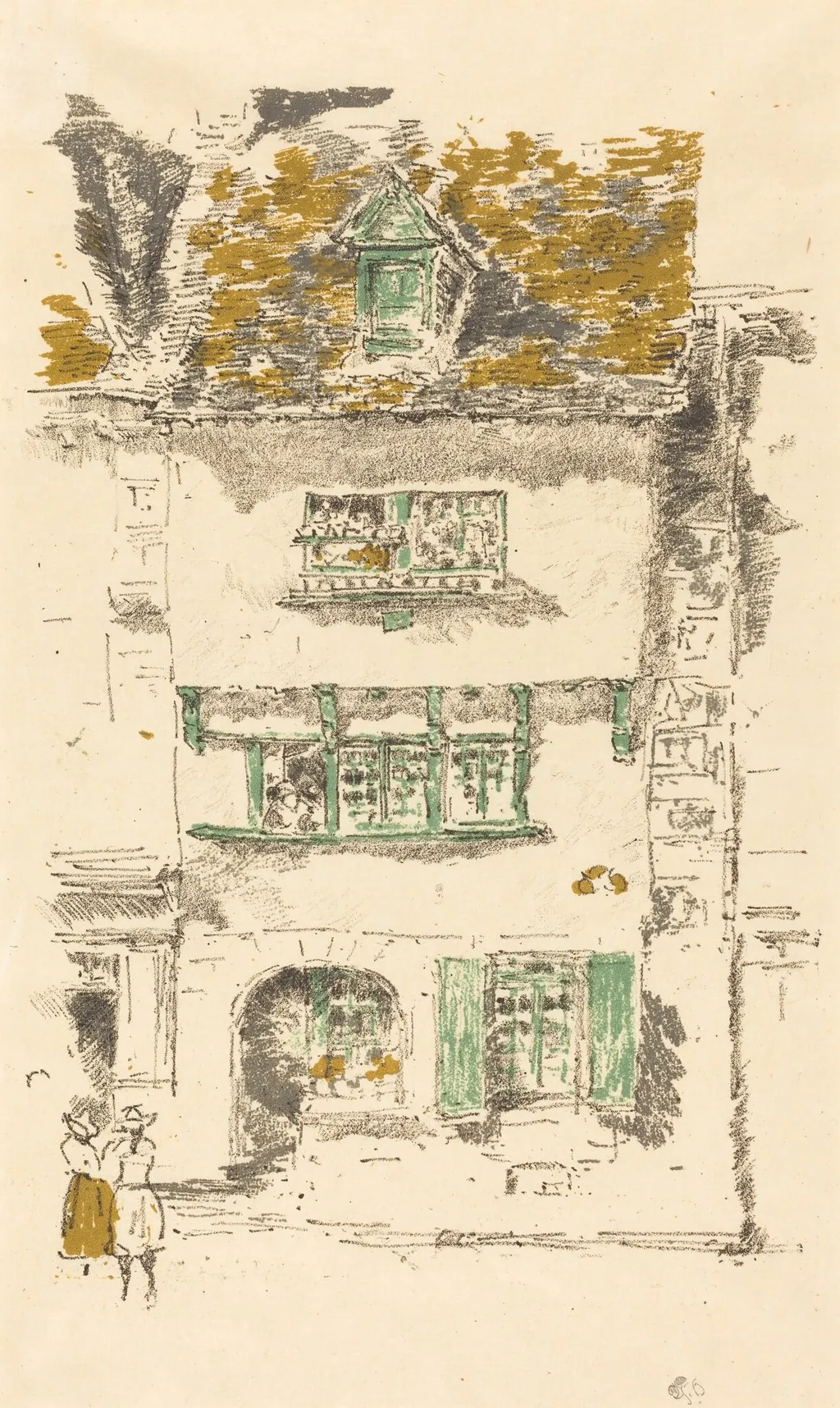
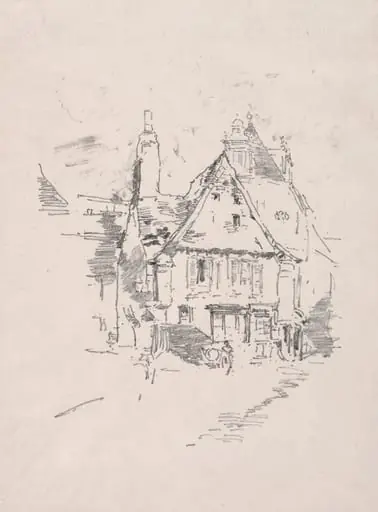
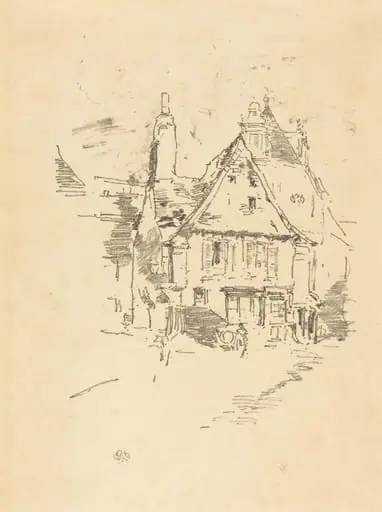
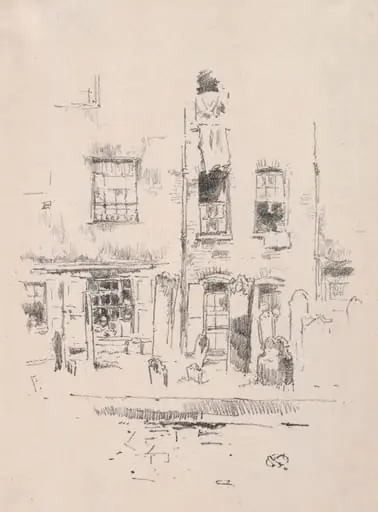
Yellow House, Lannion is an ink print by the Impressionist artist James McNeill Whistler. It dates from 1893 and is held in the collection of the National Gallery of Art.
About this work
Overview
Created in 1893, the lithograph titled *Yellow House, Lannion* presents a modest stone structure situated in a Breton town. Executed entirely in black ink on a smooth wove paper, the image captures a quiet street scene with a series of weathered buildings whose roofs and façades appear muted and slightly uneven.
Subject & Meaning
The composition focuses on an ordinary urban dwelling, emphasizing the texture of stone walls and the subtle play of light across the scene. By choosing a commonplace subject, the work reflects the artist’s interest in everyday environments, inviting viewers to contemplate the quiet dignity of ordinary architecture without overt narrative or moralizing intent.
Technique & Style
The print is produced through lithography, a process that allows for fluid, gestural lines reminiscent of quick pencil sketches. Whistler’s handling of the medium yields a restrained palette of grays and muted greens, punctuated by faint hints of yellow and brown, while the uneven arrangement of the structures conveys a sense of spontaneity and informal observation.
History & Provenance
James McNeill Whistler, an American-born artist who spent most of his career in Britain, signed the piece with his distinctive butterfly monogram. Known for advocating art’s autonomy from didactic or sentimental expectations, he applied these principles to his prints, treating the *Yellow House* as a study in tonal balance and compositional harmony rather than a narrative illustration.
Artist & collection
Artist
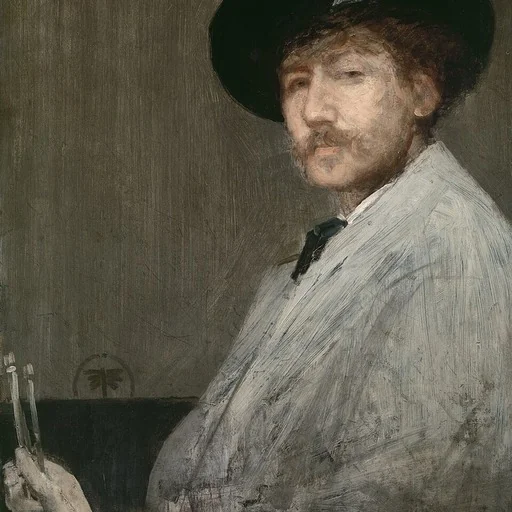
James Abbott McNeill Whistler was an American painter in oils and watercolor, and printmaker, active during the American Gilded Age and based primarily in the United Kingdom.

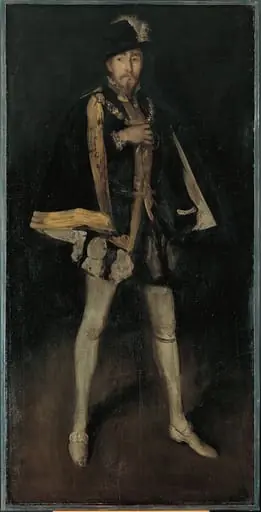 Arrangement in Black, No. 3: Sir Henry Irving as Philip II of Spain
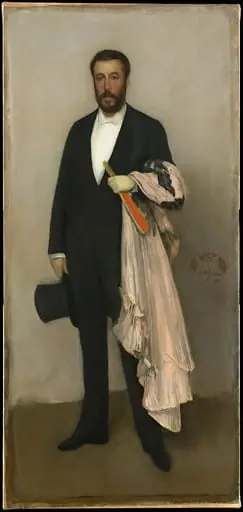 Arrangement in Flesh Colour and Black: Portrait of Theodore Duret
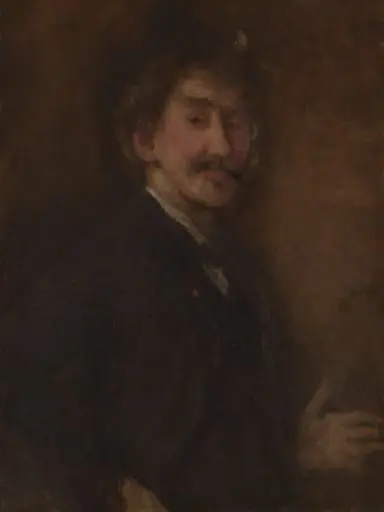 Gold and Brown: Self-Portrait
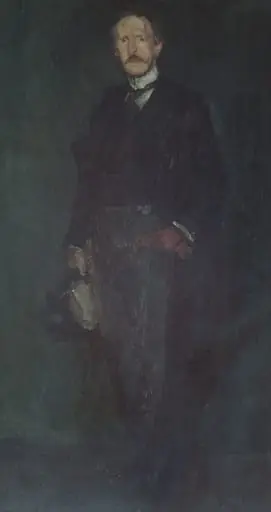 Edward Guthrie Kennedy
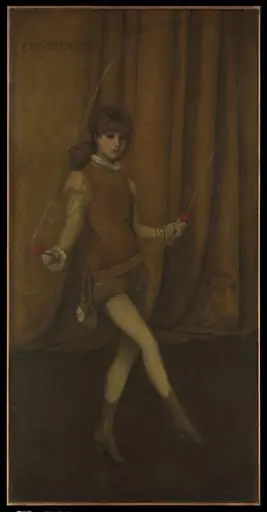 Harmony in Yellow and Gold: The Gold Girl—Connie Gilchrist
 George W. Vanderbilt
 Symphony in White, No. 1: The White Girl
 Henry Irving as Philip II of Spain