Artwork
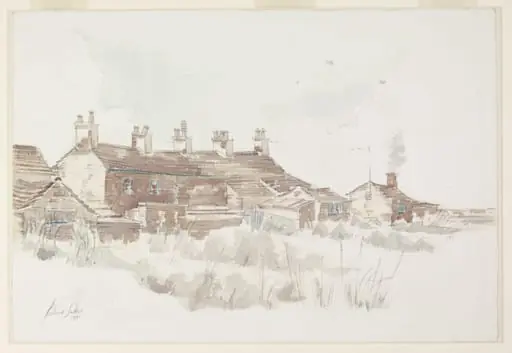
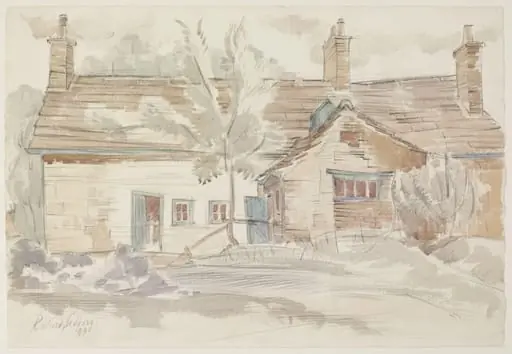
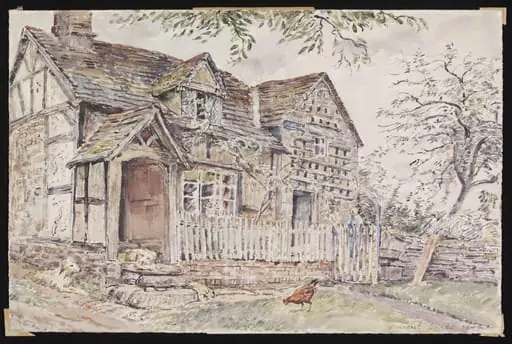
Cottages at Norton, No.2
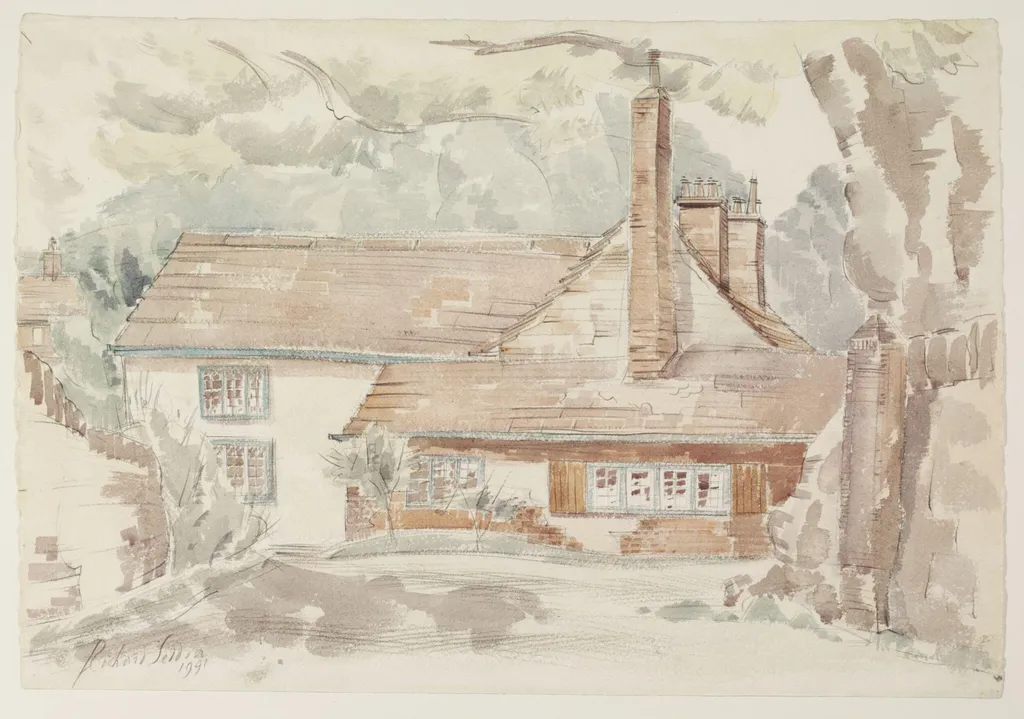
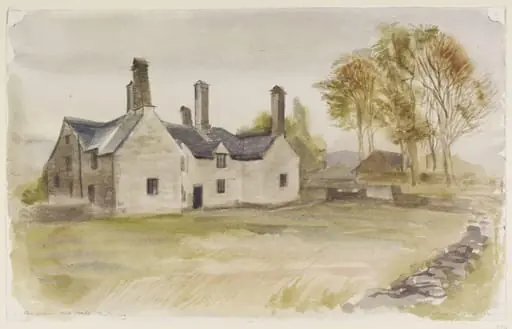
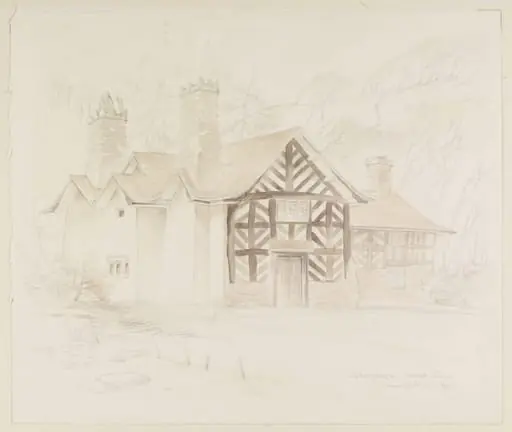
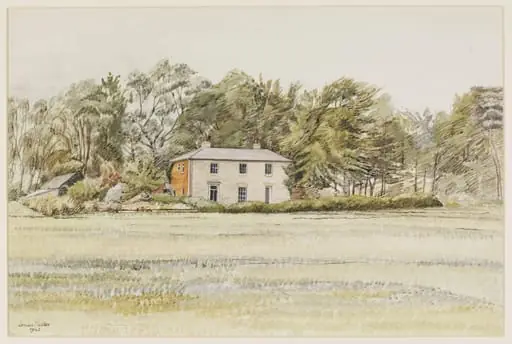
Cottages at Norton, No.2 is a watercolor work on paper by Thomas Seddon. It is held in the collection of the Victoria and Albert Museum.
About this work
Overview
Painted in 1941, this watercolour by John Seddon is one of many works produced for the Recording Britain project, a wartime initiative to preserve visual records of rural English scenes deemed vulnerable to destruction or transformation. The piece is signed and dated by the artist, reflecting its role as a deliberate act of documentation rather than mere aesthetic expression.
Subject & Meaning
The painting portrays a modest cottage with low eaves and a prominent chimney, nestled among trees under a muted sky. A small front garden and simple architectural details suggest a quiet, enduring rural life. The choice of subject reflects the project’s aim to capture everyday vernacular architecture, valuing its quiet resilience amid the uncertainties of war and modernization.
Technique & Style
Seddon employed soft, controlled brushwork to render the cottage’s weathered roof, textured trees, and hazy atmosphere. The palette is restrained—dominated by earthy browns, greys, and subtle ochres—enhancing the sense of stillness. Watercolour’s transparency allows underlying layers to suggest depth, while minimal detail invites contemplation rather than narrative.
History & Provenance
Created as part of the Recording Britain project, initiated by the Pilgrim Trust in 1939, this work was commissioned to archive landscapes and buildings at risk from bombing or development. It entered institutional collections following the project’s conclusion, preserving its historical intent within public archives dedicated to Britain’s cultural heritage.
Context
During the Second World War, the Recording Britain project mobilized artists to record scenes of rural and vernacular life before they vanished. This initiative responded to fears of cultural erasure, not through grand monuments, but through humble, familiar structures. Seddon’s painting aligns with this ethos, emphasizing quiet dignity over dramatic spectacle.
Legacy
The painting endures as part of a broader archive that reshaped how Britain’s ordinary landscapes were valued. Though not widely exhibited, works like this contributed to postwar preservation movements and continue to inform historical understanding of domestic architecture and wartime cultural memory.
Artist & collection
Artist
For the New Zealand politician see Tom Seddon Thomas Seddon (28 August 1821 in London – 23 November 1856 in Cairo) was an English landscape painter associated with the Pre-Raphaelite movement, who painted colourful and…