Artwork
H Beard Print Collection
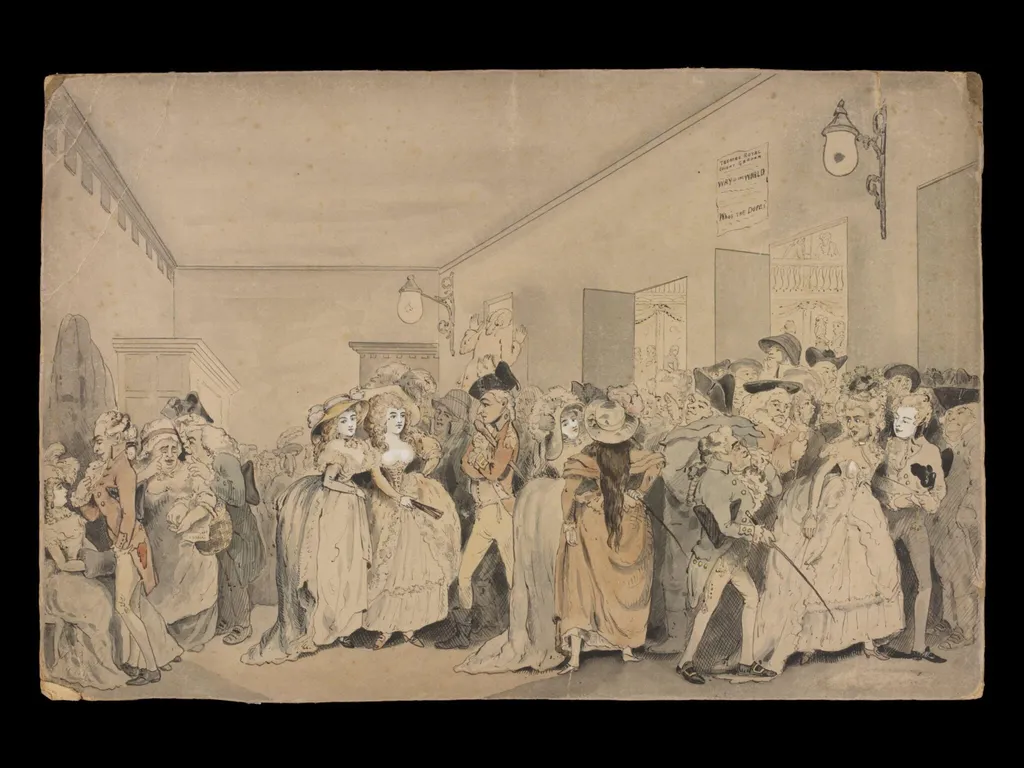
H Beard Print Collection is a paint painting by Henry Wigstead. It is held in the collection of the Victoria and Albert Museum.
About this work
Overview
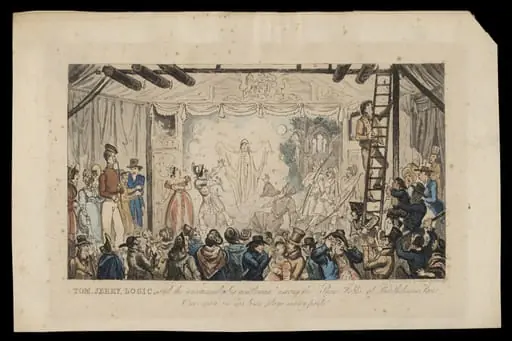
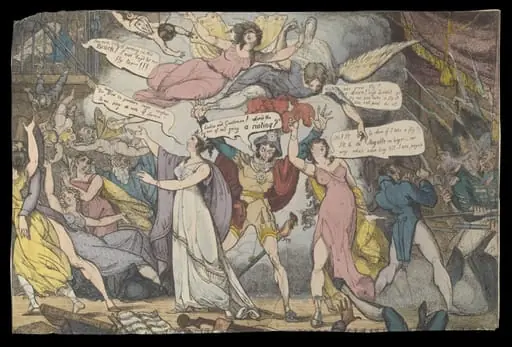
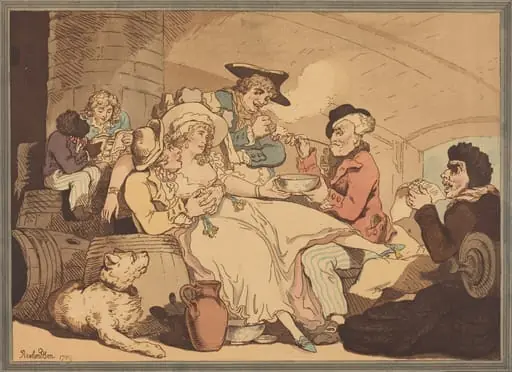
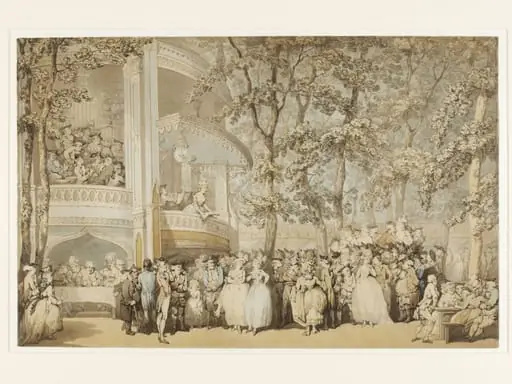
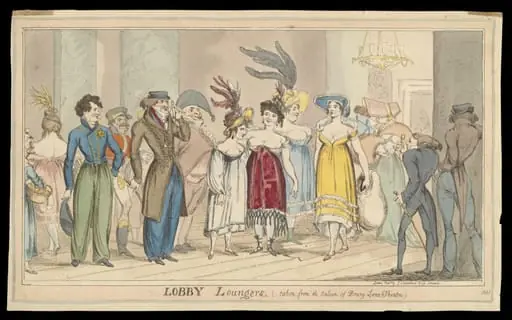
This oil painting by Henry Wigstead depicts a scene titled 'Box Lobby Loungers,' a subject also rendered as a printed image.
This oil painting by Henry Wigstead depicts a scene titled 'Box Lobby Loungers,' a subject also rendered as a printed image. The work’s status as either the source image for the print or a subsequent painted replica remains unresolved. Its presence in the Victoria and Albert Museum underscores its role in documenting the relationship between original visual compositions and their reproductive print counterparts in the late 18th century.
Subject & Meaning
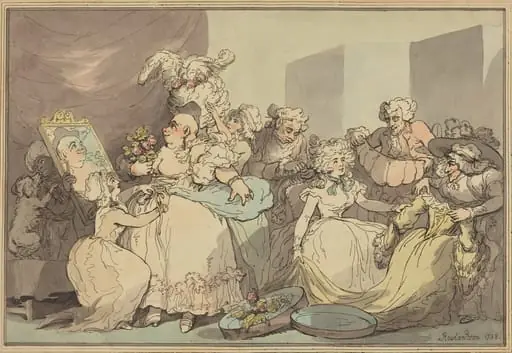
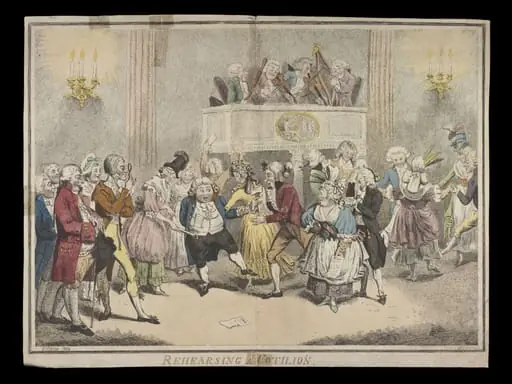
The scene portrays spectators in a theater’s box lobby, engaged in casual conversation and observation. Rather than focusing on the stage, Wigstead captures the social ritual of being seen and seeing others — a commentary on public behavior in elite cultural spaces. The figures’ postures and attire reflect the manners of London’s theater-going class during the 1790s.
Technique & Style
Executed in oil, the painting employs a restrained palette and precise brushwork to render textures of fabric, wood, and skin. The composition is tightly framed, drawing attention to the interactions among figures. Wigstead’s approach blends observational detail with a slight theatricality, mirroring the performative nature of the setting he depicts.
History & Provenance
The painting entered the Victoria and Albert Museum’s collection as part of the H. Beard Print Collection, which assembled materials related to British graphic arts. Its origins are undocumented prior to its inclusion, but its connection to the known print of the same title suggests it was created in the 1790s, likely during Wigstead’s active period as a topographical artist and illustrator.
Context
In the late 18th century, prints served as the primary means of disseminating images of contemporary life. Artists like Wigstead often produced original drawings or paintings that were then engraved for wider circulation. This work exemplifies the fluid boundary between original art and reproductive media, a dynamic central to the visual culture of the period.
Legacy
The painting contributes to understanding the mechanics of image production before photography. It illustrates how artists functioned as both creators and sources for mass-reproduced imagery. While Wigstead’s name is not widely recognized today, this work remains a tangible link to the networks of visual culture that shaped public perception in Georgian England.
Artist & collection
Artist
Henry Wigstead’s watercolours bring 18th-century stories to life in bright, playful strokes.