Artwork
An Italian Interior
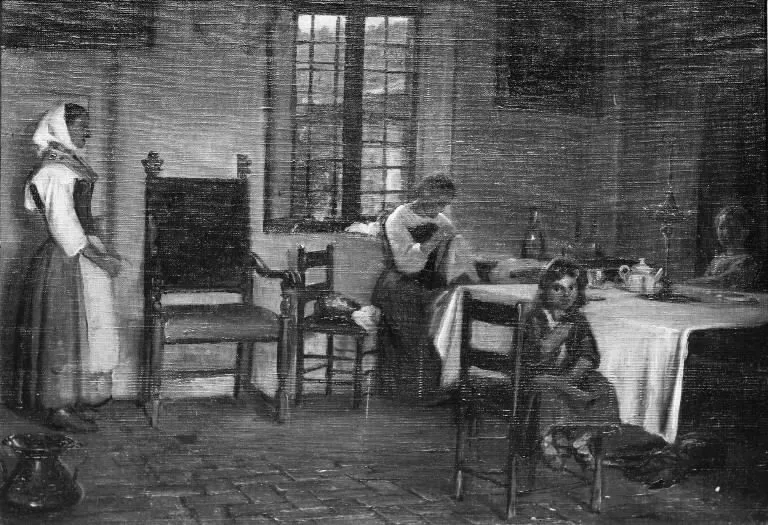
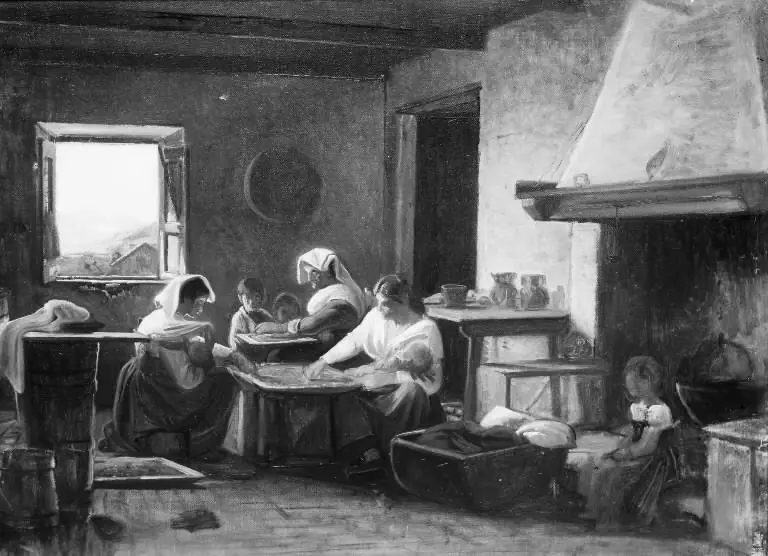
An Italian Interior is an oil painting by the Biedermeier artist Wilhelm Marstrand. It dates from 1849 and is held in the collection of the Statens Museum for Kunst.
About this work
Overview
Painted in 1849 by Danish artist Wilhelm Marstrand, this oil on canvas depicts a modest interior in Italy. Though Marstrand was rooted in Denmark’s Golden Age, he traveled extensively in southern Europe, drawing inspiration from local life. The work reflects his interest in quiet, unidealized domestic moments, rendered with restrained emotion and careful observation of light and space.
Subject & Meaning
Three women are shown in a simple room, engaged in routine tasks: one stands near a table, another sits with a child, and a third lingers by a window.
Three women are shown in a simple room, engaged in routine tasks: one stands near a table, another sits with a child, and a third lingers by a window. Their postures suggest calm routine rather than narrative drama. The absence of ornament or activity emphasizes the dignity of ordinary life. The scene conveys solitude and continuity, not as a staged moment, but as a quiet record of daily existence.
Technique & Style
Marstrand employed soft, diffused lighting to model forms gently, avoiding sharp contrasts. The palette is muted—earthy browns, pale whites, and warm grays—enhancing the sense of intimacy. Brushwork is precise but unobtrusive, favoring texture over flourish. The composition is balanced yet informal, with figures arranged naturally within the space, reflecting Biedermeier ideals of domestic harmony and understated realism.
History & Provenance
Created during Marstrand’s time in Italy, the painting entered the collection of Statens Museum for Kunst in Copenhagen shortly after its completion. It remained largely within Danish institutional holdings, rarely exhibited abroad. Its preservation reflects its status as a representative work of Danish artists engaging with Mediterranean life during the mid-19th century.
Context
In the 1840s, Scandinavian artists increasingly traveled to southern Europe, drawn by light, architecture, and perceived authenticity. Marstrand’s Italian interiors contrasted with the more formal portraiture common in Denmark, offering a quieter alternative. The Biedermeier aesthetic, popular across Central Europe, resonated with Danish sensibilities—valuing privacy, order, and the emotional weight of the everyday.
Legacy
The painting endures as a quiet example of cross-cultural observation within 19th-century Nordic art. It illustrates how Danish painters adapted foreign settings to domestic themes, avoiding exoticism in favor of empathy. While not widely reproduced, it remains a touchstone in Danish art history for its restraint and sensitivity to ordinary life.
Artist & collection

Artist
Nicolai Wilhelm Marstrand (24 December 1810 – 25 March 1873), painter and illustrator, was born in Copenhagen, Denmark, to Nicolai Jacob Marstrand, instrument maker and inventor, and Petra Othilia Smith.

 Portrait of Otto Marstrand's two daughters and their nanny
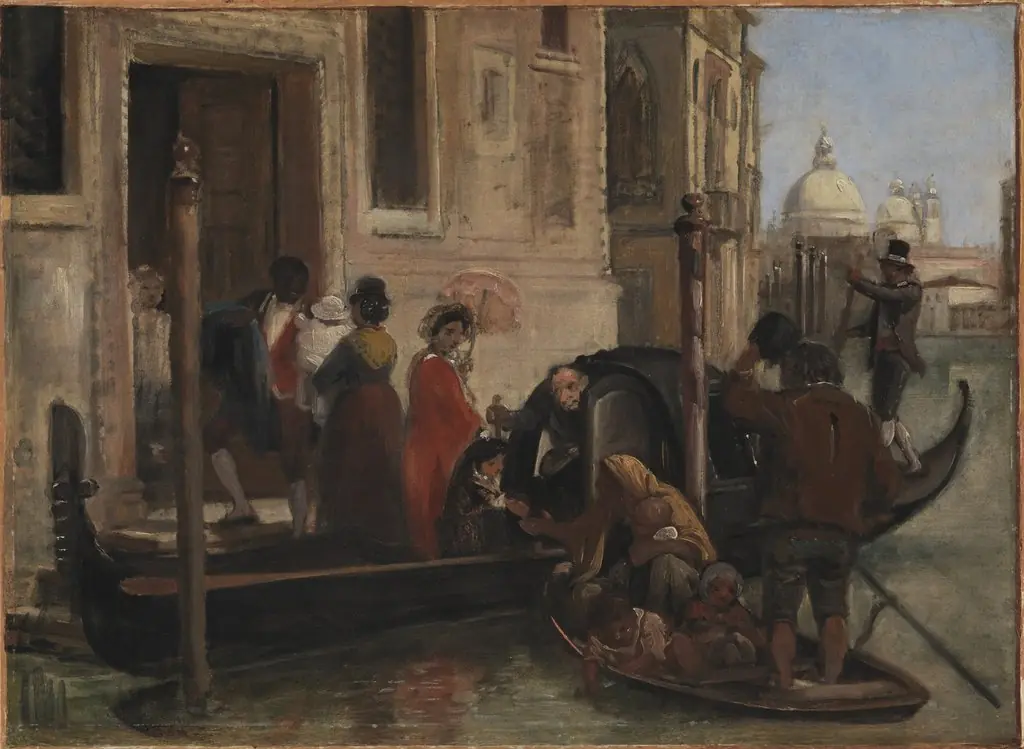 Landing in Venice. In the Distance S. Maria delle Salute
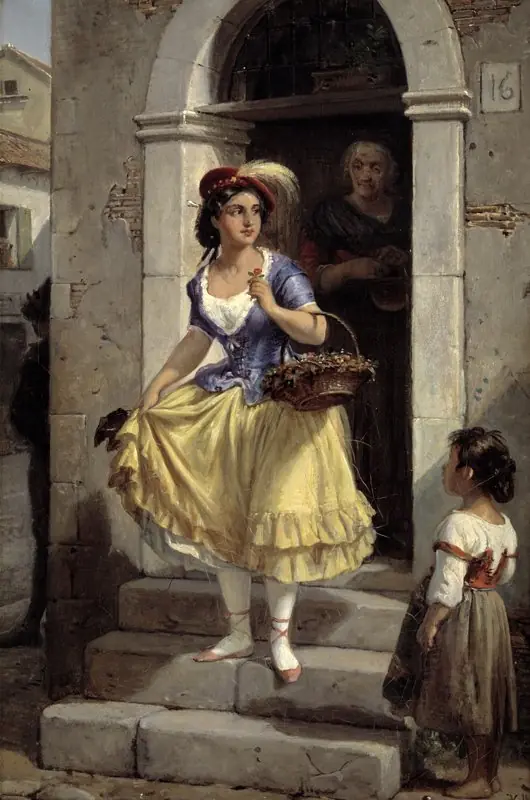 An Italian Woman in the Way to the Carnival
 Eve Tempts Adam
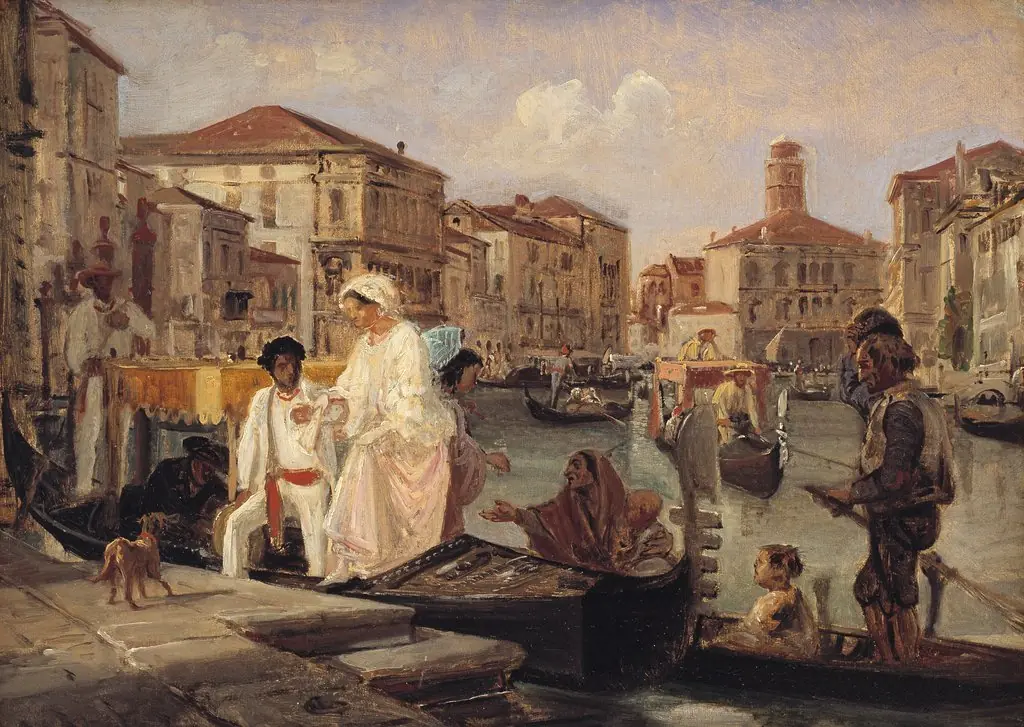 Alighting from a Gondola in Venice
 Skuespillerinden Johanne Luise Heiberg
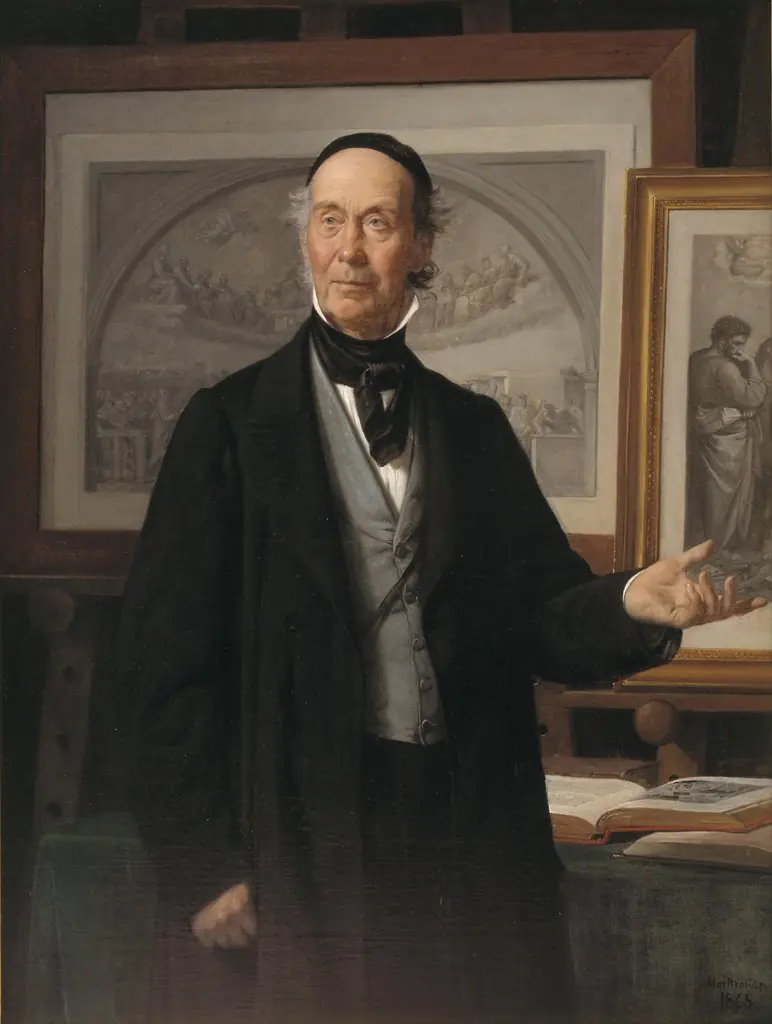 The Art Historian N. L. Høyen
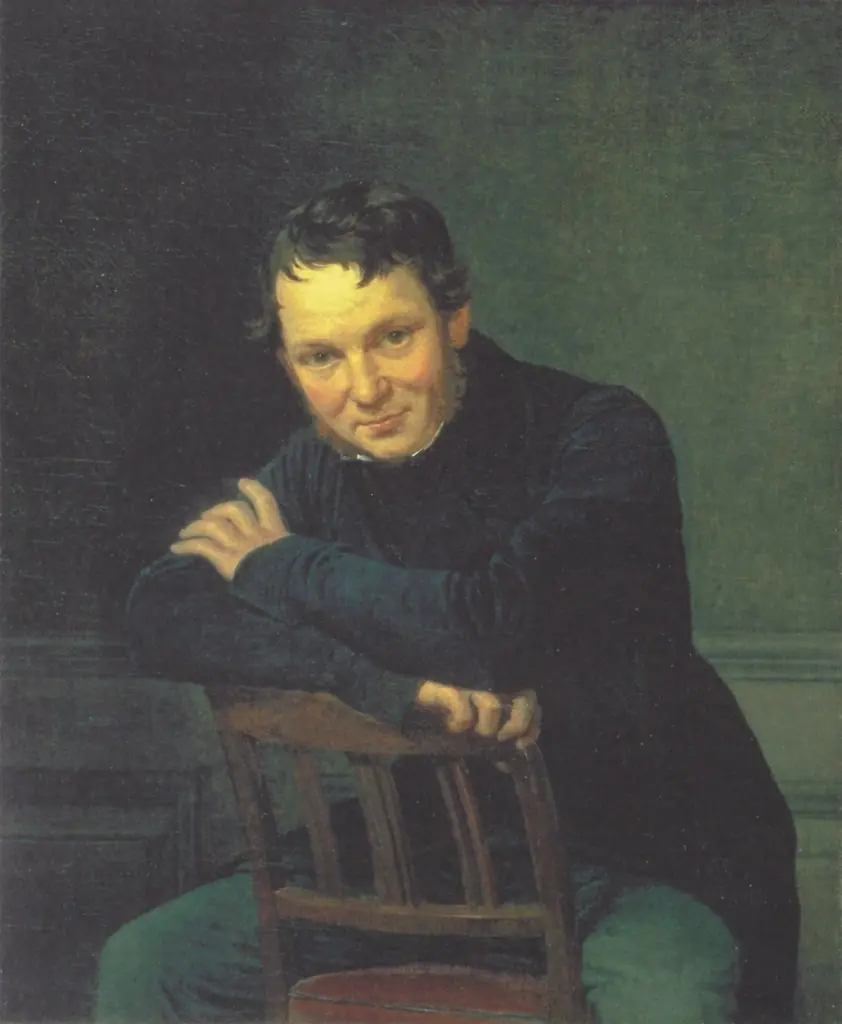 Gottlieb Bindesbøll, Danish Architect