Artwork
Still Life with a Gilt Cup
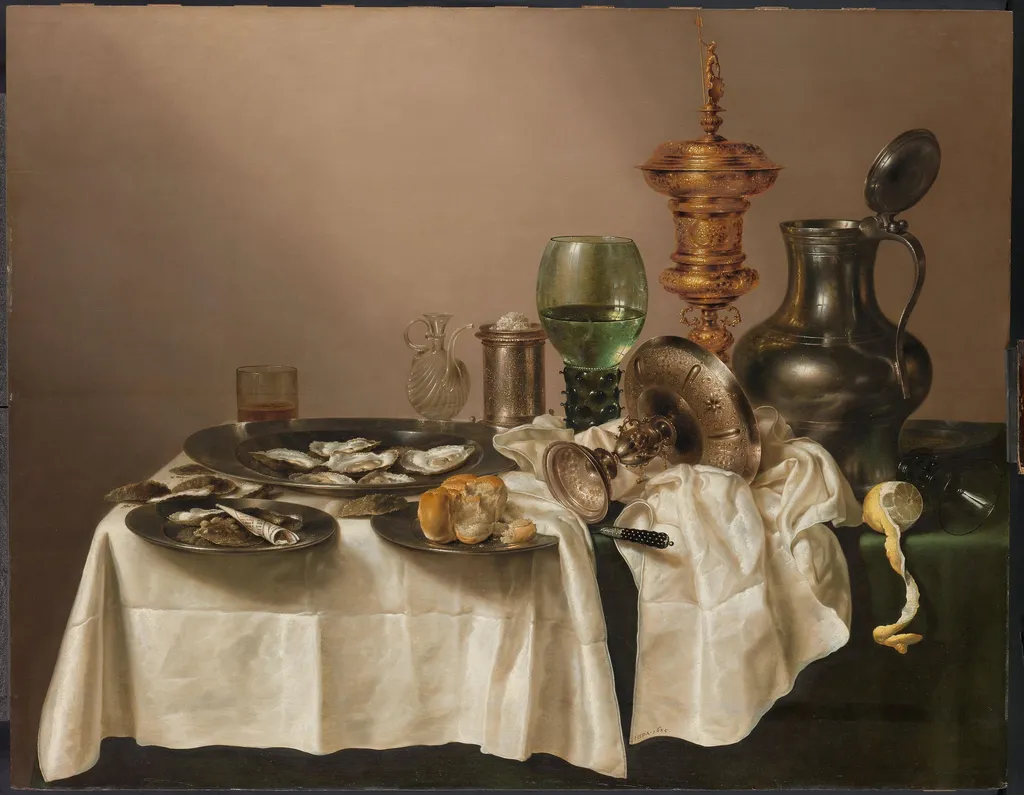
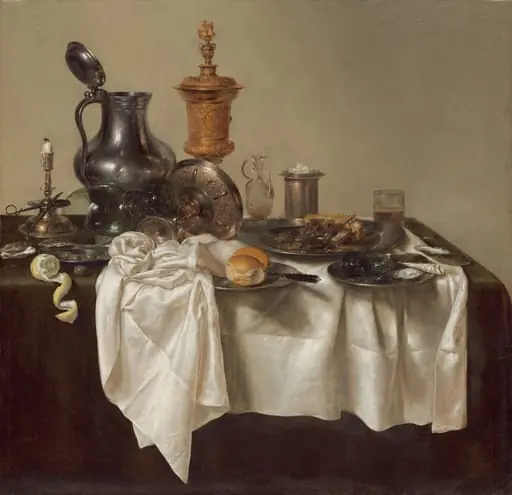
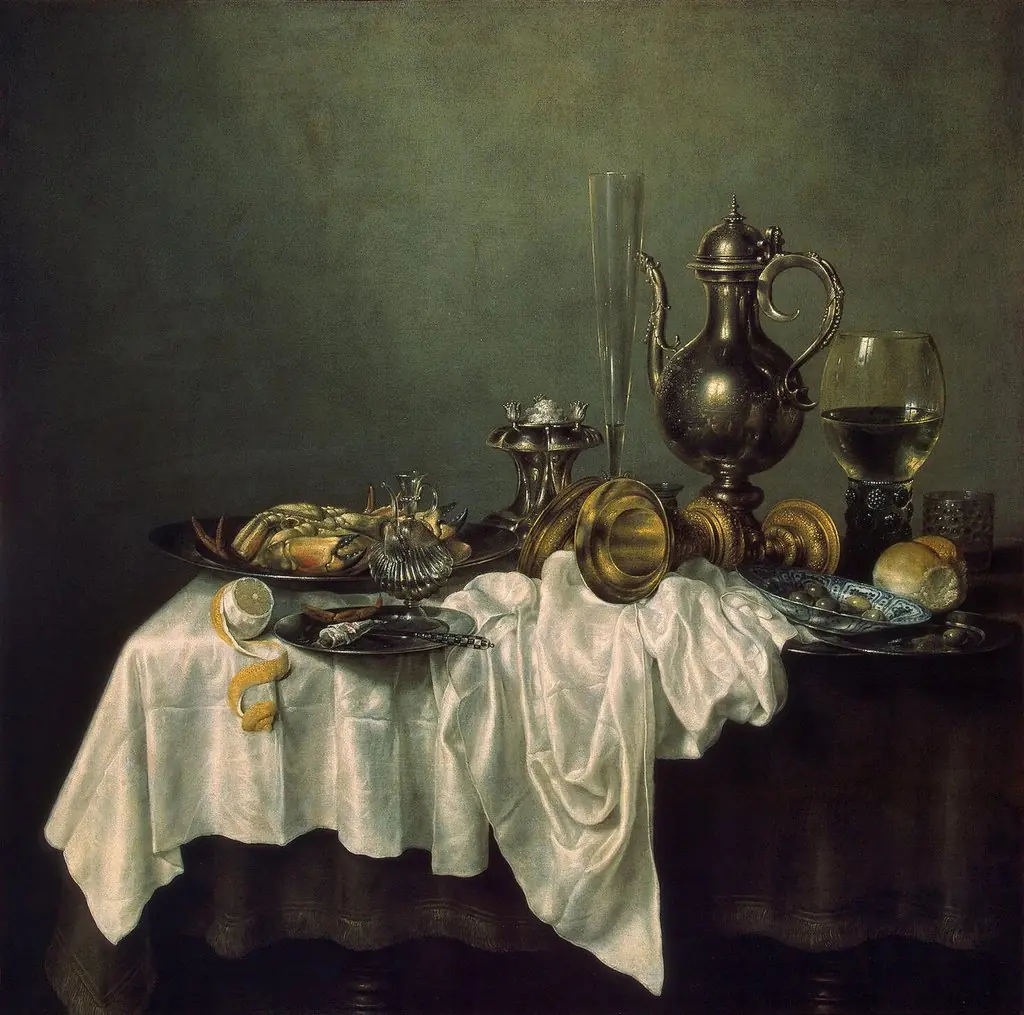
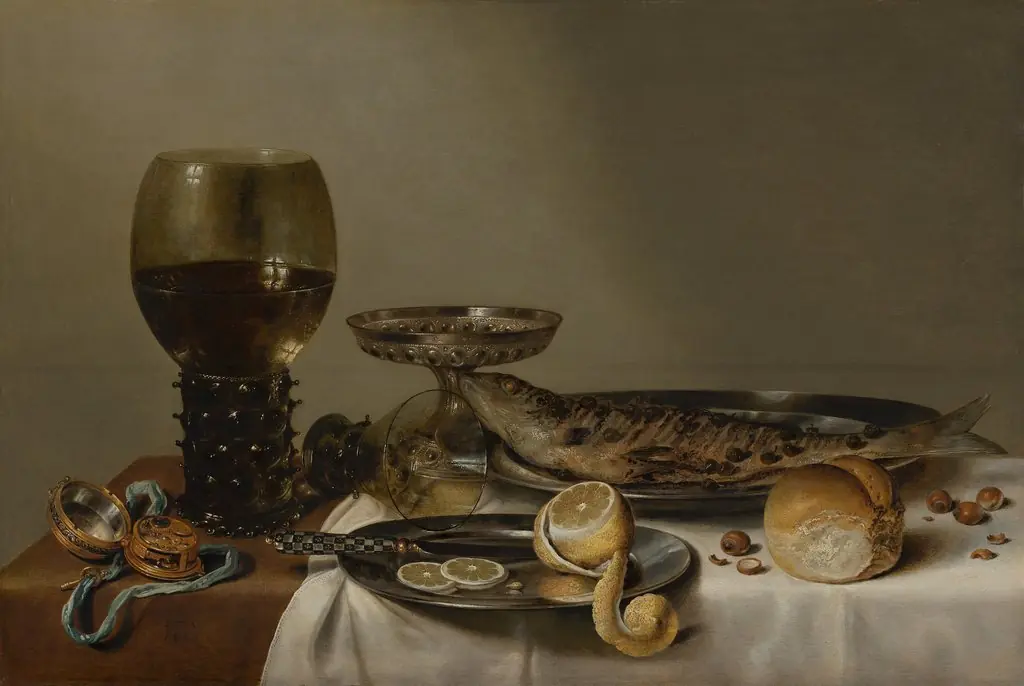
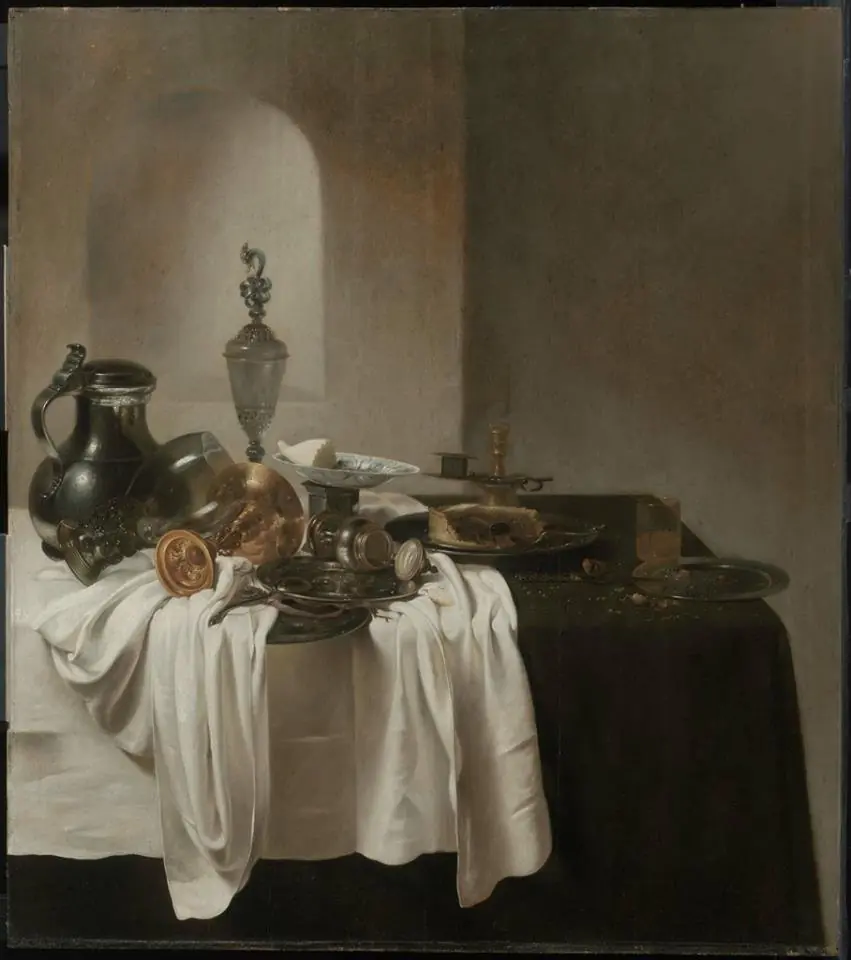
Still Life with a Gilt Cup is an unspecified painting by the Dutch Golden Age artist Willem Claesz Heda. It dates from 1635 and is held in the collection of the Rijksmuseum.
About this work
Overview
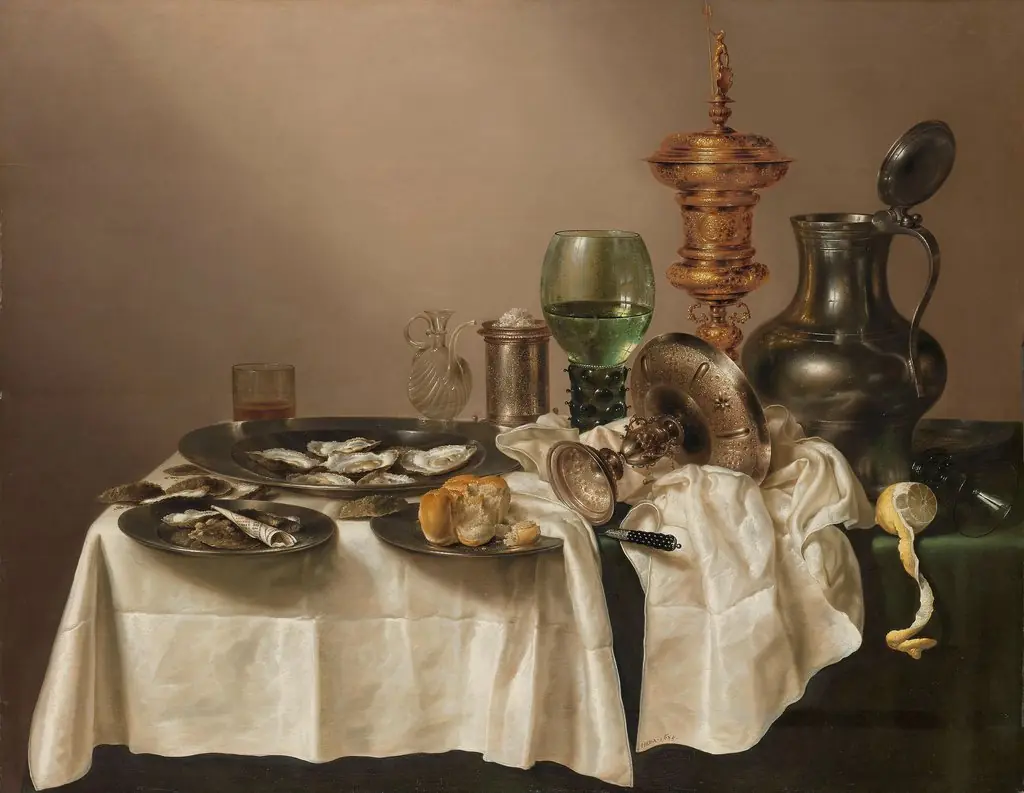
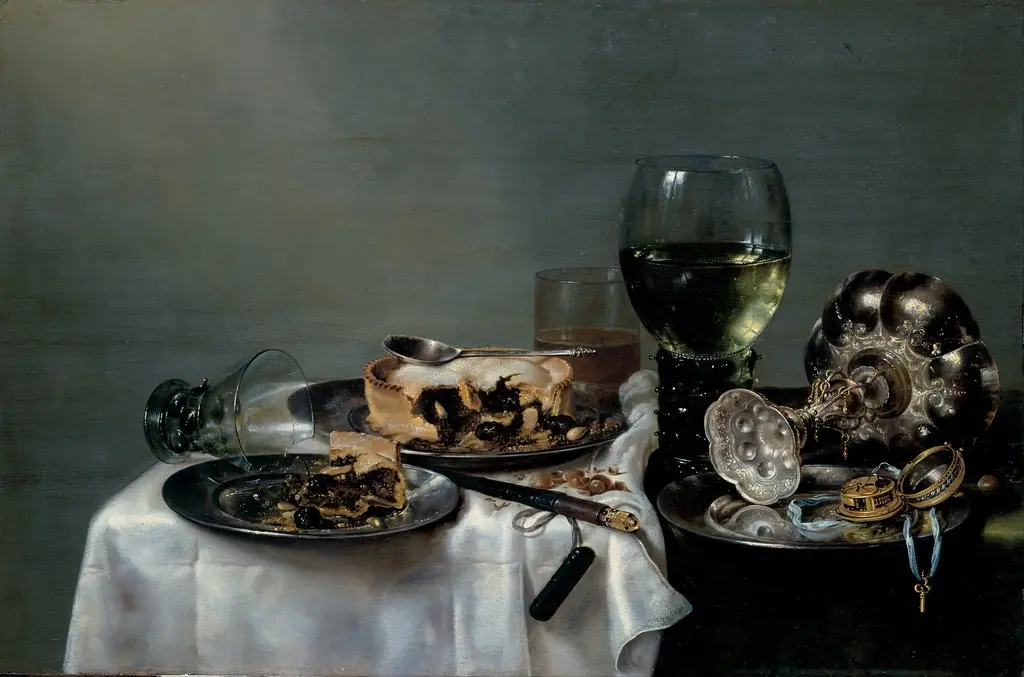
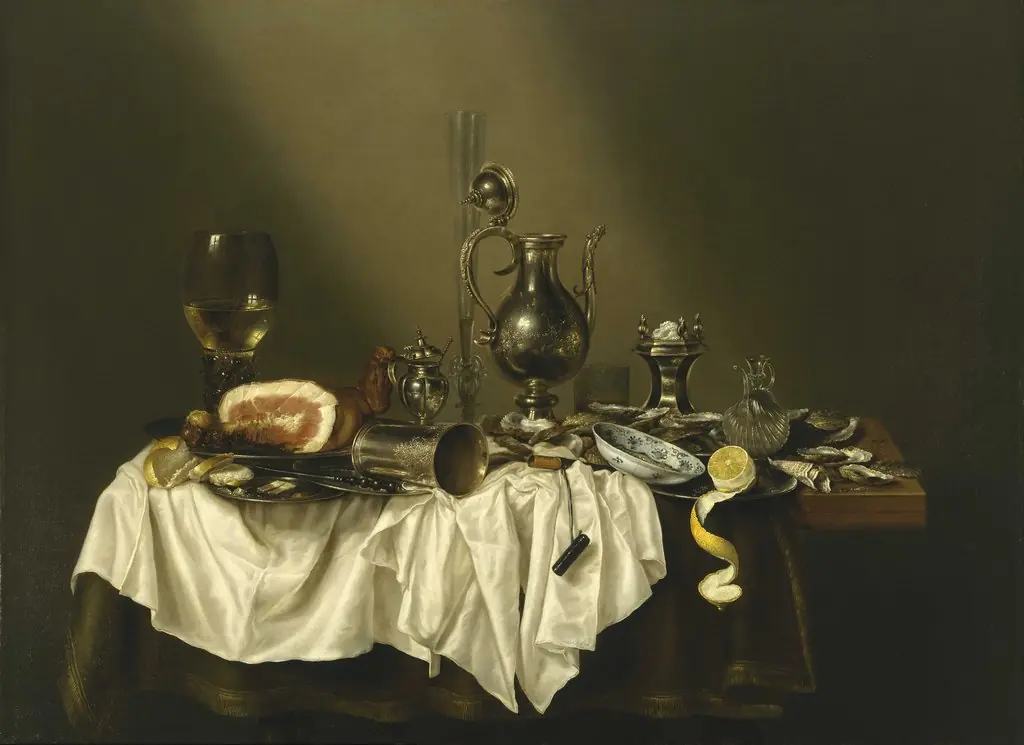
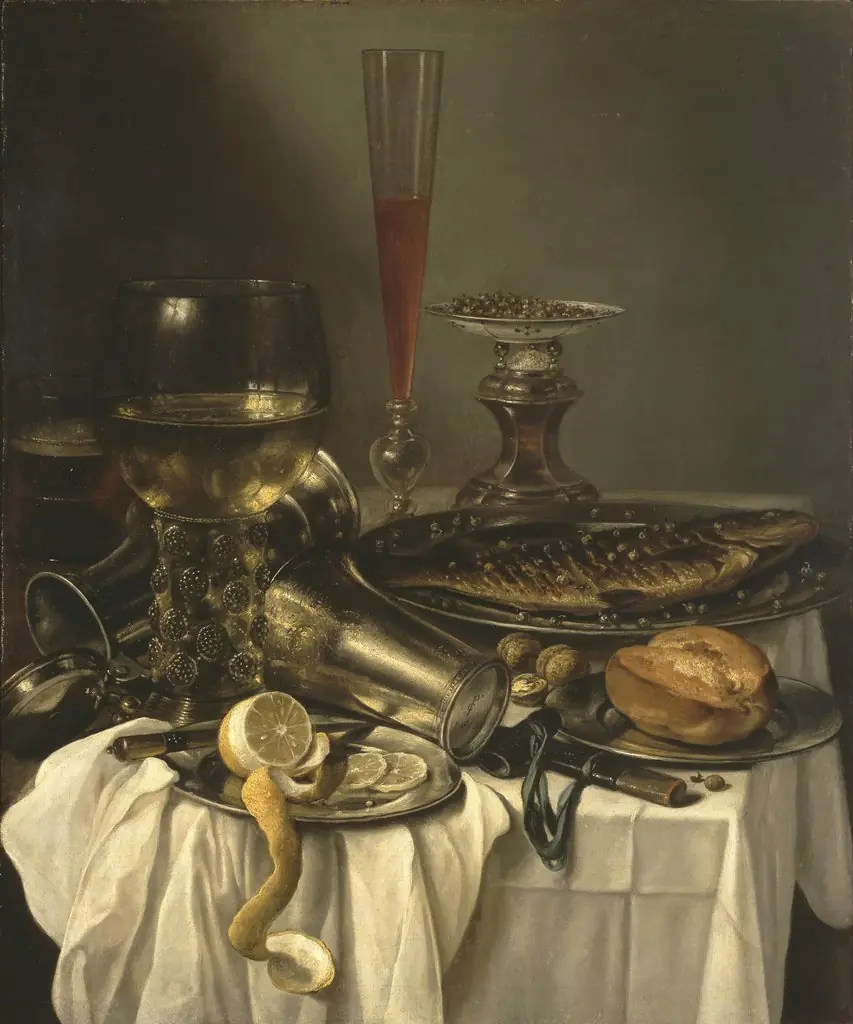
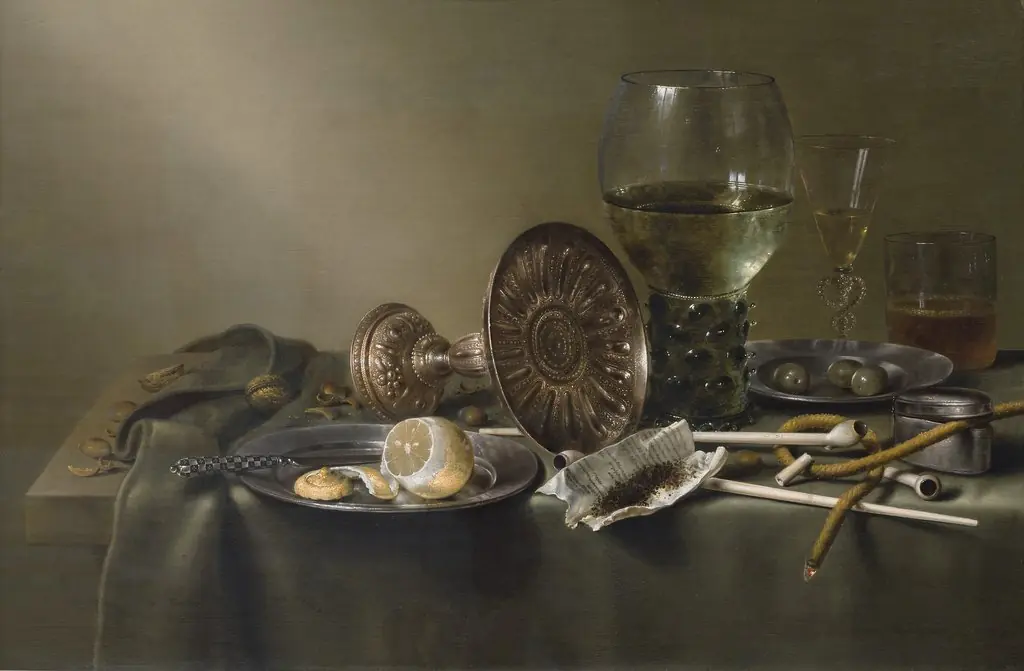
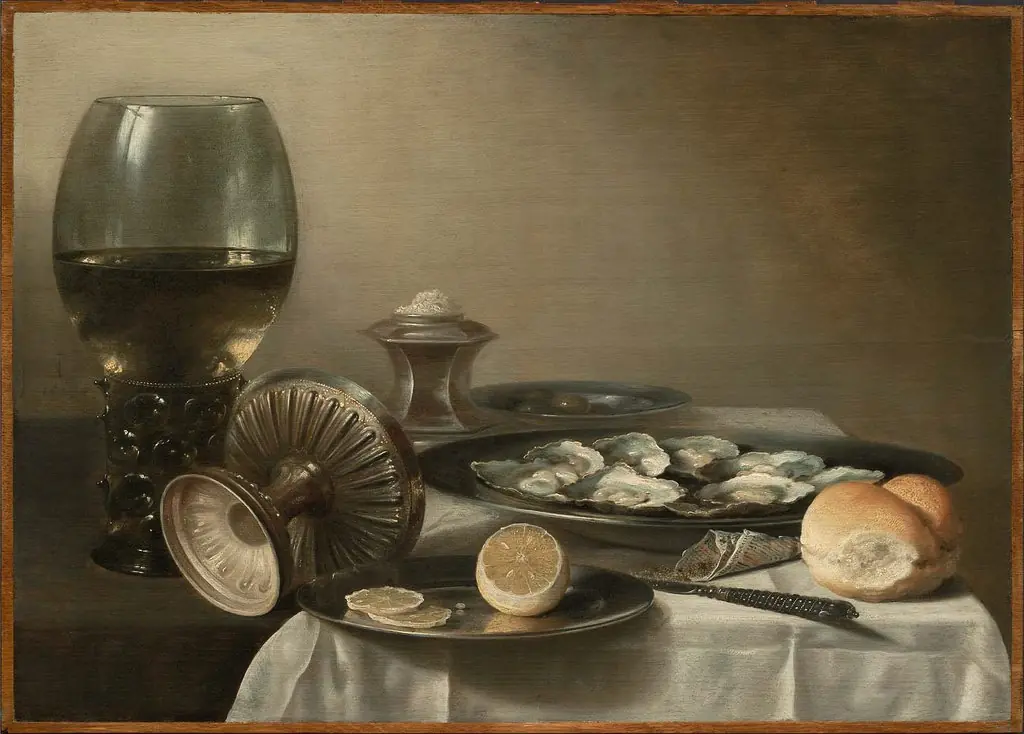
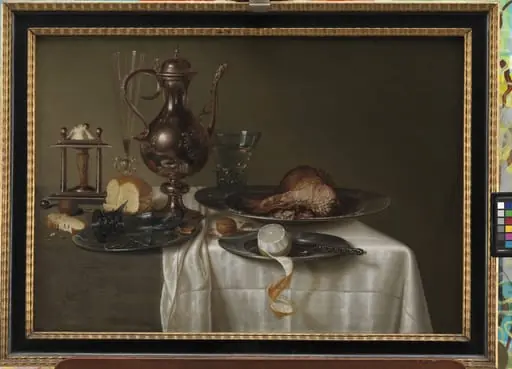
Willem Heda’s “Still Life with a Gilt Cup” presents a modest banquet spread rendered in a restrained palette. A white cloth drapes a table supporting a polished silver cup, a partially peeled lemon, scattered bread crumbs and assorted reflective objects, all arranged with quiet deliberation.
Subject & Meaning
The composition gathers everyday items—metalware, fruit, and remnants of a meal—to explore the interplay of light and surface. By limiting color to muted grays with occasional yellow and brown highlights, Heda emphasizes texture and the fleeting quality of the still moment.
Technique & Style
Heda employs a near‑monochromatic scheme, achieving depth through subtle tonal variations rather than vivid hues. Fine brushwork captures the sheen of glass, mother‑of‑pearl, and polished metal, while delicate chiaroscuro models the forms against the soft, rumpled cloth.
Context
Created within the Dutch Golden Age, the work belongs to the “tonal banquet” genre, a subset of still‑life painting that foregrounds the nuanced effects of light on modest objects. Such pieces reflect contemporary interests in realism, domesticity, and the moral symbolism of abundance and transience.
Own this work as a print
Artist & collection

Artist
Willem Claesz Heda was born in Haarlem on December 14, 1594, the son of Claes Pietersz, the city architect, and spent his entire life and career in that city.