Artwork
Still Life with Crab and Fruit
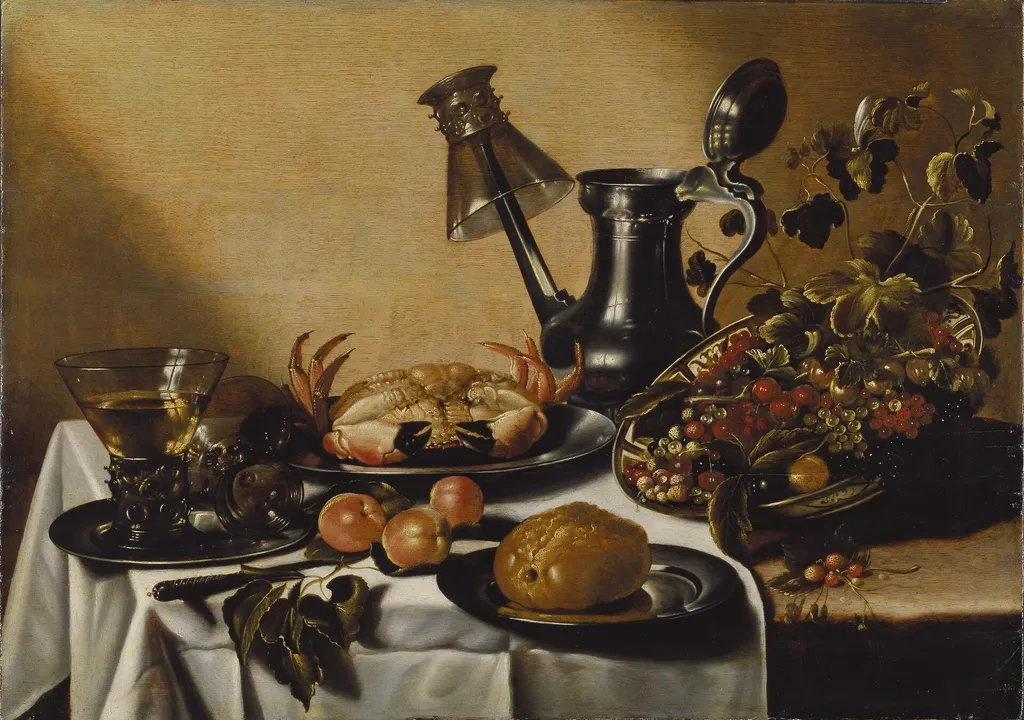
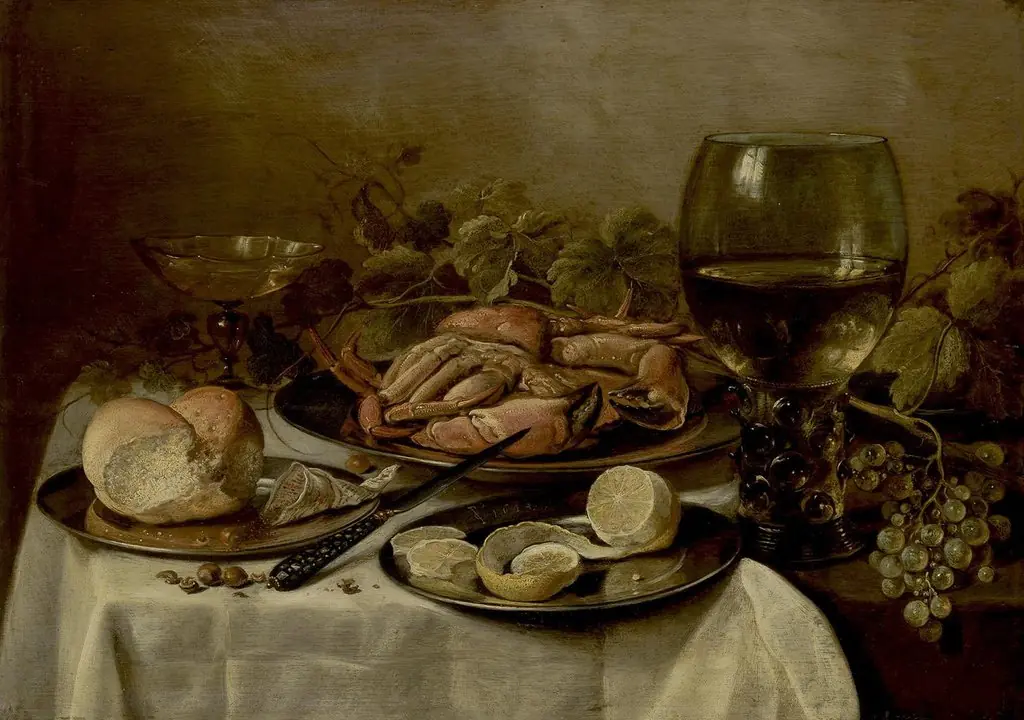
Still Life with Crab and Fruit is an oil painting. It dates from 1650 and is held in the collection of the Nationalmuseum. The oil painting presents a tabletop draped in a white linen, upon which a large crab with its claws splayed dominates the composition.
About this work
Overview
The oil painting presents a tabletop draped in a white linen, upon which a large crab with its claws splayed dominates the composition.
The oil painting presents a tabletop draped in a white linen, upon which a large crab with its claws splayed dominates the composition. Around it lie a handful of small apples, a pear, a lemon, a silver two‑handled pitcher leaning against a glass, and a bowl filled with grapes and assorted berries. A warm, unadorned background isolates the arrangement, emphasizing the tactile qualities of the objects.
Subject & Meaning
The work assembles everyday foodstuffs and a marine creature, a motif common in still‑life traditions that juxtapose abundance with the transience of life. The crab, rendered with a preserved shell, suggests freshness and the fleeting nature of the catch, while the fruit and wine elements evoke seasonal bounty and conviviality, inviting contemplation of nourishment and mortality.
Technique & Style
Executed in oil, the artist employs meticulous brushwork to capture the glossy surface of the grapes, the delicate skin of the berries, and the reflective sheen of the silver pitcher. The rendering of the crab’s carapace shows careful attention to texture and light. The overall palette is warm and restrained, with a neutral backdrop that heightens the three‑dimensional illusion of the objects.
Context
The composition recalls the Dutch Golden Age still‑life conventions, where silver vessels and fruit are arranged on a plain cloth to highlight material wealth and domestic abundance. The inclusion of a crab, less typical than fish or shellfish, adds a marine element that aligns with the period’s interest in exotic catches and the scientific curiosity of the era.
Legacy
While the painting’s provenance is not detailed, its formal qualities align it with the tradition that influenced later still‑life painters who explored the interplay of texture, light, and symbolic content. The work continues to serve as a reference for the study of 17th‑century visual strategies in representing food and tableware.
Artist & collection