Artwork
Untitled
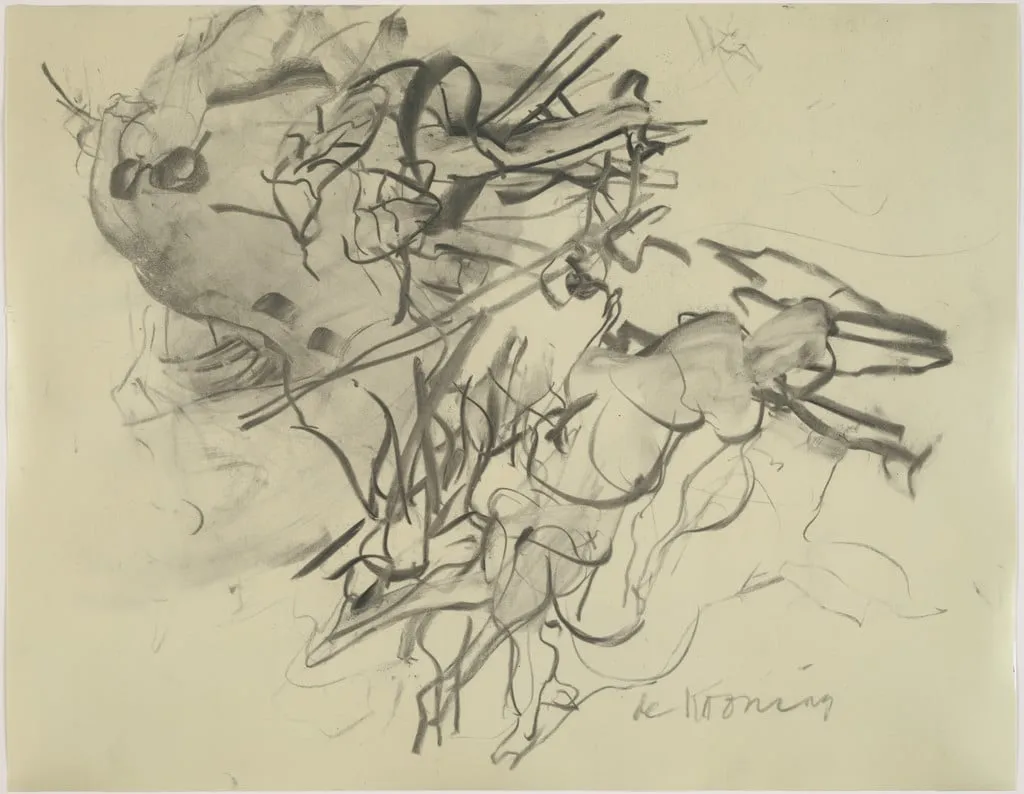
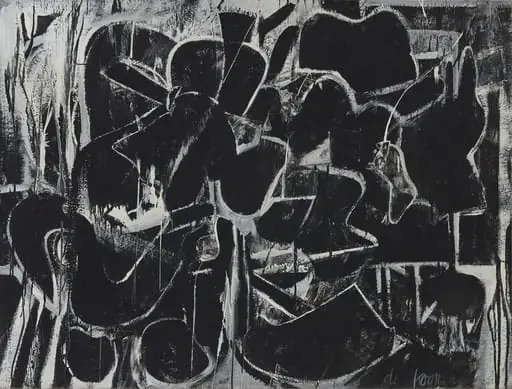
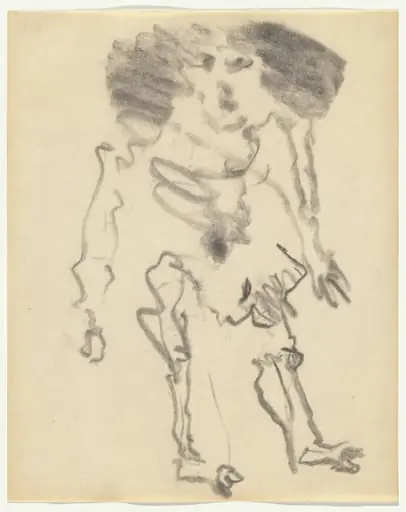
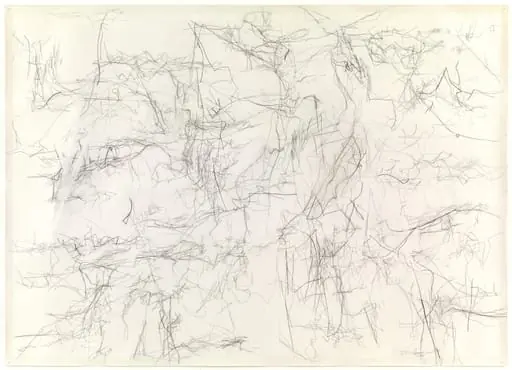
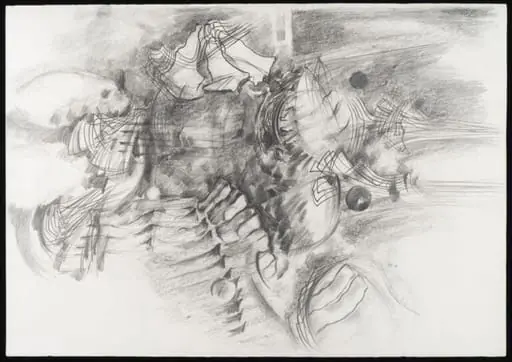
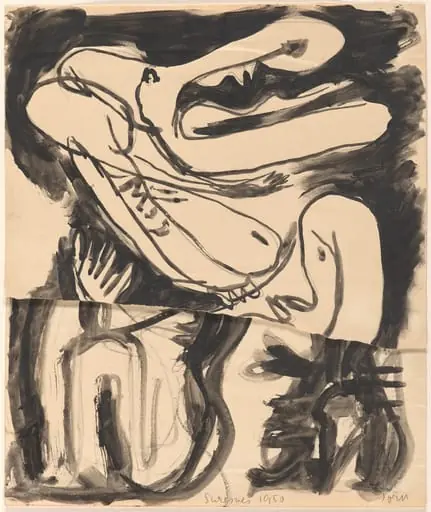
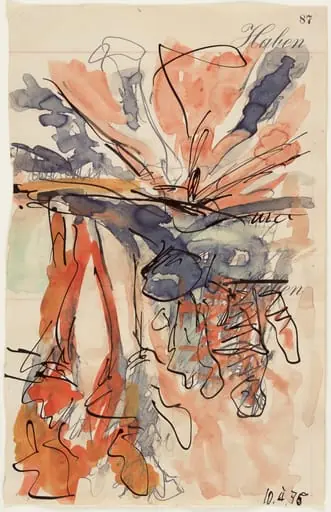
Untitled is a charcoal drawing by Willem de Kooning. It dates from 1967 and is held in the collection of the Museum of Modern Art.
About this work
Overview
The medium’s fragility and translucency amplify the immediacy of the marks, allowing light to interact with the dense, smudged lines.
Created in 1967, this charcoal drawing on transparentized paper is one of Willem de Kooning’s late works, reflecting his continued engagement with gestural abstraction. The medium’s fragility and translucency amplify the immediacy of the marks, allowing light to interact with the dense, smudged lines. De Kooning’s hand moves with urgency, leaving traces of motion rather than defined forms. The work resists narrative or figuration, focusing instead on the physical act of drawing.
Subject & Meaning
No recognizable figures or scenes emerge from the composition. Instead, two ambiguous, roughly formed shapes anchor the center, surrounded by a network of jagged, overlapping strokes. These suggest limbs or torsos in flux, but never solidify into identifiable anatomy. The absence of clear subject matter underscores the artist’s interest in process over representation, inviting viewers to experience the energy of creation rather than interpret a scene.
Technique & Style
Charcoal was applied swiftly and repeatedly, building layers of smudged gray and black through pressure and erasure. The thin paper, treated to enhance translucency, allows the marks to appear diffused, as if emerging from or dissolving into light. De Kooning’s technique emphasizes spontaneity—lines are unrefined, edges blurred, and contours unstable. This approach aligns with abstract expressionist values, prioritizing tactile immediacy over polished finish.
History & Provenance
The work dates from a period when de Kooning was increasingly exploring drawing as an independent practice, separate from his paintings. It was produced during his time in Long Island, where he often worked in quiet, intimate settings. The piece retains its original signature in the lower corner, consistent with his habit of marking works without titles. Its provenance traces through private collections before entering institutional hands.
Context
In the late 1960s, de Kooning distanced himself from the aggressive brushwork of his earlier decades, turning toward more delicate, fragmented compositions. This drawing reflects a broader shift among New York School artists toward introspective mark-making, influenced by Zen aesthetics and the materiality of paper. While abstraction remained central, the focus shifted from monumental scale to intimate, tactile experimentation.
Legacy
This drawing exemplifies de Kooning’s enduring commitment to the expressive potential of line and gesture, even as his style evolved. It influenced later generations of artists who valued process over product, particularly those working with ephemeral media. Its unpretentious materiality and raw energy continue to resonate in contemporary drawing practices that prioritize authenticity over finish.
Artist & collection

Artist
Willem de Kooning ( də KOO-ning, Dutch: ; April 24, 1904 – March 19, 1997) was a Dutch-American abstract expressionist artist.