Artwork
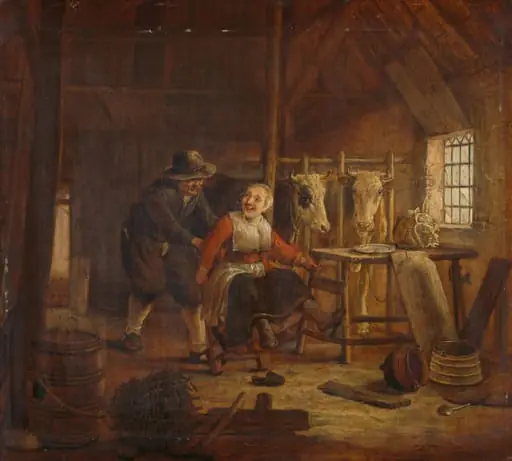
Gallant Scene in a Kitchen Interior
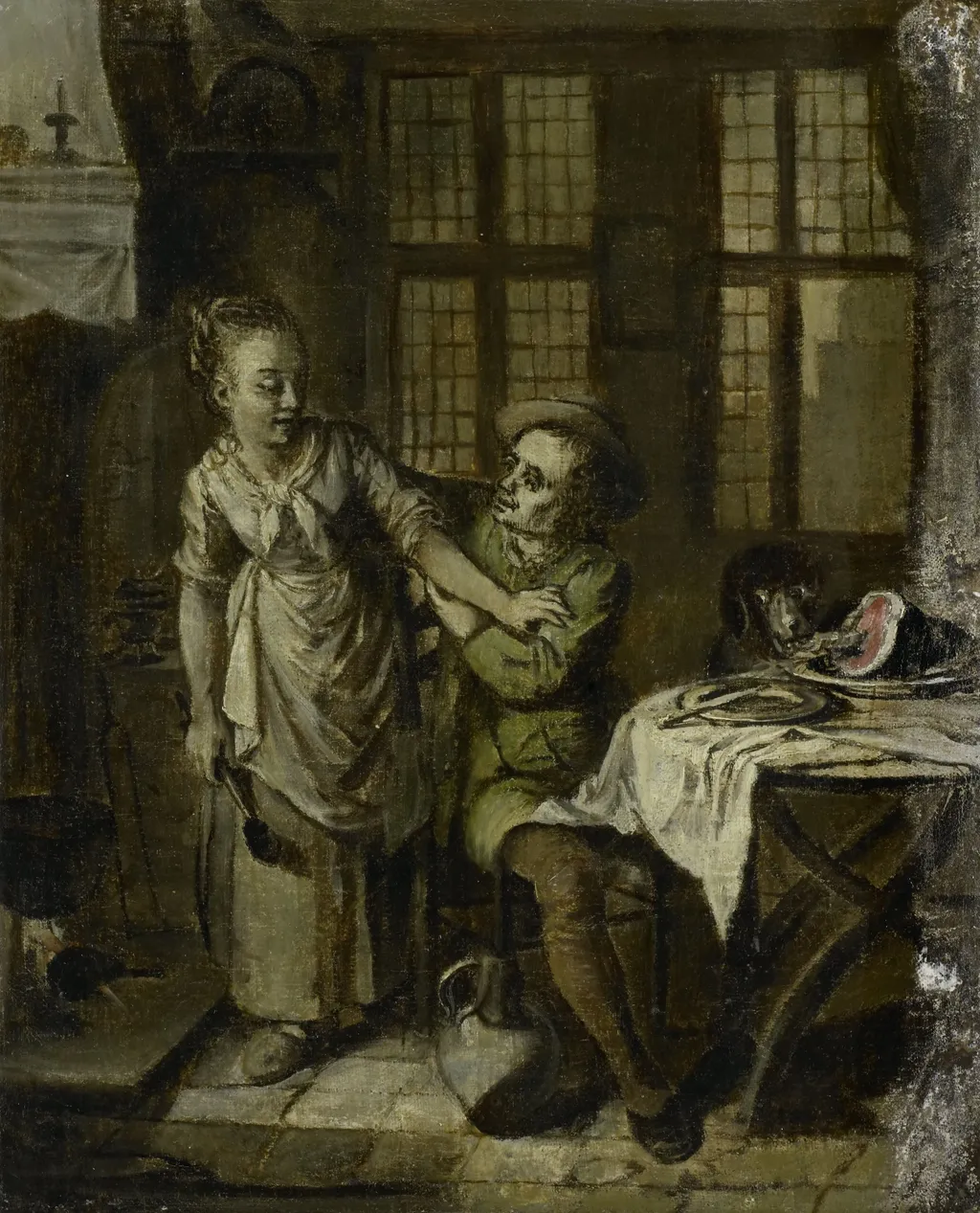
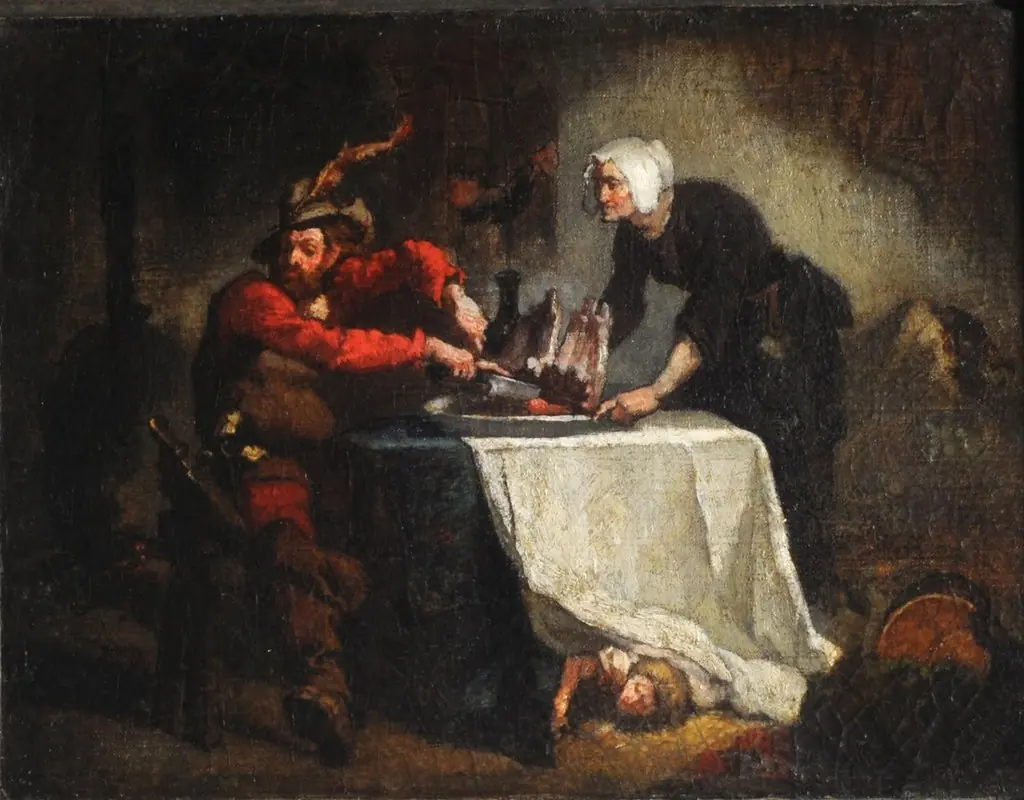
Gallant Scene in a Kitchen Interior is an oil painting by the Rococo painting artist Willem Joseph Laquy. It dates from 1795 and is held in the collection of the Rijksmuseum.
About this work
Overview
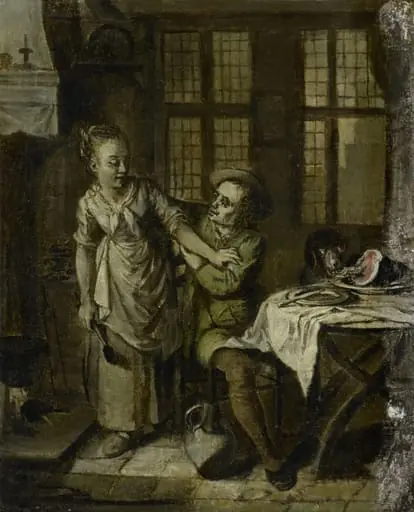
Willem Joseph Laquy’s oil painting, dated 1795, depicts an intimate domestic scene set within a modest kitchen. The composition centers on two figures—a seated man and a standing woman—bathed in subdued illumination that filters through a small window. The work is part of the Rijksmuseum’s collection and exemplifies late‑18th‑century genre painting.
Subject & Meaning
The seated figure appears weary, his head partially obscured by a hat, while the woman reaches out to touch his arm, her gesture both gentle and encouraging. The interaction suggests a moment of consolation or moral support within the everyday setting, inviting viewers to contemplate themes of fatigue, care, and the quiet dramas of household life.
Technique & Style
Laquy employs a pronounced chiaroscuro, contrasting the dim interior with the faint light that highlights the figures’ forms. The paint is applied thickly in places, creating a tactile surface that enhances the sense of texture in the kitchen’s worn furnishings. The overall palette is muted, reinforcing the somber atmosphere.
History & Provenance
Created in 1795, the painting entered the Rijksmuseum’s holdings at an unspecified later date, where it remains on display. Its provenance reflects the museum’s focus on Dutch and Flemish art of the 17th and 18th centuries, situating Laquy’s work within a broader narrative of genre painting in the Netherlands.
Artist & collection