Artwork
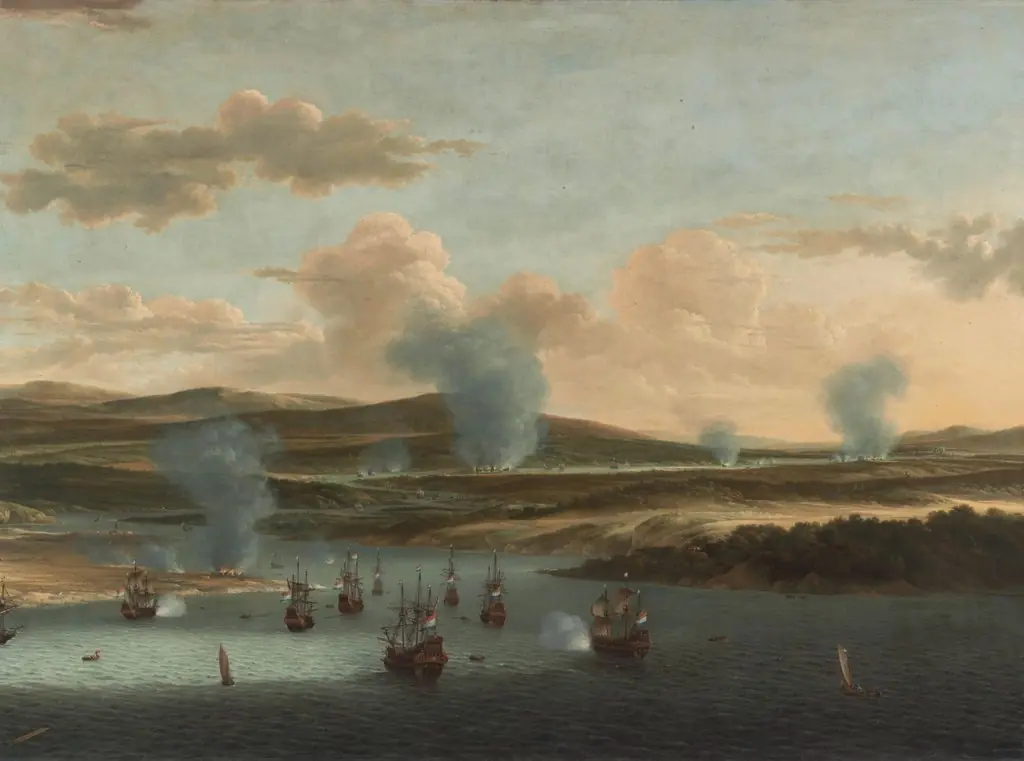
The burning of the English fleet near Chatham, June 1667, during the second Anglo-Dutch war
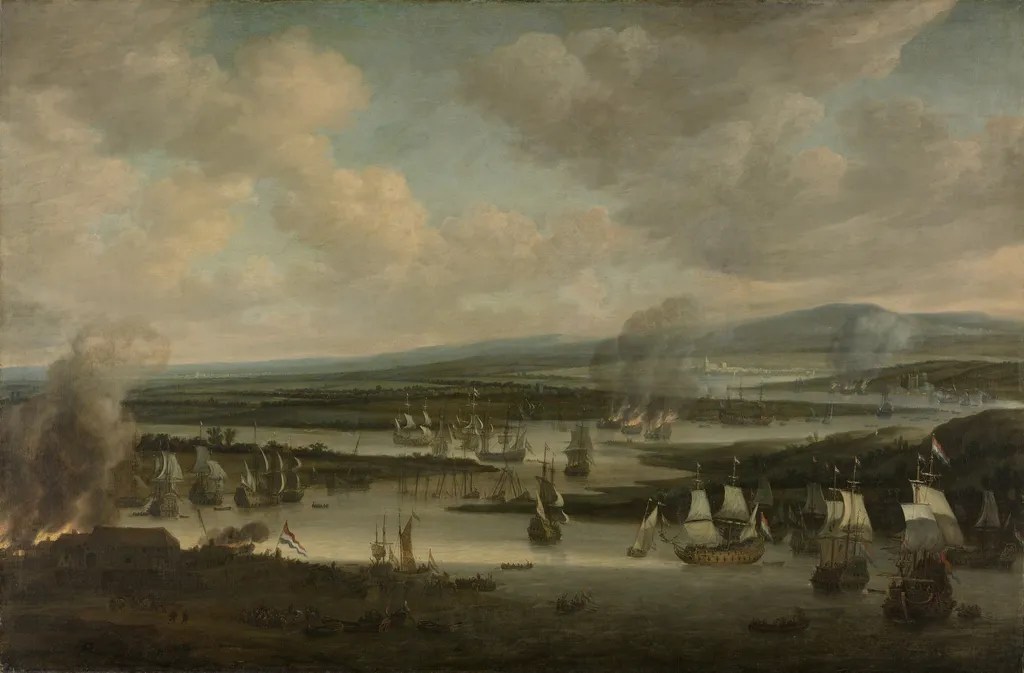
The burning of the English fleet near Chatham, June 1667, during the second Anglo-Dutch war is an oil painting by the Dutch Golden Age artist Willem Schellinks. It dates from 1672 and is held in the collection of the Rijksmuseum.
About this work
Overview
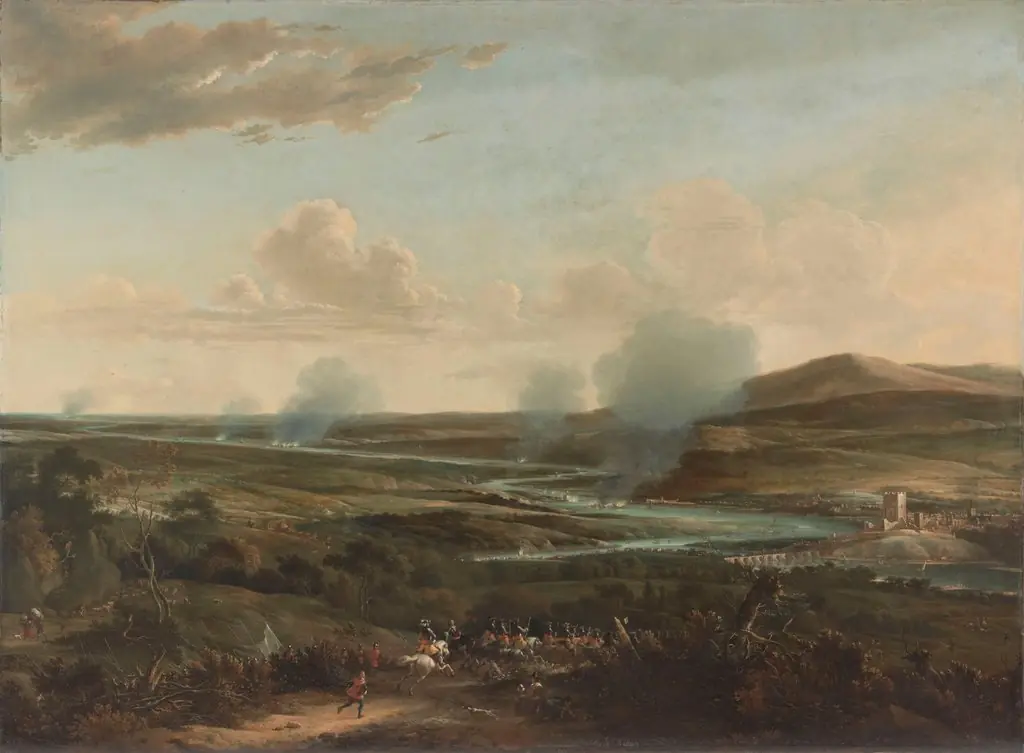
Willem Schellinks’ oil on canvas, executed in 1672, records the destruction of the English fleet anchored near Chatham in June 1667. Rendered as a history painting, the work belongs to the Dutch Golden Age and is part of the Rijksmuseum’s collection. It presents a bustling harbor consumed by fire, with smoke and flame dominating the composition.
Subject & Meaning
The canvas captures the dramatic moment when Dutch forces set fire to the English ships during the closing phase of the Second Anglo‑Dutch War. By foregrounding the conflagration and the smoldering silhouettes of vessels, Schellinks emphasizes the vulnerability of naval power and the chaos of wartime devastation.
Technique & Style
Schellinks employs a pronounced chiaroscuro, contrasting the bright, flickering flames against a brooding sky and dense smoke. The meticulous rendering of rigging and hulls remains clear amid the turmoil, while the atmospheric effects—dark clouds punctuated by shafts of light—enhance the scene’s tension and depth.
History & Provenance
Painted five years after the event it depicts, the work reflects contemporary Dutch interest in documenting military successes. It entered the Rijksmuseum’s holdings as part of the museum’s Dutch Golden Age collection, where it remains on display as a visual record of 17th‑century naval warfare.
Context
The burning of the Chatham fleet marked a decisive blow to English maritime capability during the Second Anglo‑Dutch War (1665‑1667). Schellinks, known for marine subjects, chose this episode to illustrate the broader strategic shift toward Dutch naval dominance in the mid‑1600s, situating the painting within a period of intense maritime rivalry.
Own this work as a print
Artist & collection
Artist
Willem Schellinks (1623–1678) was a Dutch painter, draughtsman and etcher of landscapes and marine scenes and also a poet.