Artwork
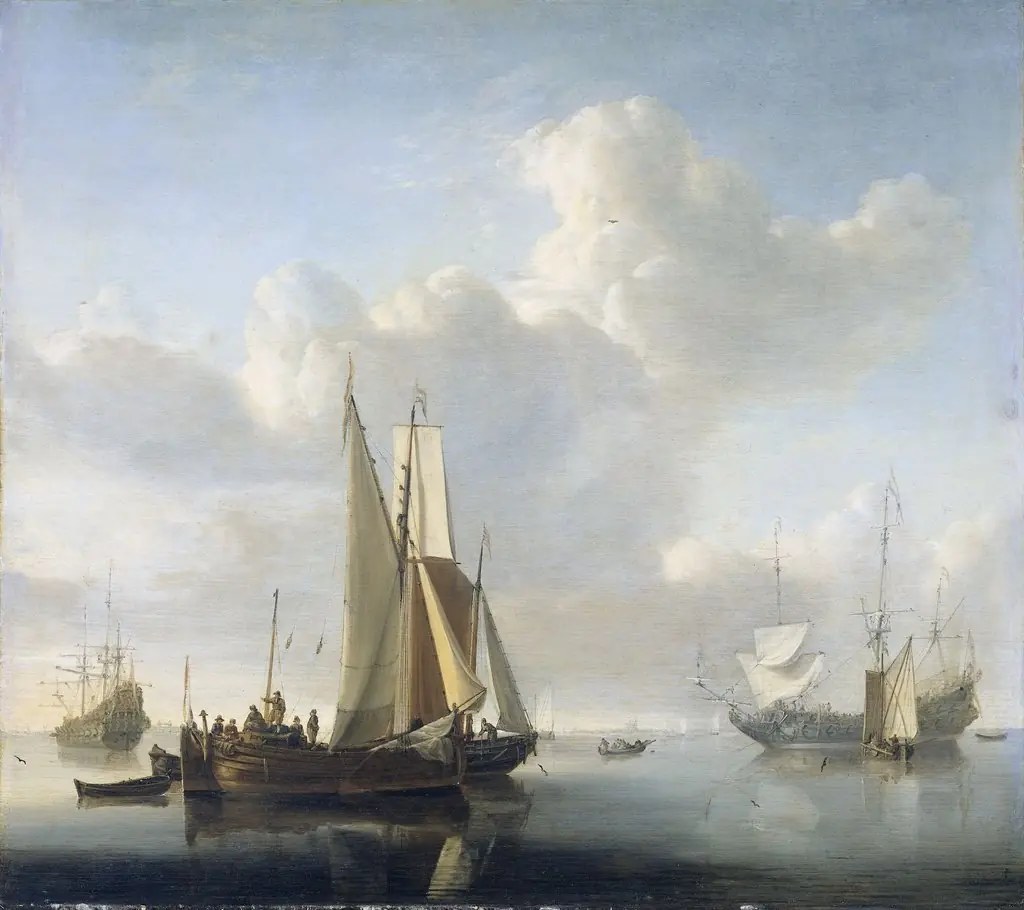
Calm: an English Sixth-rate Ship Firing a Salute
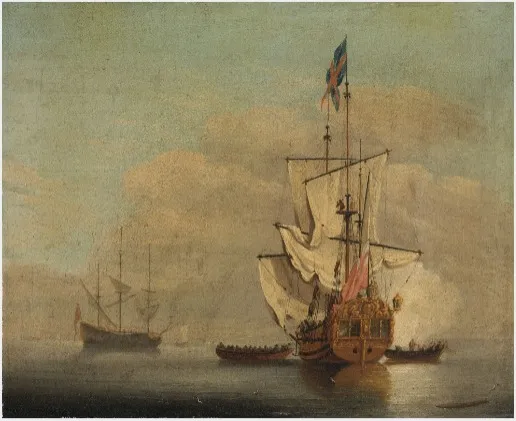
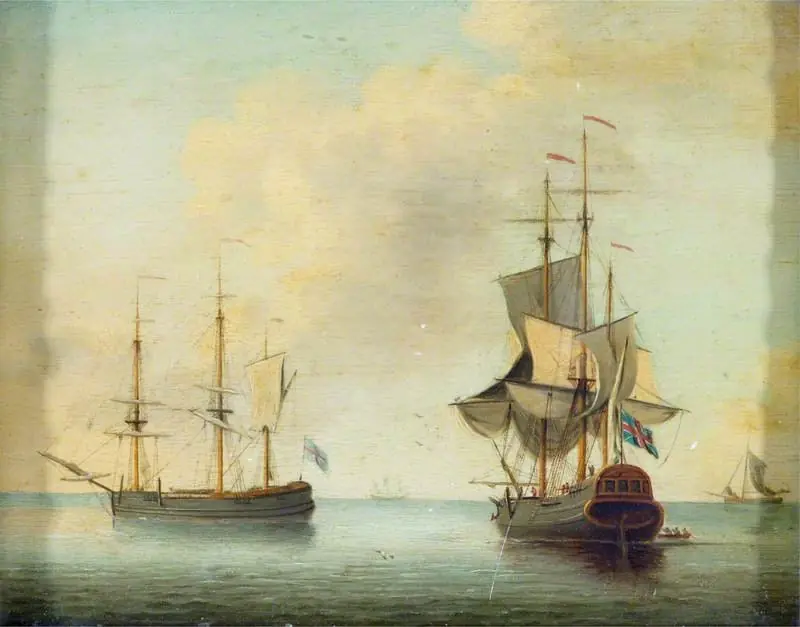
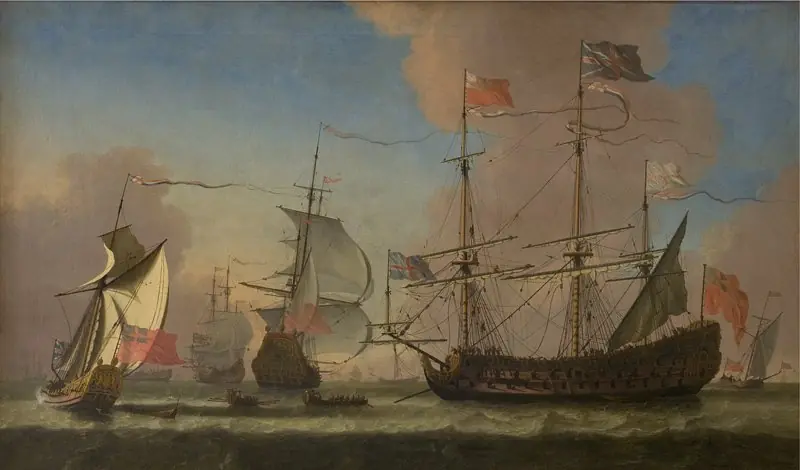
Calm: an English Sixth-rate Ship Firing a Salute is an oil painting by the Dutch Golden Age artist Willem van de Velde the Younger. It dates from 1680 and is held in the collection of the National Gallery of Ireland.
About this work
Overview
A hallmark of Dutch marine painting during the Golden Age, the scene emphasizes precision and atmospheric stillness.
Painted around 1680 by Willem van de Velde the Younger, this oil-on-canvas work captures a British sixth-rate warship executing a ceremonial salute in tranquil waters. A hallmark of Dutch marine painting during the Golden Age, the scene emphasizes precision and atmospheric stillness. The artist, trained in his father’s studio, specialized in naval subjects rendered with technical clarity and observational rigor, distinguishing his work from the more romanticized styles of contemporaries.
Subject & Meaning
The painting portrays a British naval vessel in the act of firing a salute, a ritual gesture of respect often exchanged between ships of allied or neutral nations. The calm sea and clear sky suggest a moment of diplomatic pause rather than conflict. The ship’s prominence, rendered with meticulous detail, underscores its symbolic role as an emblem of naval order and national presence, reflecting the maritime diplomacy of the late 17th century.
Technique & Style
Van de Velde employed oil paint to achieve fine detail in the ship’s rigging, hull texture, and sail fabric, while using subtle gradations of light to convey the quiet luminosity of a cloud-dappled sky. The composition centers the vessel against a receding horizon, with smaller vessels in the distance to suggest scale and spatial depth. His method prioritizes accuracy over drama, aligning with the Dutch tradition of maritime documentation through art.
History & Provenance
The painting entered the collection of the National Gallery of Ireland in the 20th century, though its earlier ownership remains undocumented. It was likely created during Van de Velde’s time in England, where he worked alongside his father under royal patronage. The work reflects the artist’s engagement with British naval subjects during a period of close Anglo-Dutch maritime interaction, despite earlier hostilities between the nations.
Context
In the late 17th century, Dutch marine painters like Van de Velde were sought after across Europe for their ability to depict ships with scientific precision. Though Dutch by birth, Van de Velde the Younger spent much of his career in England, where he documented the Royal Navy. This painting reflects the transnational nature of naval culture, where ceremonial practices and ship design were shared across borders despite political tensions.
Legacy
Van de Velde’s work helped define the genre of maritime topography, influencing later artists through his commitment to factual representation. His detailed renderings of ships and sea conditions became reference points for naval historians and painters alike. While not widely exhibited, his oeuvre remains a vital record of 17th-century seafaring practices and the visual culture of naval power.
Artist & collection
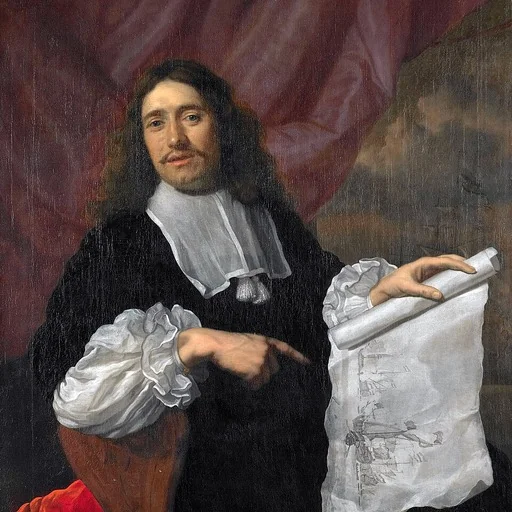
Artist
Willem van de Velde the Younger
Willem van de Velde the Younger (18 December 1633 (baptised) – 6 April 1707) was a Dutch painter who specialised in marine art.

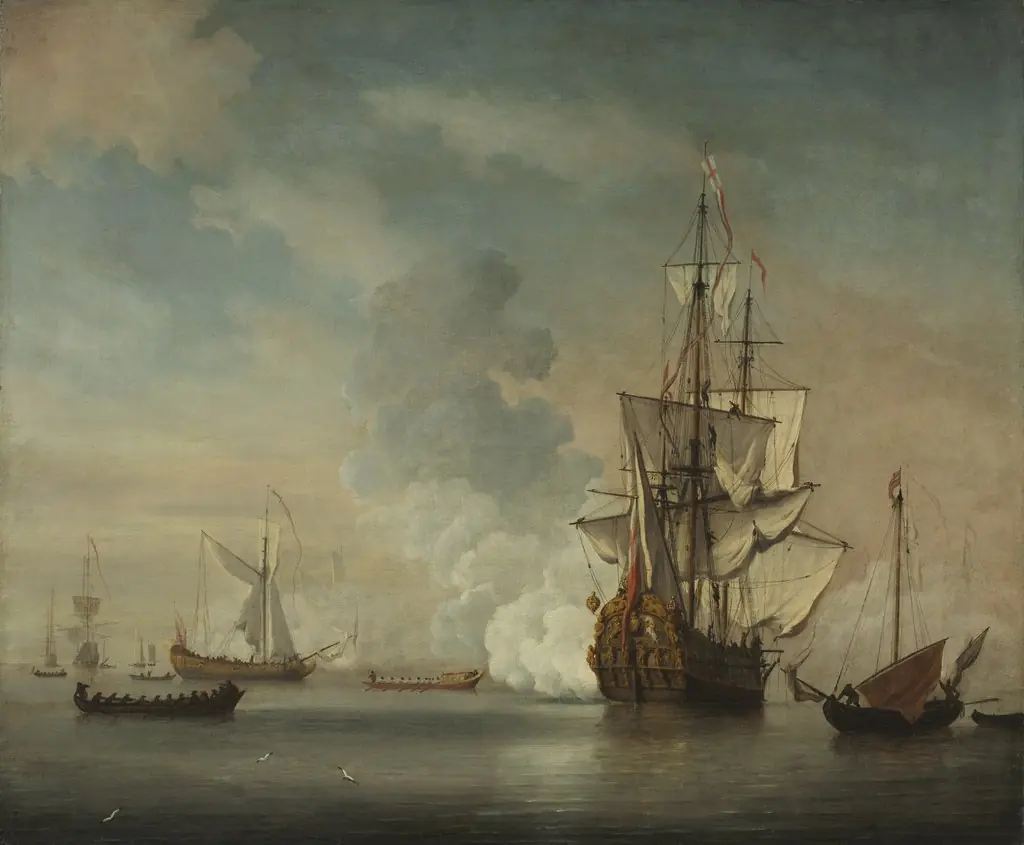 English Warship Firing a Salute
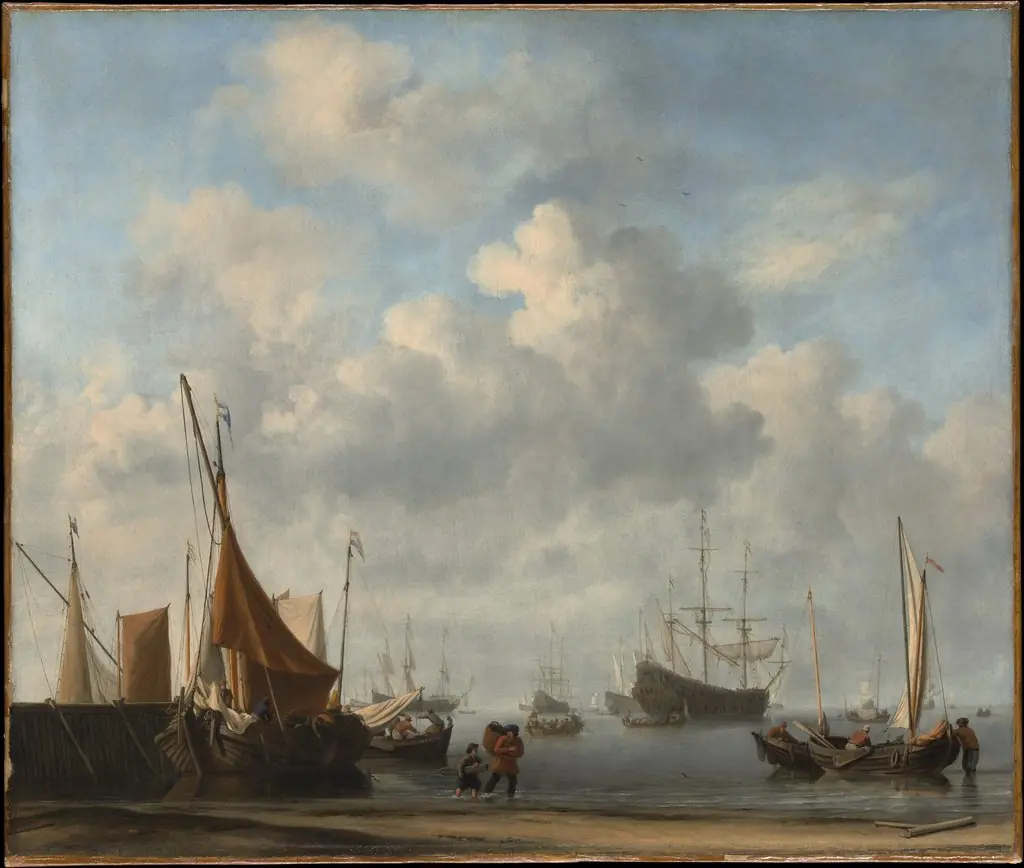 Entrance to a Dutch Port
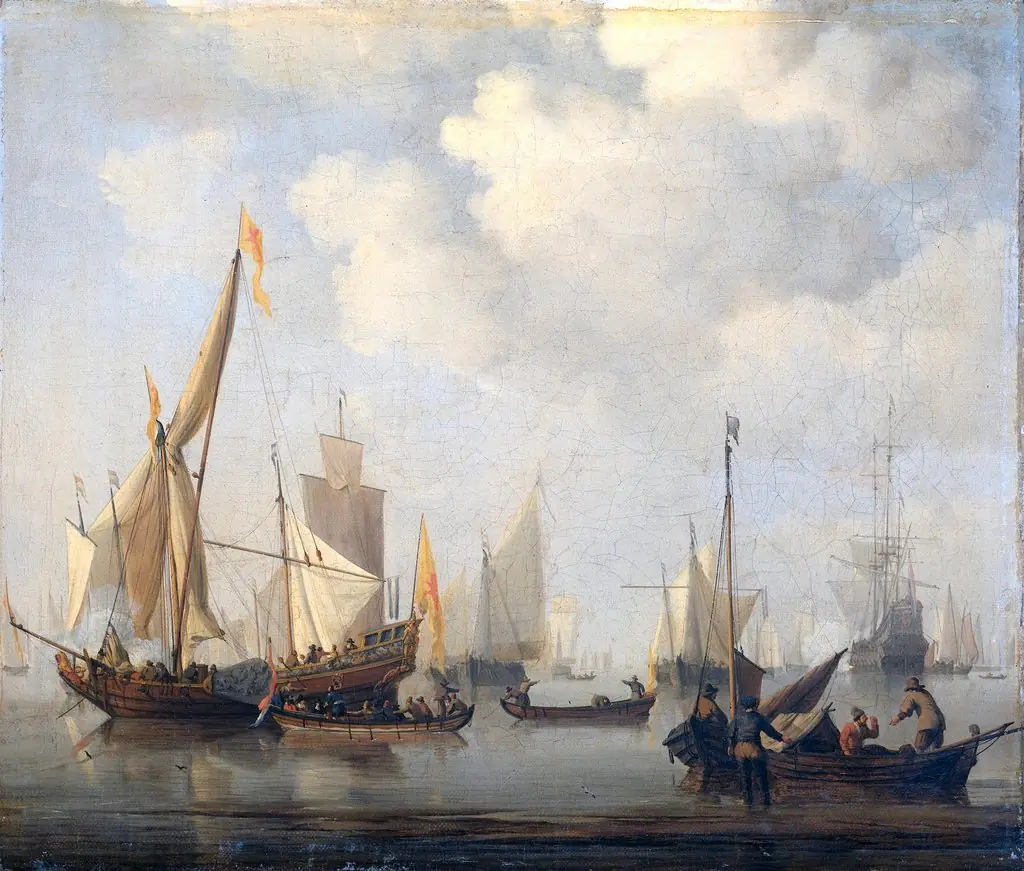 Ships in a calm
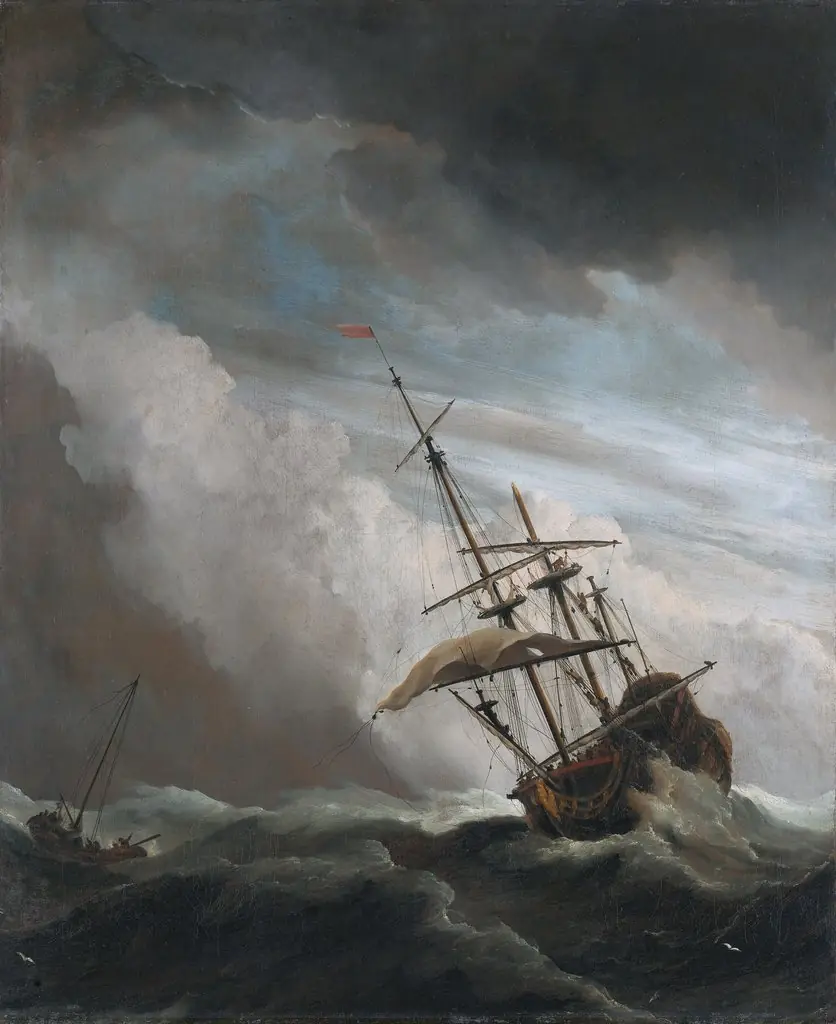 A Ship on the High Seas Caught by a Squall, Known as ‘The Gust’
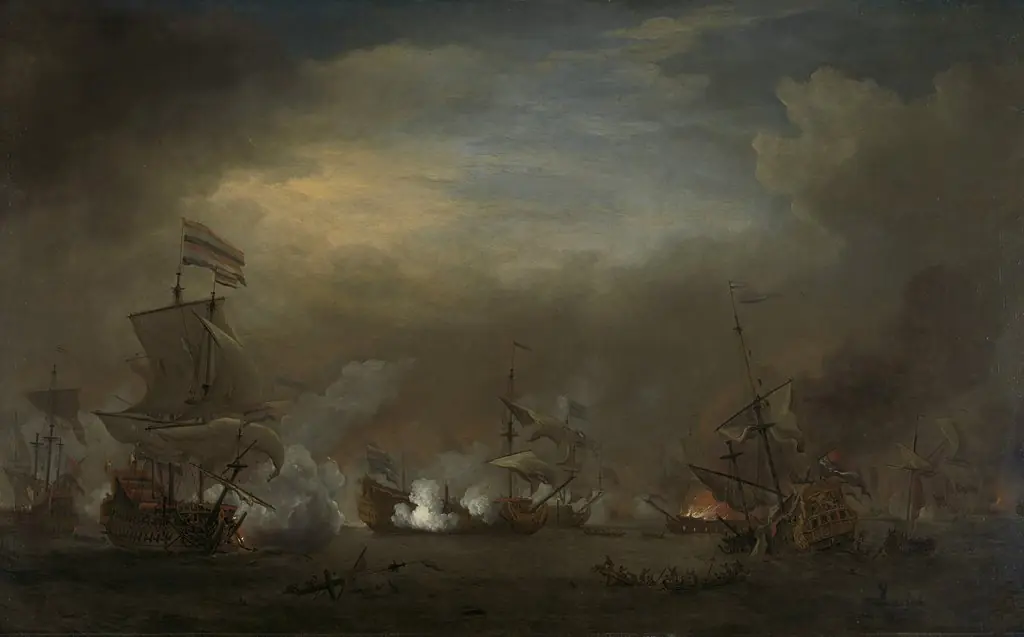 Encounter during the Battle of Kijkduin
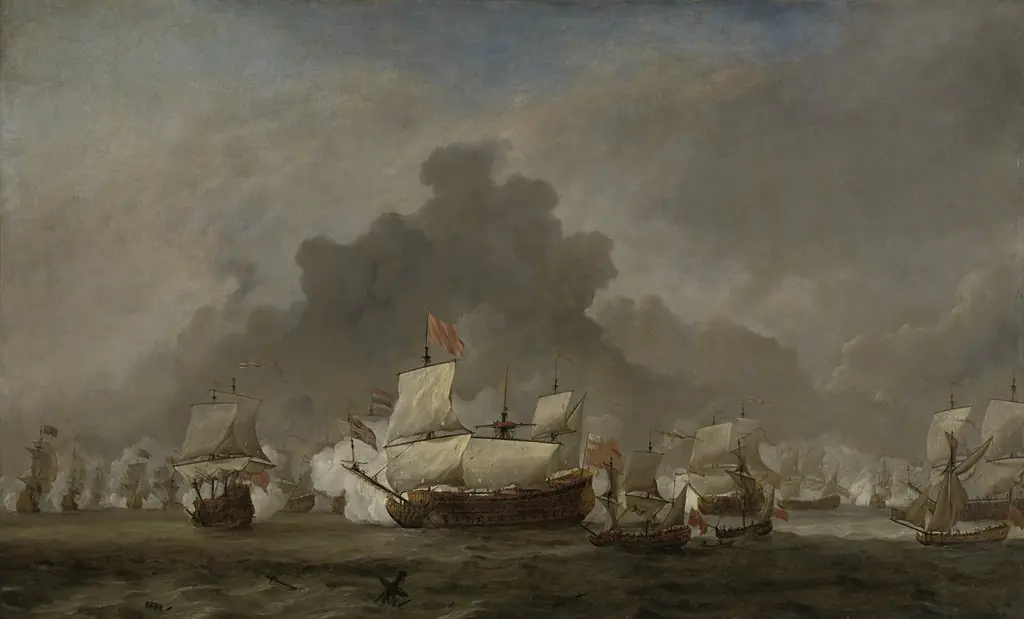 The skirmish of Michiel Adriaensz de Ruyter against the duke of York, commanding the 'Royal Prince'during the Battle of Solebay, 7 June 1672: episode from the Third Anglo-Dutch War (1672-74)
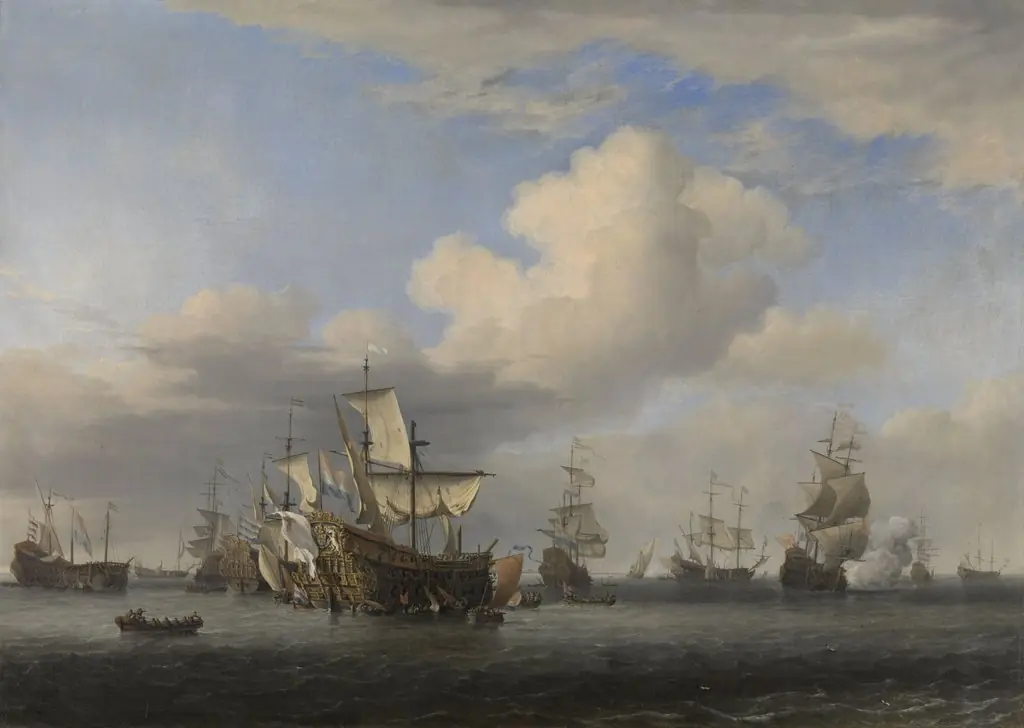 Captured English Ships after the Four Days’ Battle
 Ships off the coast