Artwork
Ruhige See
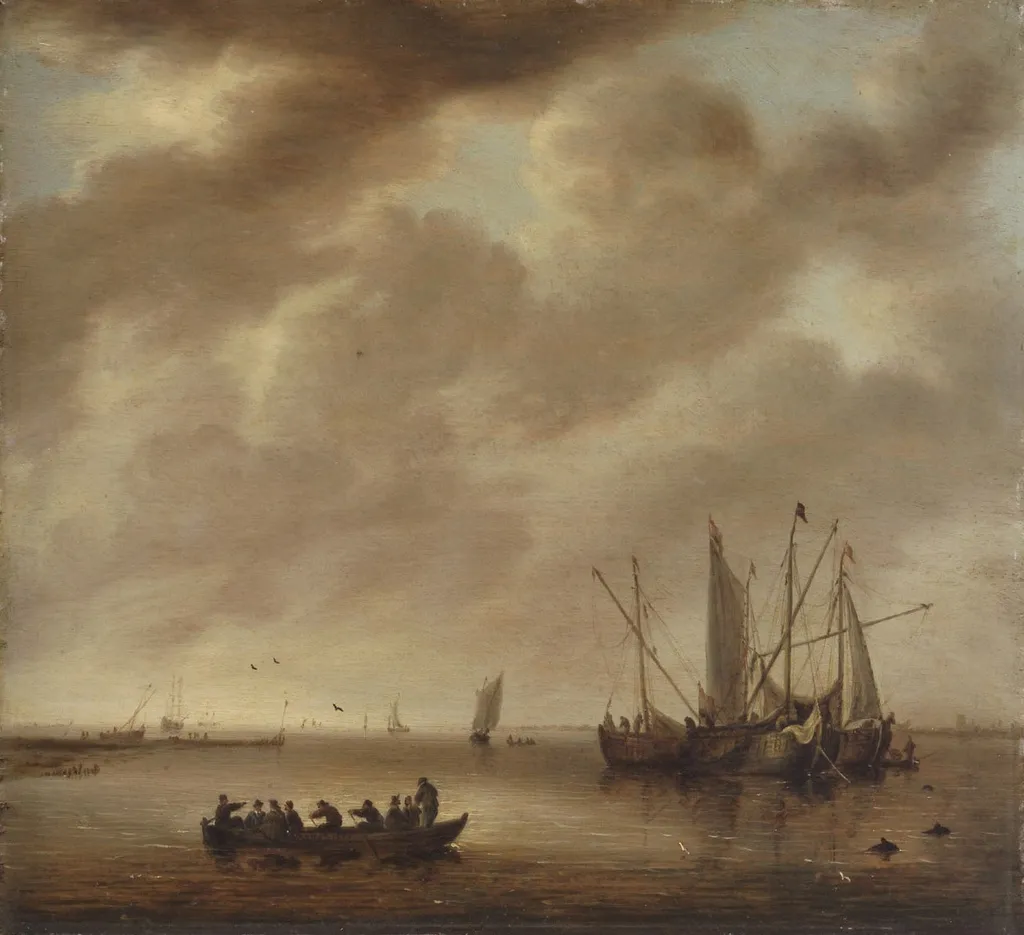
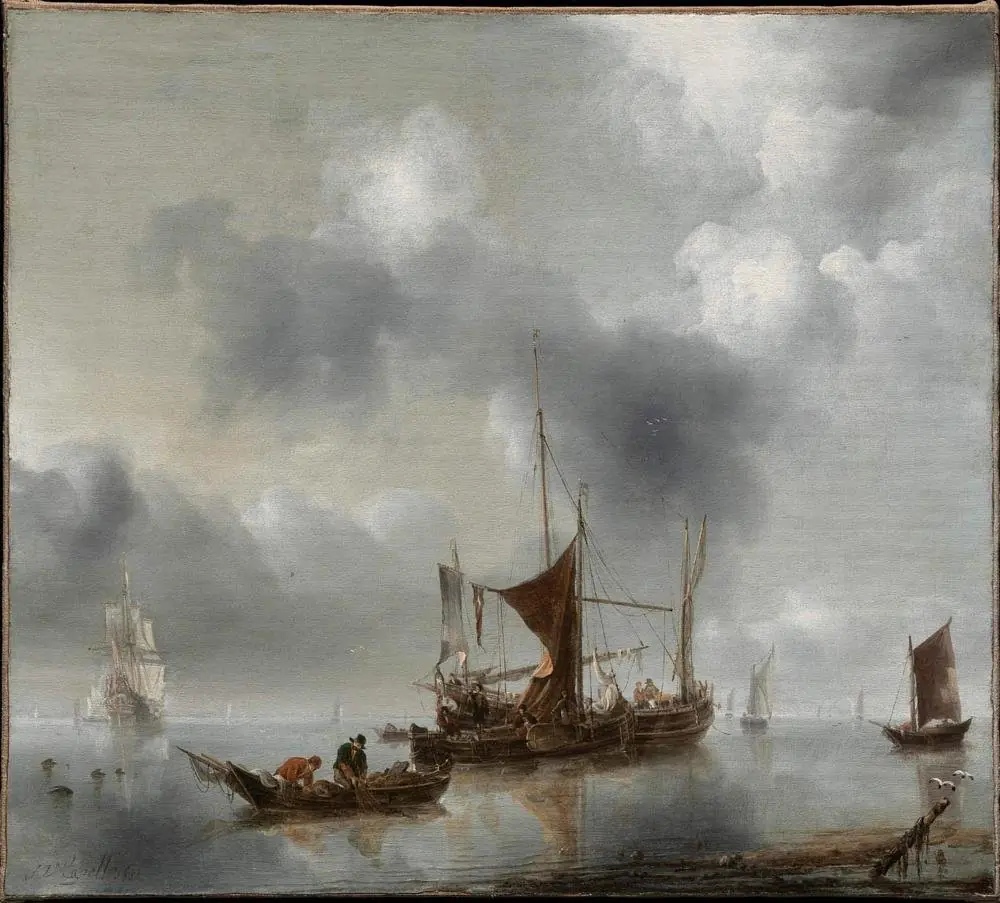
Ruhige See is an unspecified painting by the Dutch Golden Age artist Willem van Diest. It dates from 1651 and is held in the collection of the Kunsthistorisches Museum.
About this work
Overview
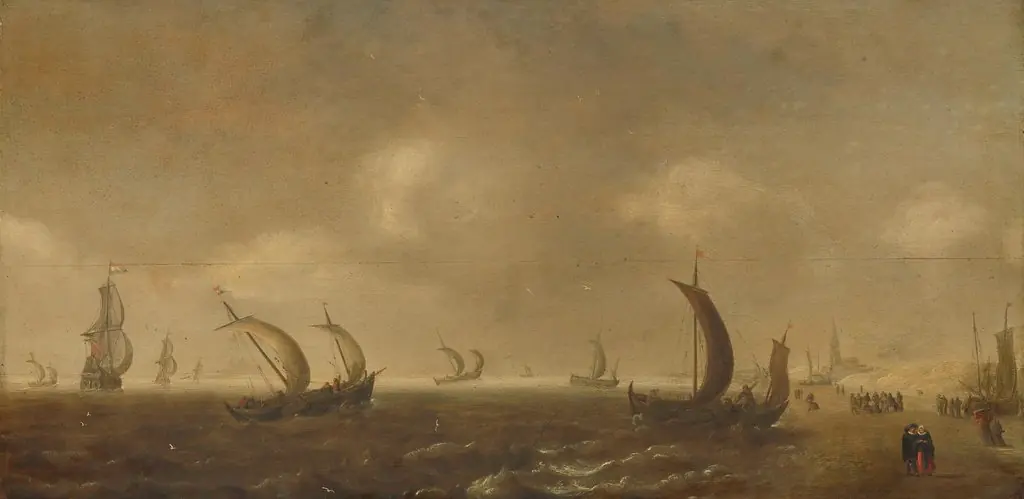
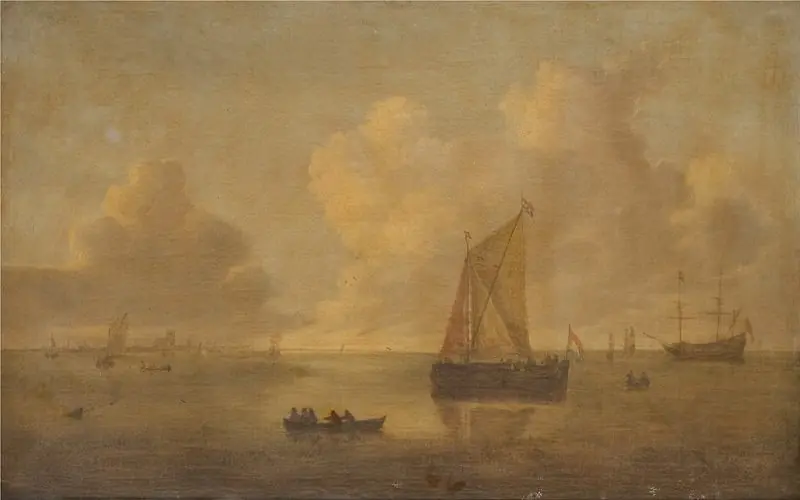
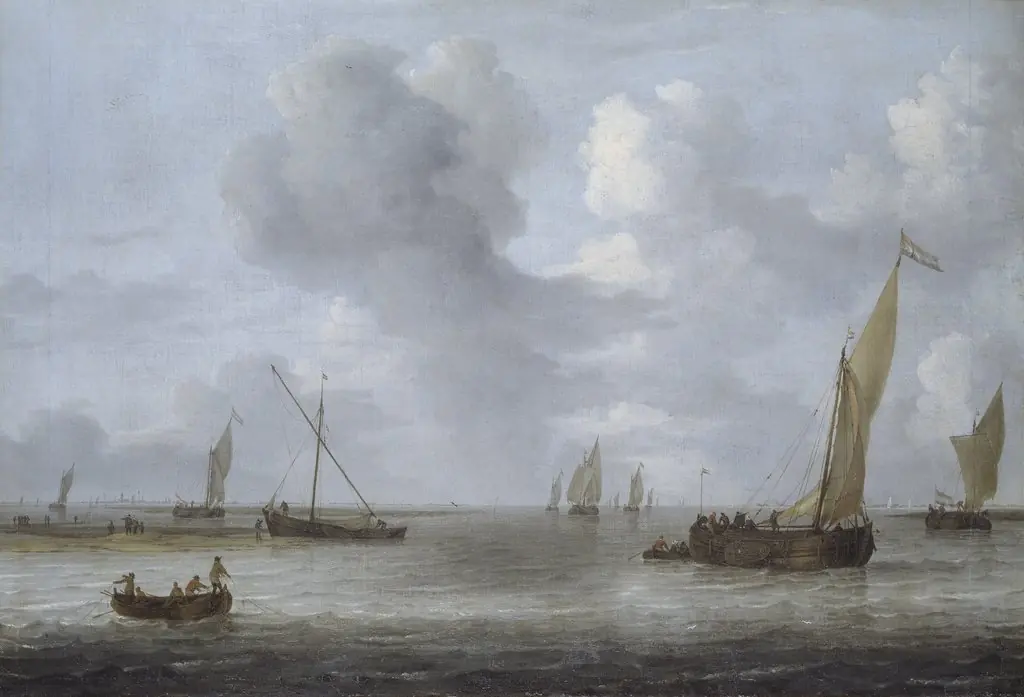
Painted in 1651 by Willem van Diest, *Ruhige See* is a quiet marine scene executed in the Dutch Golden Age tradition.
Painted in 1651 by Willem van Diest, *Ruhige See* is a quiet marine scene executed in the Dutch Golden Age tradition. Held in the Kunsthistorisches Museum, the work exemplifies the Hague school’s subdued approach to seascapes. Van Diest, active in the mid-17th century, focused on tranquil waters and atmospheric skies, aligning with contemporaries like Jan van Goyen and Simon de Vlieger. The painting captures stillness rather than drama, emphasizing mood over narrative.
Subject & Meaning
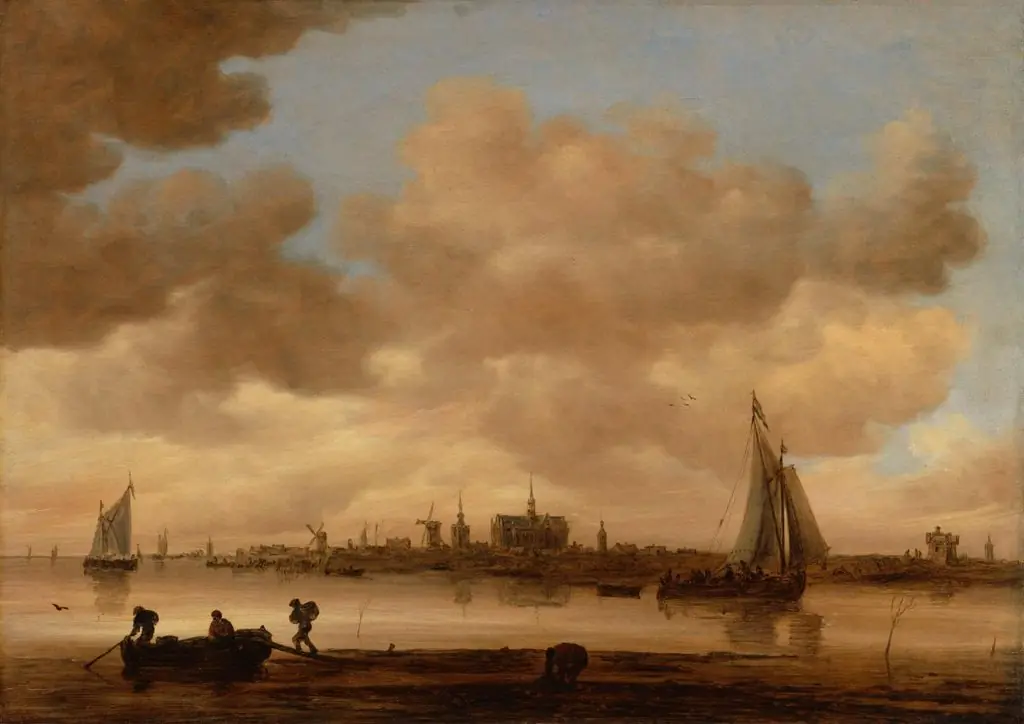
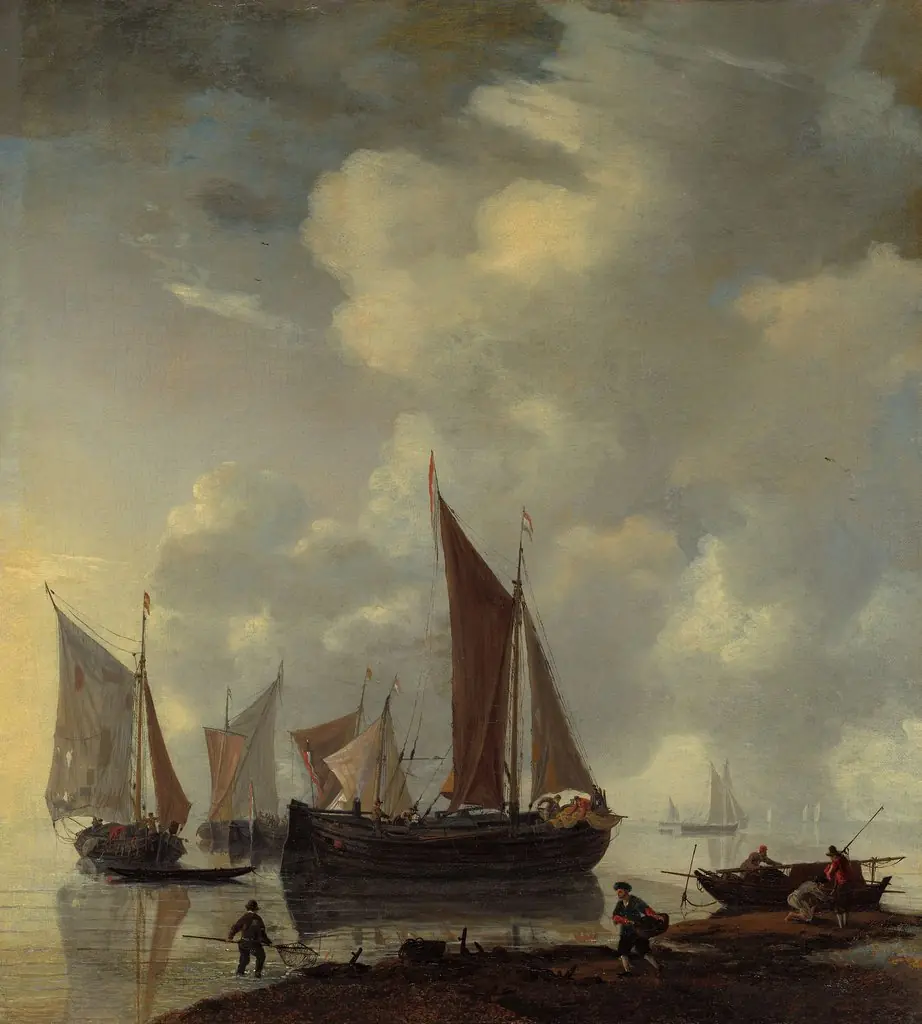
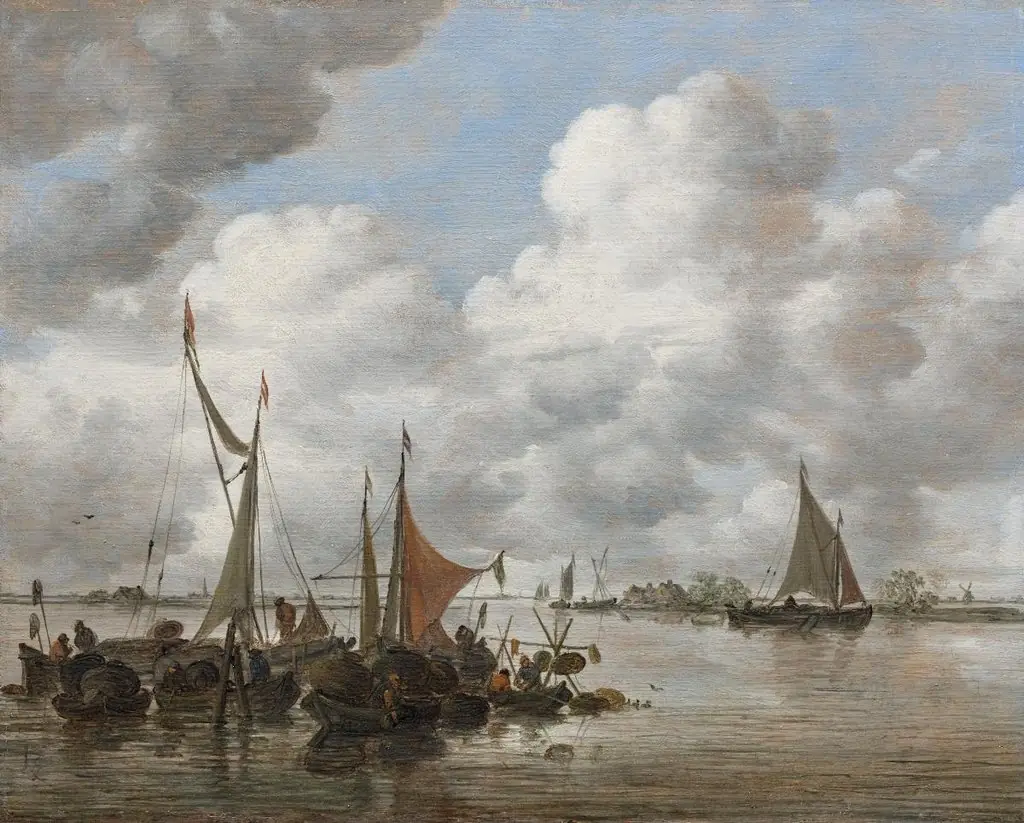
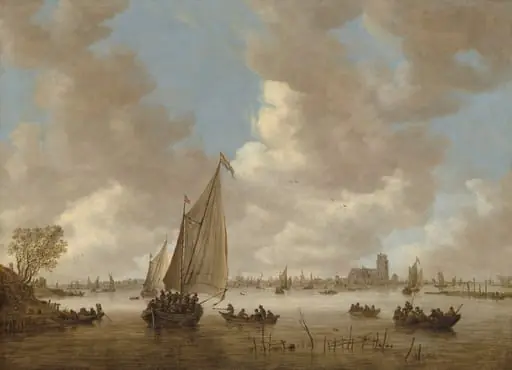
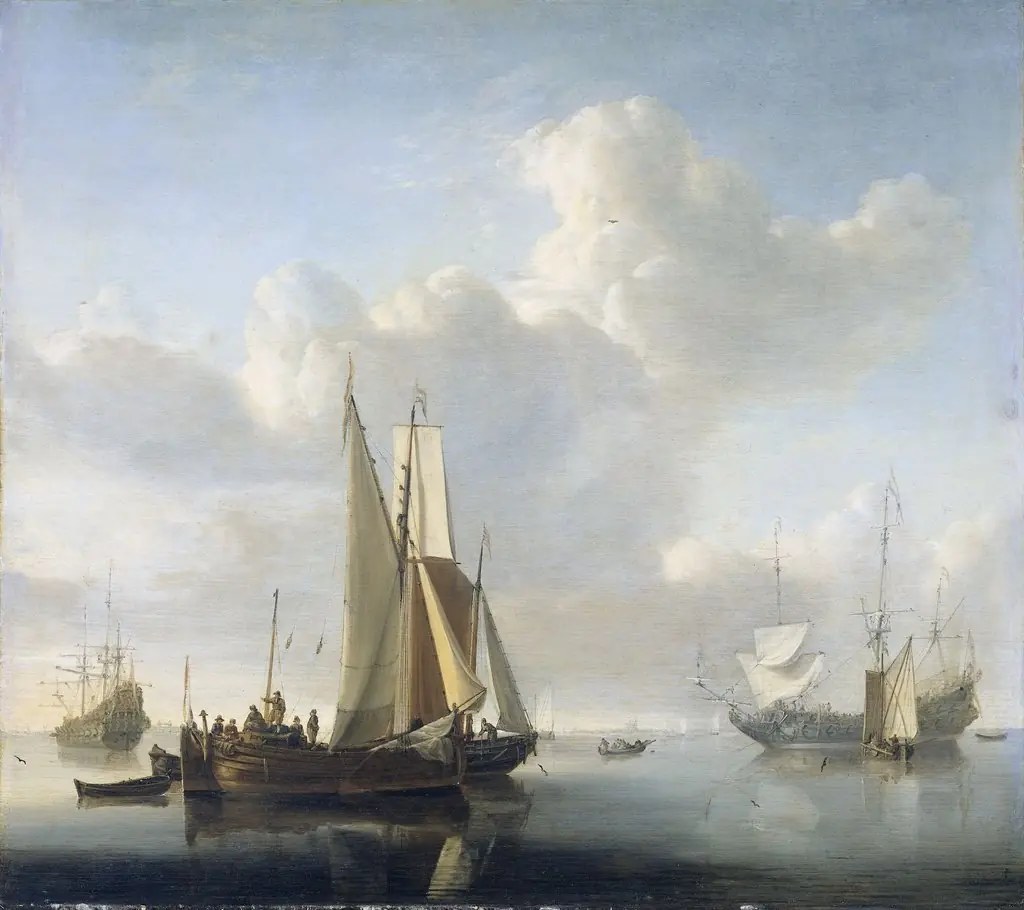
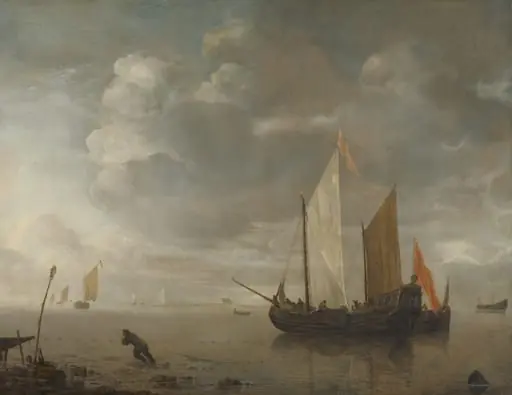
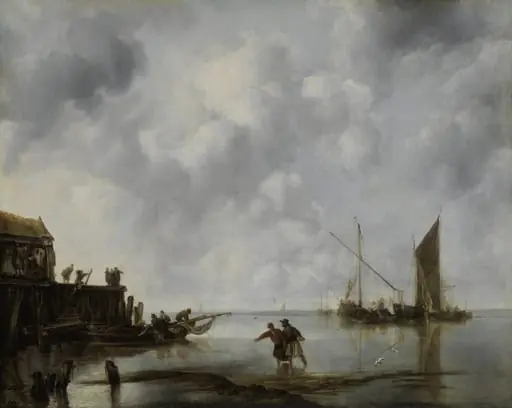
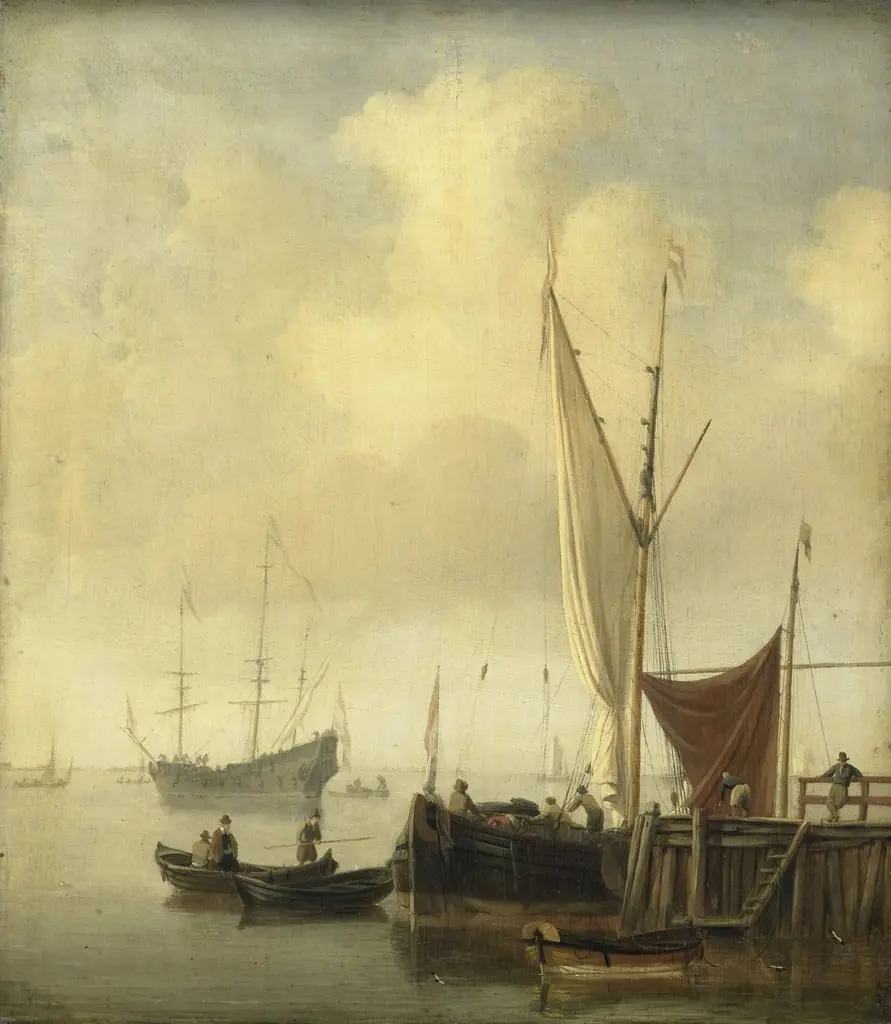
The scene portrays a calm body of water, possibly a coastal inlet or river, with small vessels near the foreground and larger ships farther out. No human activity is emphasized; figures on the boats are minimal, suggesting quiet transit rather than labor or trade. The stillness of the water and the muted sky convey a contemplative tone, reflecting a broader cultural preference for serene, reflective landscapes over turbulent maritime events.
Technique & Style
Van Diest employs a restrained palette of grays, soft blues, and muted browns to render the overcast sky and reflective water. Brushwork is delicate, with thin layers suggesting atmospheric haze and subtle shifts in light. The composition balances horizontal planes—water, sky, and distant hulls—to reinforce calm. The handling of clouds and reflections avoids dramatic contrast, favoring tonal gradations that enhance realism without theatricality.
History & Provenance
The painting entered the Kunsthistorisches Museum’s collection in the 19th century, likely through imperial Austrian acquisitions of Dutch art. Van Diest’s works were relatively modest in circulation compared to more famous peers, and few signed examples survive. *Ruhige See* is among the better-documented pieces from his mature period, offering insight into the commercial and aesthetic preferences of Hague-based marine painters in the 1650s.
Context
In mid-17th-century Holland, marine painting flourished as trade and naval power grew, yet many artists turned away from battle scenes toward tranquil, everyday waterscapes. Van Diest’s work reflects this shift: calm seas mirrored the stability sought in a prosperous republic. His style, influenced by Jan Porcellis and Simon de Vlieger, prioritized mood and atmospheric cohesion over detail, catering to collectors who valued quiet contemplation.
Legacy
Van Diest’s influence extended to later Dutch marine painters who favored subdued tones and tranquil compositions. While not as widely recognized as some contemporaries, his work contributed to the development of a distinctly Dutch aesthetic in seascape painting—one that valued restraint, observation, and the poetic potential of ordinary weather and water. *Ruhige See* remains a representative example of this quiet tradition.
Artist & collection
Artist
Willem Hermansz. van Diest (c. 1600 in The Hague – c. 1678 in The Hague), was a Dutch Golden Age seascape painter. He was the father of the painter Jeronymus van Diest and a follower of Jan van Goyen, Jan Porcellis and…