Artwork
Untitled
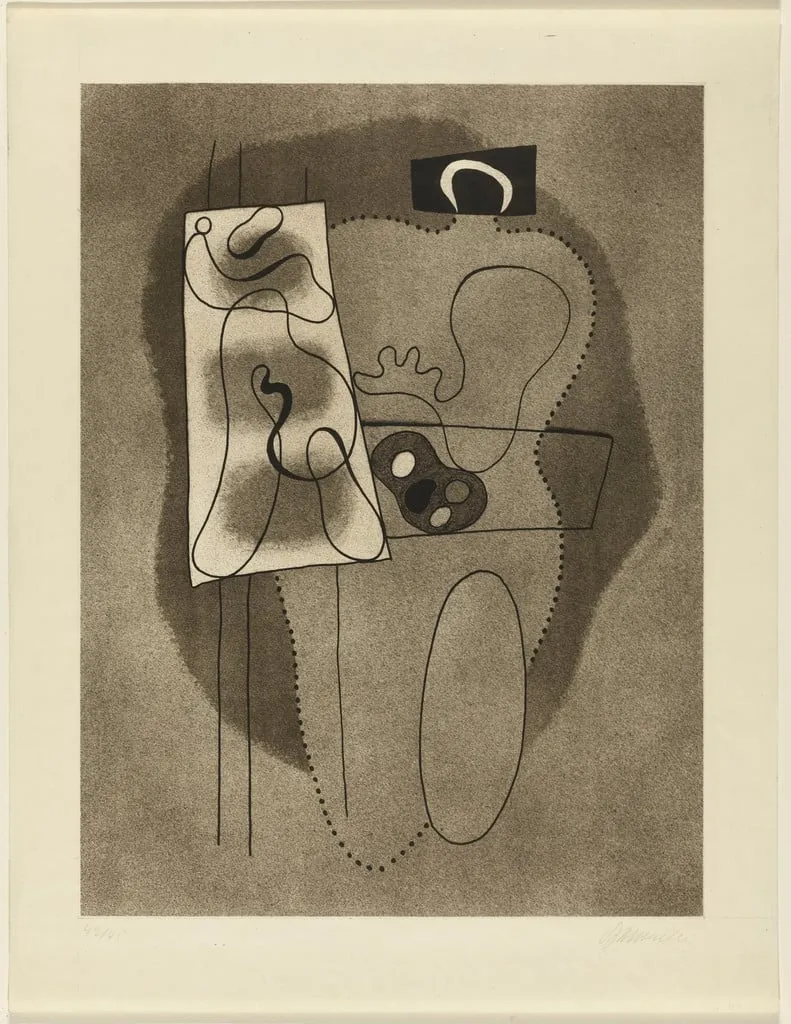
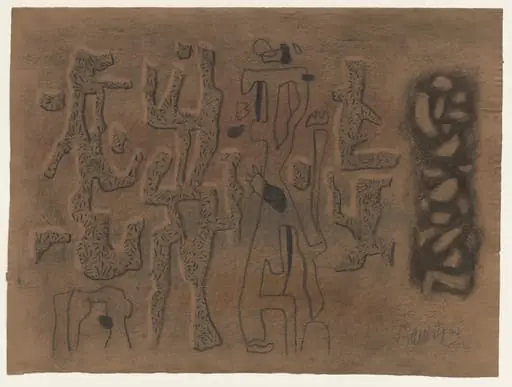
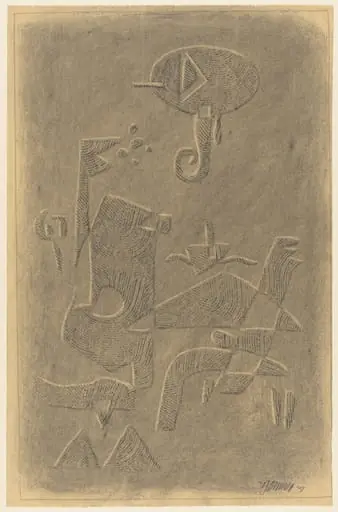
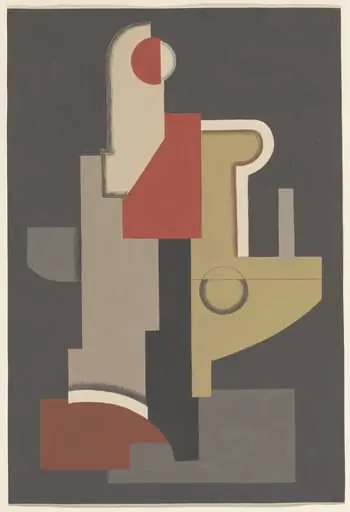
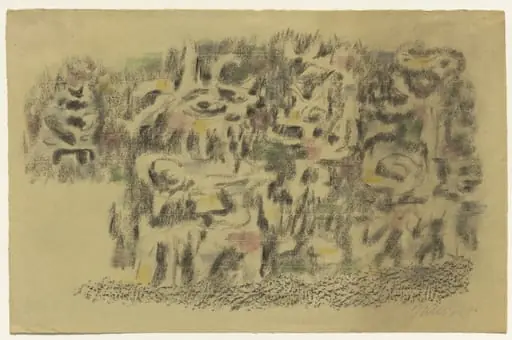
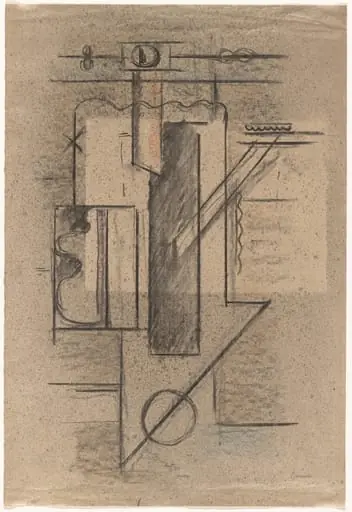
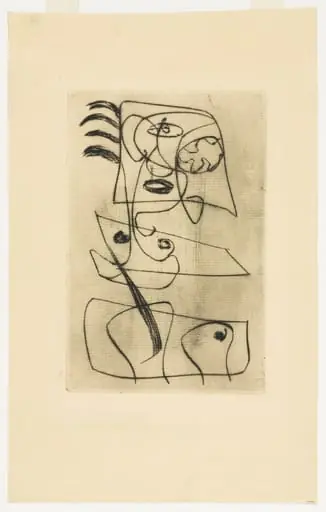
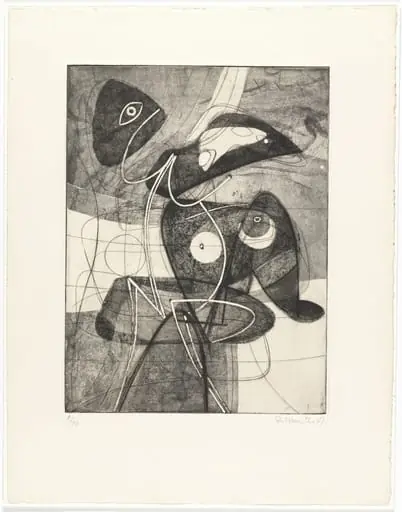
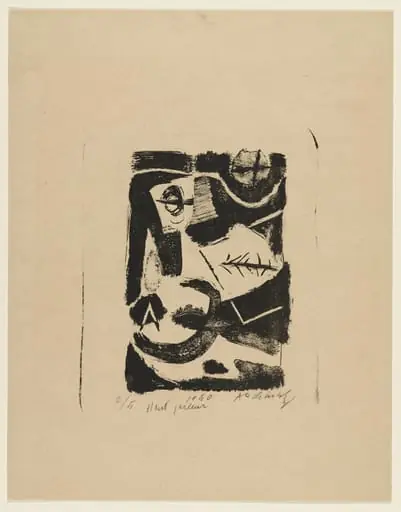
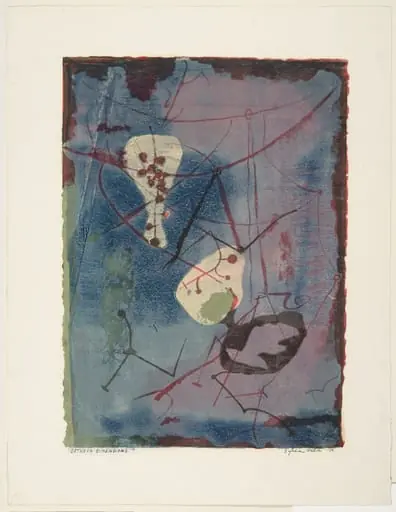
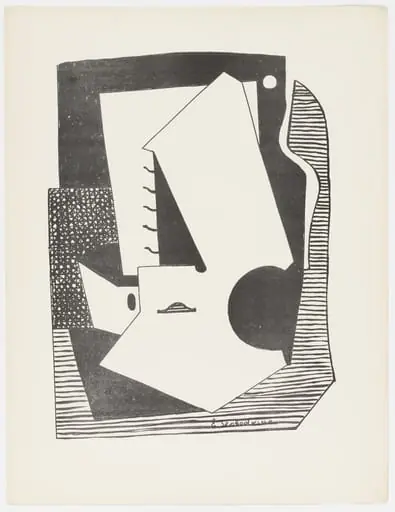
Untitled is an ink print by Willi Baumeister. It dates from 1932 and is held in the collection of the Museum of Modern Art.
About this work
Overview
Executed in black and white, the print demonstrates a deliberate interplay between structured lines and ambiguous shapes.
Created around 1932, this lithograph by German artist Willi Baumeister belongs to a period when his work shifted from rigid geometric abstraction toward more fluid, symbolic forms. Executed in black and white, the print demonstrates a deliberate interplay between structured lines and ambiguous shapes. It is part of the permanent collection at The Museum of Modern Art, reflecting Baumeister’s role in mid-century European printmaking and his engagement with non-traditional visual languages.
Subject & Meaning
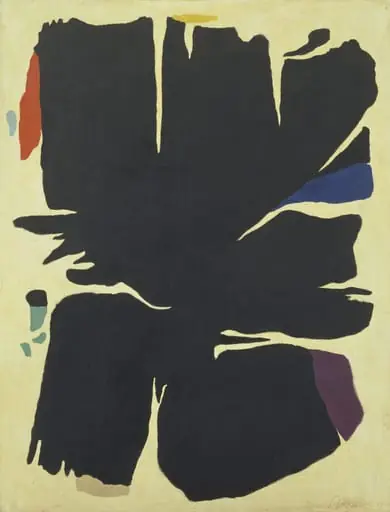
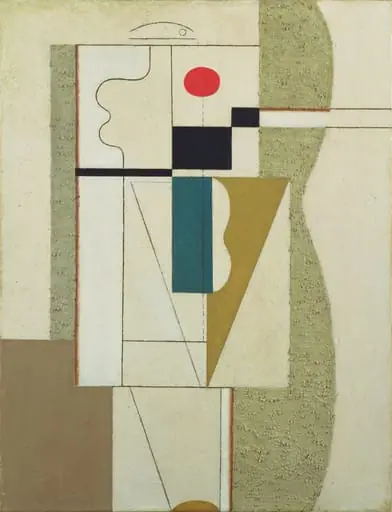
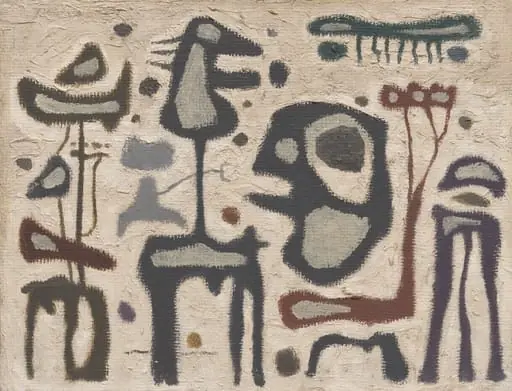
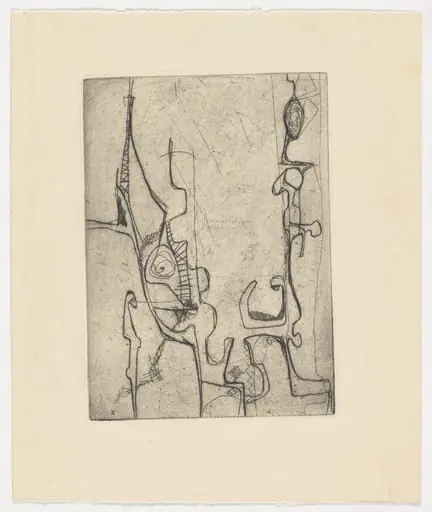
The composition features a slender, stylized figure on the left, its bent limbs suggesting motion or ritual posture, while a large oval form to the right hovers like an abstracted celestial or organic entity. A crescent-shaped mark and dotted connection imply unseen relationships between elements. These symbols draw from prehistoric motifs Baumeister studied, evoking archaic myths without literal narrative. The work resists clear interpretation, instead inviting contemplation of primal forms and unseen forces.
Technique & Style
Baumeister employed lithography to achieve sharp, clean lines and tonal contrasts typical of the medium. The image relies on bold, unmodulated black shapes against a white ground, with no gradation or texture. Forms are simplified yet dynamically asymmetrical—some appear heavy and grounded, others light and floating. The deliberate imbalance and unexpected twists in otherwise straightforward shapes reveal a controlled spontaneity, characteristic of his evolving abstract vocabulary.
History & Provenance
Produced during Baumeister’s tenure as a professor at the Stuttgart Academy, this print emerged amid increasing political pressure on modernist artists in Germany. Though not overtly political, its abstract language aligned with avant-garde circles that the Nazi regime later condemned. The work entered The Museum of Modern Art’s collection in the postwar period, as institutions sought to preserve and document European modernism displaced by fascism.
Context
In the early 1930s, Baumeister was deeply engaged with prehistoric cave art and non-Western symbols, seeking alternatives to Western naturalism. This print reflects his broader interest in universal visual languages, paralleling contemporaries like Klee and Miró. At a time when Germany’s cultural climate was turning hostile toward abstraction, his work quietly asserted the validity of non-representational expression as a legitimate artistic path.
Legacy
Baumeister’s lithographs from this period influenced later generations of German abstract artists and printmakers who sought to reconcile modernism with archaic imagery. His integration of symbolic forms into minimalist compositions helped expand the expressive potential of print media beyond illustration. This work remains a key example of how abstraction could carry cultural memory without direct representation.
Artist & collection
Artist
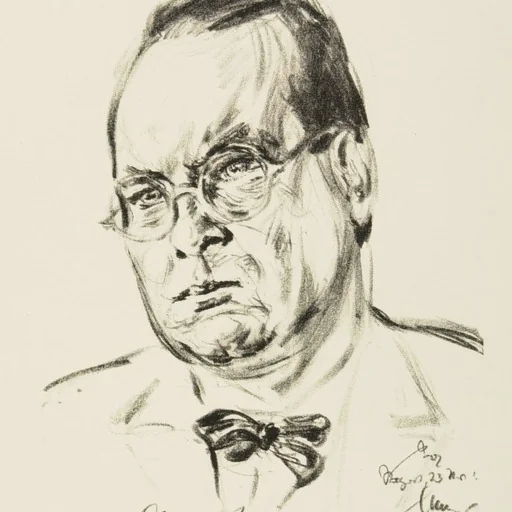
Willi Baumeister (22 January 1889 – 31 August 1955) was a German painter, scenic designer, art professor, and typographer.