Artwork
His Last Work
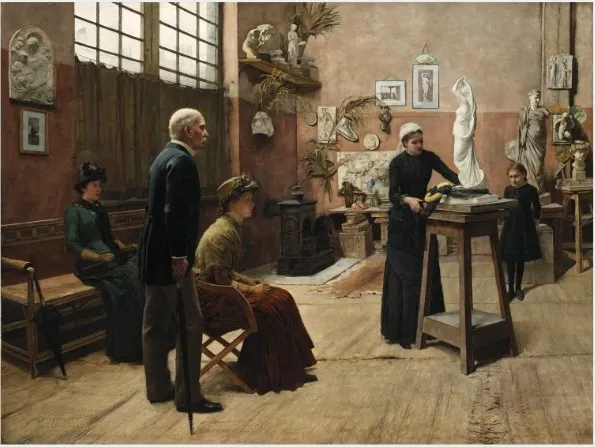
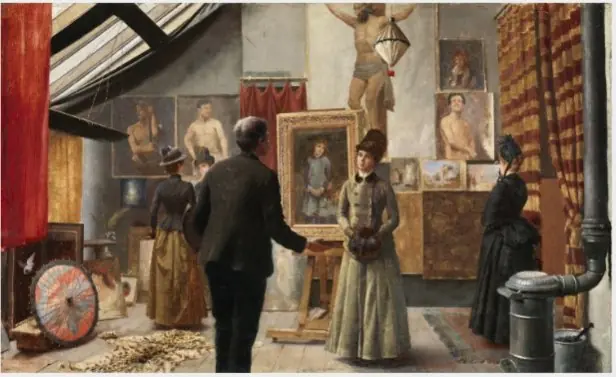
His Last Work is an oil painting by the Post-Impressionist artist William Bartlett. It dates from 1893 and is held in the collection of the National Gallery of Ireland.
About this work
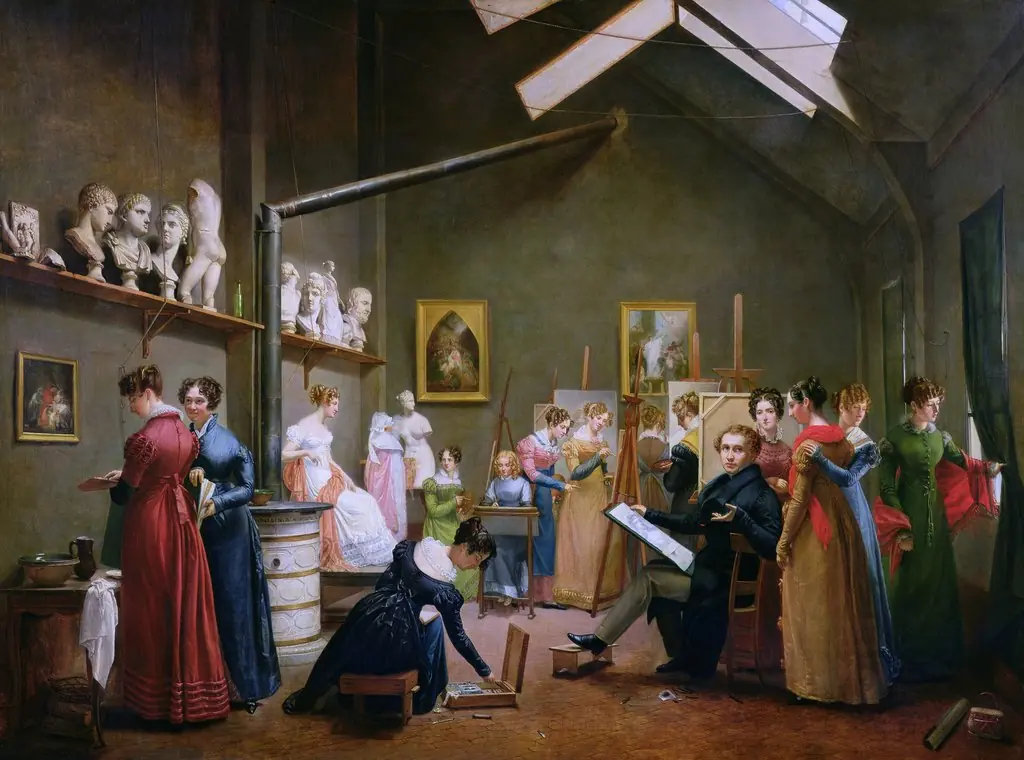
In the background, there are several people, including a woman in a long dress and a child, who appear to be watching the man or working on their own projects.
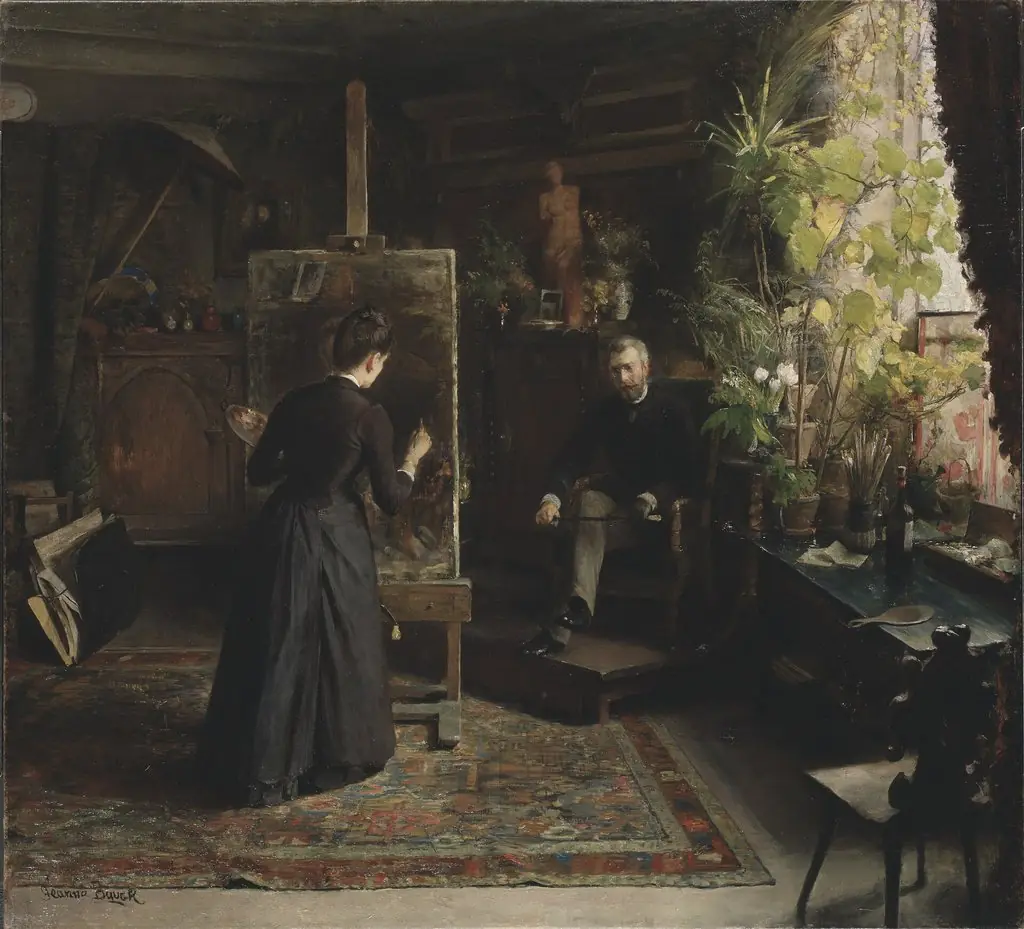
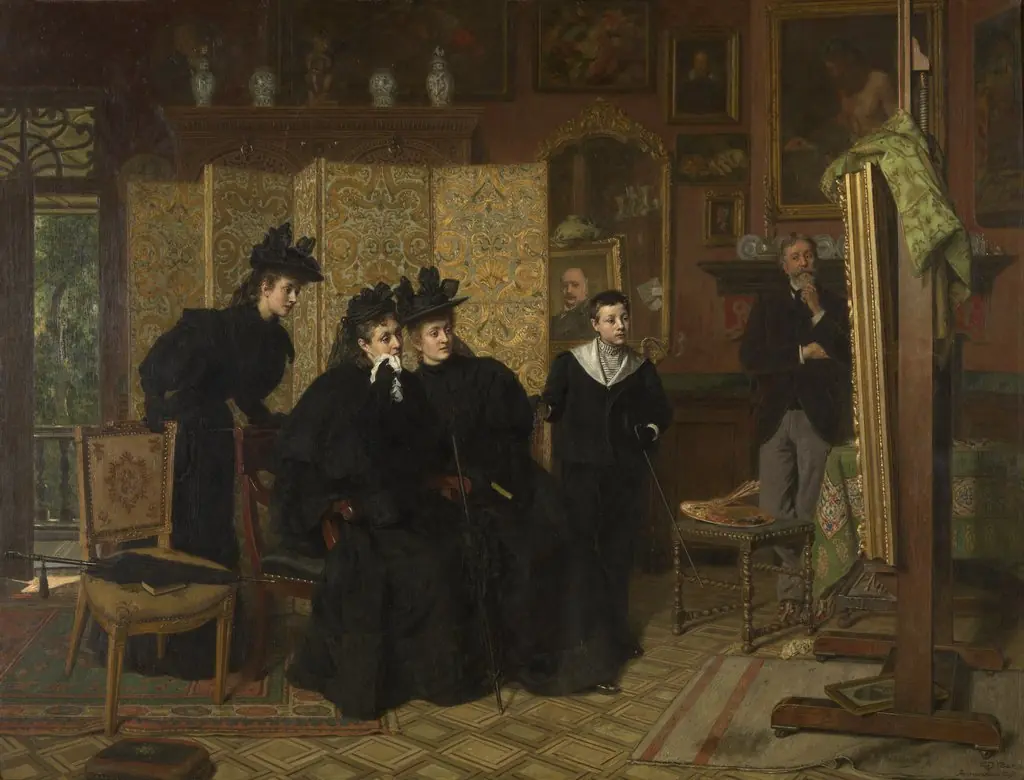
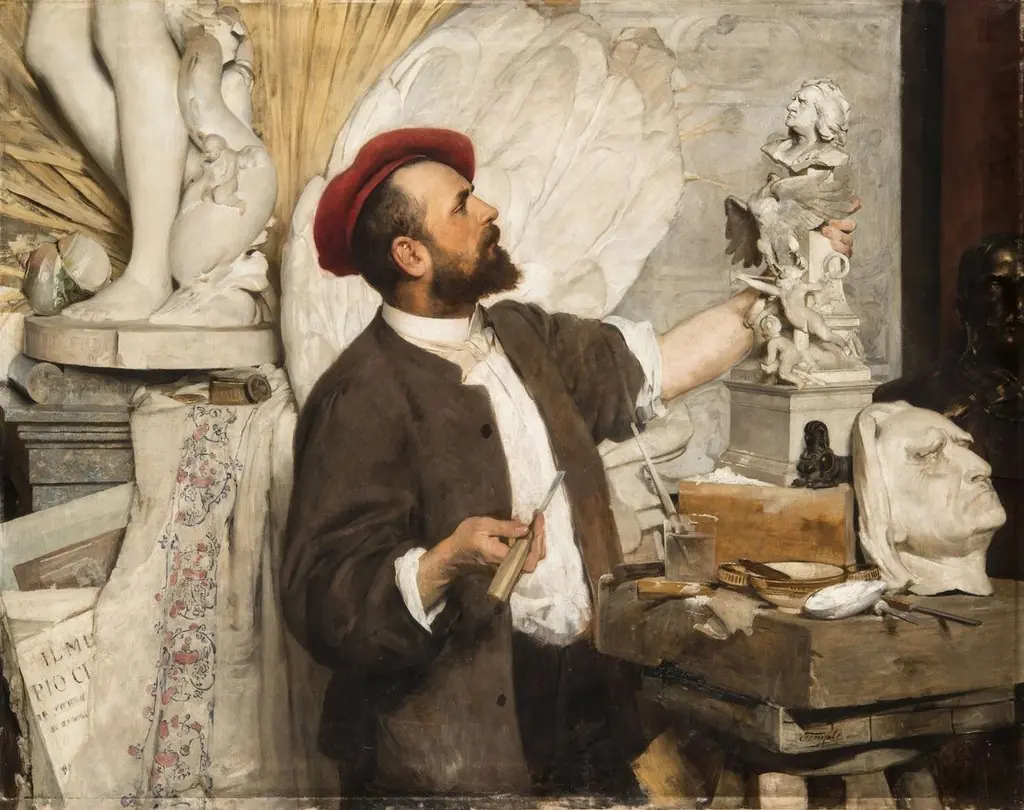
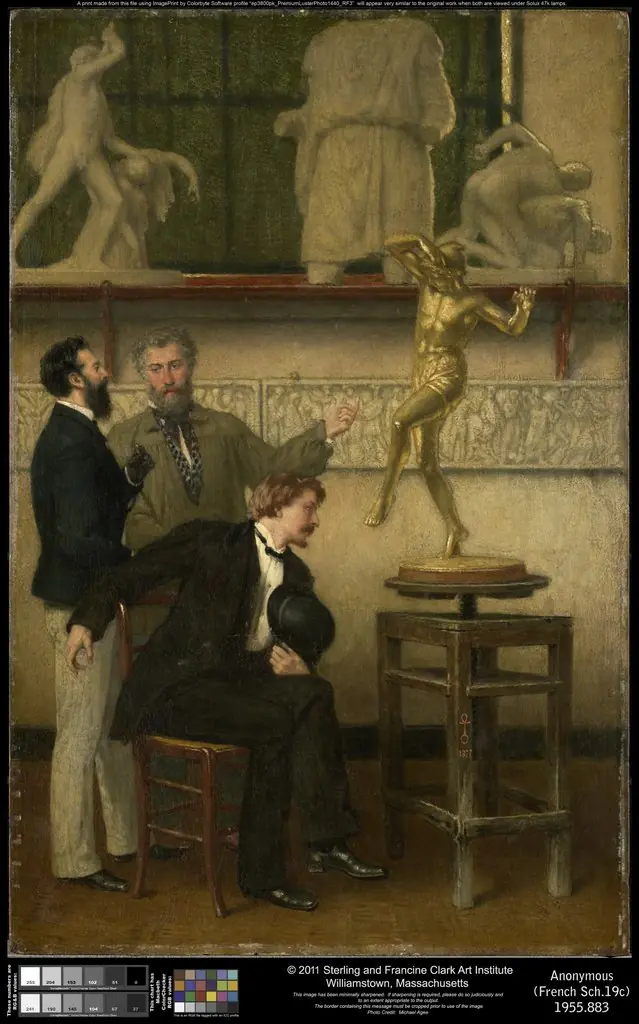
This painting shows a man standing in an art studio, looking at a sculpture on a table. He is dressed in dark clothing and has a cane in his right hand. The studio is filled with various sculptures and artwork on the walls.
In the background, there are several people, including a woman in a long dress and a child, who appear to be watching the man or working on their own projects. The room is well-lit, with large windows on the left side.
The artist, William Bartlett, used oil paint to create this piece in 1885. To learn more about the artist's technique, look up chiaroscuro.
Overview
His Last Work is an oil painting by William Bartlett, completed in 1885. It depicts an elderly man in a cluttered studio, gazing at a sculpture on a table. The scene is set in a well-lit space with large windows on the left, illuminating scattered artworks and tools. The painting is part of the National Gallery of Ireland’s collection and reflects Bartlett’s interest in the quiet rituals of artistic life.
Subject & Meaning
The central figure, an aging artist in dark attire with a cane, appears contemplative, facing a sculpture as if in final reflection. Around him, other figures—a woman and a child—engage in their own creative tasks, suggesting generational continuity. The scene conveys solitude within a creative community, hinting at the quiet end of a lifelong dedication to art.
Technique & Style
Bartlett employed oil paint to build subtle tonal contrasts, using natural light from the left to define form and depth. The rendering of textures—fabric, stone, wood—shows careful observation. While not overtly dramatic, the lighting suggests a restrained use of chiaroscuro, enhancing the painting’s introspective mood without theatricality.
History & Provenance
Painted in 1885, the work entered the National Gallery of Ireland’s collection shortly after its completion. There is no record of public exhibition prior to its acquisition, and Bartlett’s personal correspondence offers no explicit commentary on the piece. Its preservation suggests it was valued by the artist or his circle as a significant personal statement.
Context
In late 19th-century Ireland, studio scenes were uncommon in academic painting, which favored historical or religious themes. Bartlett’s focus on an artist’s private space aligns with broader European trends of realism and domestic introspection. The inclusion of multiple figures implies a working studio environment, reflecting the social nature of artistic practice at the time.
Legacy
Though not widely reproduced or studied, His Last Work remains a quiet testament to Bartlett’s attention to the everyday rituals of artists. It stands as one of the few surviving Irish paintings from the period to depict the studio as a space of contemplation rather than production, offering insight into the personal dimensions of artistic life in the Victorian era.
Artist & collection