Artwork
The Three Graces
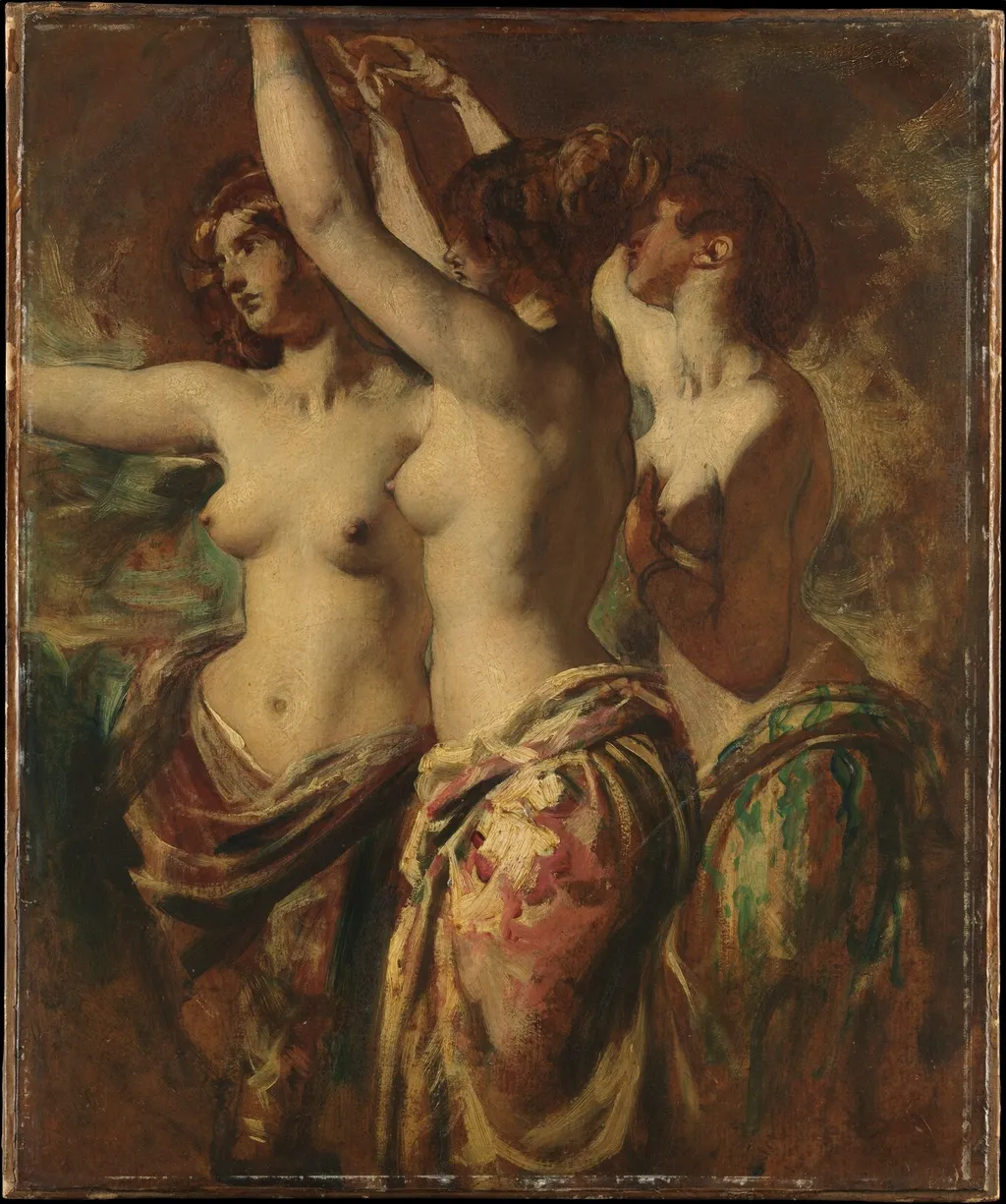
The Three Graces is an unspecified painting by William Etty. It dates from 1830 and is held in the collection of the Metropolitan Museum of Art.
About this work
Overview
Created in 1830 by English artist William Etty, *The Three Graces* presents a quiet, mythological grouping of three nude women. Rendered in warm, golden hues, the composition emphasizes gentle modeling of flesh and a calm, contemplative atmosphere.
Subject & Meaning
The work portrays the classical trio of Graces, each posed differently: the left figure lifts her right arm overhead, the central figure embraces the companions, and the rightmost turns her gaze away. The arrangement suggests harmonious interaction and a serene, introspective mood.
Technique & Style
Etty employs a realistic approach, using smooth, blended brushwork to achieve delicate transitions of light and shadow. The careful rendering of skin tones and subtle shading convey volume and a tactile sense of flesh, characteristic of his skill in depicting the human form.
History & Provenance
Born in York in 1787, Etty trained at the Royal Academy Schools under Thomas Lawrence. By the 1830s he had become the first notable British painter to devote much of his oeuvre to nude subjects, and *The Three Graces* exemplifies this focus within his early career.
Artist & collection
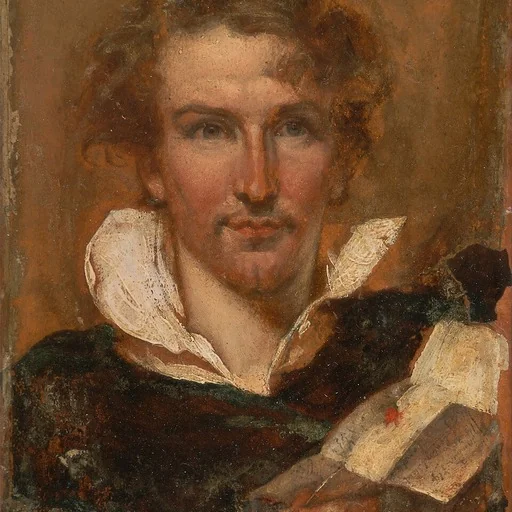
Artist
William Etty (10 March 1787 – 13 November 1849) was an English artist best known for his historical paintings containing nude figures.
