Artwork
Landscape with a house and ruined castle
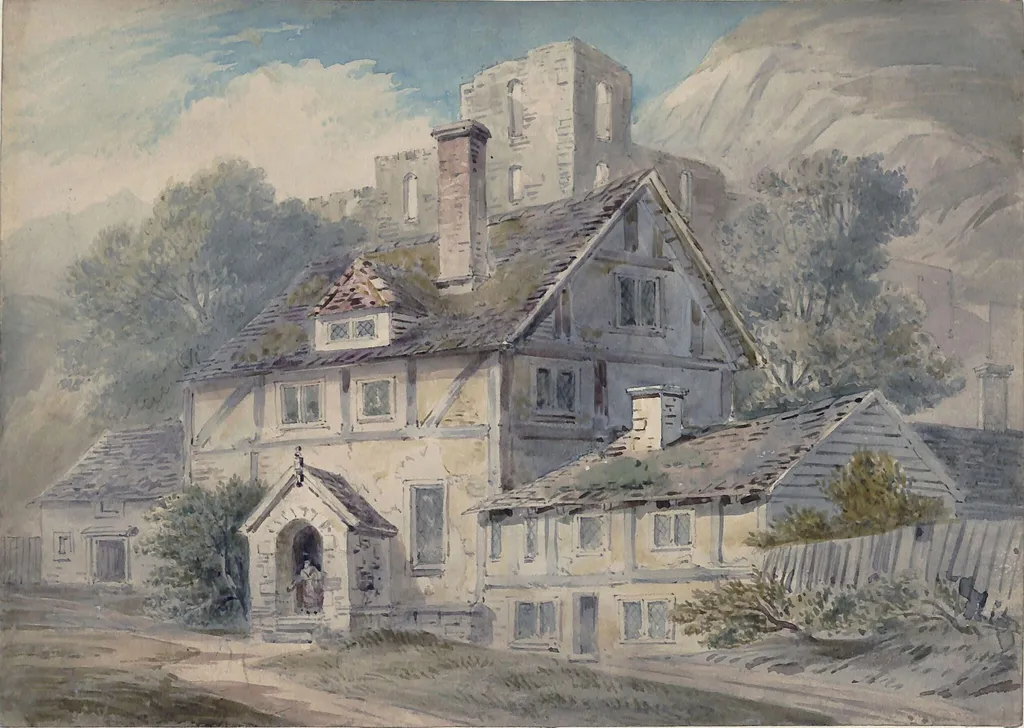
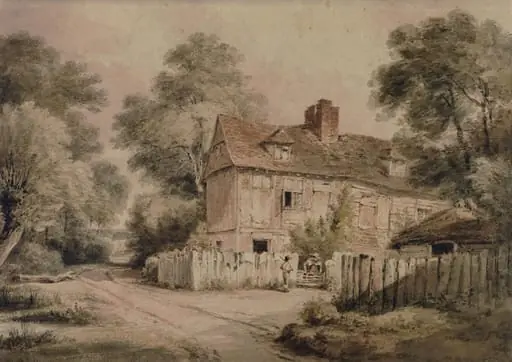
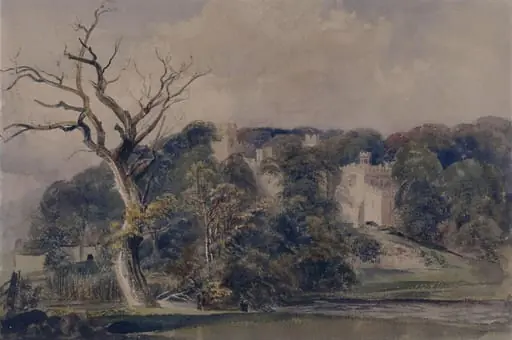
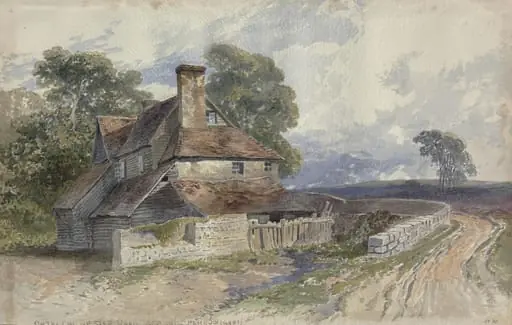
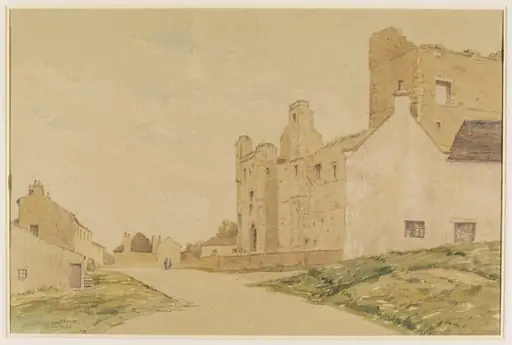
Landscape with a house and ruined castle is a watercolor work on paper by the British Romanticist artist William Fleetwood Varley. It dates from 1850 and is held in the collection of the Victoria and Albert Museum.
About this work
Overview
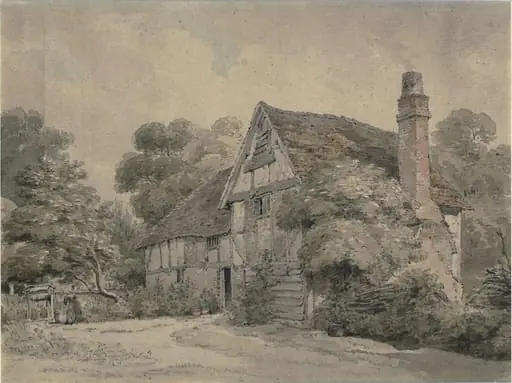
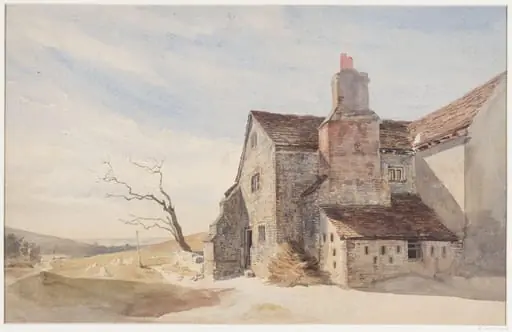
The composition centers on a modest, well-worn house with a steeply pitched roof and shuttered windows, set against a backdrop of natural vegetation.
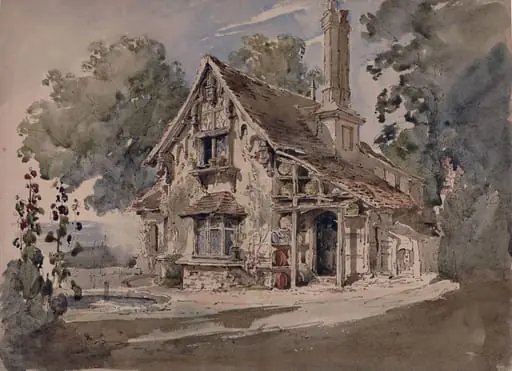
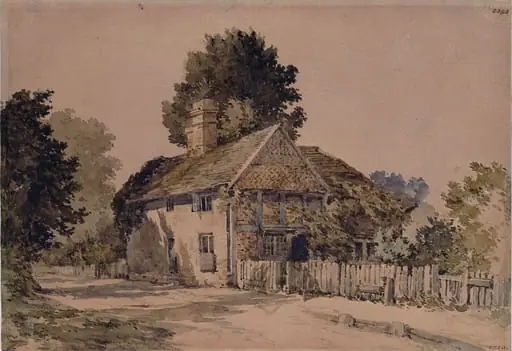
Painted in 1850 by William Fleetwood Varley, this watercolour captures a tranquil rural scene in England. The composition centers on a modest, well-worn house with a steeply pitched roof and shuttered windows, set against a backdrop of natural vegetation. A fragment of a medieval castle rises behind it, its decayed stonework softened by foliage. The work’s gentle palette and fluid brushwork convey stillness, avoiding dramatic emphasis in favor of quiet observation.
Subject & Meaning
The painting juxtaposes domestic life with the remnants of feudal architecture. The house, occupied by a solitary figure at its threshold, suggests continuity and daily routine. The ruined castle, partially obscured by trees, evokes time’s passage without sentimentality. Together, they frame a narrative of endurance—ordinary life persisting amid the quiet decay of the past, neither mourned nor glorified.
Technique & Style
Varley employed transparent watercolour washes with minimal detail, allowing the paper’s texture to contribute to the atmosphere. Soft, unblended strokes define foliage and stone, while pale tones of grey, ochre, and muted green unify the scene. The lack of sharp outlines and the absence of strong contrasts reinforce the subdued mood, reflecting a preference for atmospheric suggestion over precise rendering.
History & Provenance
Created in 1850, the work belongs to Varley’s early period, when he focused on English landscapes and vernacular architecture. It was likely painted during his travels in the Midlands or South West, regions rich in historic ruins. The piece remained in private hands until acquired by the Victoria and Albert Museum, where it is now held as part of their 19th-century British watercolour collection.
Context
In mid-19th century Britain, watercolour was increasingly valued for its capacity to capture fleeting light and intimate scenes. Artists like Varley responded to a growing interest in local heritage and pastoral life, often depicting ruins as quiet witnesses to history rather than symbols of grandeur. This work aligns with a broader trend of understated, topographical art that emphasized place over narrative.
Legacy
Varley’s watercolour contributes to a body of work that redefined landscape art by prioritizing subtlety over spectacle. Though not widely exhibited during his lifetime, his approach influenced later topographical artists who sought to document the English countryside with sensitivity. The painting remains a representative example of how watercolour could convey historical depth through restraint and quiet observation.
Artist & collection