Artwork
Mountainous landscape with cottages
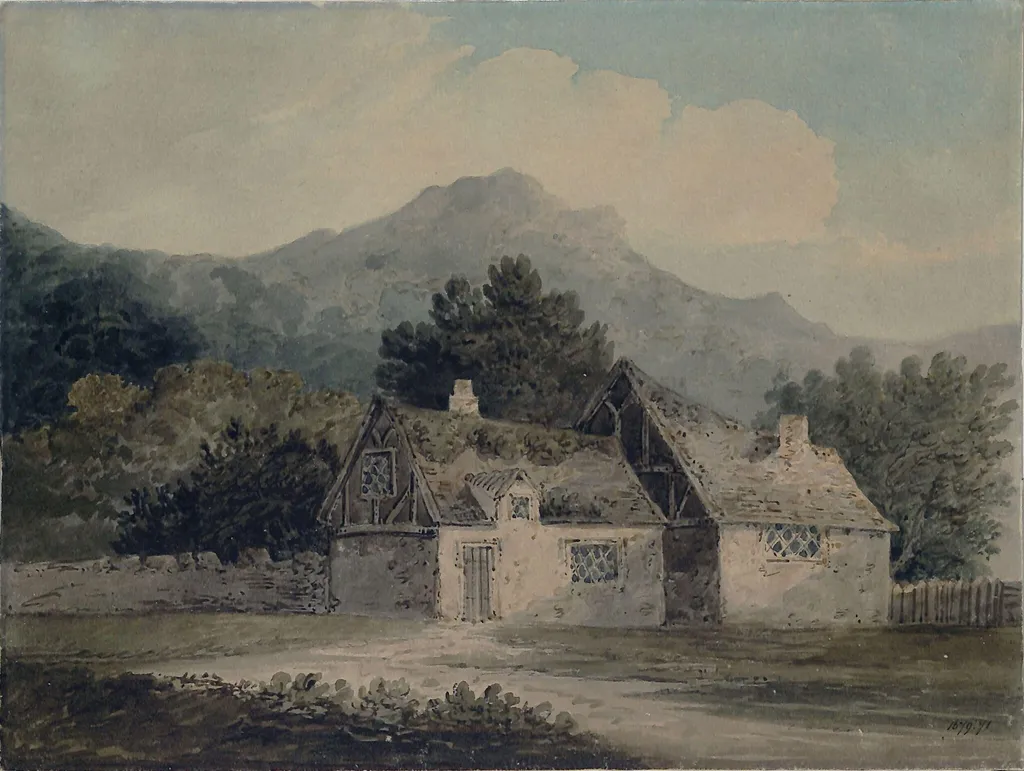
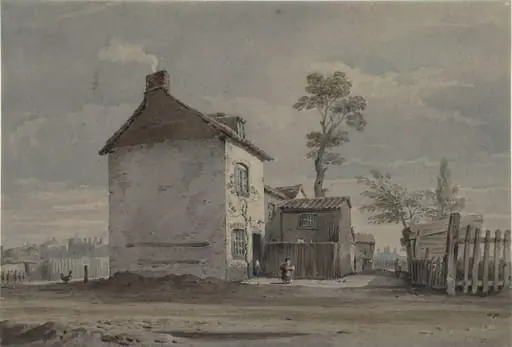
Mountainous landscape with cottages is a watercolor work on paper by the British Romanticist artist William Pearson. It dates from 1806 and is held in the collection of the Victoria and Albert Museum. This watercolour landscape portrays a quiet valley with two modest cottages nestled among rolling terrain.
About this work
Overview
This watercolour landscape portrays a quiet valley with two modest cottages nestled among rolling terrain. Executed in delicate washes, the composition emphasizes atmospheric depth and subdued tones. Though once attributed to a C. Pearson, no such artist is documented; stylistic evidence suggests the hand of William Pearson, known for similar topographical watercolours in the early 19th century.
Subject & Meaning
The scene centers on two small dwellings with steep roofs and diamond-pane windows, framed by a low stone wall and surrounded by lush vegetation.
The scene centers on two small dwellings with steep roofs and diamond-pane windows, framed by a low stone wall and surrounded by lush vegetation. The misty mountain range beyond suggests isolation and tranquility. The absence of human figures and the quiet scale of the structures evoke a contemplative mood, aligning with the era’s interest in nature as a space for quiet reflection rather than drama.
Technique & Style
The artist employed transparent watercolour washes to achieve a light, airy effect. Greens dominate the foreground vegetation, while the houses and distant peaks are rendered in muted browns and greys. Soft gradations and minimal detail in the sky and mountains enhance the sense of distance, reflecting a restrained, observational approach typical of topographical watercolour practice of the period.
History & Provenance
The work was previously ascribed to an unknown C. Pearson, but no records confirm this attribution. Stylistic analysis, including brushwork and compositional habits, points to William Pearson, an active watercolourist in the early 1800s. The piece likely originated in Britain, possibly as part of a private collection focused on landscape studies rather than grand historical themes.
Context
Created during the early 19th century, the painting reflects the growing interest in intimate natural scenes over idealized or dramatic vistas. While not overtly Romantic in sentiment, it shares the period’s preference for quiet, observed landscapes. Such works were often made for personal enjoyment or as records of specific locales, distinct from the monumental landscapes of contemporaries like Turner.
Legacy
The painting contributes to the broader tradition of British watercolour landscape studies, valued for their technical restraint and sensitivity to light. Though not widely exhibited, works like this helped shape the aesthetic of topographical art, influencing later generations of artists who sought to capture the subtleties of the natural world without theatrical embellishment.
Own this work as a print
Artist & collection
Artist
British watercolors from the late 1700s often turned rugged terrain into cozy scenes.

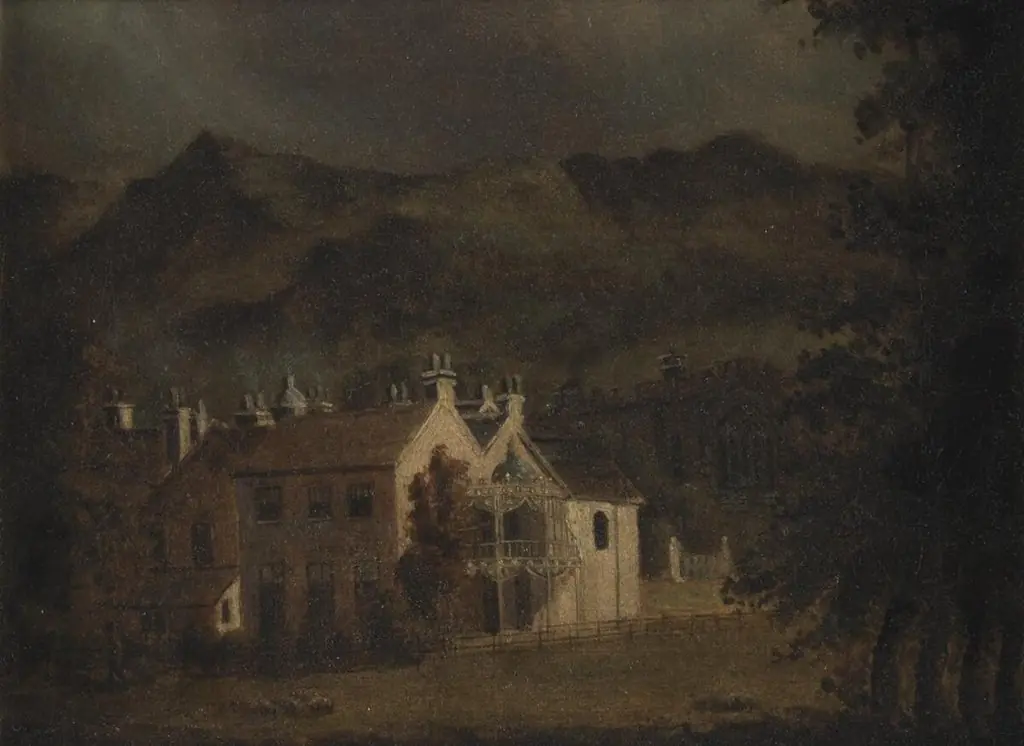 Bishop's Palace,Bangor
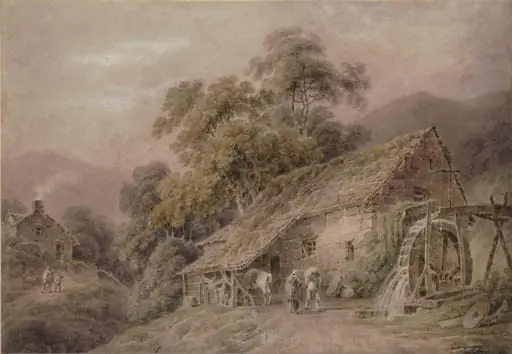 A mill near Dinas Mawddwy
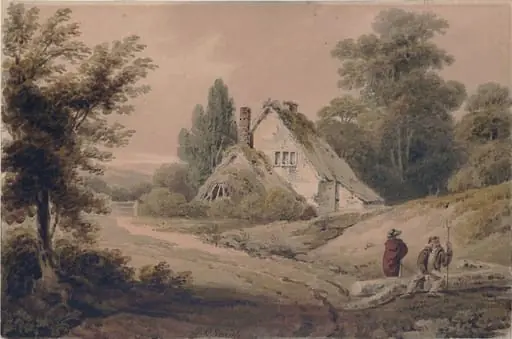 Landscape with cottage and figures
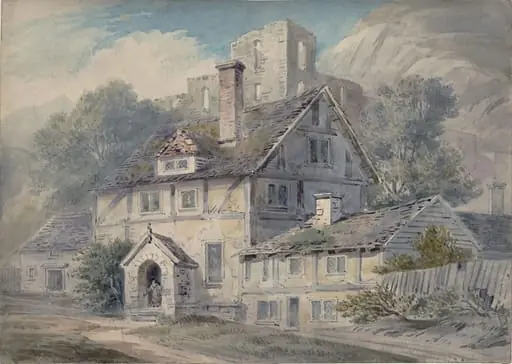 Landscape with a house and ruined castle
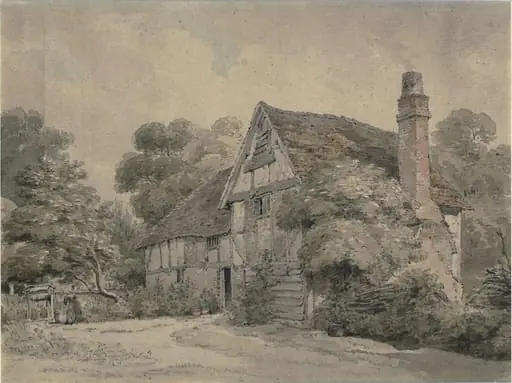 Cottage at Bookham
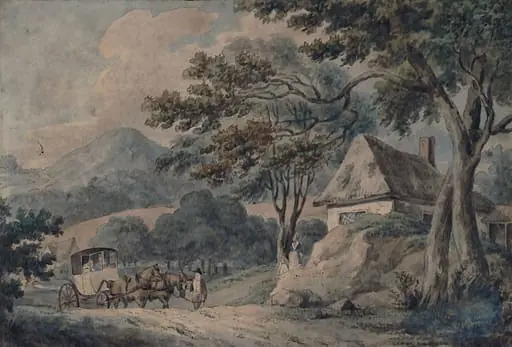 Landscape with cottage and postchaise
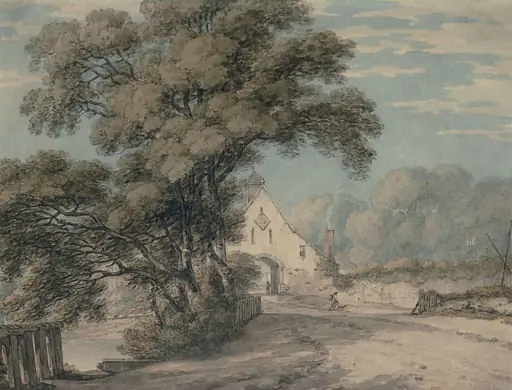 The Gateway at Beaulieu Abbey, Hants
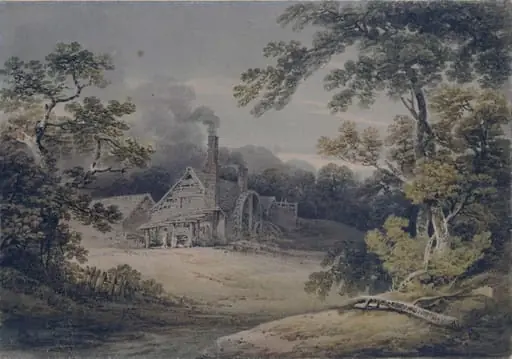 Landscape with cottage and waterwheel
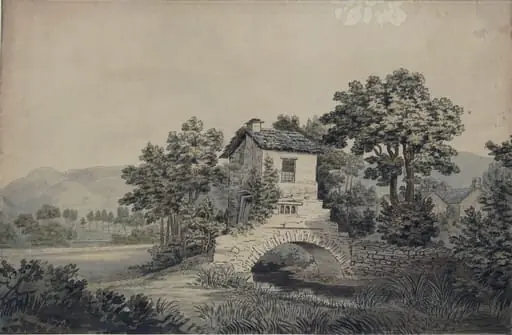 The Hall Summer House at Ambleside
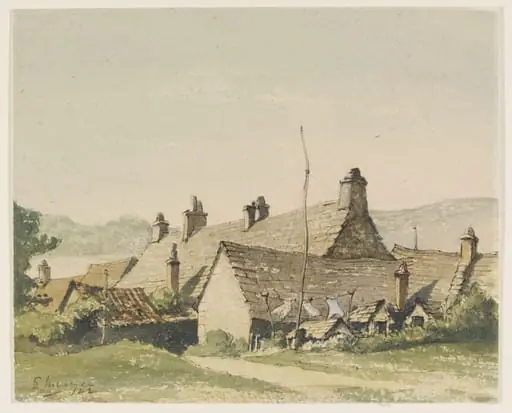 Cottages, Corfe
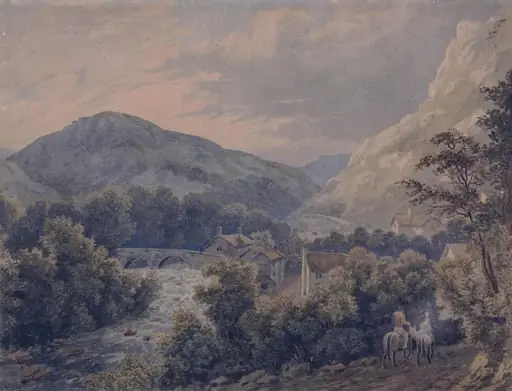 Lynmouth, Devon
 Cottages in a landscape