Artwork
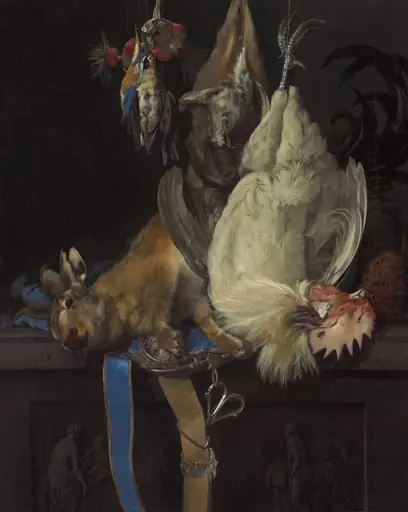
Still-life with white cockerel and dead game
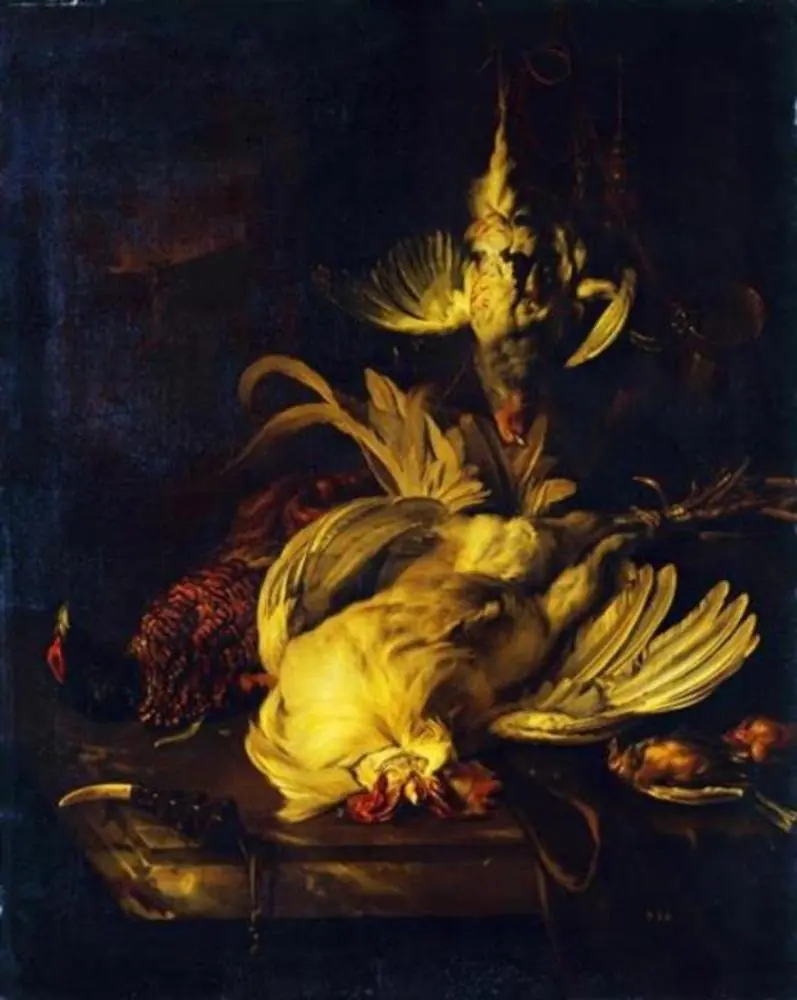
Still-life with white cockerel and dead game is an oil painting by William Gouw Ferguson. It dates from 1673 and is held in the collection of the National Galleries Scotland.
About this work
Overview
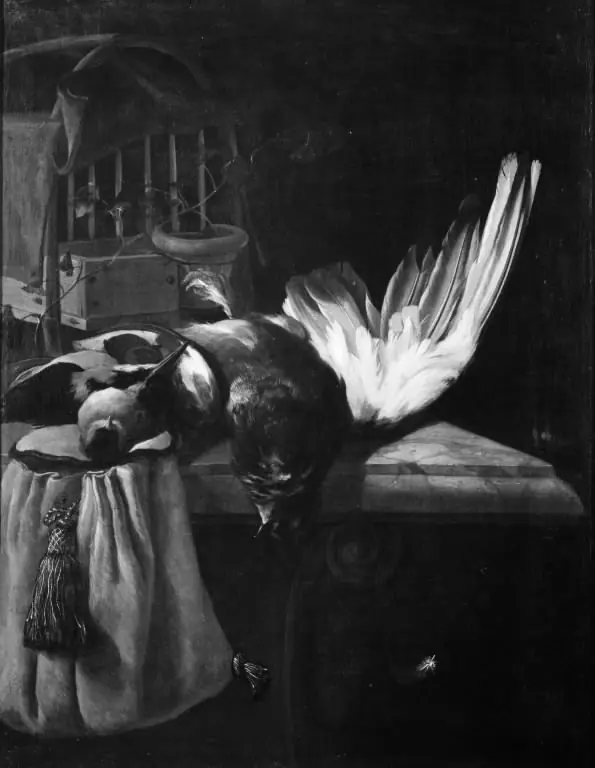
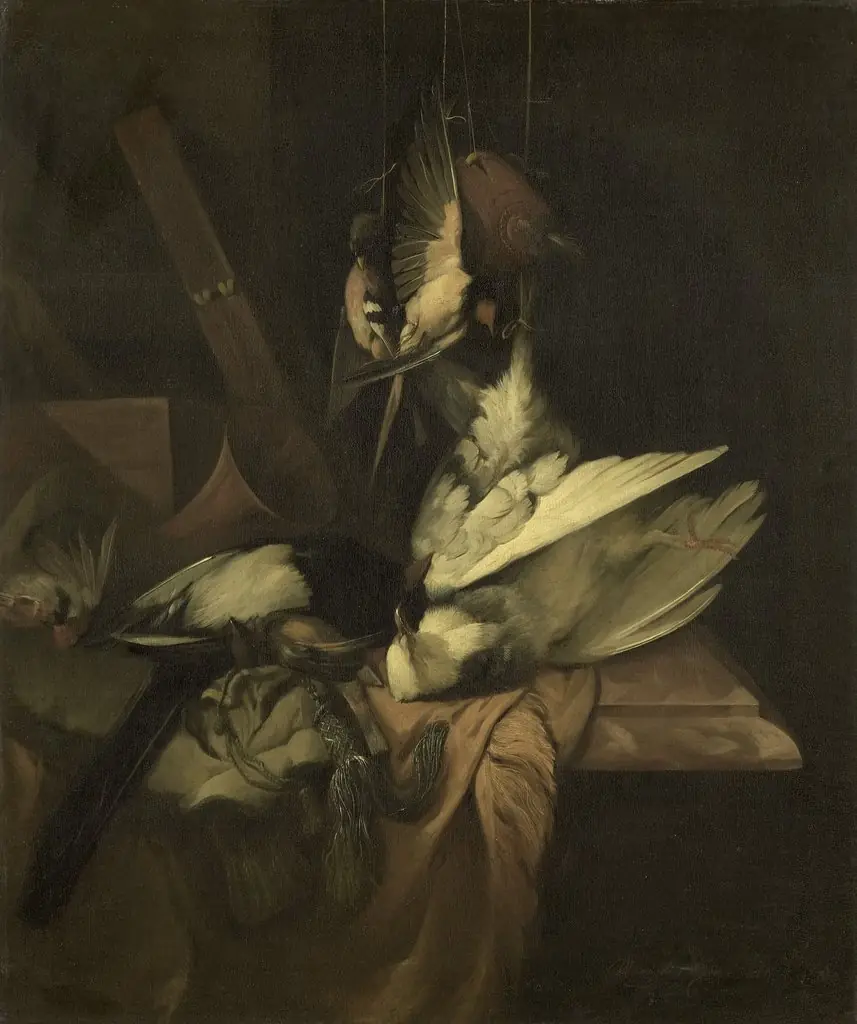
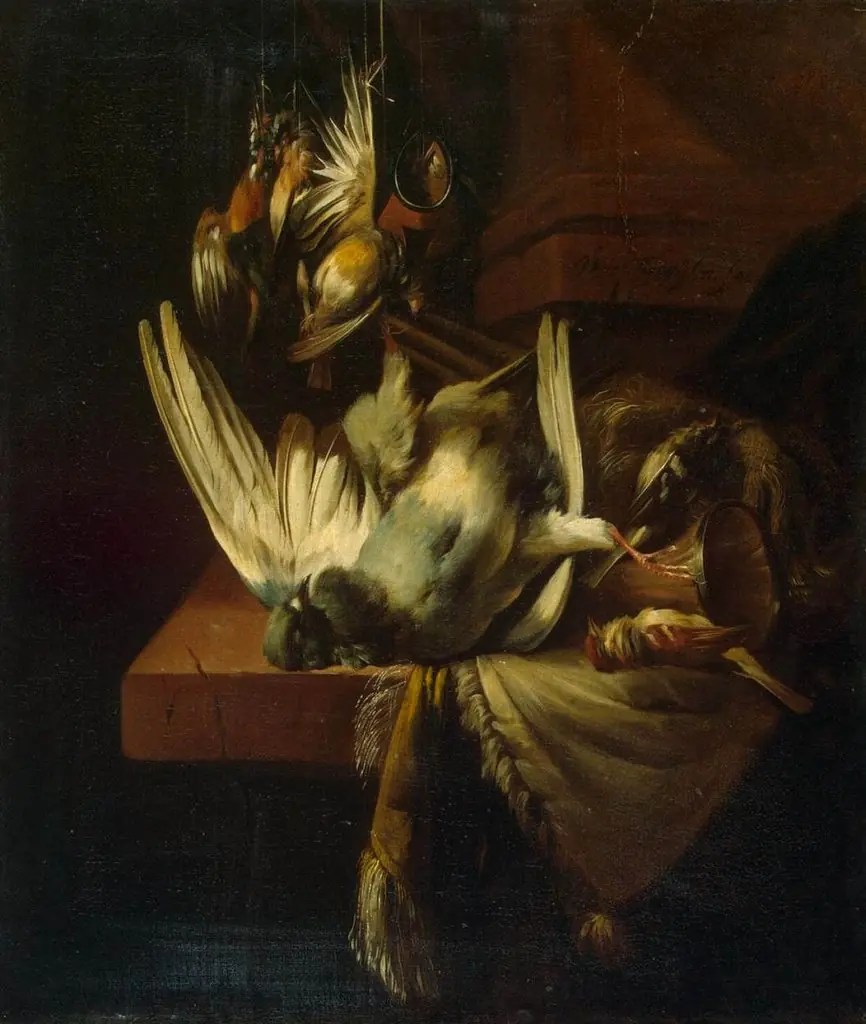
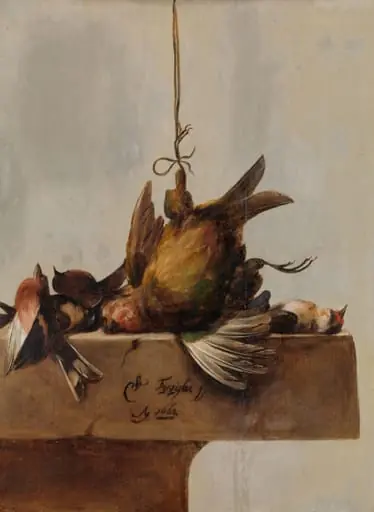
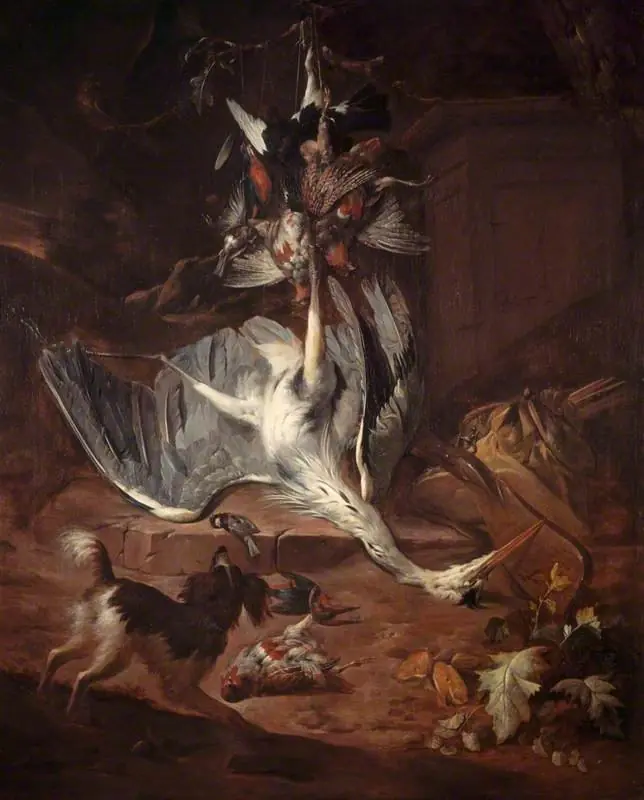
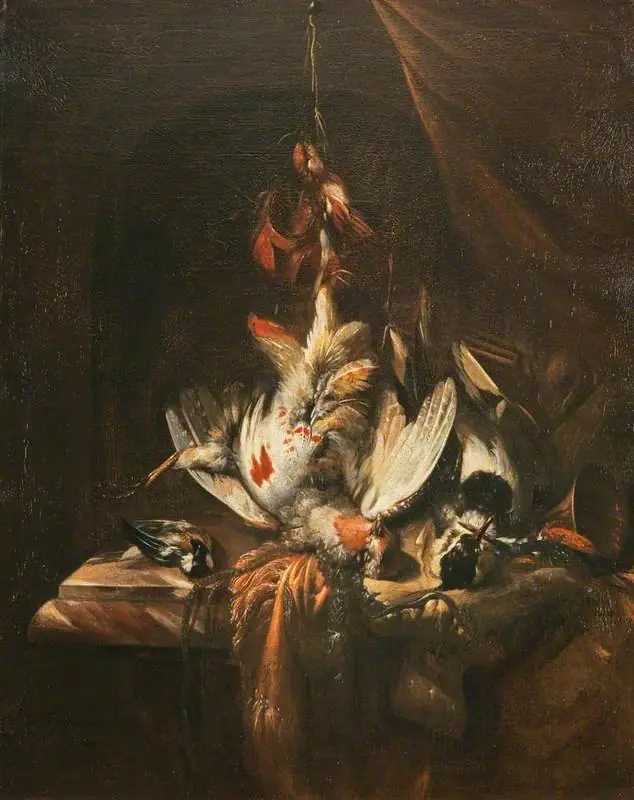
Painted around 1673, this oil still life by William Gouw Ferguson depicts a white cockerel and several game birds arranged in a somber, suspended composition. The work is part of the Scottish National Gallery’s collection and exemplifies the Dutch-influenced still-life tradition of the period, emphasizing naturalism and careful observation of animal forms in a quiet, contemplative setting.
Subject & Meaning
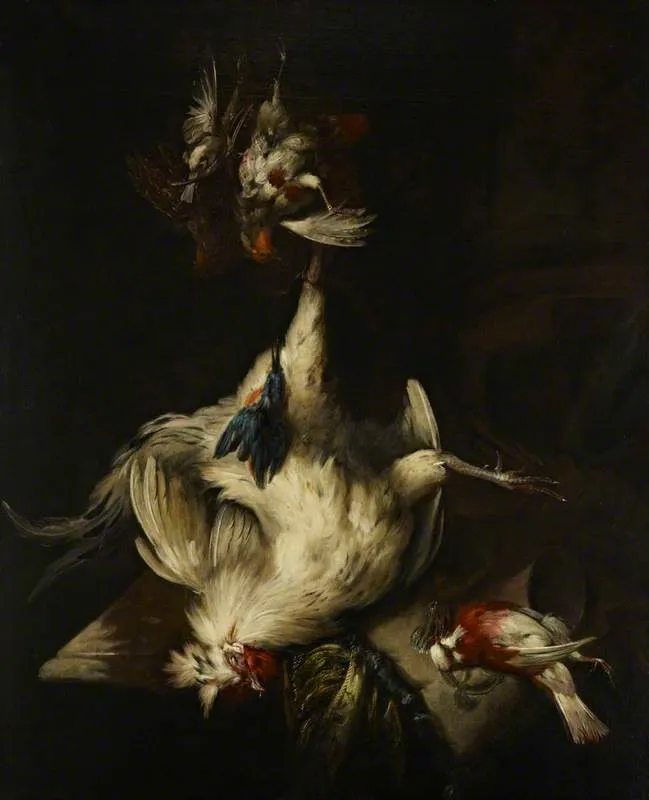
The central figure is a white cockerel lying on its back, wings spread, with dead game birds hanging by their feet from its legs.
The central figure is a white cockerel lying on its back, wings spread, with dead game birds hanging by their feet from its legs. This arrangement suggests a moment after the hunt, evoking themes of mortality and the transience of life. The positioning of the birds, neither fully alive nor entirely discarded, introduces a quiet tension between vitality and decay, common in Northern European still lifes of the era.
Technique & Style
Ferguson employs chiaroscuro to model the birds’ forms with subtle gradations of light and shadow, enhancing their three-dimensionality. The white feathers of the cockerel are rendered with delicate highlights against a dark, neutral background, while the game birds’ brown plumage is painted in warm, earthy tones. The brushwork is precise yet unobtrusive, prioritizing texture and realism over decorative flourish.
History & Provenance
The painting has been in the collection of the Scottish National Gallery since the 19th century, though its earlier ownership remains undocumented. It reflects the influence of Dutch still-life painters active in the Low Countries during the mid-17th century, a style that found resonance among Scottish collectors and artists of the period who favored naturalistic depictions of hunted game.
Context
In late 17th-century Scotland, still-life painting was less common than portraiture or religious subjects, but Dutch-trained artists like Ferguson introduced the genre to local patrons. This work aligns with broader European trends that used animal carcasses and feathers to explore themes of abundance, death, and the passage of time, often commissioned by wealthy households as symbols of status and refinement.
Legacy
Ferguson’s painting remains a rare example of Scottish still-life work from the period, preserving a quiet, unembellished approach to animal subjects that diverges from the more ornate Dutch compositions. Its preservation in a national collection underscores its value as a document of artistic exchange and the enduring appeal of naturalistic observation in early modern painting.
Artist & collection