Artwork
Still Life with Dead Game
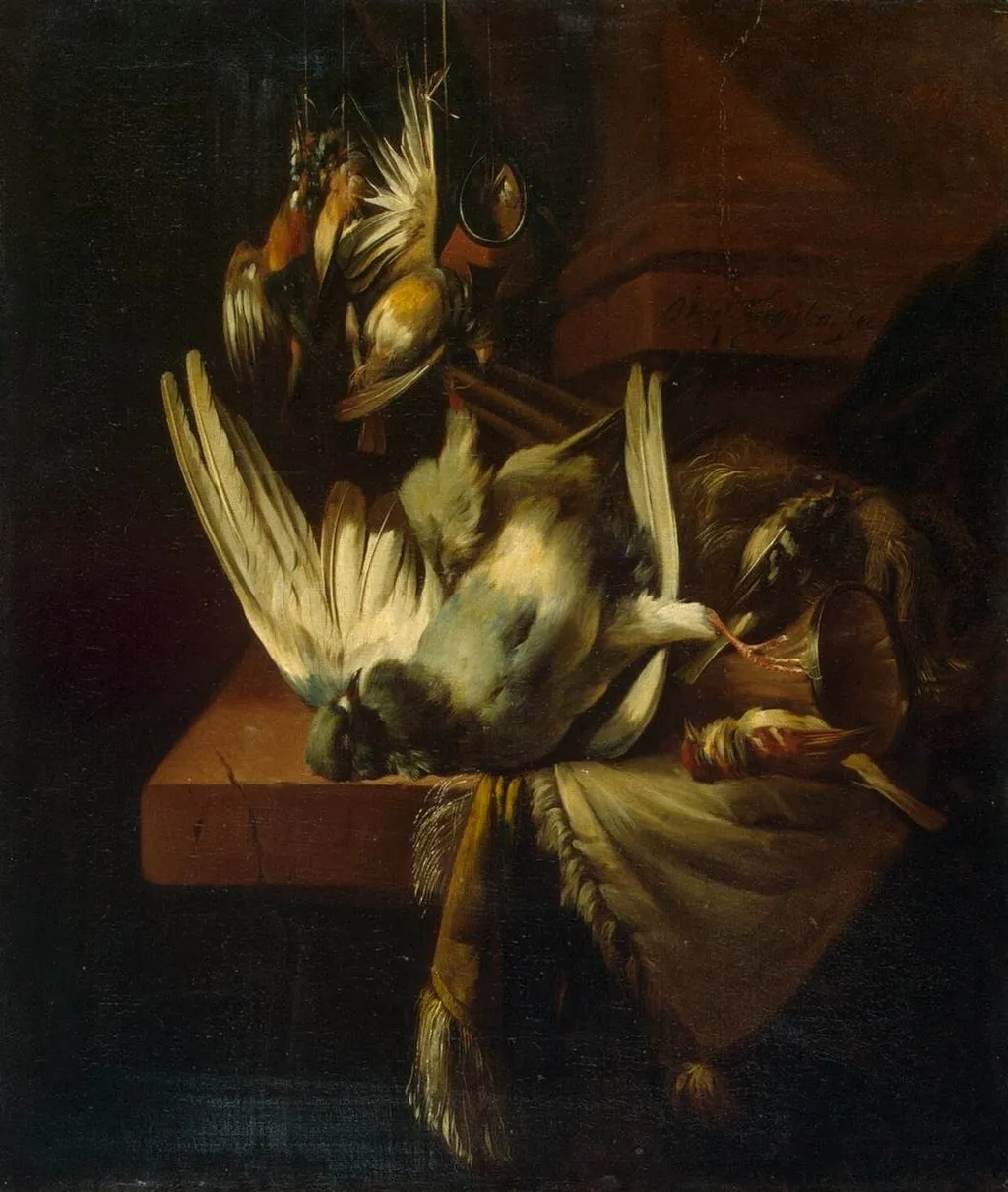
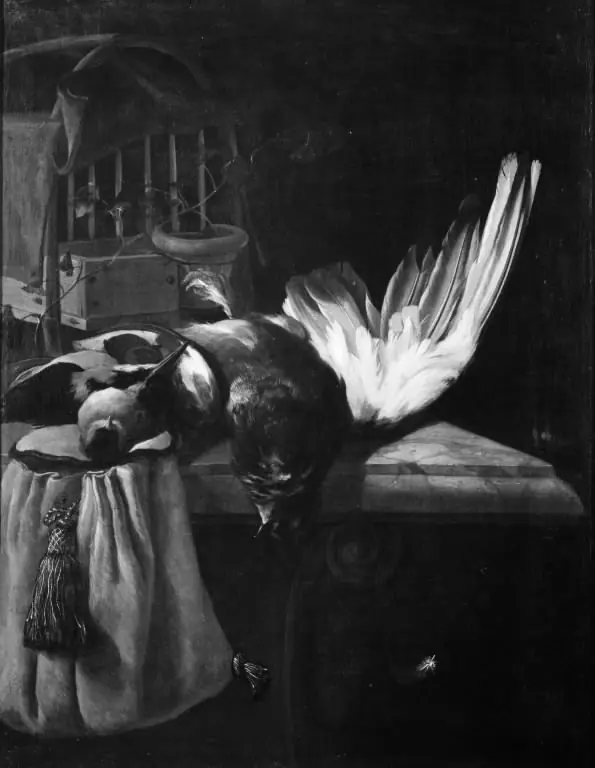
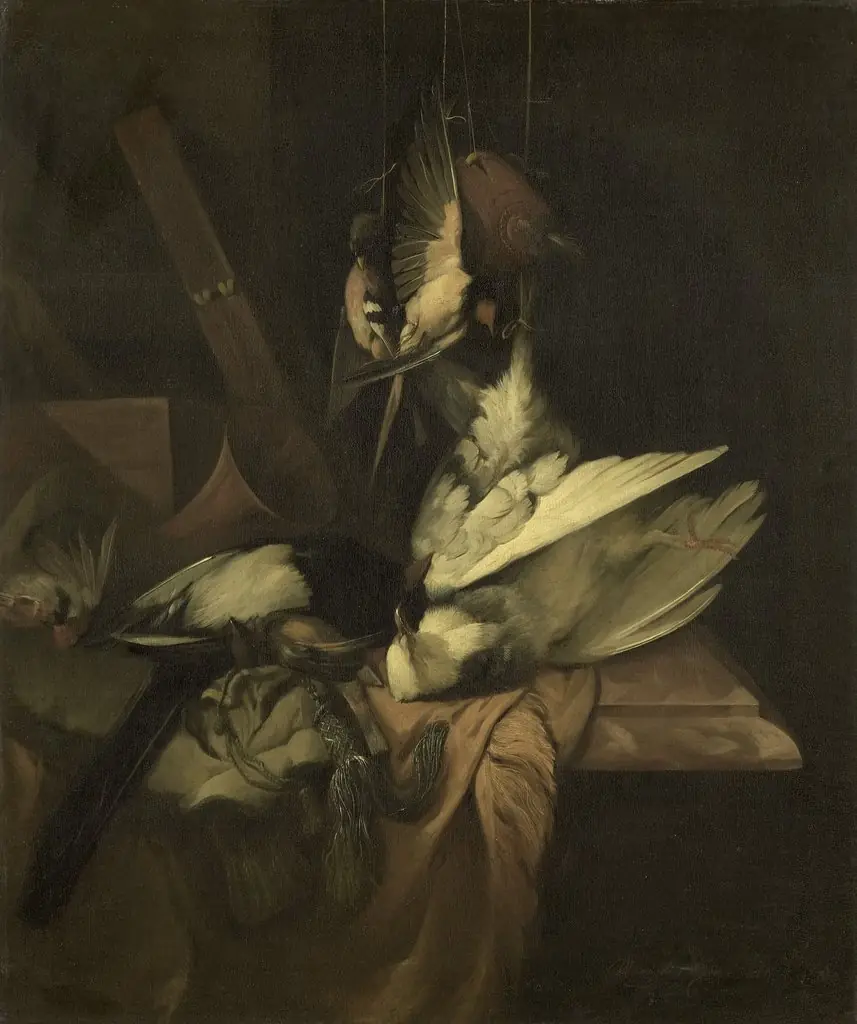
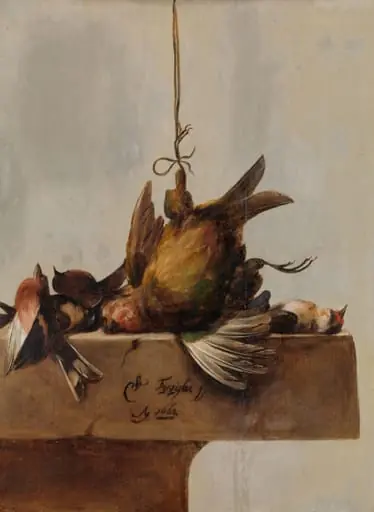
Still Life with Dead Game is an oil painting by the Dutch Golden Age artist William Gouw Ferguson. It dates from 1693 and is held in the collection of the Hermitage Museum.
About this work
Overview
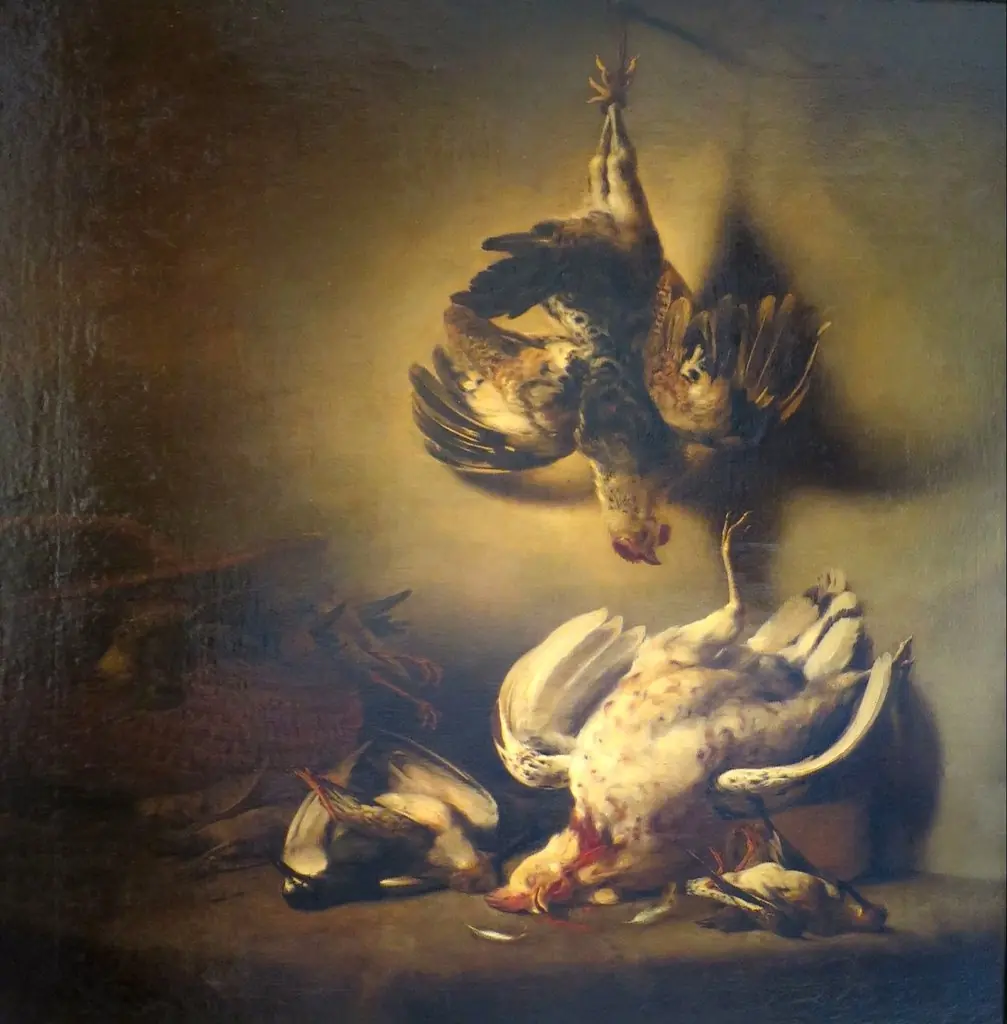
Painted in 1693 by William Gouw Ferguson, this oil on canvas still life presents a collection of hunted birds arranged on a weathered wooden surface.
Painted in 1693 by William Gouw Ferguson, this oil on canvas still life presents a collection of hunted birds arranged on a weathered wooden surface. The composition is spare yet deliberate, focusing solely on the forms and textures of the deceased game. Its current location is the State Hermitage Museum in Saint Petersburg, where it remains part of a broader collection of Dutch and Flemish still lifes from the late 17th century.
Subject & Meaning
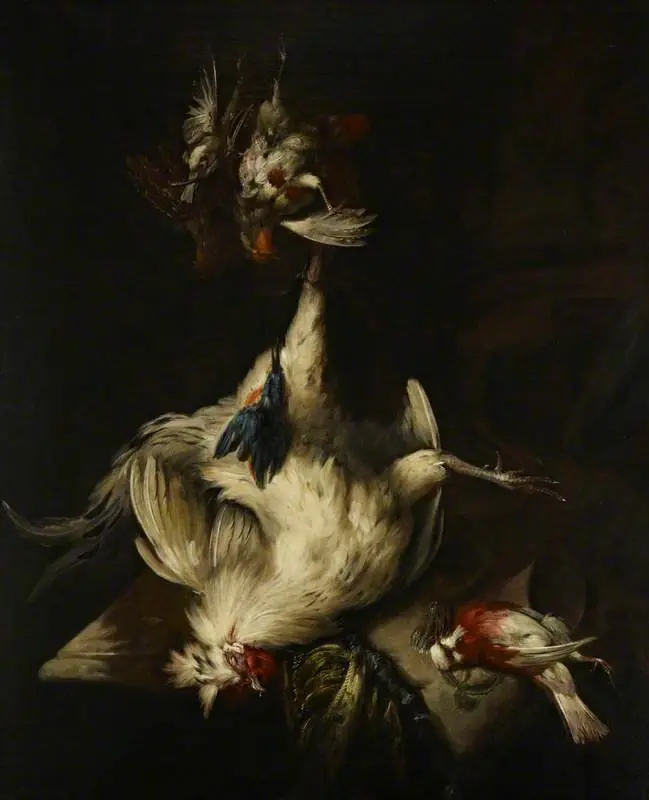
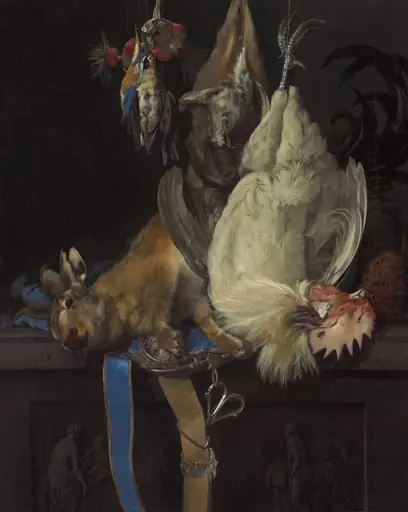
The painting depicts a rooster and several pigeons, their bodies splayed across a rough ledge, suggesting a recent hunt. The arrangement avoids theatricality, presenting the birds with quiet realism rather than symbolic grandeur. While not overtly allegorical, the work reflects the era’s interest in natural observation and the transient nature of life, common themes in Dutch still life traditions.
Technique & Style
Ferguson employs chiaroscuro to model the birds’ forms, using subtle gradations of light and shadow to suggest volume and texture. Feathers are rendered with fine brushwork, capturing both fluffed and flattened states. The dark, unbroken background isolates the subjects, enhancing their three-dimensionality. The rooster’s crimson comb and glossy plumage catch a faint light, creating a quiet focal point amid the muted tones.
History & Provenance
The painting was completed in 1693 and entered the collection of the State Hermitage Museum in the 18th or 19th century, likely as part of a broader acquisition of Northern European works. Its provenance prior to museum acquisition is undocumented, but its style aligns with the Dutch still life tradition, suggesting it may have been commissioned by a private collector in the Low Countries.
Context
Created during the height of Dutch still life painting, the work reflects a cultural fascination with natural detail and the aesthetics of mortality. While grander still lifes often included fruit, silver, or flowers, Ferguson’s focus on hunted game underscores a regional preference for hunting-related subjects, particularly in northern Netherlands and Flanders, where such imagery carried both domestic and aristocratic associations.
Legacy
Though not widely known outside specialist circles, the painting exemplifies the quiet precision of late 17th-century Dutch still life. Its restrained composition and attention to avian anatomy contribute to a broader understanding of how artists of the period engaged with nature—not as idealized symbols, but as observed, tangible realities. It remains a modest but significant example of its genre.
Artist & collection