Artwork
Plums
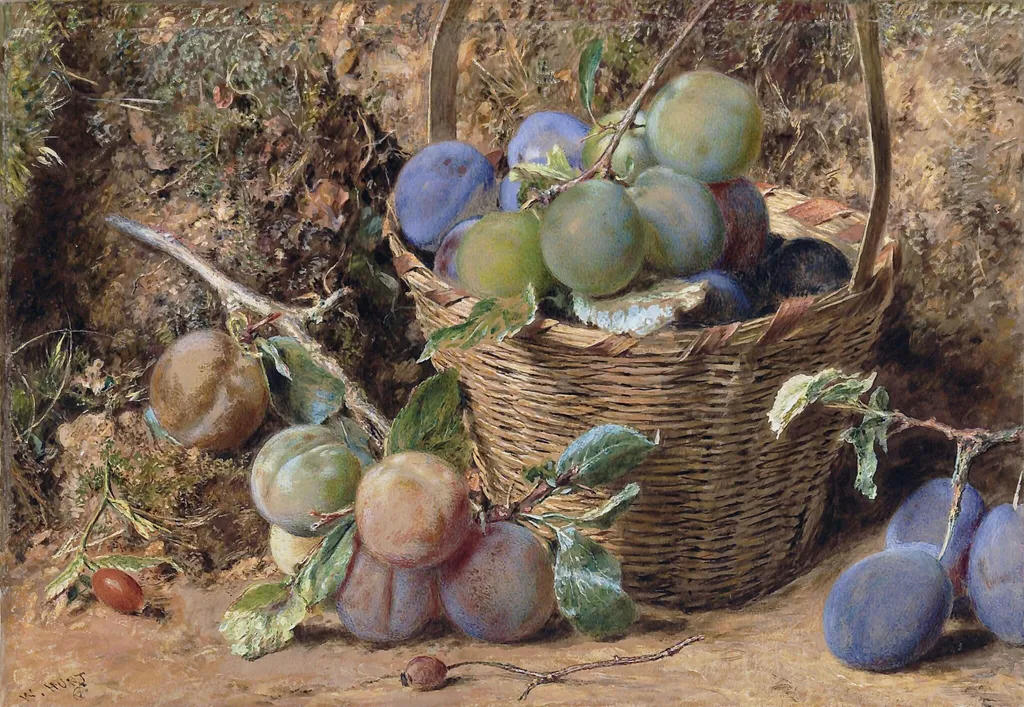
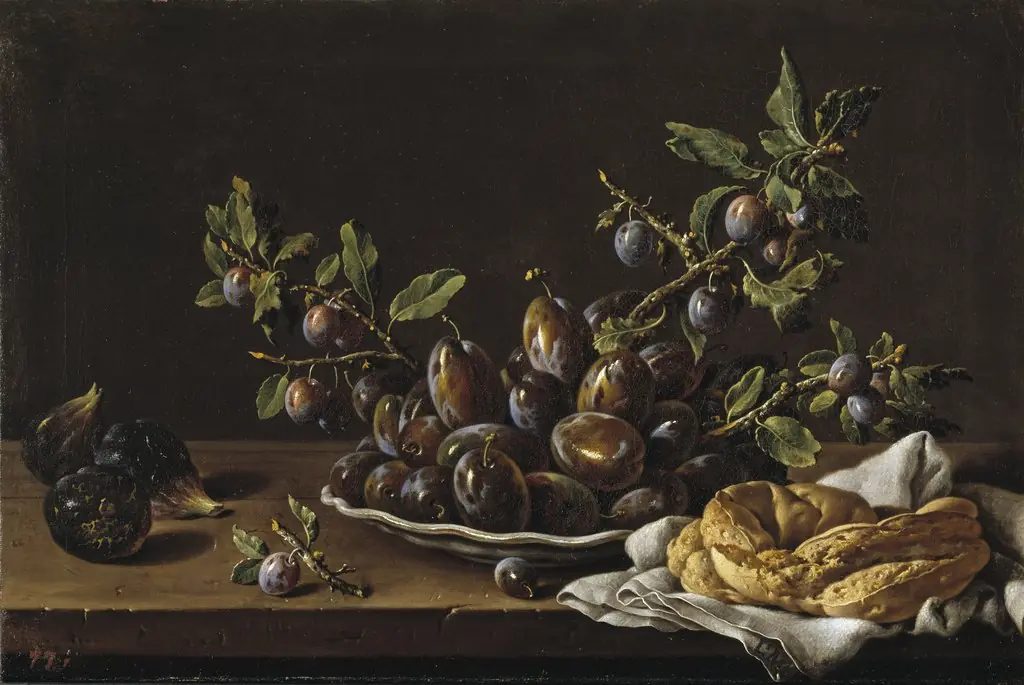
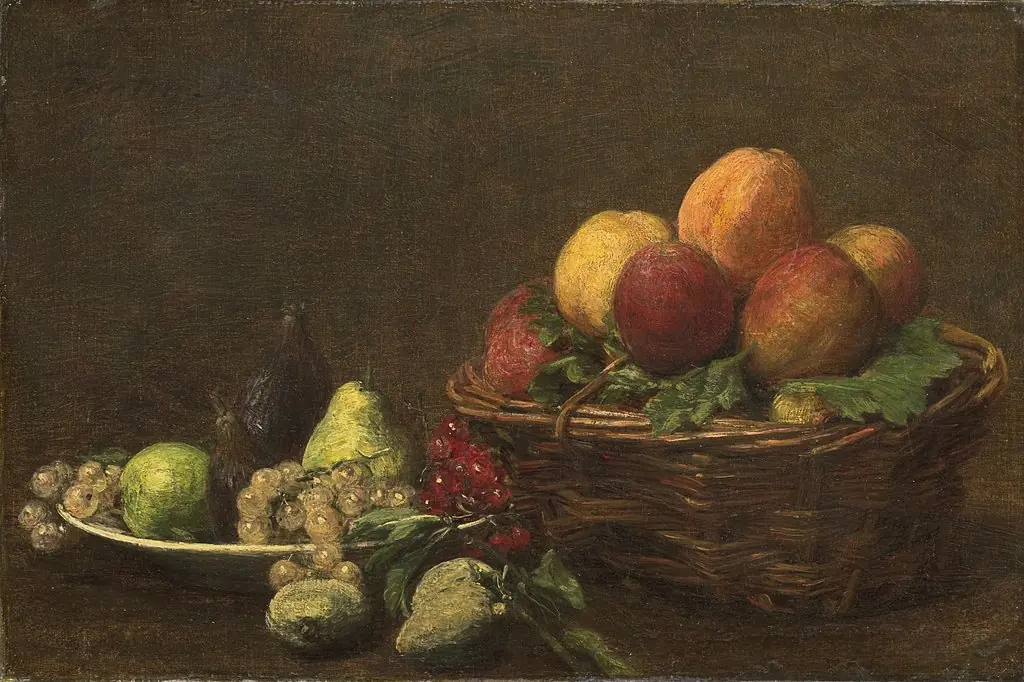
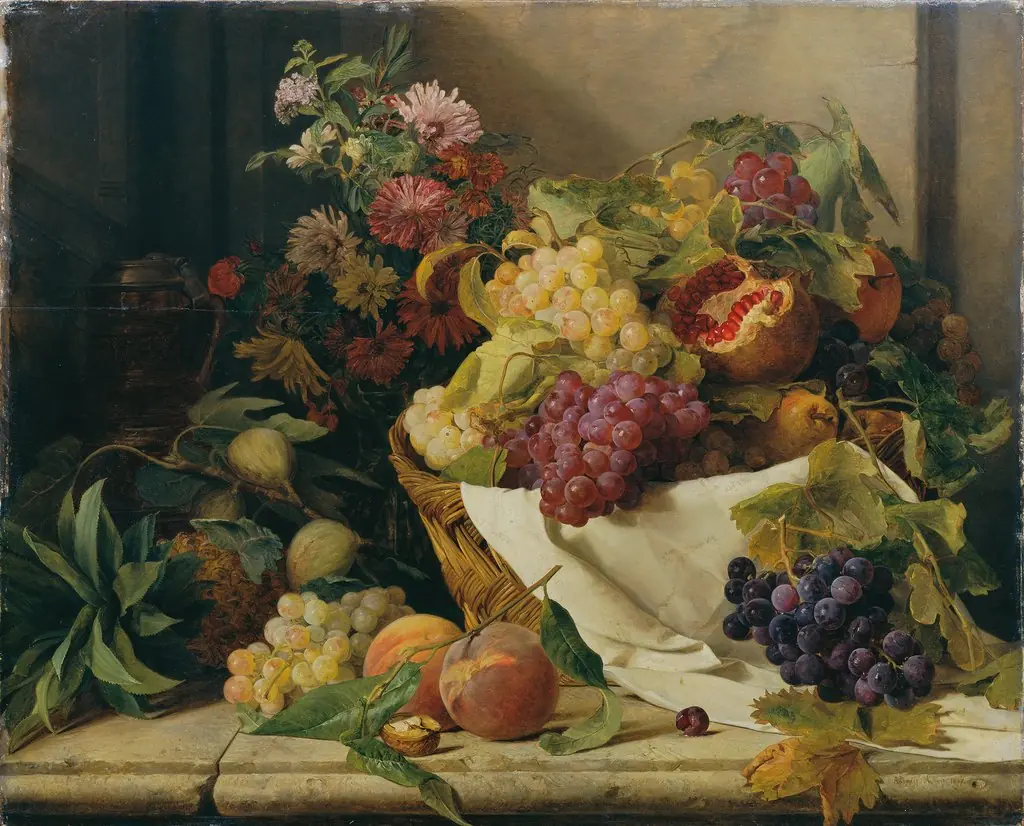
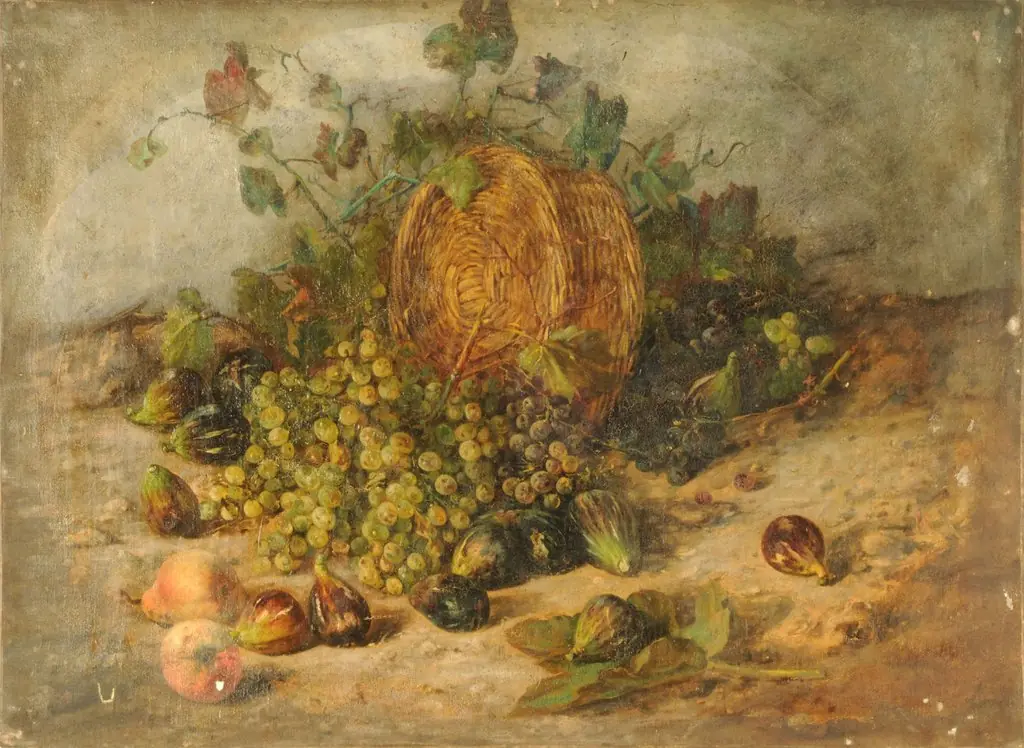
Plums is a watercolor work on paper by the American Folk Art artist William Henry Hunt. It dates from 1850 and is held in the collection of the Victoria and Albert Museum.
About this work
Overview
Executed in transparent washes, the work exemplifies Hunt’s precision in capturing natural forms through subtle tonal shifts.
Painted in 1850 by William Henry Hunt, this watercolour presents a quiet still life of plums arranged in a wicker basket, with several fruits spilled onto the surface below. Executed in transparent washes, the work exemplifies Hunt’s precision in capturing natural forms through subtle tonal shifts. It entered the national collection in the 1860s as part of a bequest from Richard Ellison’s private holdings, contributing to the foundation of Britain’s public watercolour archive.
Subject & Meaning
The composition centers on everyday fruit—plums in varying stages of ripeness, some still attached to stems, others fallen and bruised. Accompanied by scattered leaves, the scene evokes a moment of quiet domestic observation rather than symbolic grandeur. The arrangement suggests the transient nature of harvest, rendered without theatricality, emphasizing the dignity of ordinary things through careful attention to detail and natural decay.
Technique & Style
Hunt employed delicate watercolour washes to model the plums’ surfaces, using layered glazes to suggest the sheen of skin and the softness of flesh. Earthy greens and muted purples define the fruit, while the basket’s weave is rendered with fine, controlled brushwork. The background, softly blurred in brown and green, recedes to isolate the subject, enhancing the intimate scale. Light falls naturally, casting subtle shadows that give volume without harsh contrast.
History & Provenance
The painting was part of a collection of one hundred British watercolours assembled by Richard Ellison. After his death, his widow donated the works in two phases—1860 and 1873—to aid in forming a national repository for watercolour art. This bequest became a cornerstone of the National Collection of Water Colour Paintings, ensuring the preservation of works like Hunt’s that reflected the medium’s domestic and observational traditions.
Context
In mid-19th century Britain, watercolour was gaining recognition as a serious medium, particularly for landscape and still life. Hunt, a leading figure in this movement, focused on humble subjects with scientific precision, aligning with broader cultural interests in naturalism and domestic tranquility. His work stood apart from grand historical narratives, offering instead a contemplative view of the material world.
Legacy
Hunt’s still lifes, including this depiction of plums, helped establish watercolour as a vehicle for quiet, detailed observation. His approach influenced later artists who valued precision over sentimentality. The painting’s inclusion in the national collection affirmed the cultural value of everyday subjects and ensured its continued study as an example of Victorian watercolour technique and aesthetic restraint.
Artist & collection
Artist
William Henry Hunt (London 28 March 1790 – 10 February 1864), was an English watercolourist.