Artwork
Study of a bloodhound
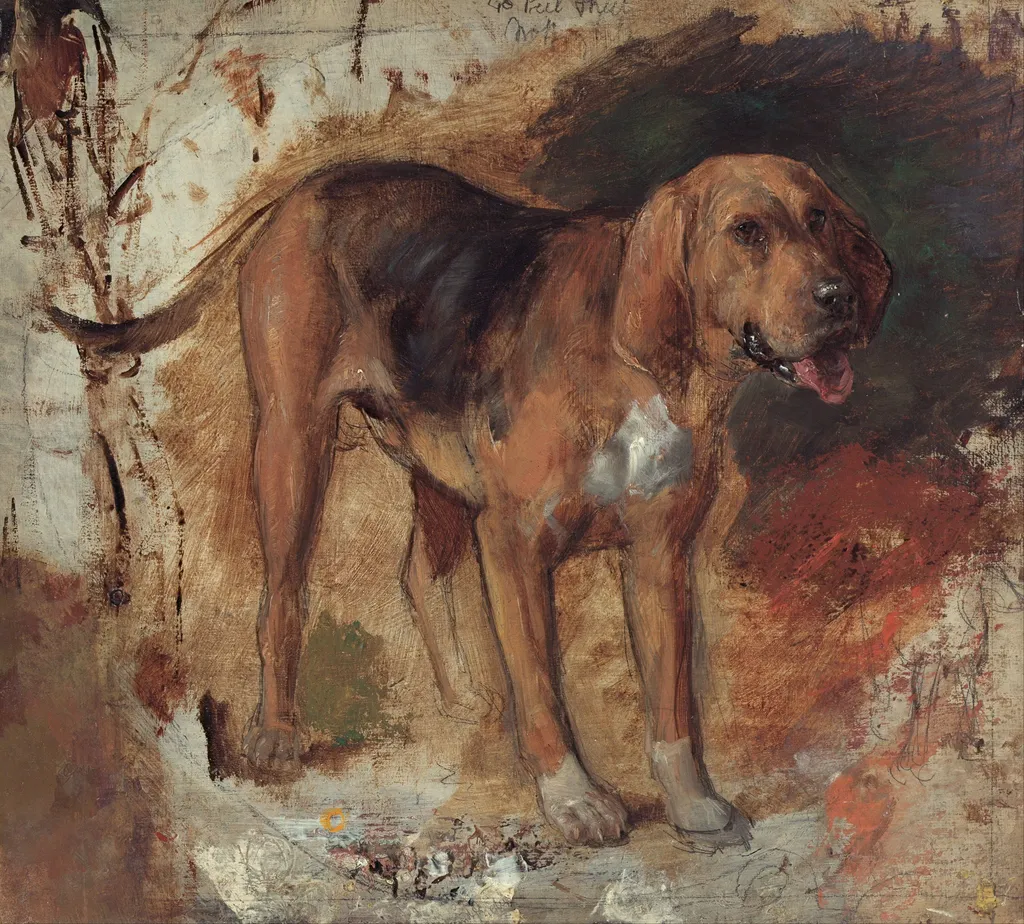
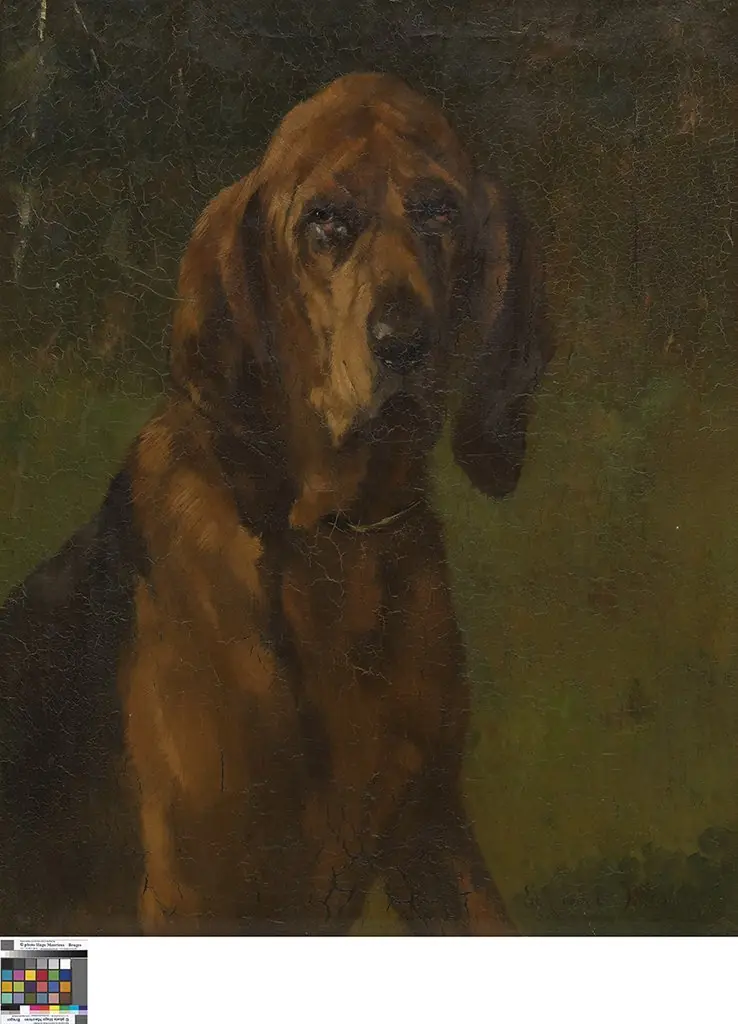
Study of a bloodhound is an unspecified painting by the Realist artist William Holman Hunt. It dates from 1848 and is held in the collection of the Art Gallery of New South Wales.
About this work
Overview
Unlike finished compositions, it reveals the artist’s process—brushwork remains visible, and the background bears sketch-like marks.
Painted in 1848 by William Holman Hunt, this work is a focused observational study of a bloodhound, executed during the early years of the Pre-Raphaelite Brotherhood. Unlike finished compositions, it reveals the artist’s process—brushwork remains visible, and the background bears sketch-like marks. Its purpose was likely to capture anatomical accuracy and texture, serving as preparation for larger symbolic works.
Subject & Meaning
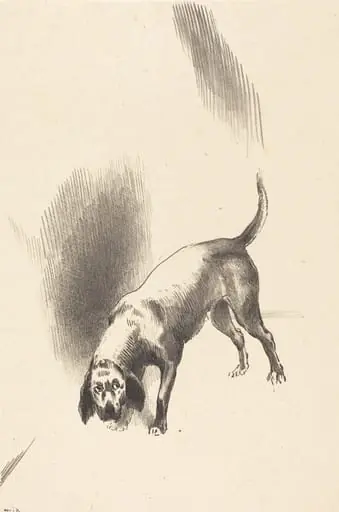
The bloodhound, chosen for its keen senses and historical association with tracking, embodies the Pre-Raphaelite interest in natural truth. Hunt’s emphasis on the dog’s open mouth and protruding tongue suggests alertness and vitality, reinforcing the movement’s rejection of idealized forms. While not overtly allegorical, the study implies a reverence for the animal’s physical presence as a subject worthy of serious attention.
Technique & Style
Hunt applied paint with close attention to fur texture, using layered tones of brown to model the dog’s form and highlight the contrast of its black saddle and white chest patch. The brushwork is precise yet unpolished, revealing the artist’s direct engagement with the subject. Background marks indicate an unfinished state, consistent with preparatory studies that prioritized observation over decorative completion.
History & Provenance
Created in 1848, the painting remained in Hunt’s possession until it entered the collection of the Art Gallery of New South Wales. Its survival as a study rather than a finished piece offers insight into the artist’s working methods during the formative phase of the Pre-Raphaelite movement. No significant alterations or reworkings are documented, preserving its original state as a working sketch.
Context
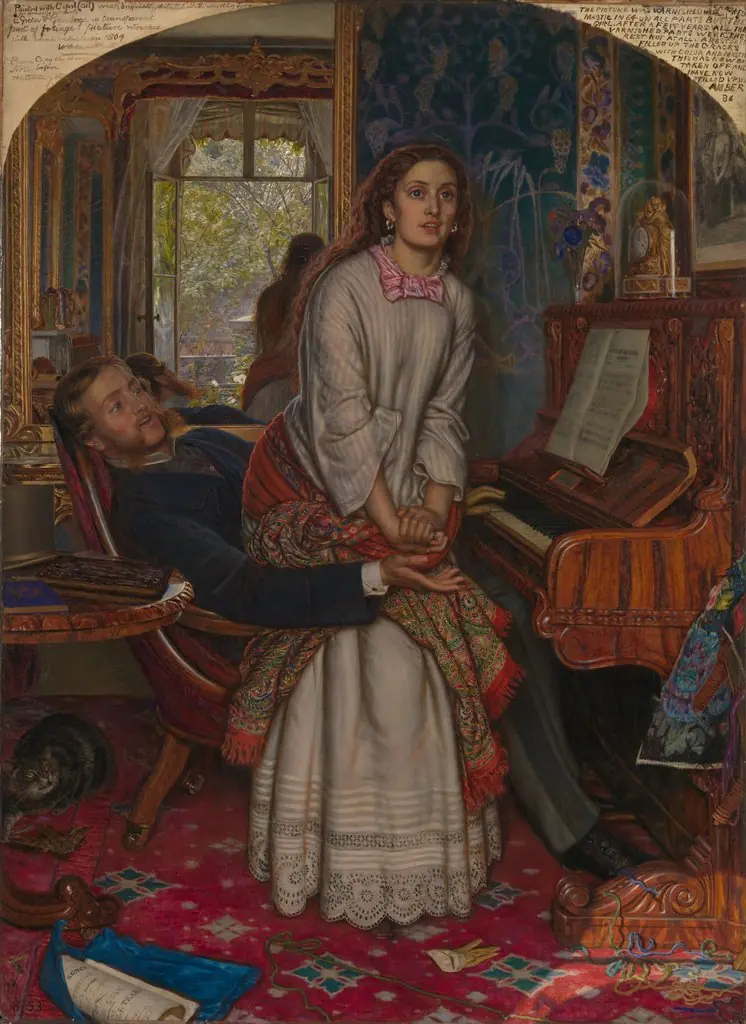
This study emerged alongside Hunt’s larger projects, such as 'The Awakening Conscience,' when the Pre-Raphaelites were challenging academic conventions by insisting on direct observation from nature. Artists in the group often produced detailed animal and botanical studies to ground their symbolic narratives in tangible reality. This bloodhound exemplifies that commitment to empirical accuracy as a foundation for artistic integrity.
Legacy
Though not widely exhibited, the painting remains a key example of the Pre-Raphaelites’ dedication to truthful representation. It illustrates how even minor studies contributed to their broader aesthetic project. Today, it is valued less for its finish than for the insight it provides into Hunt’s method—revealing how meticulous observation shaped the movement’s enduring legacy in British art.
Own this work as a print
Artist & collection
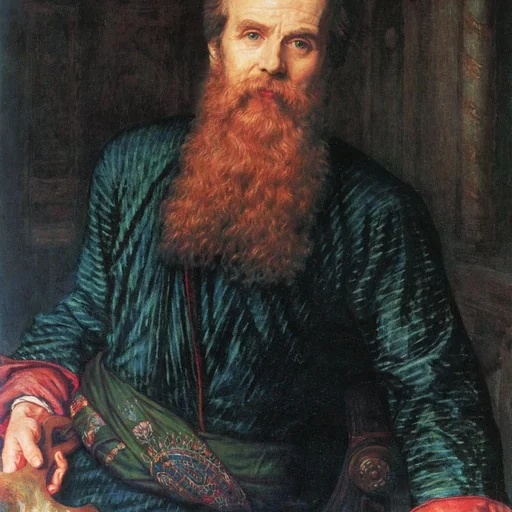
Artist
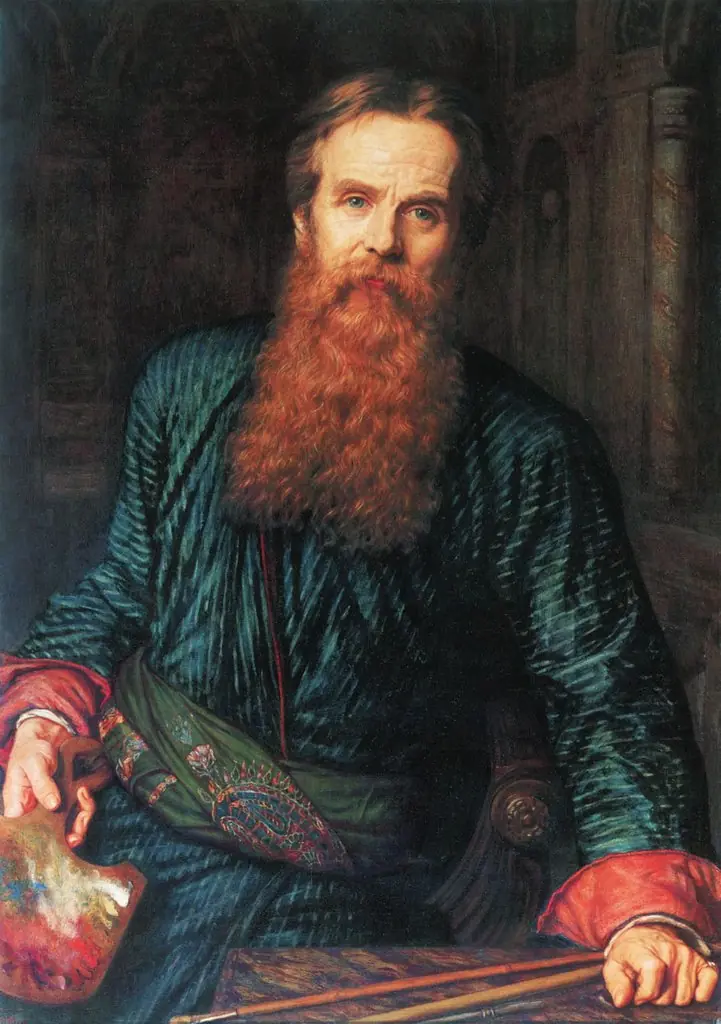
William Holman Hunt (2 April 1827 – 7 September 1910) was an English painter and one of the founders of the Pre-Raphaelite Brotherhood.