Artwork
An Estuary at Evening
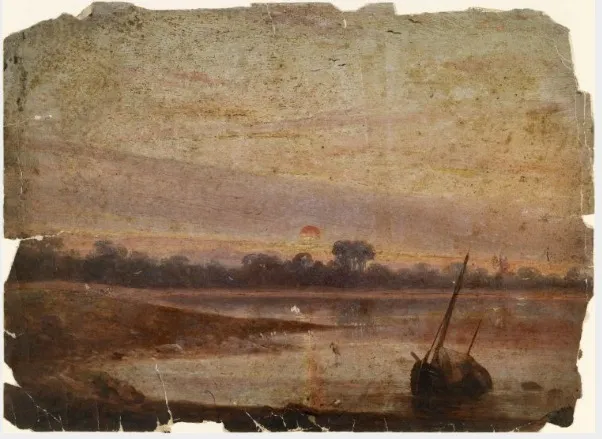
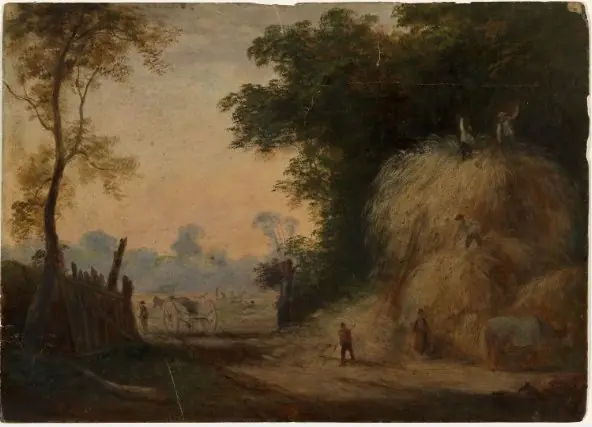
An Estuary at Evening is an unspecified painting by William Howis senior. It dates from 1843 and is held in the collection of the National Gallery of Ireland. Created in 1843, this oil painting depicts an evening scene at an estuary, now part of the National Gallery of Ireland’s collection.
About this work
Overview
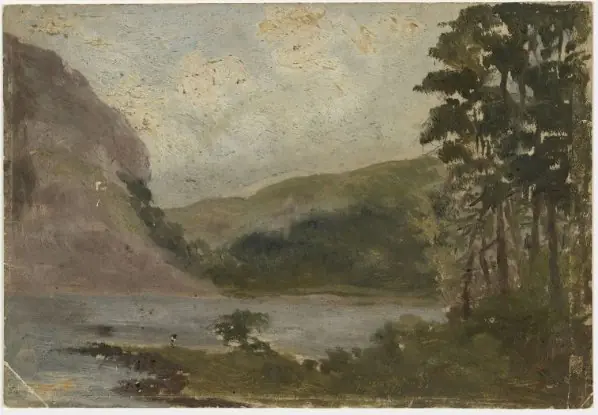
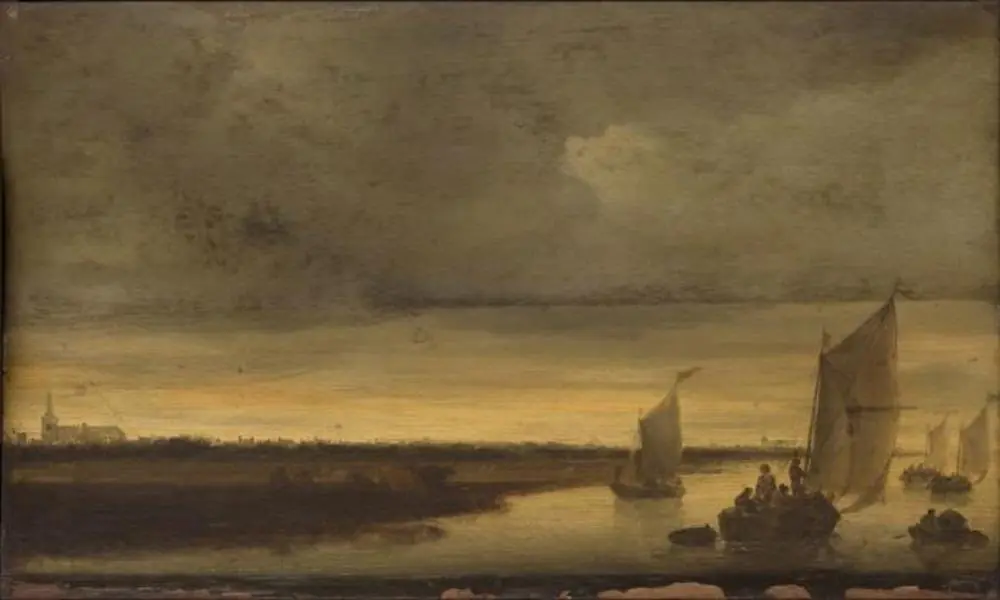
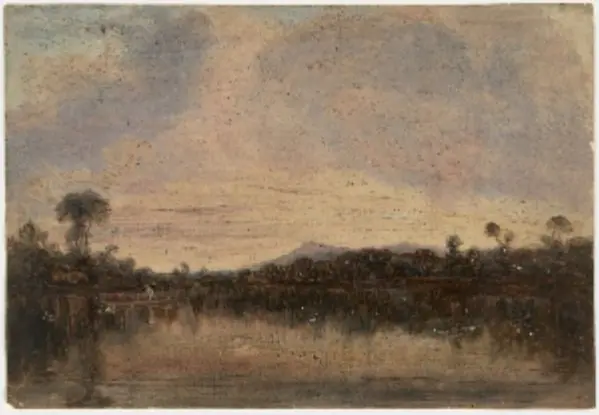
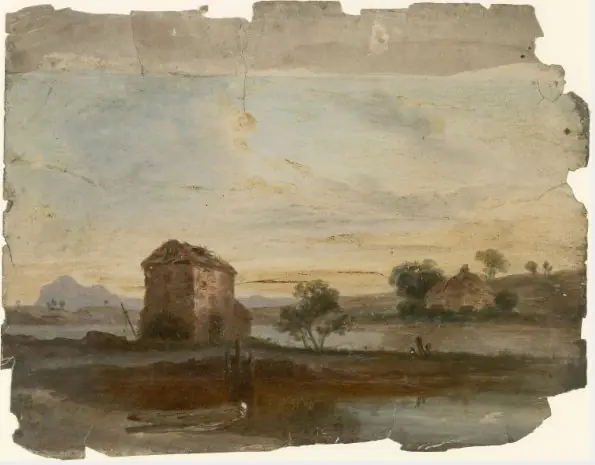
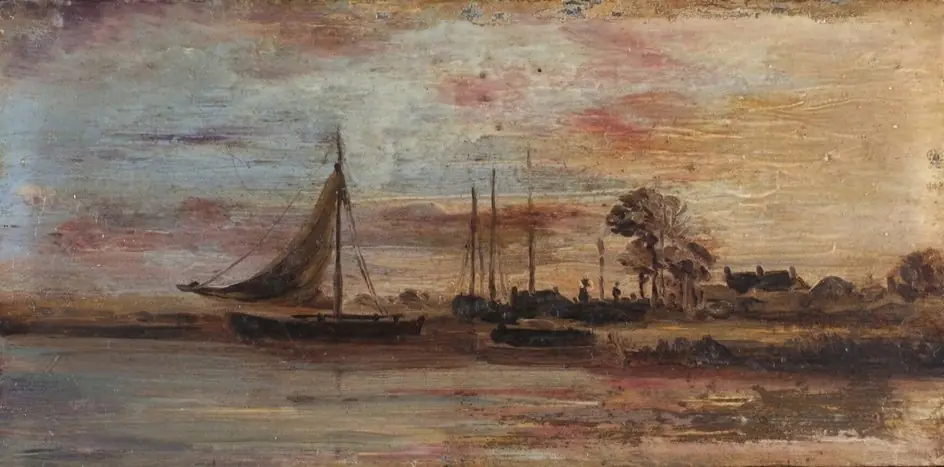
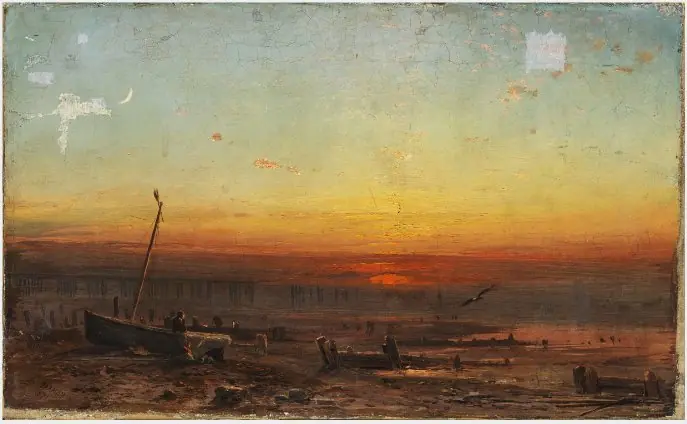
Created in 1843, this oil painting depicts an evening scene at an estuary, now part of the National Gallery of Ireland’s collection. The composition balances sky, water, and land, presenting a tranquil moment as daylight fades. Warm tones dominate the horizon, while a modest boat rests in the foreground, contributing to the work’s quiet narrative.
Subject & Meaning
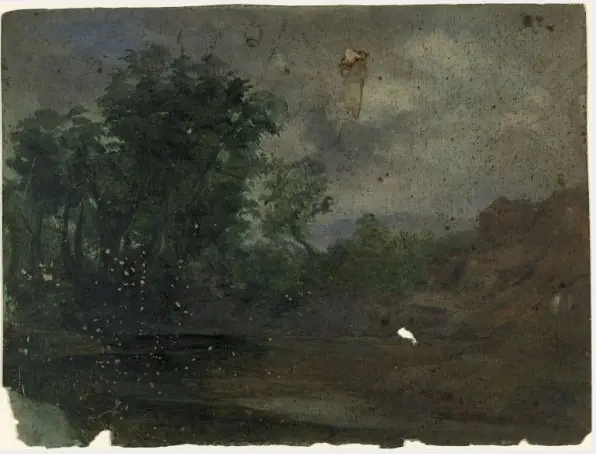
The canvas presents a calm waterway framed by distant trees, their silhouettes etched against a glowing sunset. A small vessel, its sails furled, suggests a pause in travel, emphasizing stillness and the transition from day to night. The overall mood conveys a reflective pause, inviting viewers to contemplate the serenity of a fading day.
Technique & Style
Executed in oil, the artist employs a limited palette of orange, yellow, and muted greens to render the evening light. Broad, softened brushstrokes convey the atmospheric glow, while finer detailing defines the boat and tree outlines. The handling of reflected light on the water demonstrates a careful observation of natural effects typical of mid‑19th‑century landscape painting.
History & Provenance
Painted by William Howis senior, an Irish landscape artist active in the early 1800s, the work entered the National Gallery of Ireland’s holdings through acquisition in the early 20th century. Its presence in the museum’s collection reflects the institution’s commitment to preserving representative examples of Irish nineteenth‑century scenery.
Context
During the 1840s, Irish artists often turned to local vistas to capture the nation’s natural beauty. Howis’s choice of an estuarine setting aligns with contemporary interests in maritime subjects, while the evening light echoes Romantic sensibilities that favored mood and atmosphere over strict topographical accuracy.
Artist & collection