Artwork
Mill and Cottage
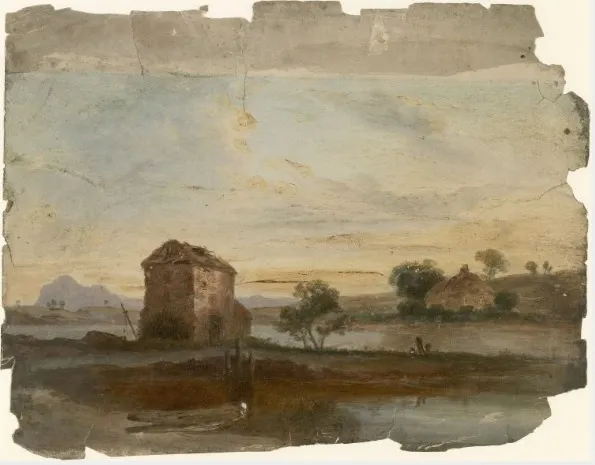
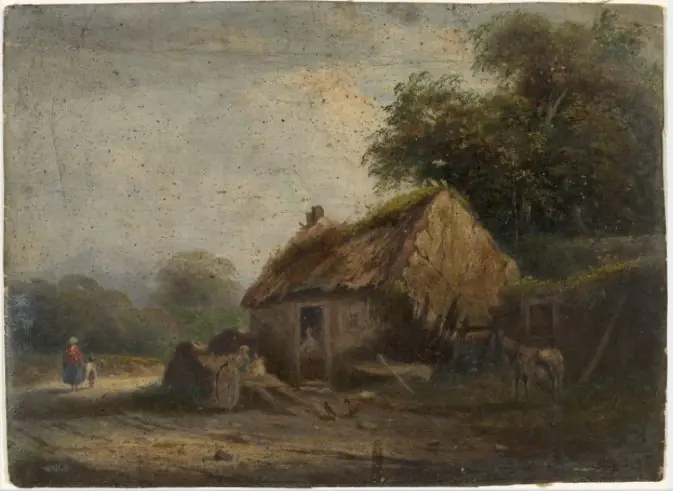
Mill and Cottage is an unspecified painting by William Howis junior. It dates from 1852 and is held in the collection of the National Gallery of Ireland. Painted around 1852 by William Howis Jr.
About this work
Overview
The composition is balanced, with the structures flanking the central stretch of water, framed by surrounding trees.
Painted around 1852 by William Howis Jr., this landscape depicts a quiet rural scene featuring a stone mill and cottage beside a still body of water. The composition is balanced, with the structures flanking the central stretch of water, framed by surrounding trees. The palette is dominated by earthy browns and muted greens, with a pale, cloud-dappled sky overhead. The work is part of the National Gallery of Ireland’s collection.
Subject & Meaning
The mill and cottage represent modest, functional rural life in mid-19th century Ireland. Their placement suggests a harmonious relationship between human habitation and the natural environment. The still water reflects the sky, reinforcing a sense of calm and continuity. There is no overt narrative, but the scene evokes the quiet dignity of agricultural livelihoods during a period of social and economic change.
Technique & Style
Howis employed a restrained, observational approach, using soft brushwork to render textures of stone, foliage, and water. The colors are subdued, with attention to natural light and atmospheric tone rather than dramatic contrast. Reflections in the water are rendered with gentle precision, enhancing the scene’s stillness. The composition avoids theatricality, favoring quiet realism over romanticized idealism.
History & Provenance
The painting was created in the early 1850s and entered the National Gallery of Ireland’s collection at an early stage, likely through donation or acquisition from a private source. Its continuous presence in the gallery since the 19th century indicates its recognition as a representative example of Irish landscape painting from the period, though little is documented about its initial reception or ownership.
Context
During the 1850s, Ireland was recovering from the Great Famine, and rural life remained central to national identity. Artists like Howis turned to local scenery as a subject of quiet reverence, avoiding political themes in favor of enduring natural forms. This work aligns with a broader trend among Irish painters who sought to document the landscape as a stable, if fading, cultural anchor.
Legacy
Though not widely exhibited beyond Ireland, the painting remains a quiet example of provincial landscape art from the Victorian era. It contributes to the understanding of how Irish artists engaged with their immediate surroundings without grandiosity. Its preservation in the National Gallery of Ireland ensures its role as a reference point for regional artistic practice in the mid-19th century.
Artist & collection

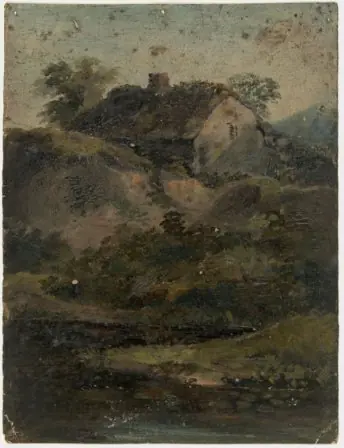 Country Scene with Cottage
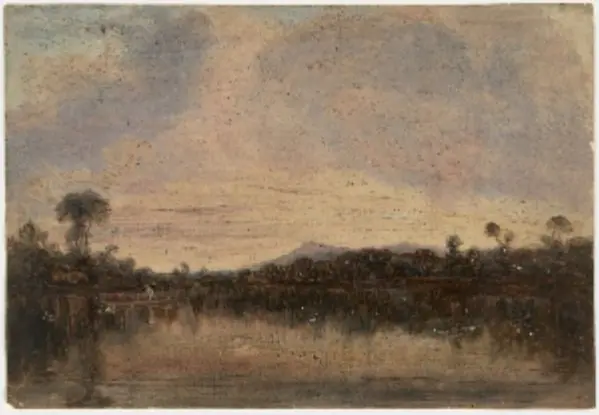 Boatmen on a Lake
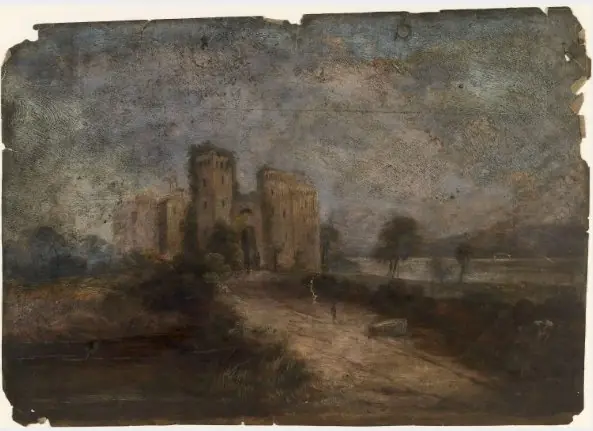 Raglan Castle, Wales
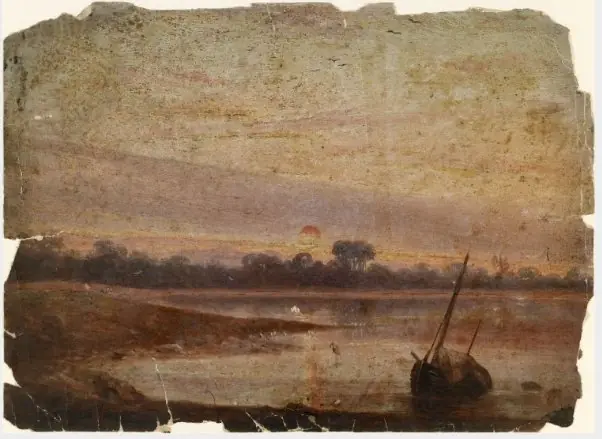 An Estuary at Evening
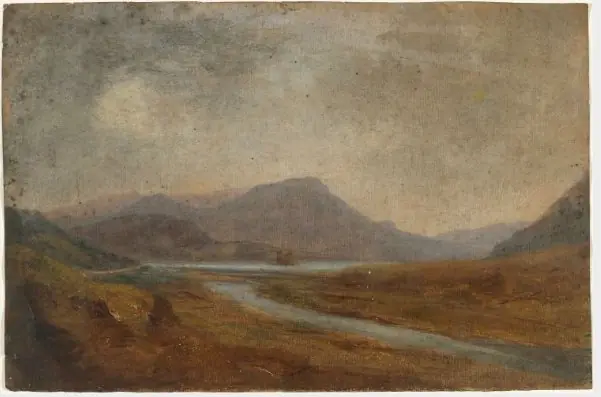 Hen's Castle, Lough Corrib, County Galway
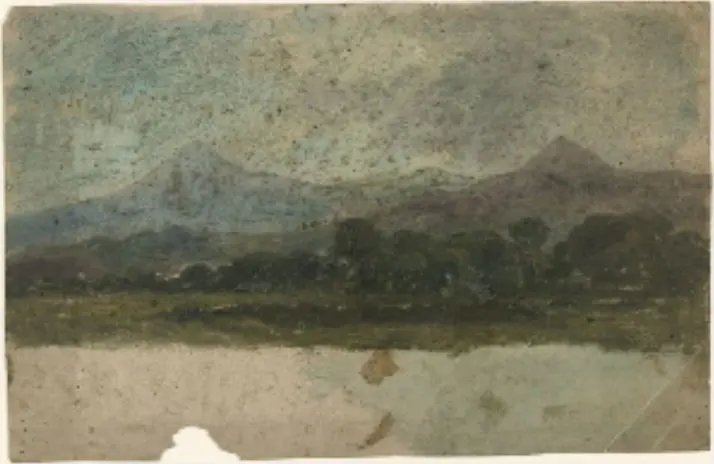 The Great and Little Sugarloaf Mountains, County Wicklow
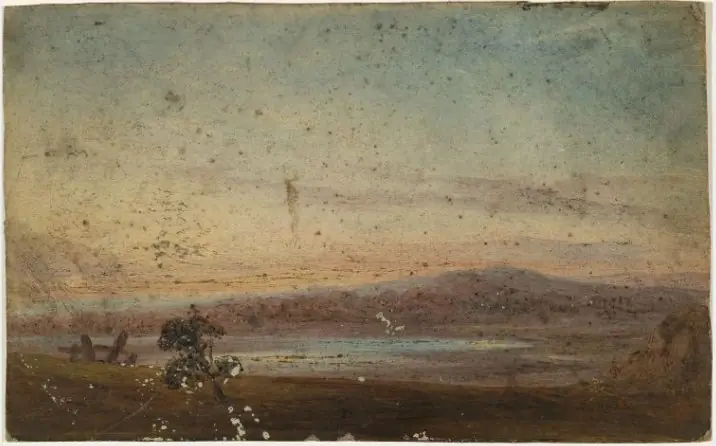 River at Evening
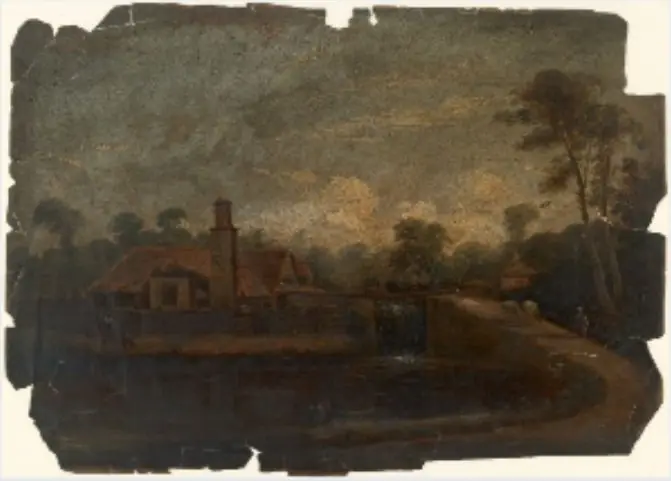 Lock Gates on a Canal
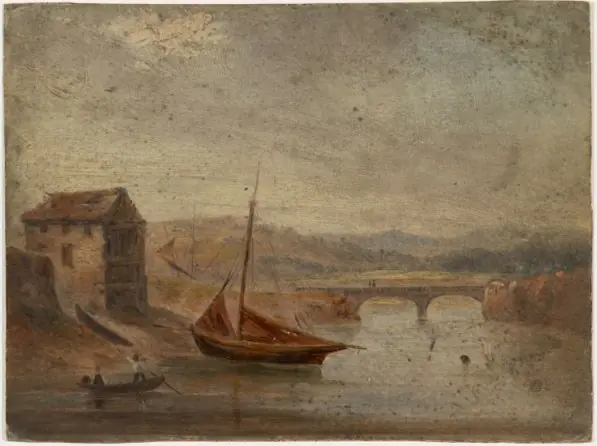 Near Plymouth, Devon
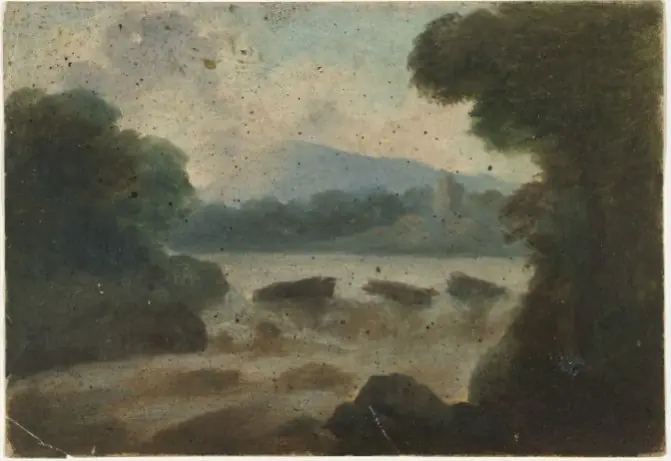 River Falls with Distant Ruin
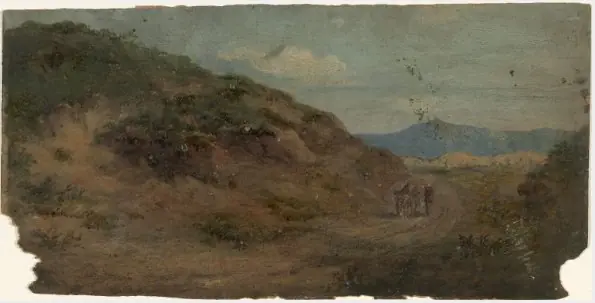 Near Arklow, County Wicklow
 Cottage Scene