Artwork
Lock Gates on a Canal
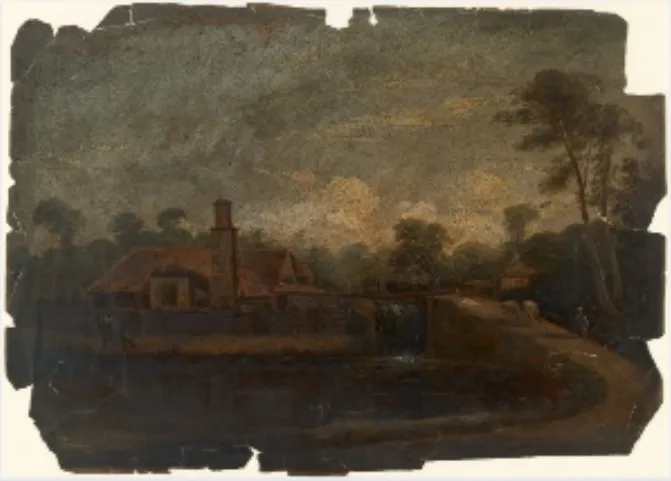
Lock Gates on a Canal is an unspecified painting by William Howis senior. It dates from 1853 and is held in the collection of the National Gallery of Ireland.
About this work
Overview
Painted around 1853 by William Howis senior, this work depicts a quiet stretch of canal in the Irish countryside.
Painted around 1853 by William Howis senior, this work depicts a quiet stretch of canal in the Irish countryside. The composition centers on a wooden lock gate, flanked by earthy paths and framed by soft tree lines. The scene lacks human figures or mechanical activity, emphasizing stillness. Executed in a restrained palette of olive greens and earth browns, the painting reflects a quiet observation of rural infrastructure rather than a dramatic narrative.
Subject & Meaning
The lock gate serves as both structural element and visual anchor, symbolizing human intervention in natural waterways. Its quiet presence suggests utility over spectacle, aligning with 19th-century rural life where such mechanisms were routine. The absence of people or movement reinforces a contemplative mood, inviting reflection on the harmony between engineered systems and the surrounding landscape.
Technique & Style
Howis employed a subdued tonal range, favoring muted greens, browns, and soft grays to evoke atmospheric depth. Brushwork is deliberate but unobtrusive, with gentle transitions between land, water, and sky. The foreground path leads the eye toward the lock, creating subtle spatial depth without theatrical perspective. The style leans toward topographical realism, prioritizing accuracy over emotional intensity.
History & Provenance
The painting has been held by the National Gallery of Ireland since its acquisition, though its early ownership history remains undocumented. It was likely created during Howis’s active period in Ireland, possibly as part of a series documenting local infrastructure. No exhibition records from the 1850s survive, but its inclusion in the national collection suggests early recognition of its quiet documentary value.
Context
In mid-19th-century Ireland, canal networks were vital for transport and agriculture, yet often overlooked in art. Howis’s focus on a functional lock gate reflects a regional interest in everyday landscapes, distinct from grander Romantic or historical subjects. His work aligns with a growing trend among Irish artists to document vernacular environments with quiet precision.
Legacy
Though not widely known outside Ireland, the painting contributes to a modest but significant body of work documenting rural infrastructure in 19th-century Irish art. It stands as a quiet counterpoint to more dramatic landscape traditions, preserving a sense of place tied to practical, uncelebrated spaces. Its endurance in the national collection affirms its role as a record of ordinary life.
Artist & collection

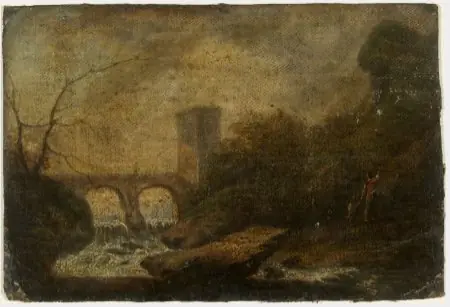 Sunset beyond a Bridge
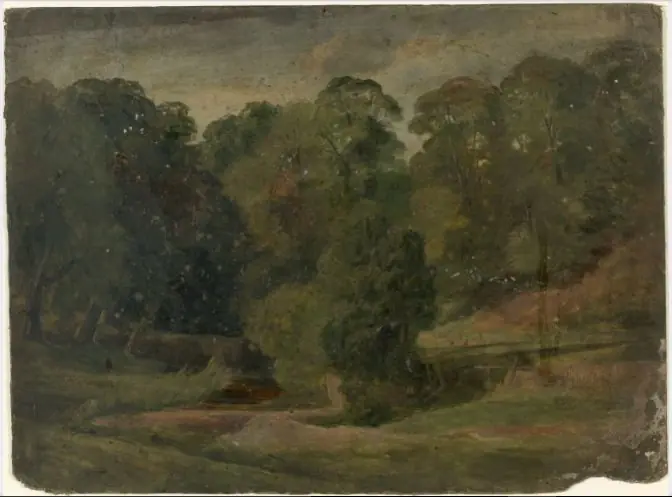 A Clearing in the Woods
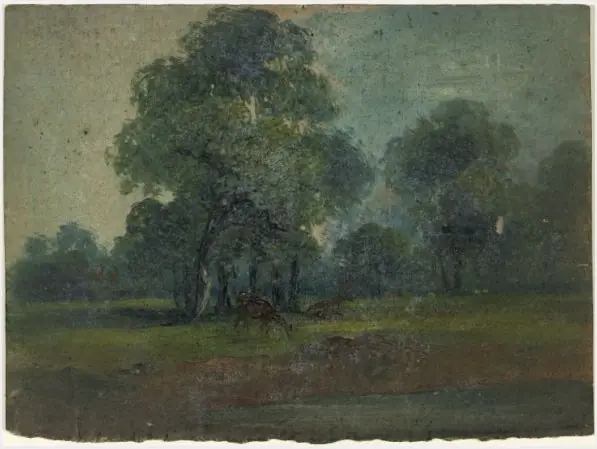 Parkland with Deer
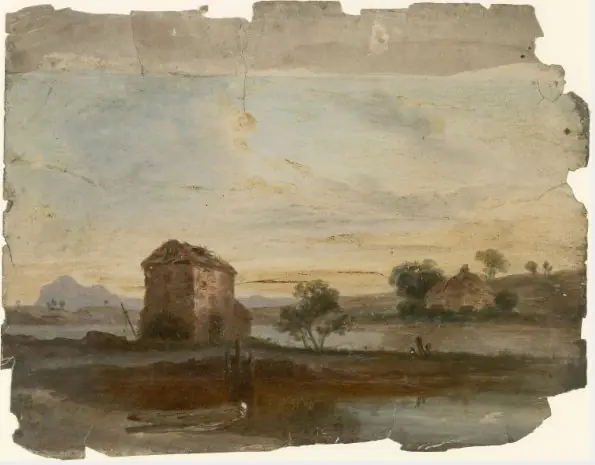 Mill and Cottage
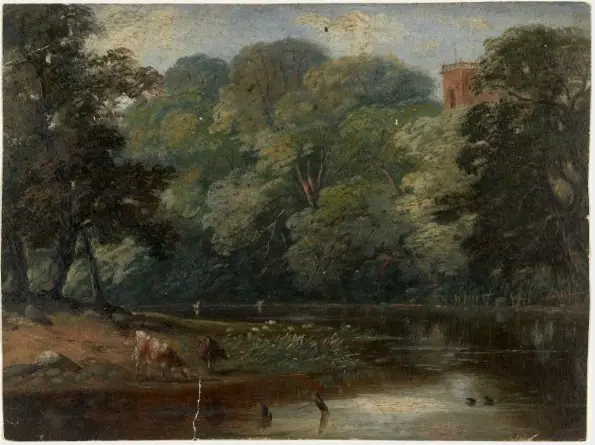 Cattle Drinking
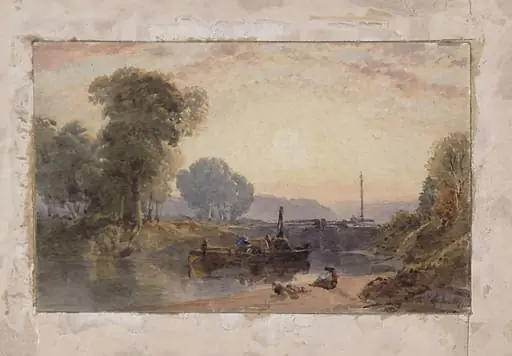 Lock on the Thames
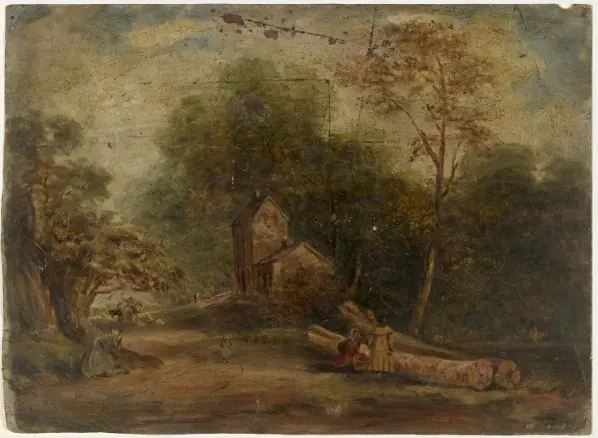 Woman and Coachman Talking beside a Road
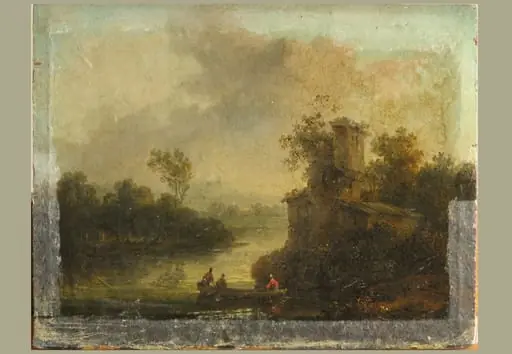 Peisaj cu râu și în dreapta castel cu ruine. Pandant: Peisaj cu râu și în stânga castel cu ruine
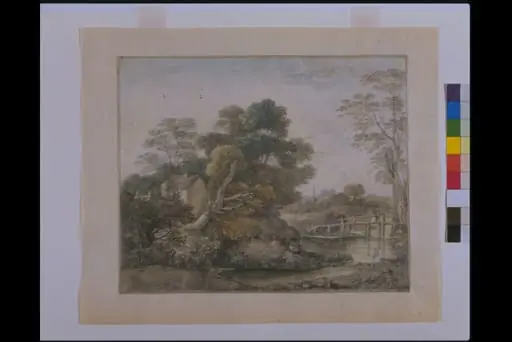 Landscape with Cottage and Stream
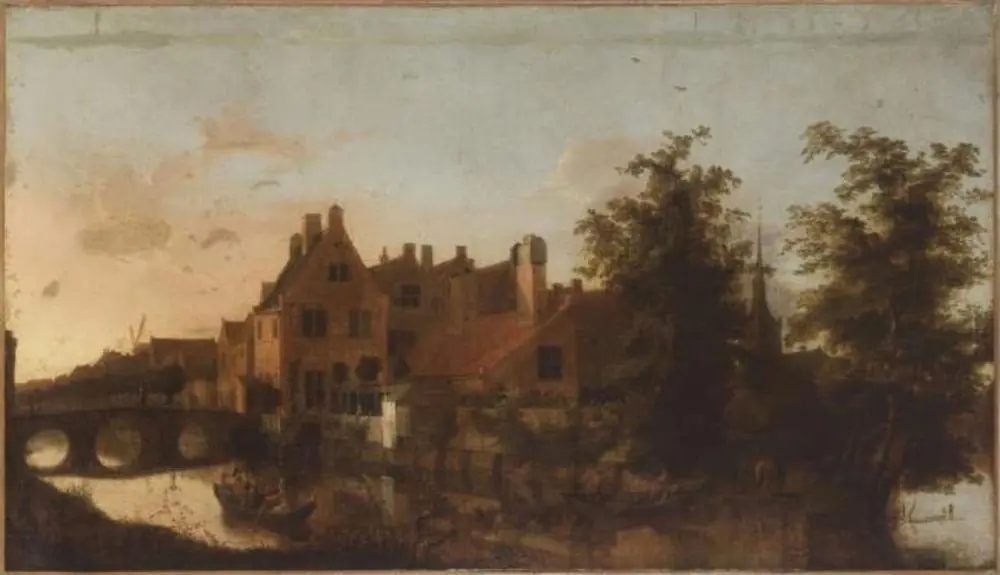 Houses beside a Canal