Artwork
View towards the Great and Little Sugarloaf Mountains, County Wicklow
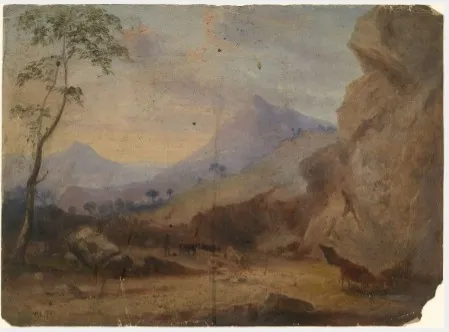
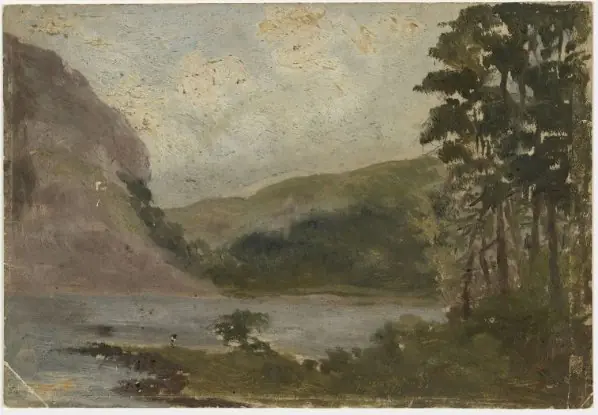
View towards the Great and Little Sugarloaf Mountains, County Wicklow is an unspecified painting by William Howis senior. It dates from 1861 and is held in the collection of the National Gallery of Ireland.
About this work
Overview
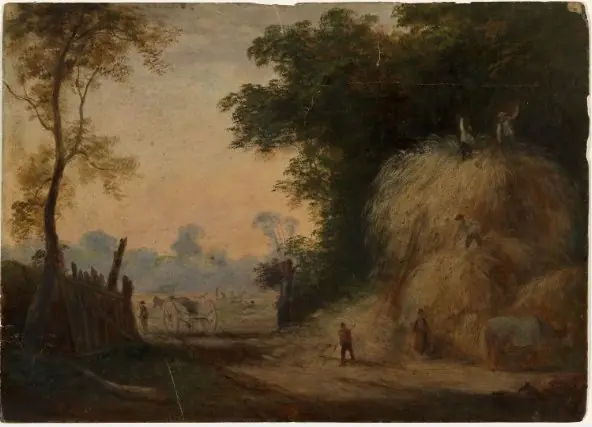
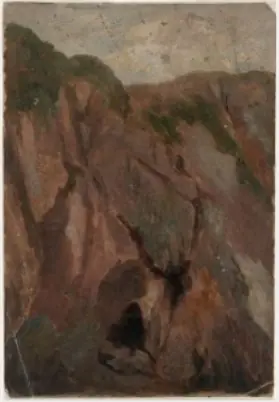
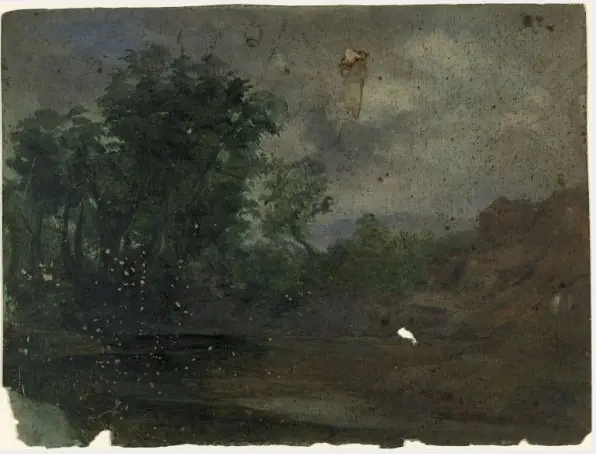
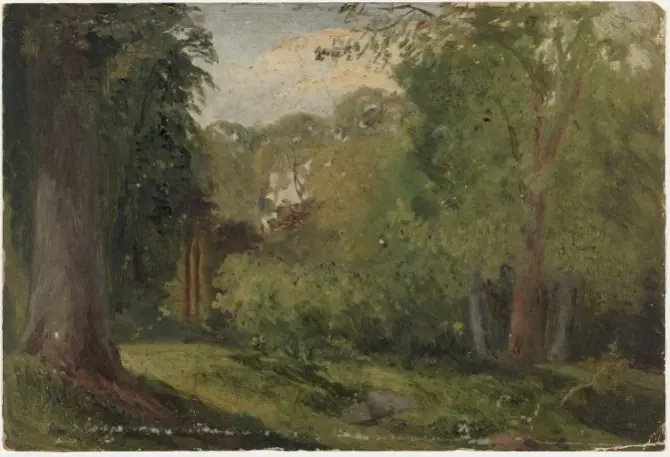
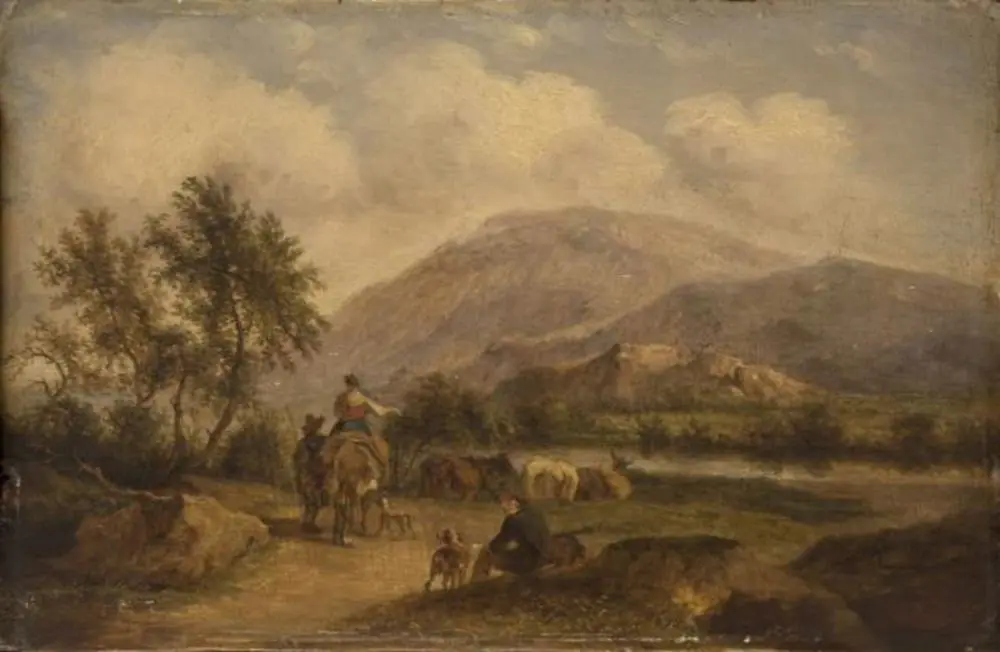
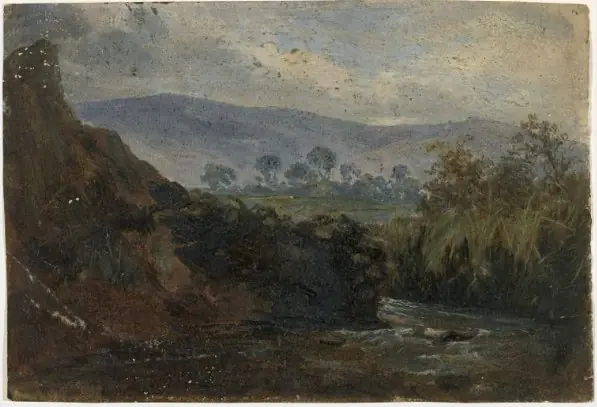
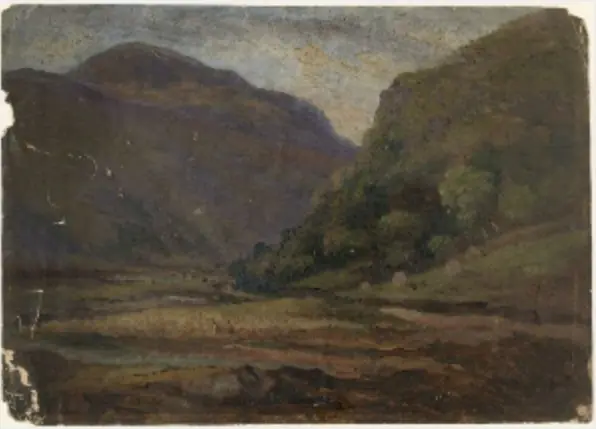
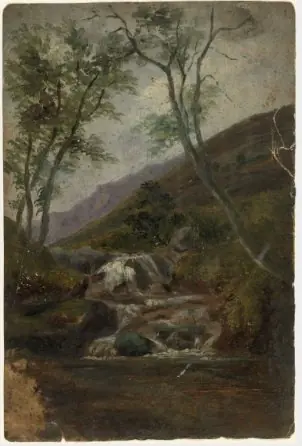
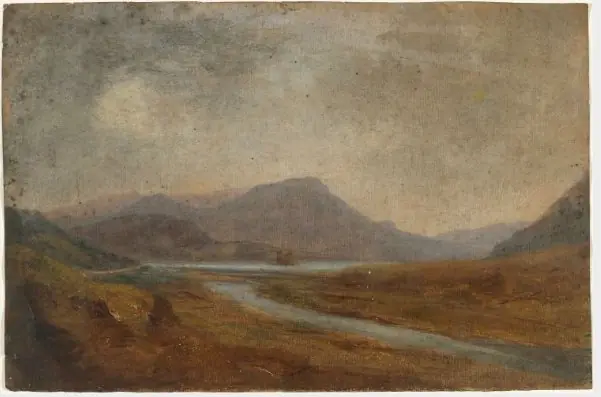
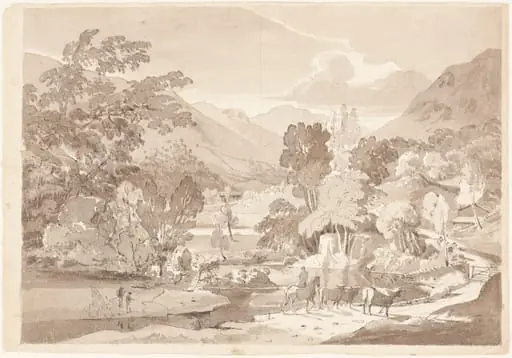
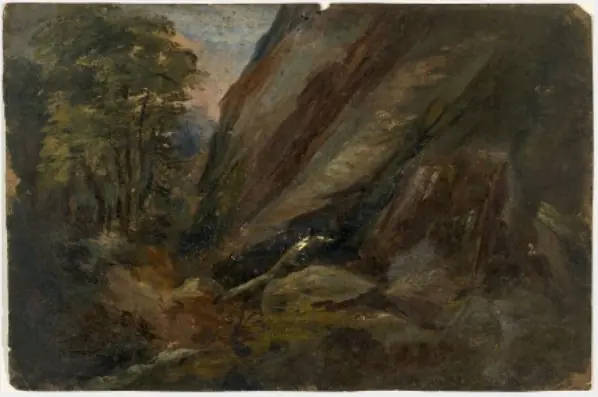
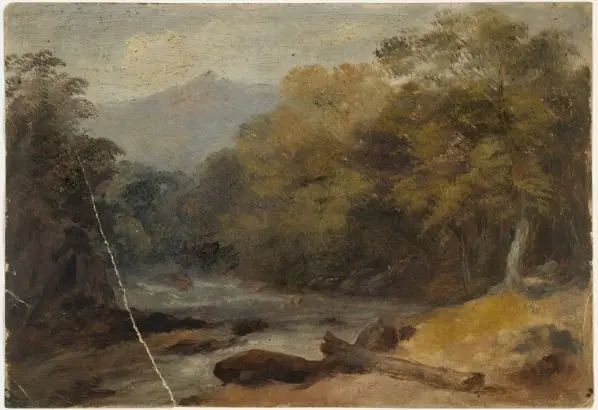
Painted in 1861 by William Howis senior, this landscape depicts the Sugarloaf Mountains in County Wicklow, Ireland. The composition balances distant peaks with a textured foreground of trees and rocky terrain. Executed in oil, the work reflects a quiet, observational approach to the Irish countryside, emphasizing natural forms over dramatic narrative.
Subject & Meaning
The painting presents a serene, unidealized view of the Wicklow landscape, focusing on the geological character of the Sugarloaf Mountains. There is no human presence or symbolic element; the subject is the land itself, rendered with quiet reverence. The absence of narrative suggests an interest in place as a subject worthy of contemplation in its own right.
Technique & Style
Color gradation, rather than sharp detail, defines distance, reflecting a sensitivity to atmospheric perspective common in mid-19th-century landscape practice.
Howis employs a muted palette to differentiate spatial planes: cool blues and purples recede for the mountains, while warm browns and greens anchor the foreground. Brushwork is deliberate but not ornate, with attention to the texture of rock and foliage. Color gradation, rather than sharp detail, defines distance, reflecting a sensitivity to atmospheric perspective common in mid-19th-century landscape practice.
History & Provenance
The painting entered the collection of the National Gallery of Ireland shortly after its creation. It was likely acquired as part of a broader effort to document Irish scenery during a period of growing national interest in local landscapes. No significant changes in ownership are recorded, and it has remained in public care since the 19th century.
Context
Created during a time when Irish artists were increasingly turning to native scenery, this work aligns with a regional movement away from imported European models. While not part of a formal school, Howis’s approach reflects a broader trend among Irish painters to record the topography of their homeland with sincerity and local knowledge.
Legacy
The painting contributes to a modest but persistent body of 19th-century Irish landscape art that prioritizes observation over romanticism. Though not widely exhibited beyond Ireland, it remains a representative example of provincial artistic practice, offering insight into how local environments were visually recorded during a formative period in Irish cultural identity.
Artist & collection