Artwork
A Mountainous Landscape
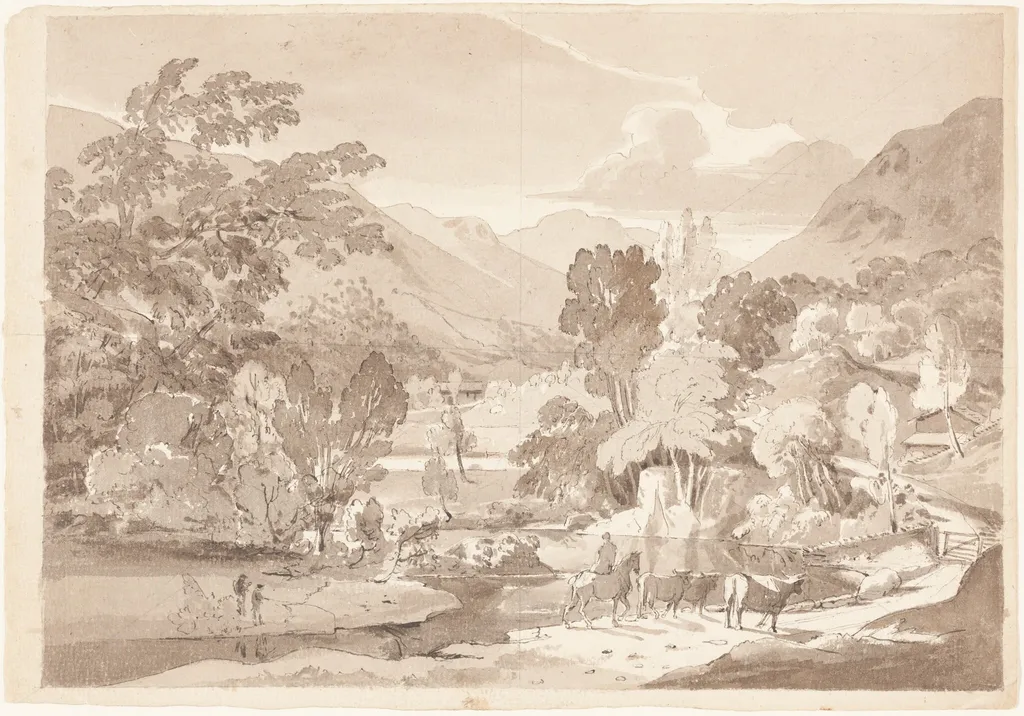
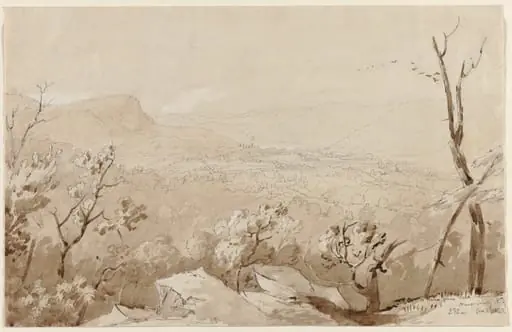
A Mountainous Landscape is an ink drawing by the Romanticist artist British 19th Century. It dates from 1801 and is held in the collection of the National Gallery of Art. This drawing is a landscape rendered in pen and black ink with gray wash over graphite on wove paper.
About this work
Overview
Distant figures on horseback and a small structure near the water suggest human presence without dominating the scene.
This drawing is a landscape rendered in pen and black ink with gray wash over graphite on wove paper. It depicts a tranquil valley with gentle hills, a winding stream, and scattered trees. Distant figures on horseback and a small structure near the water suggest human presence without dominating the scene. The overall effect is subdued and atmospheric, achieved through light, layered washes and minimal detail.
Subject & Meaning
The scene conveys quietude rather than narrative. Nature is the focus—rolling terrain, misty air, and sparse architecture imply harmony between land and human activity. The faint figures and distant church evoke solitude and contemplation, aligning with Romantic ideals that valued nature as a space for introspection, not grandeur or drama.
Technique & Style
The artist employed loose, rapid pen strokes for trees and contours, paired with diluted ink washes to suggest depth and haze. Graphite underdrawing guides the composition but remains partially visible, reinforcing the sketchlike quality. The absence of sharp definition and the soft transitions between tones create a sense of atmospheric perspective and ephemeral light.
History & Provenance
The work’s origin is undocumented beyond its medium and support. No record of its commission, exhibition, or early ownership is available. Its informal character suggests it was likely a personal study or travel sketch, made quickly in the field rather than as a finished piece for display.
Context
Created during the early 19th century, the drawing reflects Romantic-era tendencies to portray nature as emotionally resonant and subtly sublime. Unlike grand historical landscapes, this work embraces intimacy and imperfection, aligning with artists who valued spontaneous observation over idealized composition.
Legacy
Though unsigned and unattributed, the piece exemplifies a widespread practice among Romantic draftsmen: using sketchbook studies to capture transient moods of the natural world. Its unpolished aesthetic influenced later generations who valued immediacy and emotional authenticity over technical finish.
Own this work as a print
Artist & collection

Artist
This artist’s short life left behind a quiet obsession with water—whether the churn of a mill wheel, the choppy waves off England’s south coast, or the way light bounces off pond lilies.

 Untitled
 The Good Shepherd
 River scene with a temple or palace in the clouds
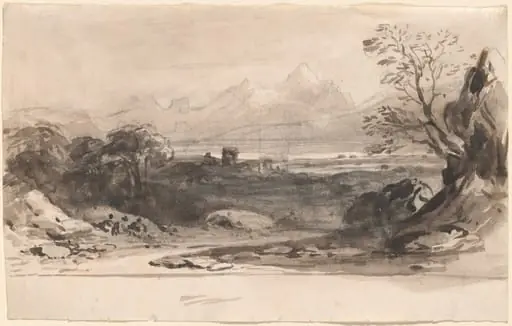 Landscape with Ruins
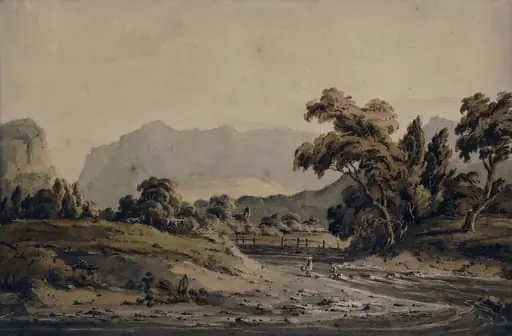 Rydal Head, Ambleside, Westmorland
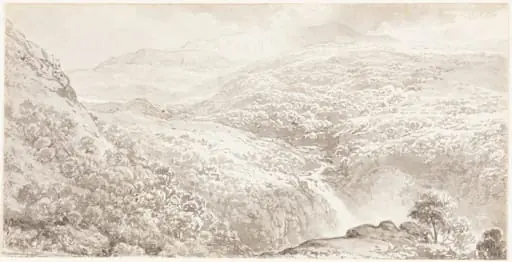 A Mountain Valley with a Waterfall
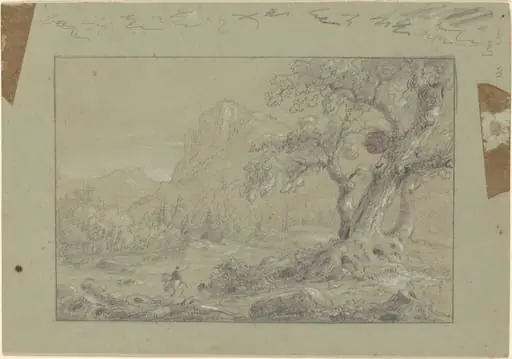 Study for "The Mountain Ford"
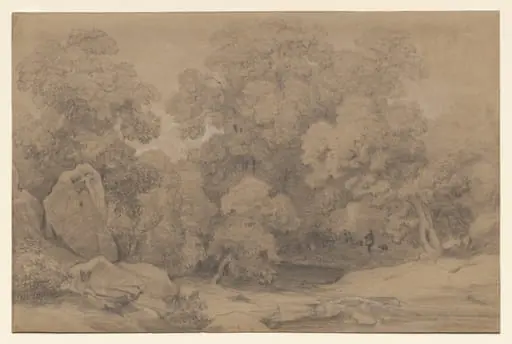 Landscape
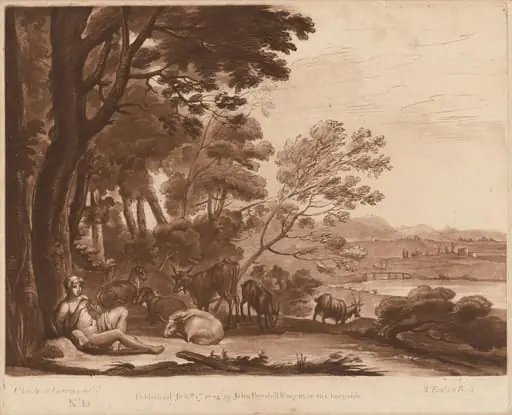 Landscape No. 15 from "Liber Veritatis"
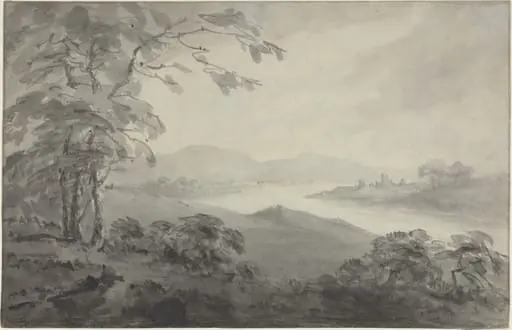 River Landscape with Ruins
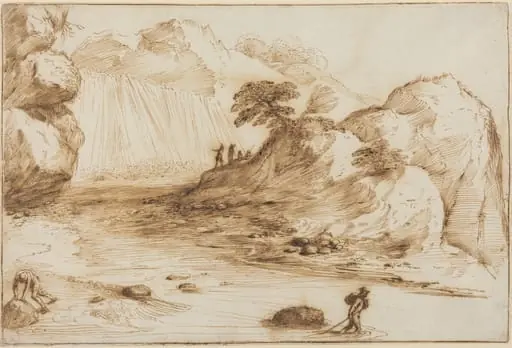 Landscape with a Waterfall
 A View from Bald Mountain, Orange County, N.Y.