Artwork
Mrs. Cephas Smith, Jr. (Mary Gove) and Child
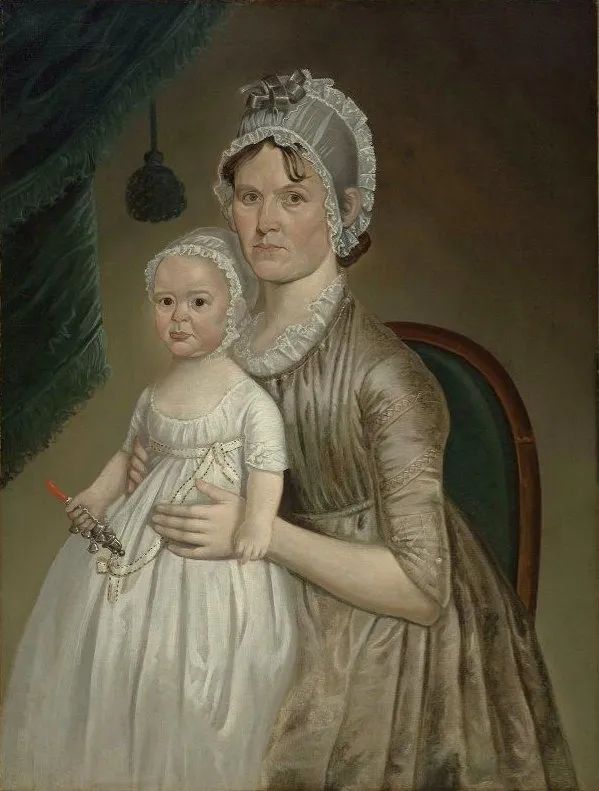
Mrs. Cephas Smith, Jr. (Mary Gove) and Child is an oil painting by the American Folk Art artist William Jennys. It dates from 1803 and is held in the collection of the Museum of Fine Arts Boston.
About this work
Overview
It is part of the Museum of Fine Arts, Boston’s collection, representing the quiet domestic life of the era through a modest, unadorned composition.
Painted in 1803 by William Jennys, this oil portrait captures Mary Gove, wife of Cephas Smith Jr., holding her young child. Created during a period when itinerant artists traveled rural New England for commissions, the work exemplifies early American folk portraiture. It is part of the Museum of Fine Arts, Boston’s collection, representing the quiet domestic life of the era through a modest, unadorned composition.
Subject & Meaning
The painting portrays a mother and infant in a simple interior, emphasizing tenderness and familial connection. Both figures wear modest attire typical of early 19th-century New England women, with bonnets suggesting propriety and domesticity. The presence of the child underscores themes of motherhood and continuity, while the plain setting reflects the restrained values of the time, avoiding grandeur in favor of intimate realism.
Technique & Style
Jennys employed oil paint with a soft, muted palette and gentle modeling, avoiding dramatic lighting or elaborate detail. Forms are simplified, with flat planes and careful but unrefined contours characteristic of folk art. The curtain on the left and the small object suspended from the ceiling suggest a domestic space without architectural precision, reinforcing the artist’s focus on the figures rather than their environment.
History & Provenance
William Jennys, son of itinerant painter Richard Jennys, worked primarily between 1790 and 1810, moving through rural communities to paint portraits for local families. This work likely originated in a New England town, commissioned by the Smith family. It remained in private hands until entering the Museum of Fine Arts, Boston’s collection, where it now serves as a record of regional artistic practice during the early republic.
Context
In the early 1800s, formal portraiture was rare outside urban centers, and many families relied on traveling painters like Jennys to document their likenesses. His work reflects a broader trend of amateur and semi-professional artists filling a cultural gap. The painting’s simplicity mirrors the economic and social conditions of rural New England, where artistic training was limited and personal identity was conveyed through modest, recognizable symbols.
Legacy
Jennys’s portraits, including this one, contribute to the understanding of American folk art as a distinct tradition rooted in regional practice rather than academic training. Though not widely known in his lifetime, his works are now valued for their sincerity and historical insight. This painting remains a quiet testament to the lives of ordinary families in post-revolutionary America.
Artist & collection

Artist
William Jennys (1774–1859), also known as J. William Jennys, was an American primitive portrait painter who was active from about 1790 to 1810. He traveled throughout New England seeking commissions in rural areas and…

 Mother and Child
 Mother and Child
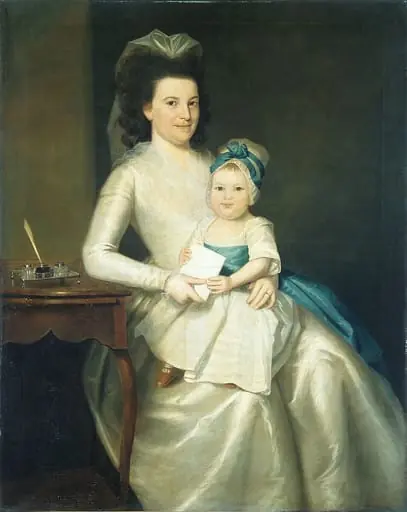 Lady Williams and Child
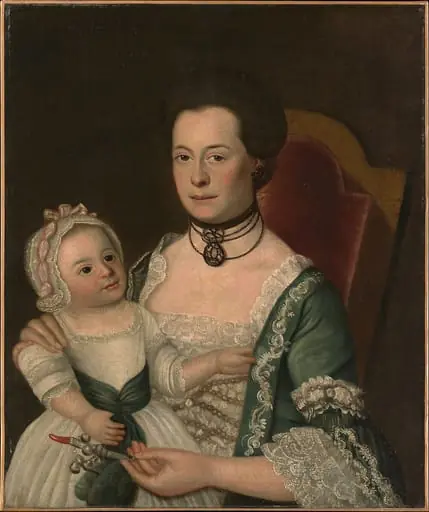 Mrs. Jacob Hurd and Child
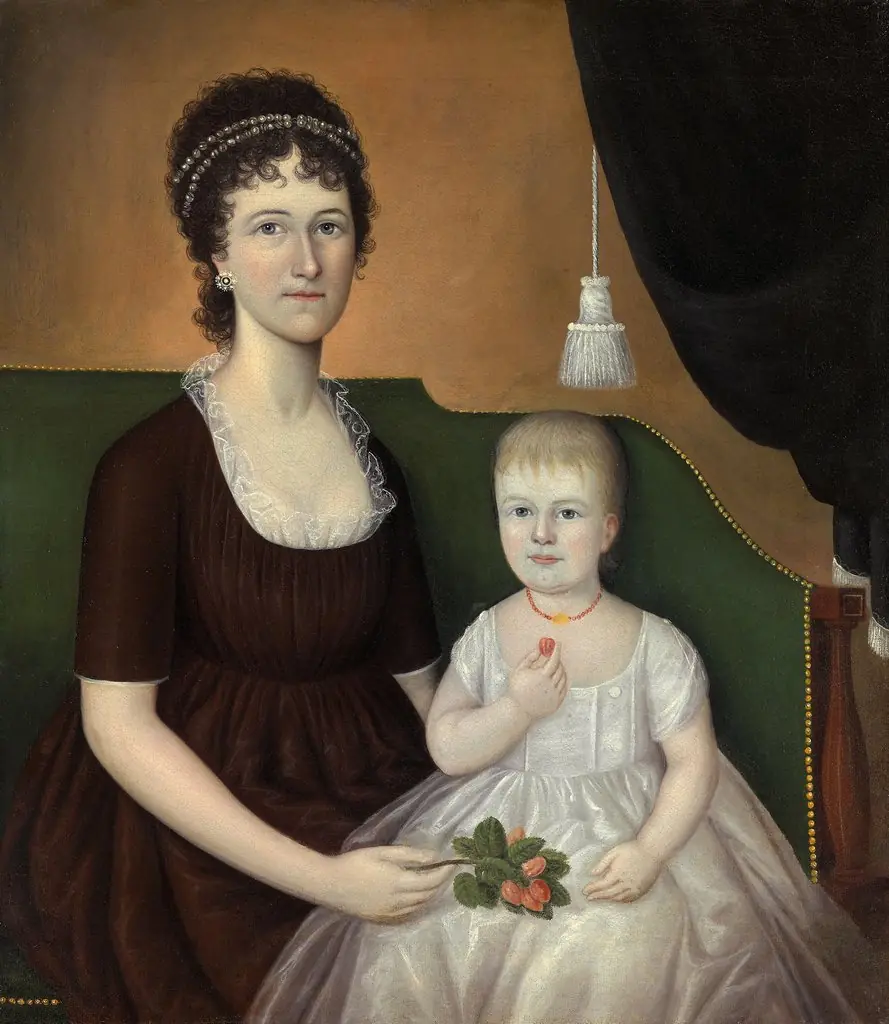 Mrs. Andrew Bedford Bankson and Son, Gunning Bedford Bankson
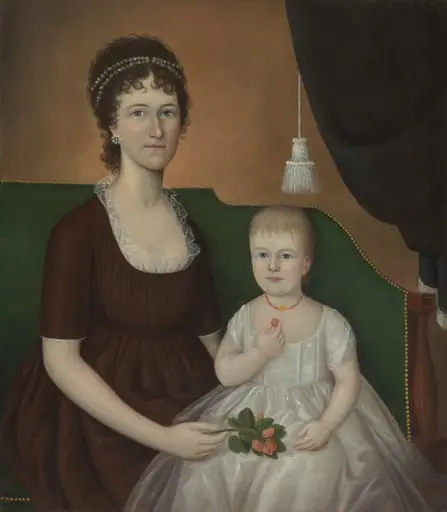 Elizabeth Grant Bankson Beatty (Mrs. James Beatty) and Her Daughter Susan
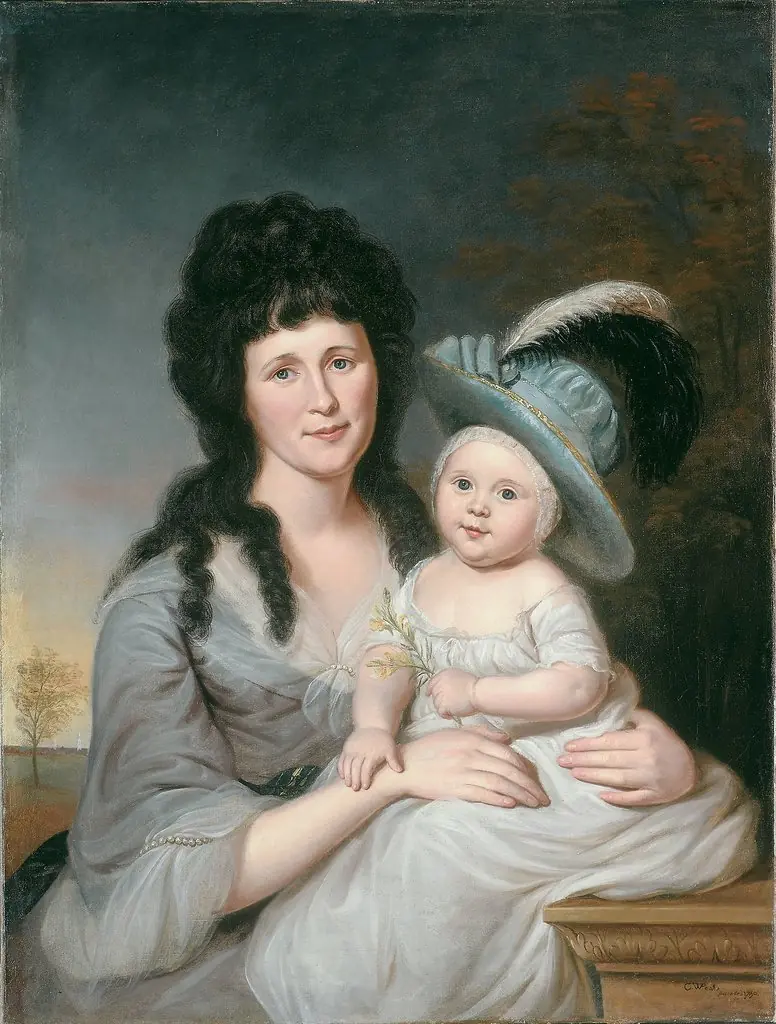 Mrs. John Nicholson (Hannah Duncan) and John Nicholson, Jr.
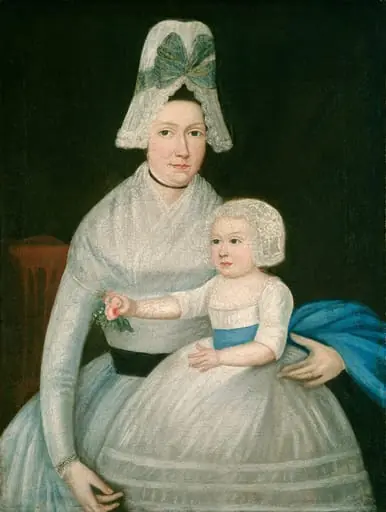 Mother and Child in White
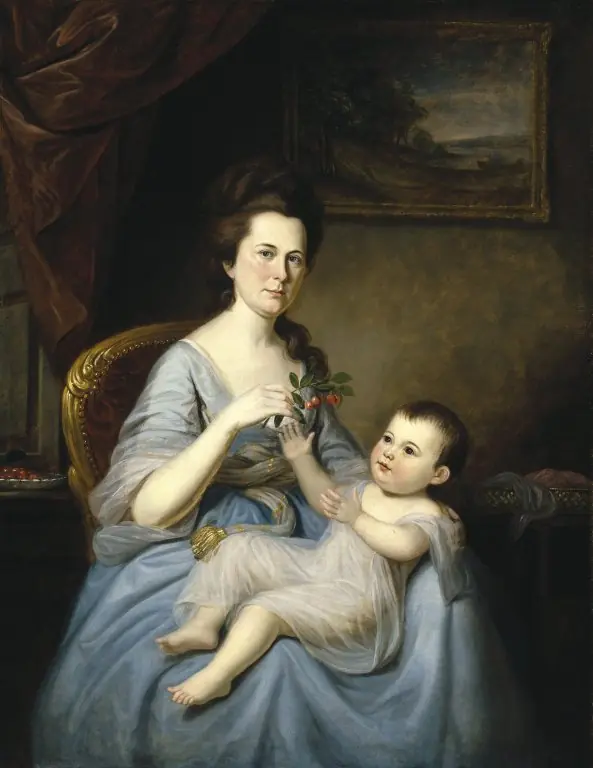 Mrs. David Forman and Child
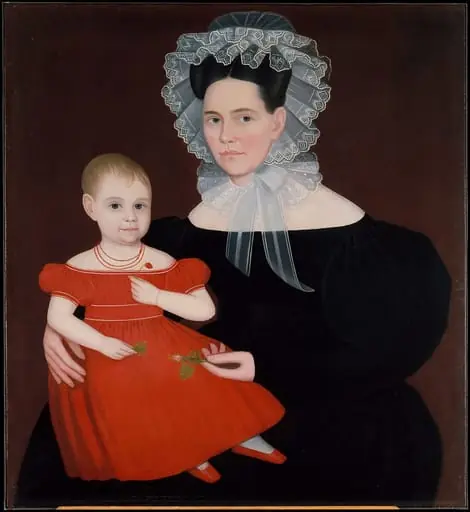 Mrs. Mayer and Daughter