Artwork
Frontier Cabin
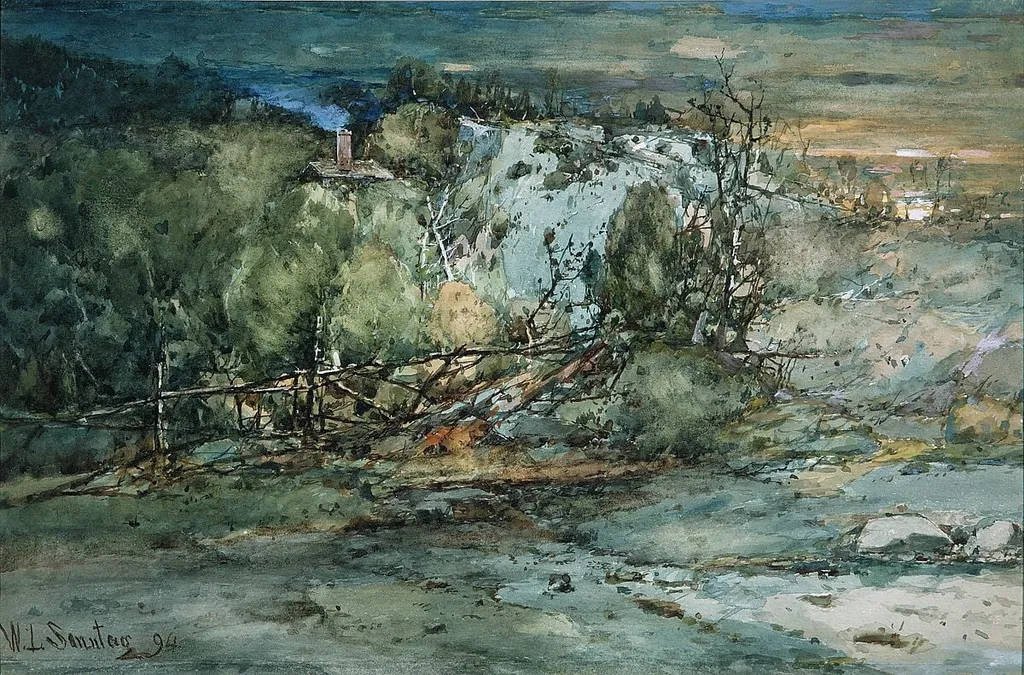
Frontier Cabin is a watercolor work on paper by the American Impressionist artist William Louis Sonntag. It dates from 1894 and is held in the collection of the Metropolitan Museum of Art.
About this work
Sonntag painted this in 1894, when railroads were cutting through the American wilderness.
A small wooden cabin sits beside a rushing stream, surrounded by tall trees. A narrow bridge crosses the water in the distance. The scene feels quiet and remote.
Sonntag painted this in 1894, when railroads were cutting through the American wilderness. The cabin looks hand-built, not part of any town—just a lone shelter in the woods. The watercolor lets light shine through the paper, making the leaves glow.
If you like this, look up *landscapes* for more paintings of wide-open spaces.
Overview
Frontier Cabin, executed in 1894 by American painter William Louis Sonntag, is a modestly sized work combining watercolor, gouache, and graphite on off‑white wove paper. The composition presents a solitary wooden shelter perched beside a swift stream, framed by towering trees and a distant footbridge, evoking a sense of isolation within a quiet wilderness.
Subject & Meaning
The image centers on a hand‑crafted cabin, unconnected to any settlement, suggesting a self‑reliant existence amid untamed forest. The flowing water and surrounding foliage reinforce the theme of solitude, while the narrow bridge hints at a fleeting connection to the broader world beyond the immediate scene.
Technique & Style
Sonntag employs a layered approach, allowing the translucency of watercolor to illuminate the paper and give the leaves a luminous quality. Gouache adds opacity for structural elements such as the cabin and bridge, while graphite outlines provide subtle definition, creating a balanced interplay of light, texture, and atmospheric depth.
Context
Created during the late nineteenth‑century expansion of railroads across the American frontier, the painting reflects contemporary concerns about the encroachment of industry on pristine landscapes. By portraying an untouched, self‑sufficient cabin, Sonntag offers a visual counterpoint to the rapid modernization reshaping the nation's wilderness at that time.
Artist & collection