Artwork
The New Necklace
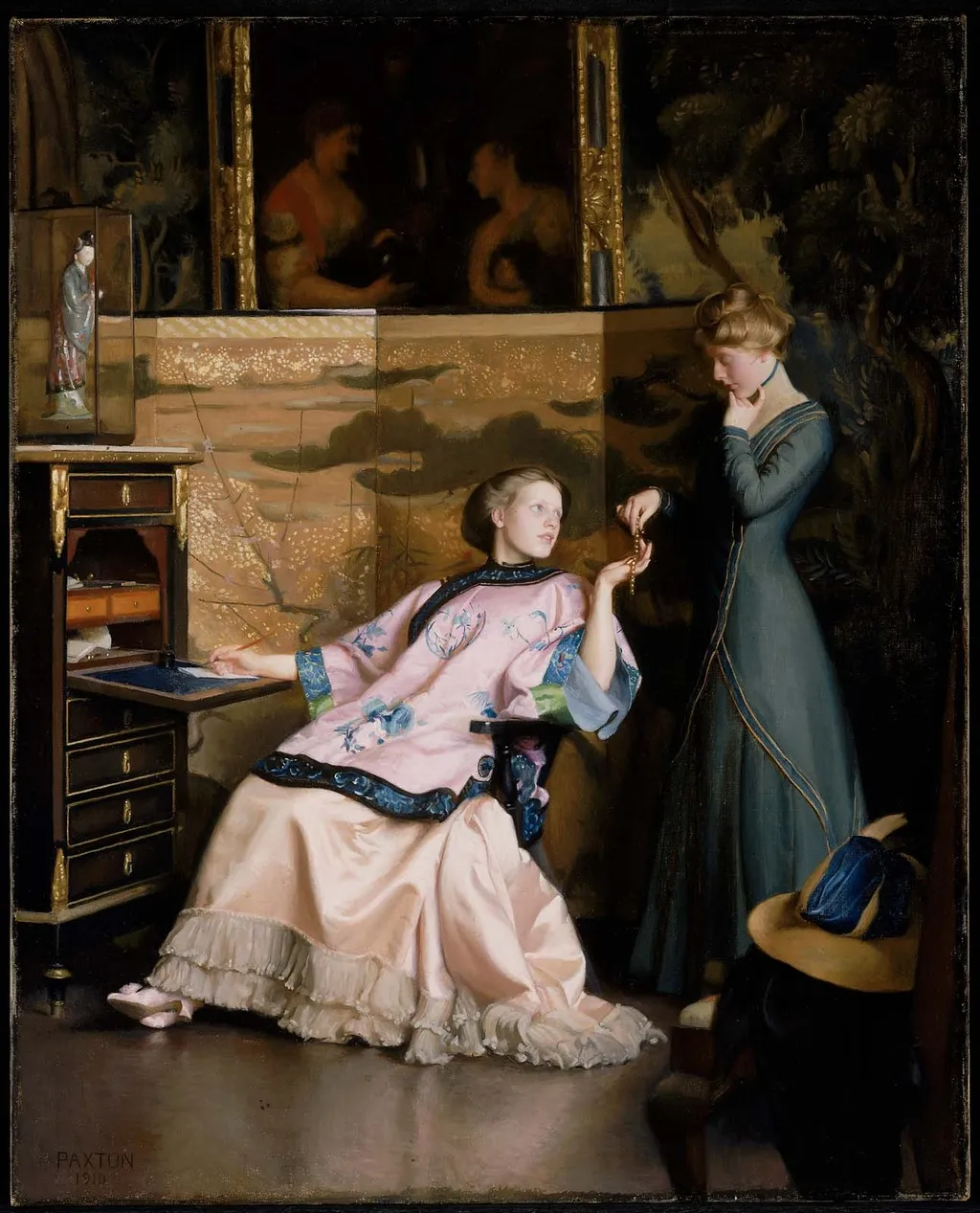
The New Necklace is an oil painting by the Impressionist artist William McGregor Paxton. It dates from 1910 and is held in the collection of the Museum of Fine Arts Boston.
About this work
Overview
This painting is part of the Museum of Fine Arts, Boston’s collection, reflecting the artist’s enduring connection to the city’s artistic community.
Painted in 1910, *The New Necklace* is an oil on canvas by American artist William McGregor Paxton, a central figure in the Boston School. The work captures a quiet domestic moment with precise realism and subtle lighting. Paxton, known for his focus on interior scenes and refined technique, often portrayed women in contemplative settings. This painting is part of the Museum of Fine Arts, Boston’s collection, reflecting the artist’s enduring connection to the city’s artistic community.
Subject & Meaning
The painting shows two women in a softly lit interior, one seated at a desk with paper and pencil, the other standing as she inspects a necklace. The act of examining jewelry suggests a moment of personal reflection, possibly tied to identity or social ritual. While the seated figure may be Paxton’s wife, Elizabeth Okie Paxton, the scene avoids narrative clarity, instead emphasizing stillness and the quiet significance of everyday gestures.
Technique & Style
Paxton employed a controlled palette and careful brushwork to render textures—fabric, metal, wood—with quiet precision. Light falls gently across surfaces, modeling forms without harsh contrasts, characteristic of the Boston School’s luminist approach. The composition is balanced yet intimate, with attention to incidental details like the landscape screen and shelf statuette, reinforcing a sense of lived-in space and refined taste.
History & Provenance
Created in 1910, the painting remained within the artist’s circle before entering the Museum of Fine Arts, Boston’s collection. Paxton, a co-founder of the Guild of Boston Artists and instructor at the MFA School, maintained close ties to the institution. The work’s acquisition reflects the museum’s early commitment to preserving regional American art that emphasized technical mastery and domestic subject matter.
Context
In early 20th-century America, artists like Paxton turned away from dramatic narratives toward intimate, interior scenes influenced by European realism and Impressionism. The Boston School, of which he was a leading voice, valued harmony, light, and quiet elegance. *The New Necklace* aligns with this ethos, capturing a moment of private ritual amid a culture increasingly focused on domesticity and refined aesthetics.
Legacy
Paxton’s work, including *The New Necklace*, helped define a distinctly American mode of realism that prioritized atmosphere over drama. Though less widely known today than his European contemporaries, his influence endures in the emphasis on light, texture, and psychological subtlety within American academic painting. The painting remains a touchstone for understanding the quiet sophistication of early modern American interior scenes.
Artist & collection
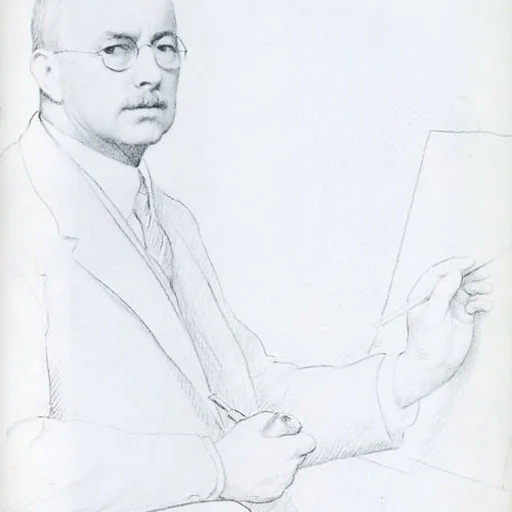
Artist
William McGregor Paxton (June 22, 1869 – 1941) was an American painter and instructor who embraced the Boston School paradigm and was a co-founder of The Guild of Boston Artists.