Artwork
Gray Day on the Bay
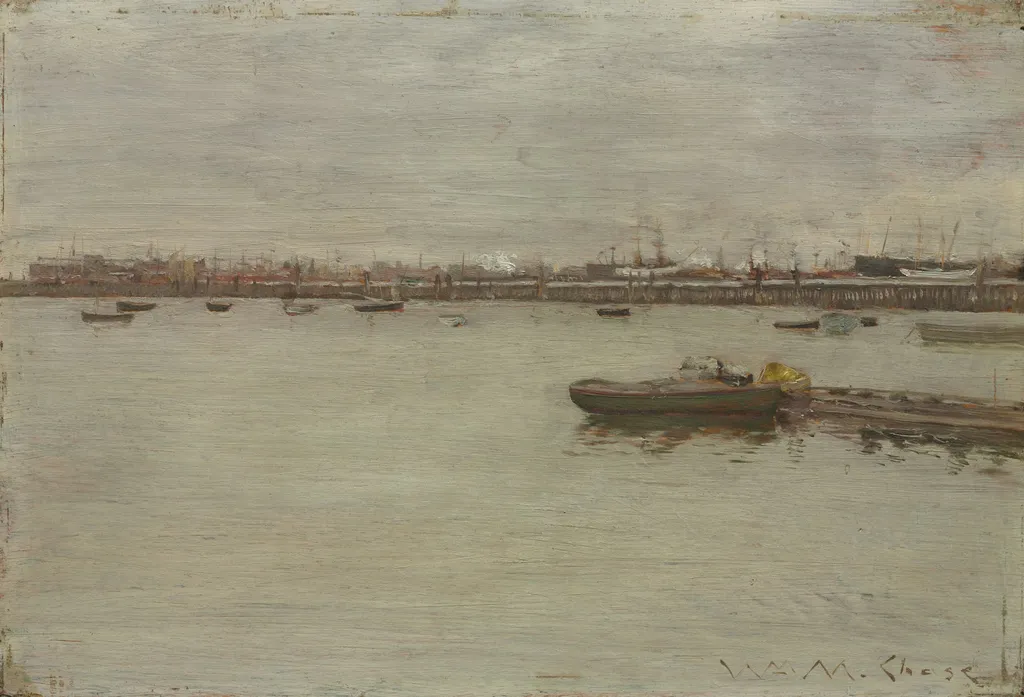
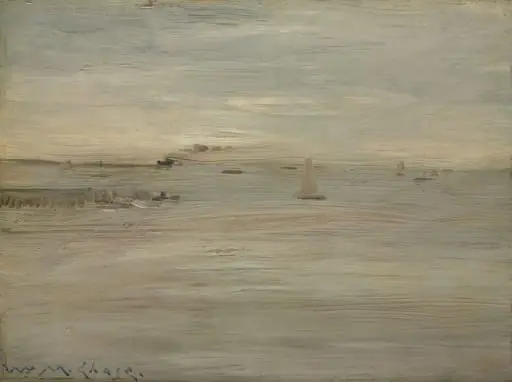
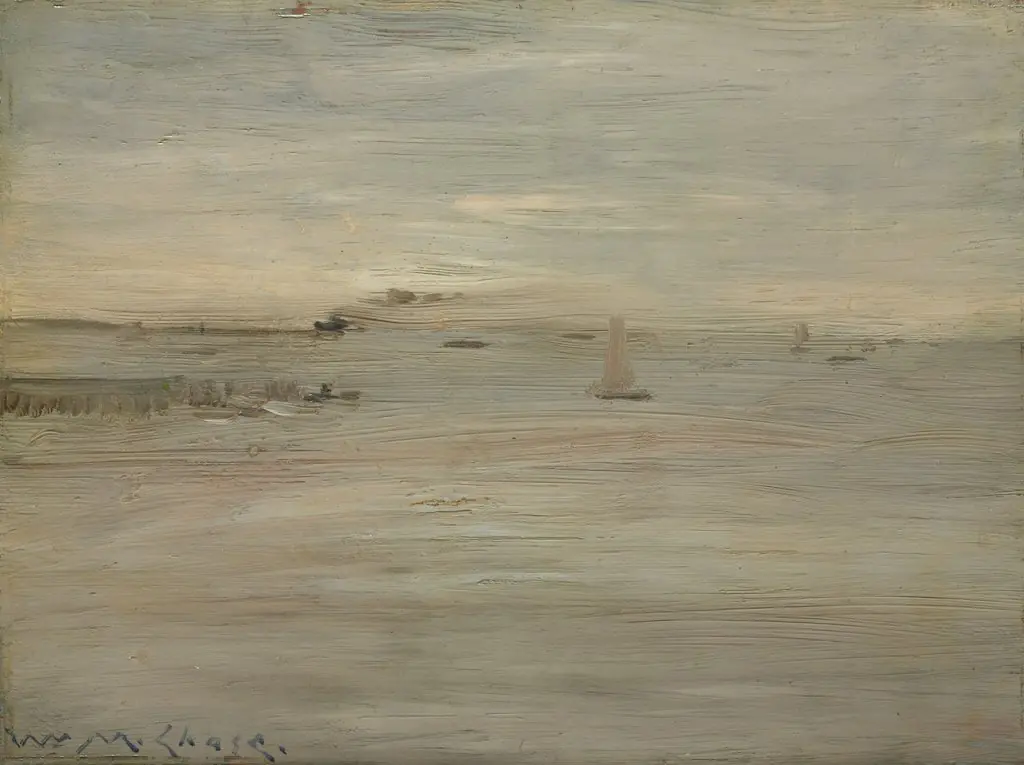
Gray Day on the Bay is an unspecified painting by the American Impressionist artist William Merritt Chase. It dates from 1886 and is held in the collection of the Cleveland Museum of Art.
About this work
Overview
The work captures a quiet harbor under overcast skies, emphasizing atmospheric conditions over detailed narrative.
Painted circa 1886, *Gray Day on the Bay* is a landscape by William Merritt Chase that reflects his adaptation of European Impressionist methods to American coastal scenes. The work captures a quiet harbor under overcast skies, emphasizing atmospheric conditions over detailed narrative. Chase, known for his teaching and advocacy of modern painting, used this period to refine his handling of light and tone, moving away from academic precision toward more spontaneous brushwork.
Subject & Meaning
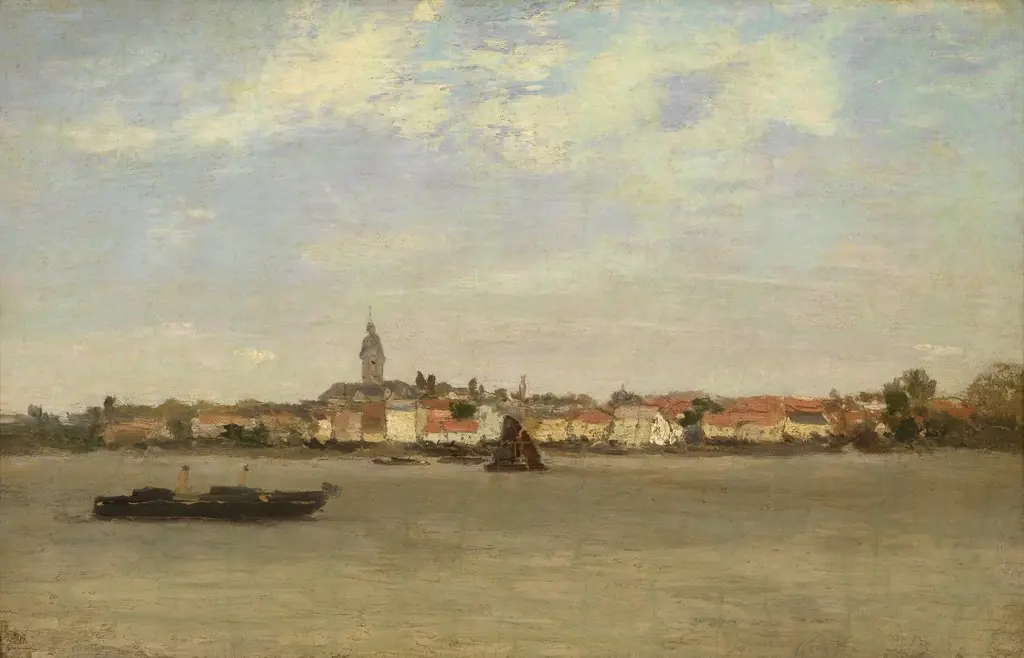
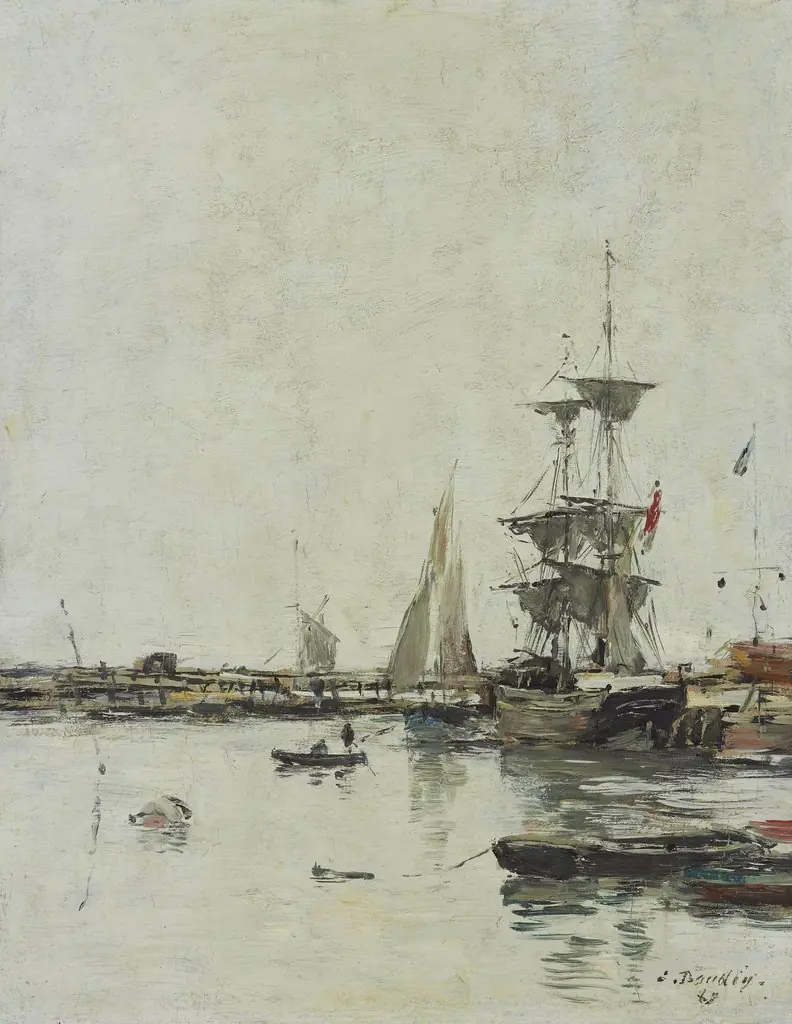
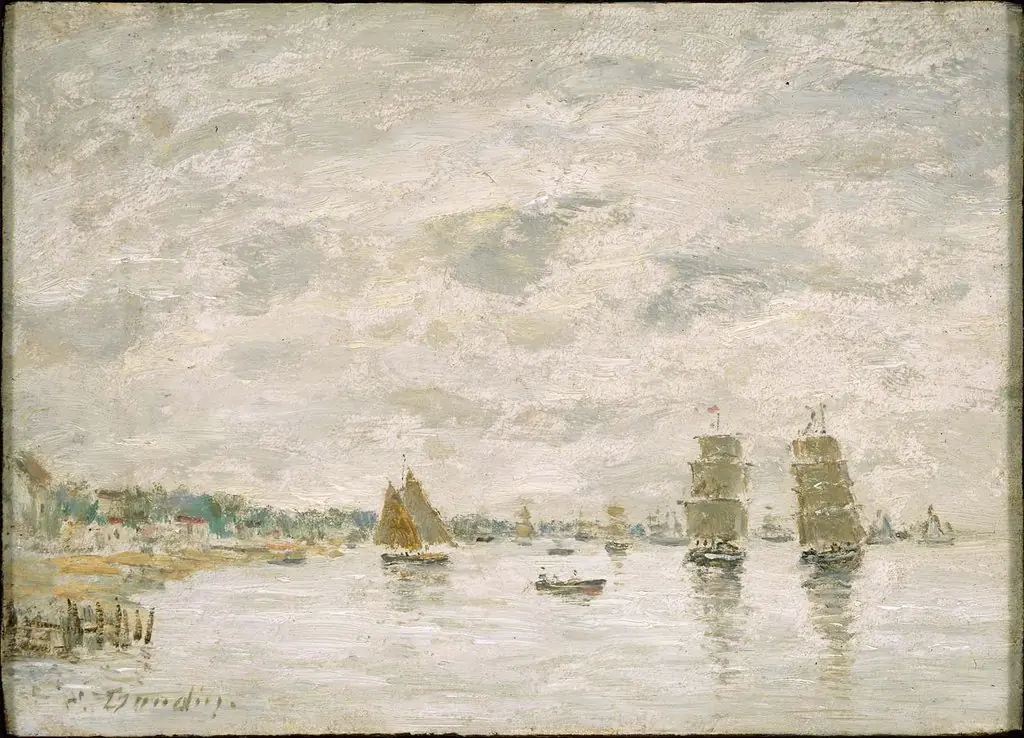
The painting presents a tranquil harbor with small rowboats near the shore and larger vessels anchored farther out. No human figures are present, and the absence of activity reinforces a sense of stillness. The subdued palette and diffused light suggest a moment of quiet observation, inviting contemplation rather than storytelling. The scene reflects Chase’s interest in everyday coastal life, rendered without idealization or drama.
Technique & Style
Chase employed loose, fluid brushstrokes to convey the hazy quality of a gray day, blending tones of blue, gray, and pale green to suggest atmosphere rather than define form. The water’s surface is rendered with soft, horizontal strokes, while the masts and hulls are suggested with quick, vertical marks. Color is applied in thin layers, allowing underlying tones to subtly show through, enhancing the sense of luminous haze and atmospheric depth.
History & Provenance
Created during Chase’s mature period, the painting emerged from his frequent travels along the northeastern coast, where he sought to capture shifting light and weather. It was likely painted during a stay in New England or Long Island, areas he frequented for plein air work. The painting remained in private collections for much of the 20th century before entering a public museum’s holdings, where it now serves as an example of American Impressionist practice.
Context
In the 1880s, American artists were increasingly drawn to Impressionism as a means of breaking from academic traditions. Chase, already established as a portraitist, turned to landscape to explore light and color more freely. His work contributed to a broader shift in U.S. art, encouraging younger painters to observe nature directly and prioritize sensory experience over narrative detail, aligning with trends in France but grounded in American settings.
Legacy
Chase’s approach in *Gray Day on the Bay* influenced a generation of American painters who adopted his emphasis on direct observation and tonal harmony. As a founding figure of the Chase School—later Parsons School of Design—he institutionalized these methods in art education. The painting stands as a quiet but significant example of how Impressionist principles were localized in the U.S., shaping the trajectory of American landscape painting into the 20th century.
Own this work as a print
Artist & collection
Artist
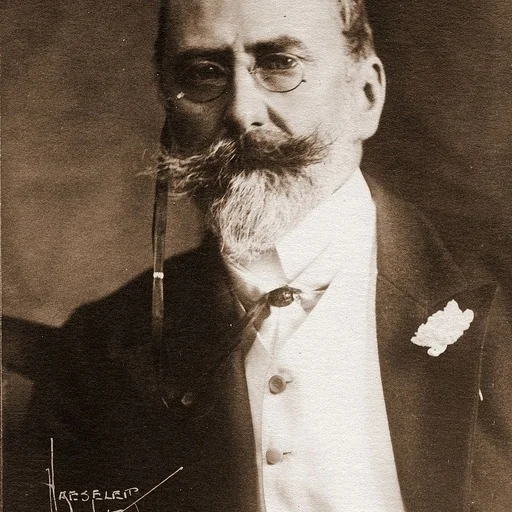
William Merritt Chase (November 1, 1849 – October 25, 1916) was an American painter, known as an exponent of Impressionism and as a teacher.