Artwork
La jetée à Trouville
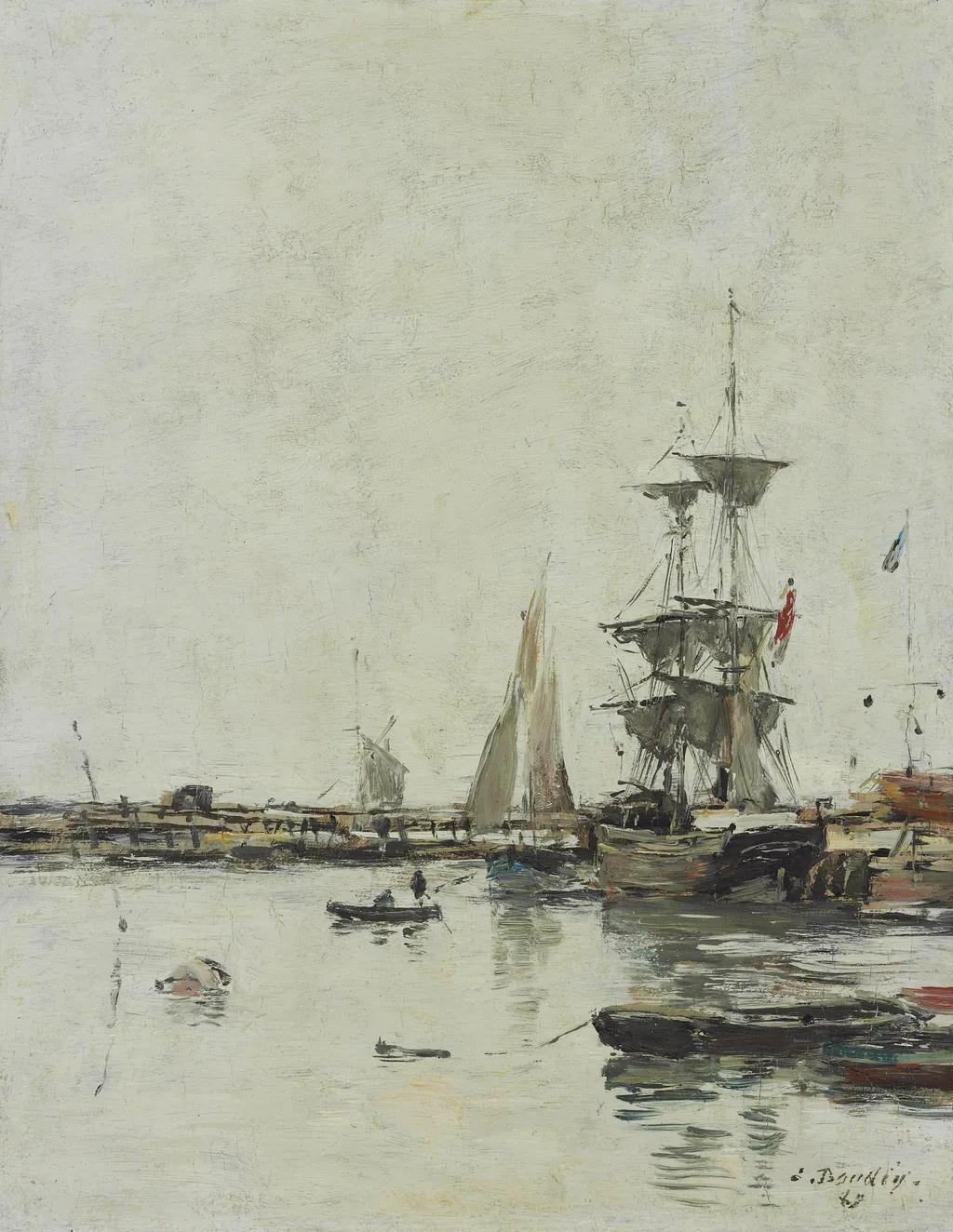
La jetée à Trouville is an oil painting by the Impressionist artist Eugène Boudin. It dates from 1867 and is held in the collection of the Hammer Museum.
About this work
Overview
La jetée à Trouville, painted in 1867 by Eugène Louis Boudin, is an oil on canvas work depicting a serene harbor scene. Characterized by loose brushstrokes and a muted palette, it exemplifies Boudin's contribution to the Impressionist movement through its emphasis on capturing light and atmosphere in a coastal setting.
Subject & Meaning
The painting centers on a docked large ship with a red flag, surrounded by smaller moored boats and a few figures on the dock. The calm water reflects the sky, conveying tranquility and peacefulness. The scene captures everyday harbor life, focusing on the interplay of natural light and human activity.
Technique & Style
Boudin employed expressive, loose brushstrokes to imbue the scene with a sense of movement. A predominantly gray, blue, and brown palette maintains the serene ambiance. The use of chiaroscuro adds depth and volume, guiding the viewer's eye into the composition.
History & Provenance
Created in 1867, La jetée à Trouville is part of the Impressionist canon. It is currently housed in the collection of the Hammer Museum.
Context
As an Impressionist work, it reflects Boudin's pioneering plein air approach, capturing the fleeting effects of natural light in outdoor settings, a hallmark of the movement.
Legacy
While specific legacy details of La jetée à Trouville are not highlighted, as part of Boudin's oeuvre, it contributes to the broader influence of Impressionism on subsequent art movements.
Own this work as a print
Artist & collection
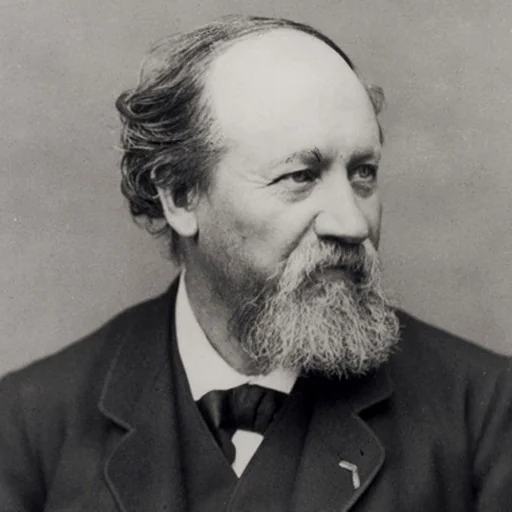
Artist
Eugène Louis Boudin (French: ; 12 July 1824 – 8 August 1898) was one of the first French landscape painters to paint outdoors.

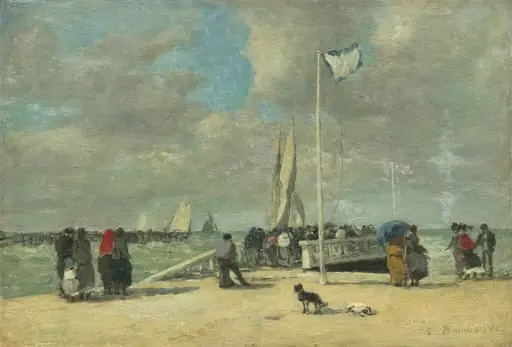
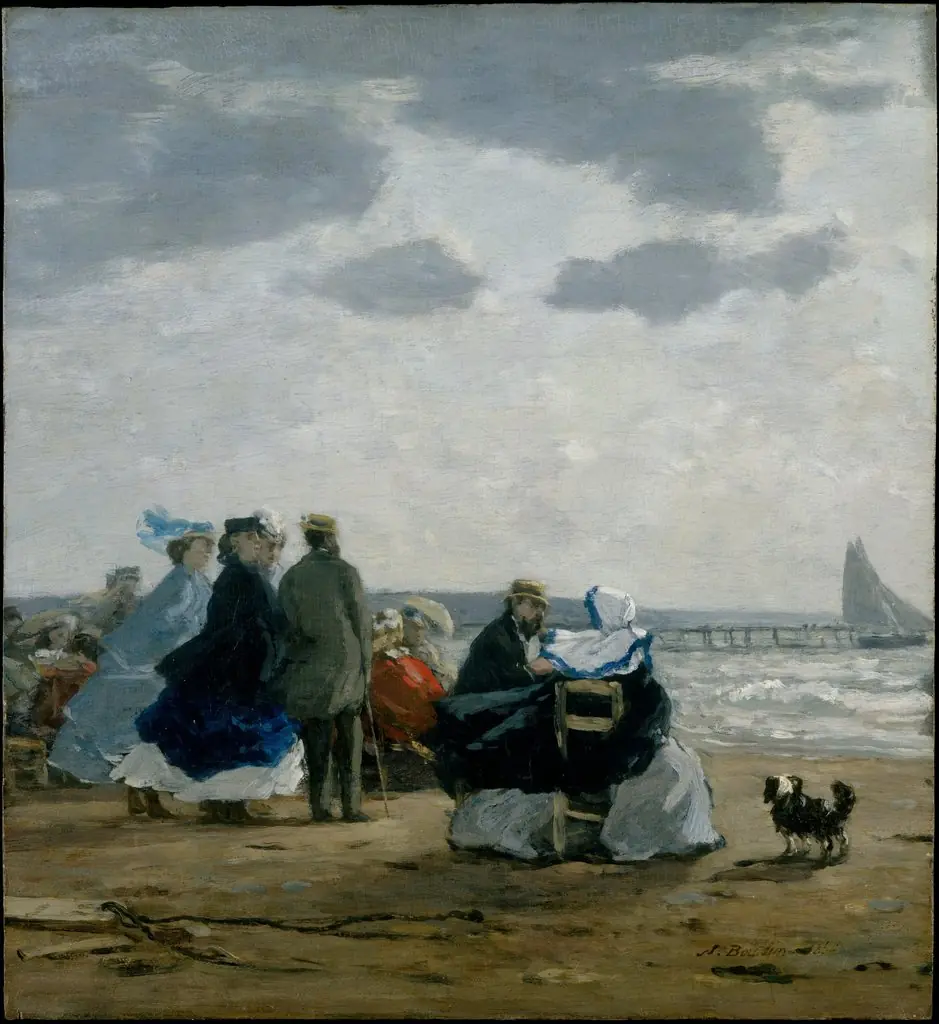
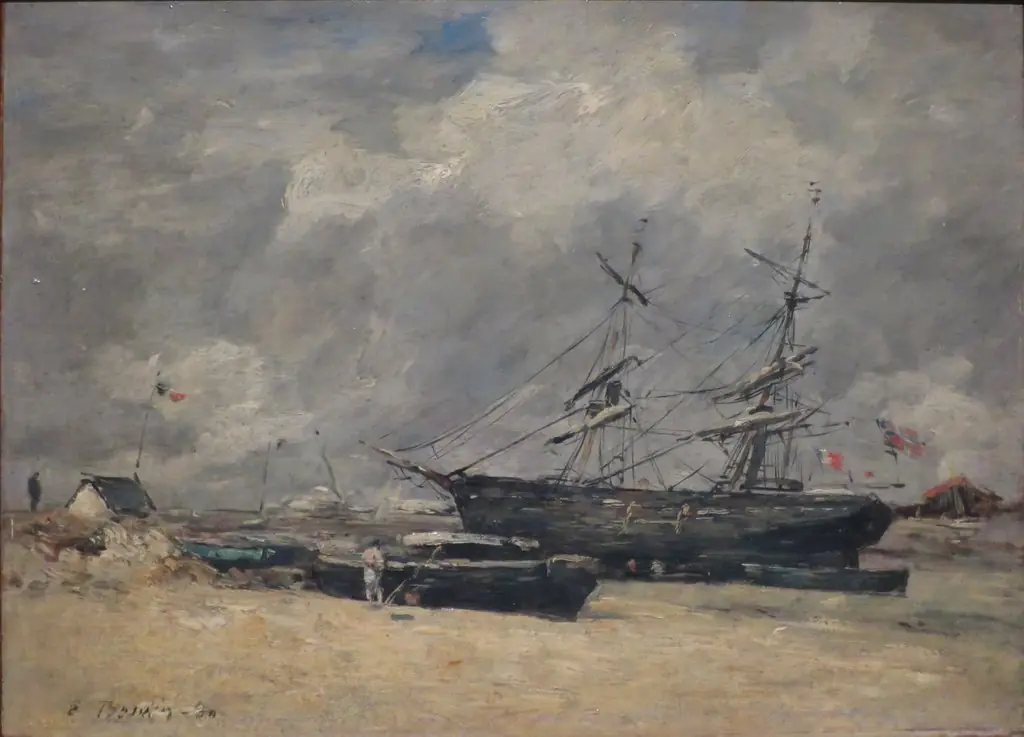 Bateaux de pêche sur la plage. Trouville, marée basse
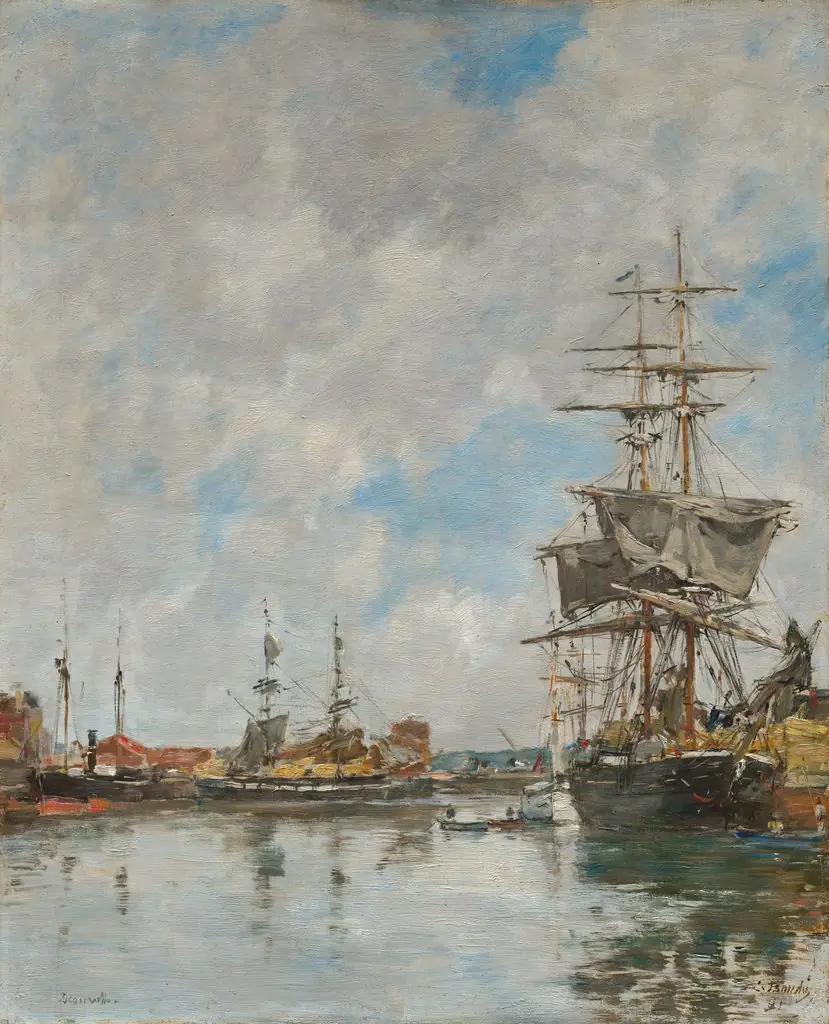 The Dock of Deauville
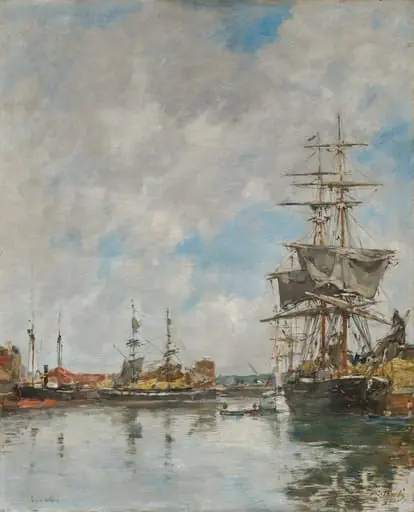 The Dock of Deauville
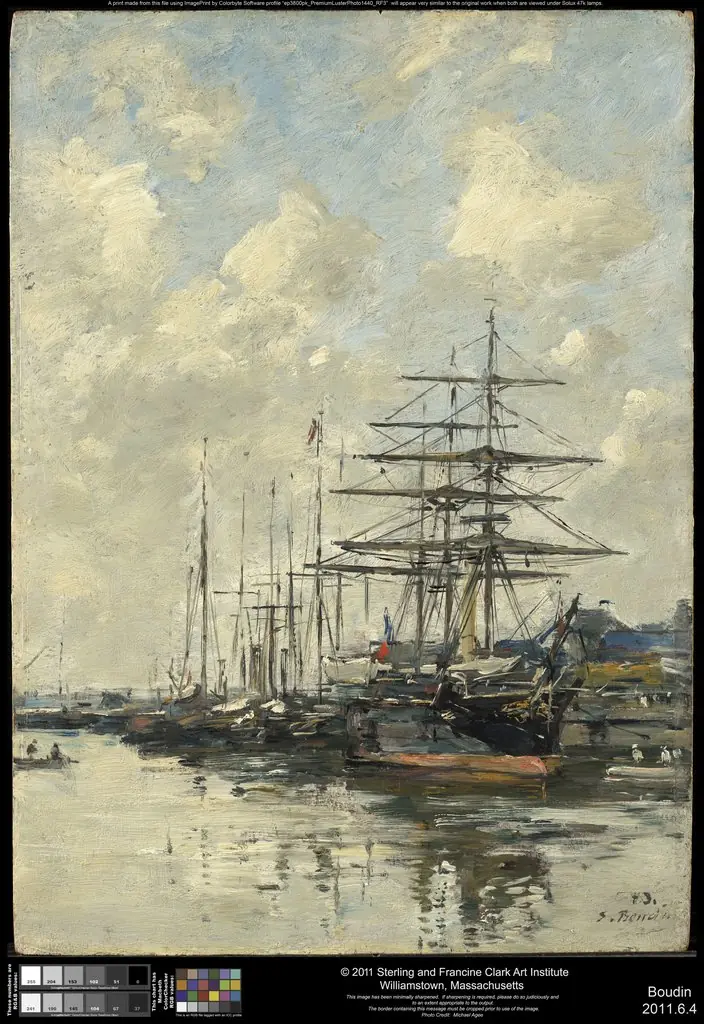 Deauville, the Boat Basin
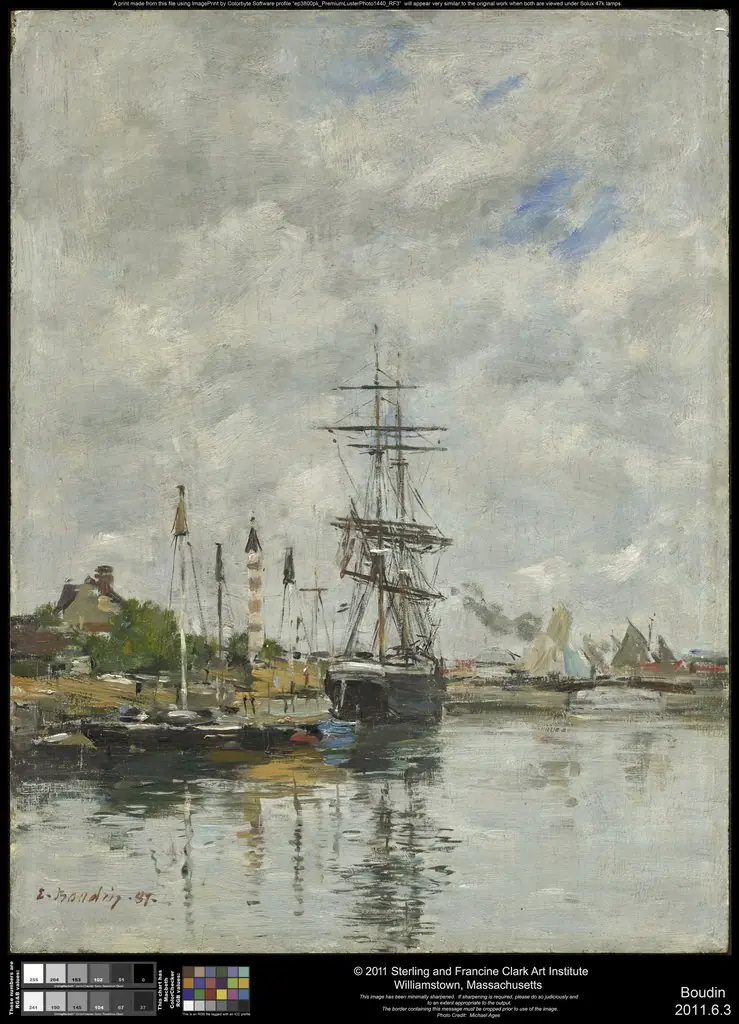 Le Havre, Sailboats in the Port
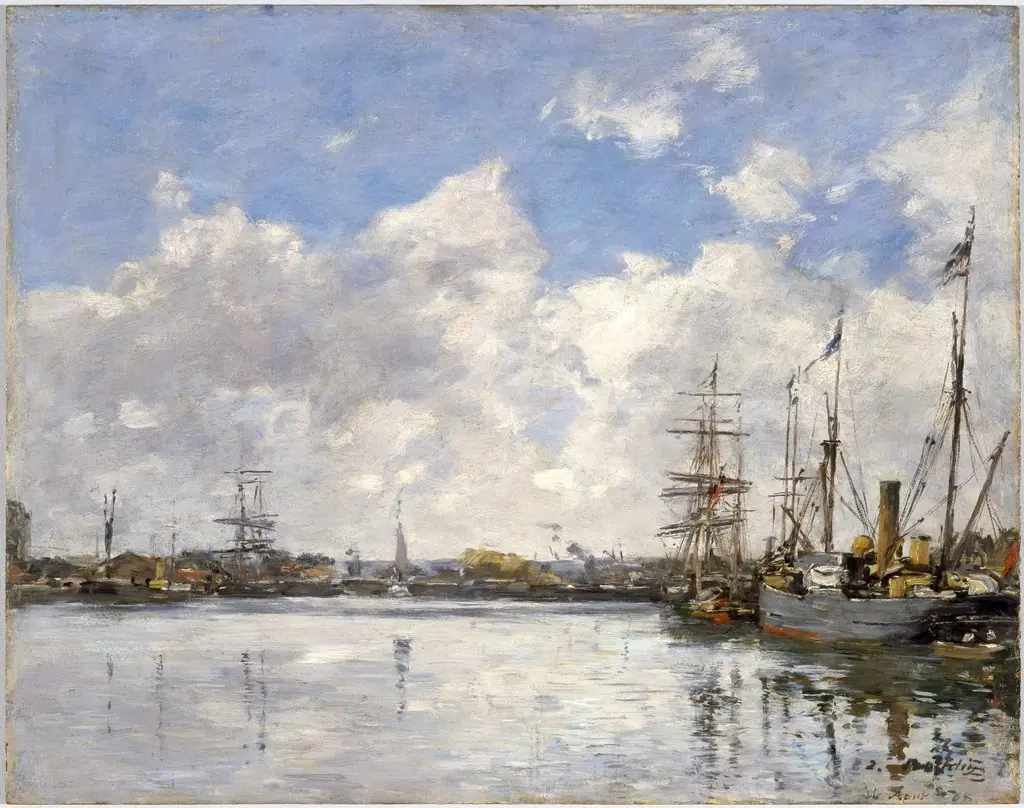 Le Havre , the harbor
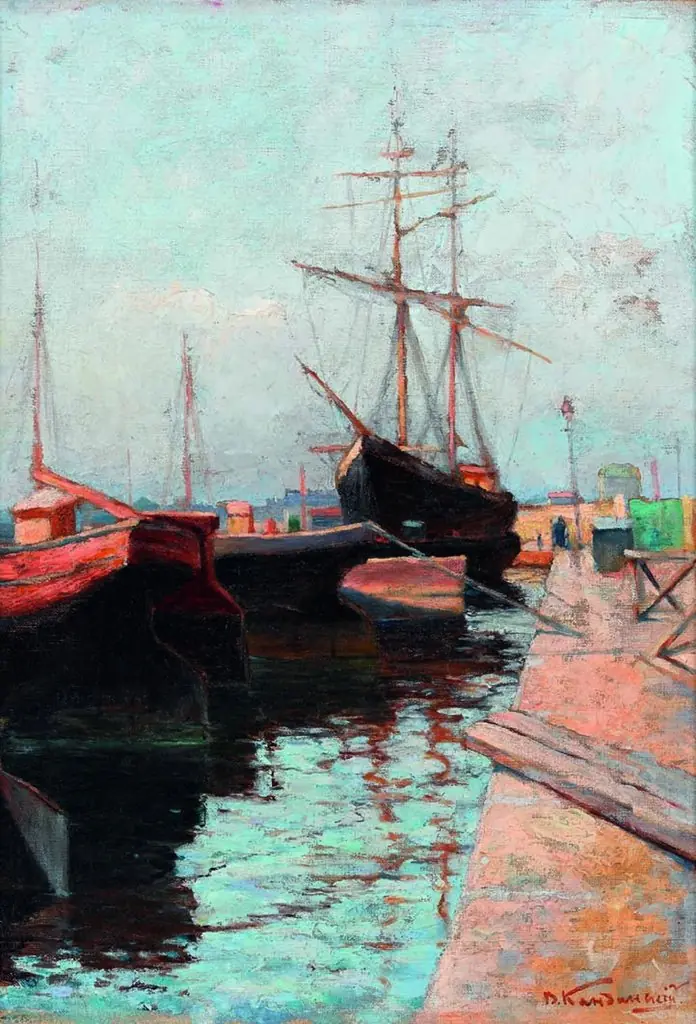 Odessa, Port
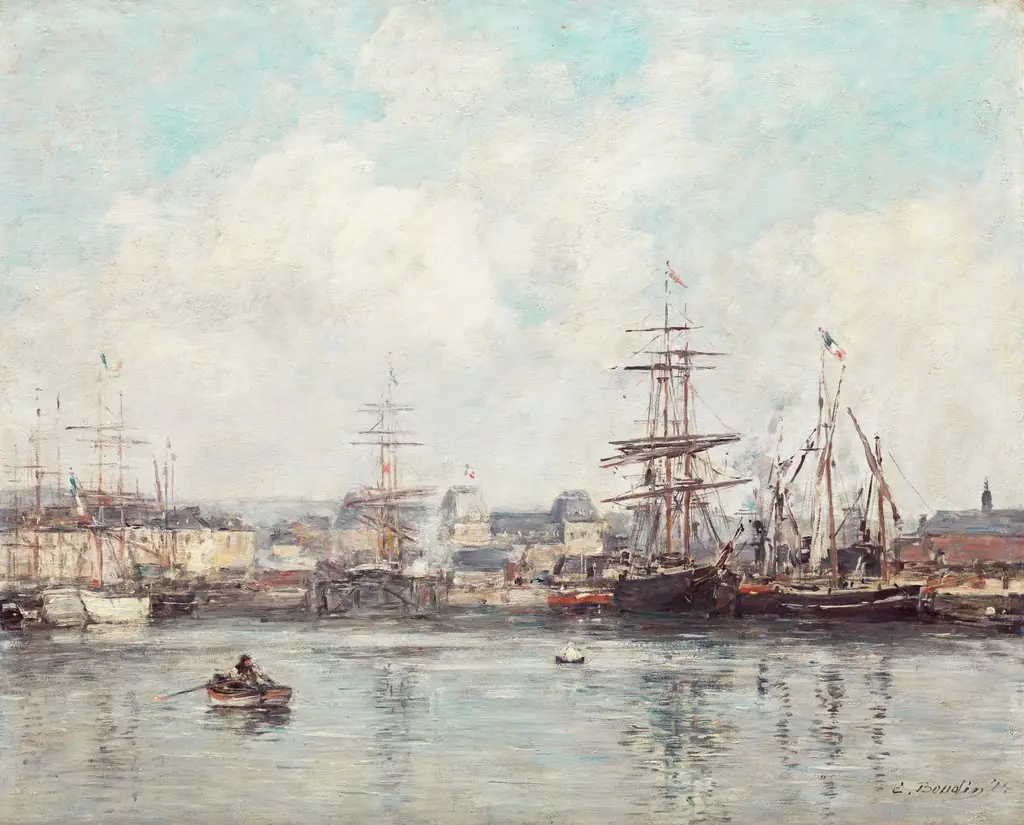 Casimir Delavigne Basin at Le Havre
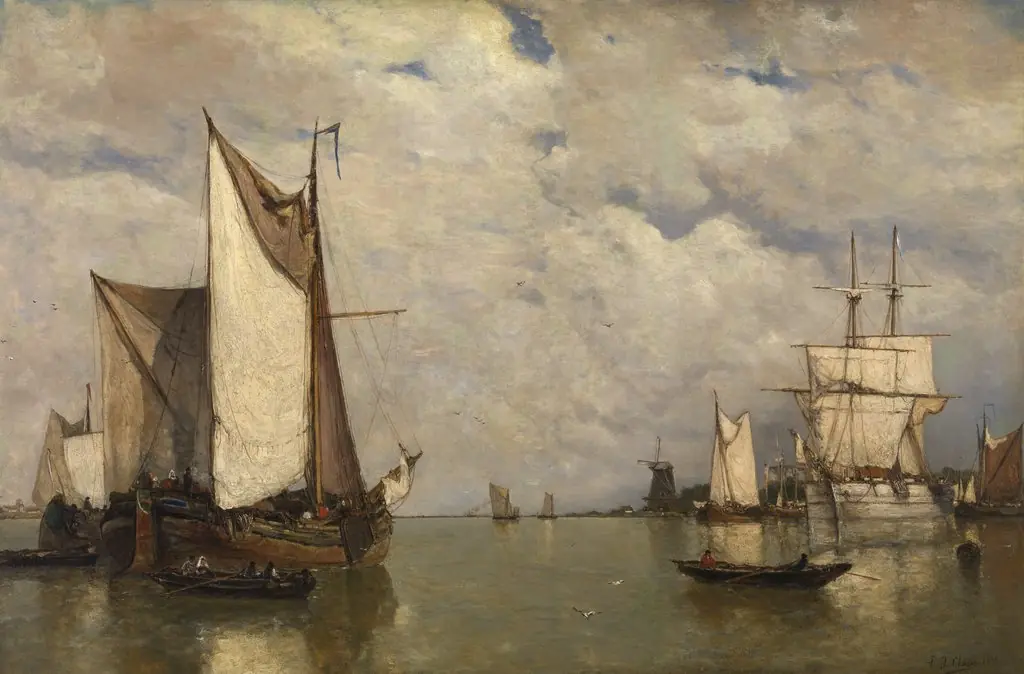 Calm before the Storm at Dordrecht
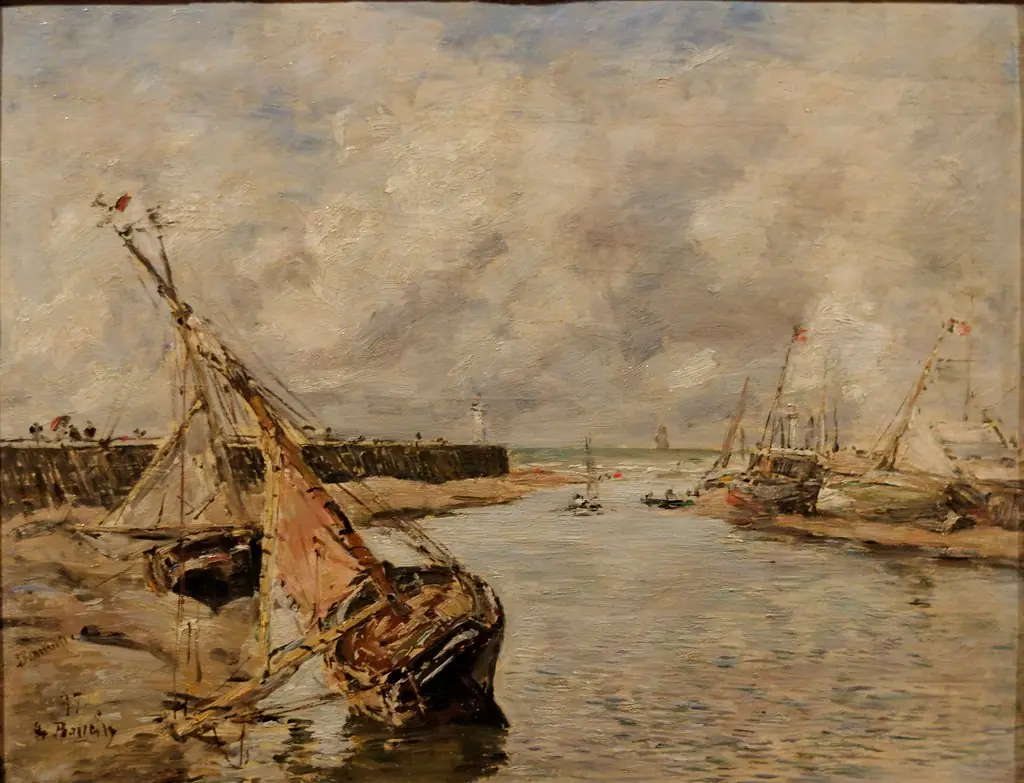 Trouville-Deauville – Low Tide
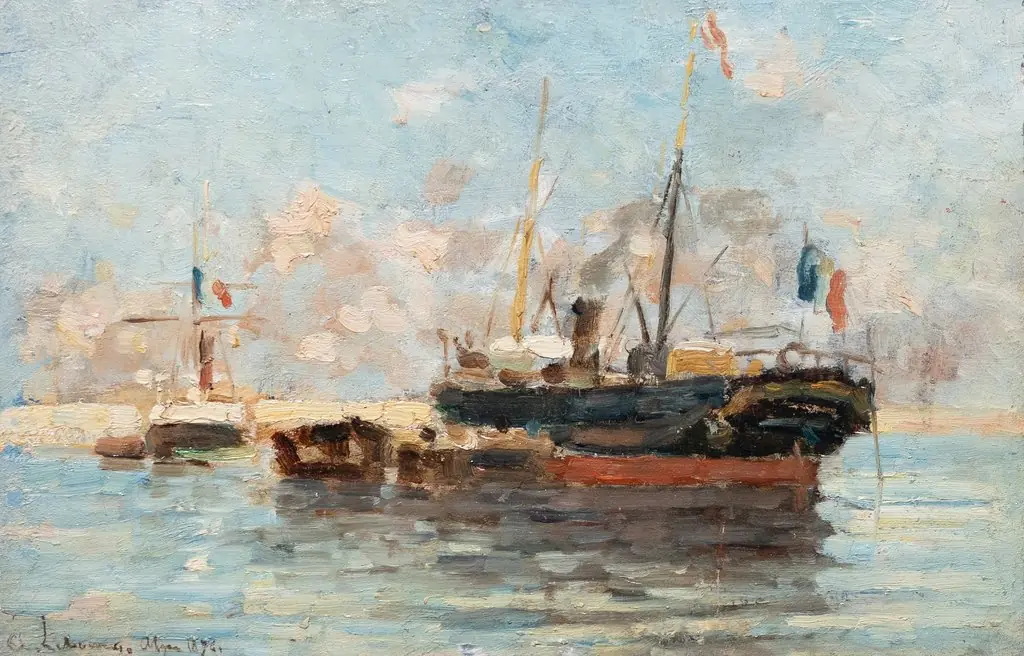 Steamer, Port of Algiers
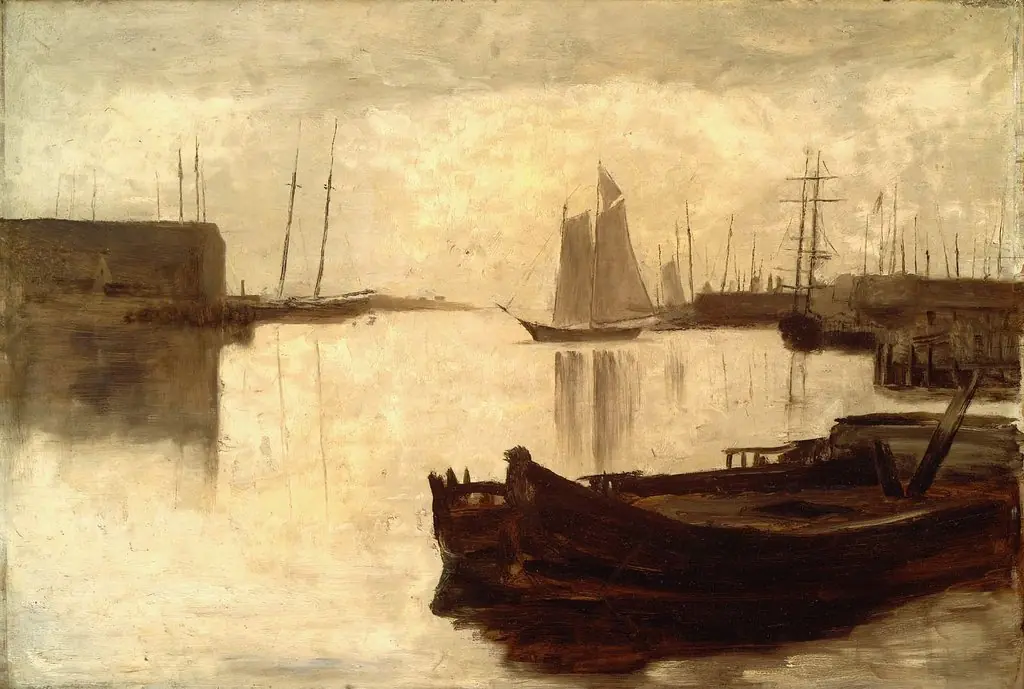 Nautilus Fleet