Artwork
Old Ferry Stairs
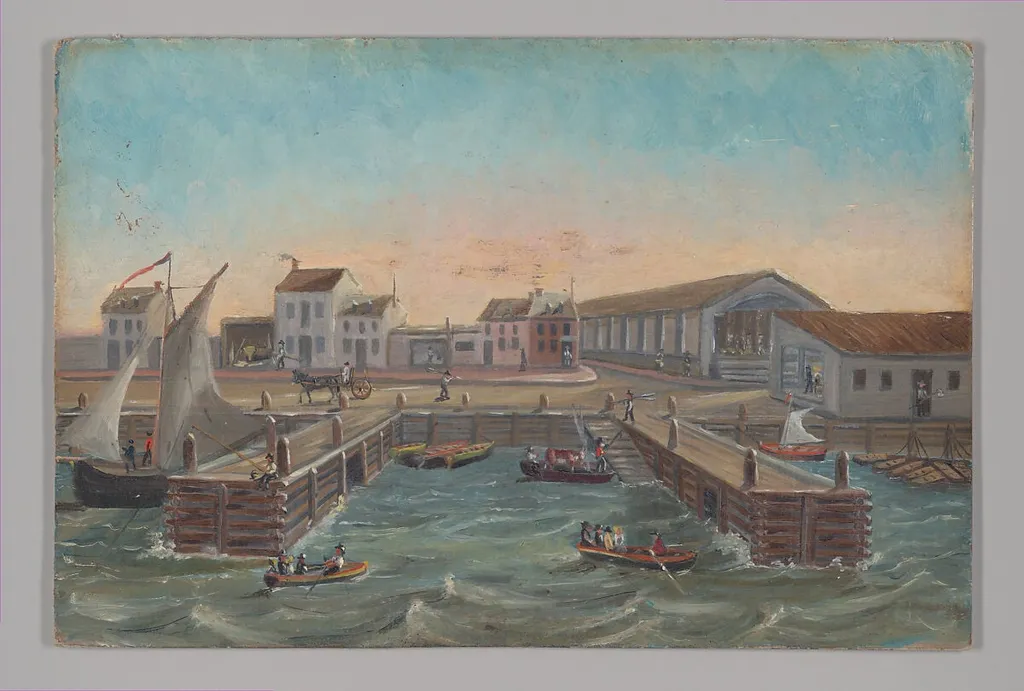
Old Ferry Stairs is an oil painting by the Impressionist artist William P. Chappel. It dates from 1874 and is held in the collection of the Metropolitan Museum of Art. William P.
About this work
Overview
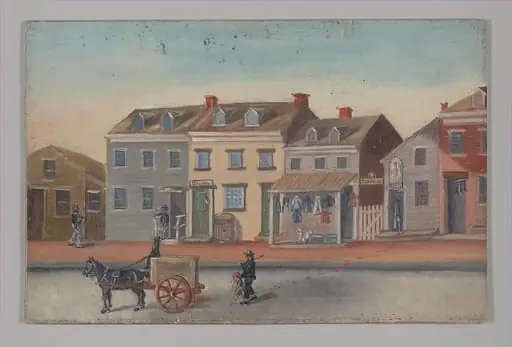
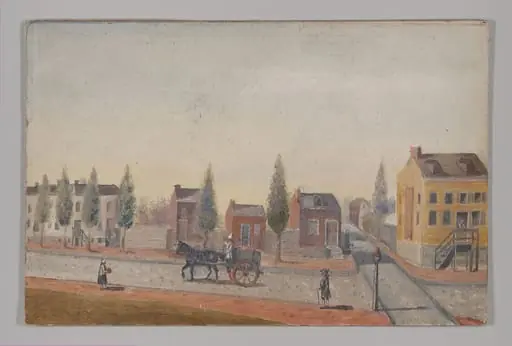
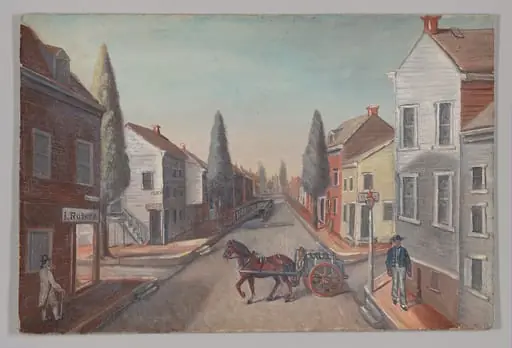
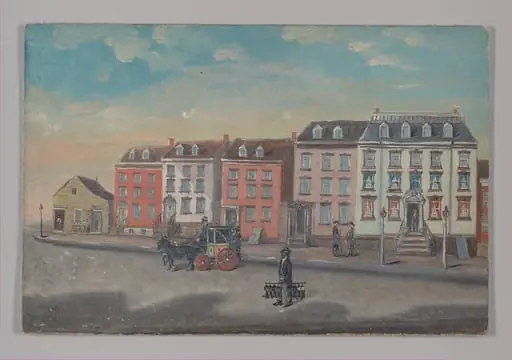
It features a horse-drawn carriage waiting on cobblestones above, while wooden stairs descend to a muddy bank where two rowboats rest.
William P. Chappel's "Old Ferry Stairs," created around 1874, is an oil landscape rendered on slate paper. The work captures a tranquil, everyday scene at a riverside dock, depicting the quiet activity of a low-tide moment. It features a horse-drawn carriage waiting on cobblestones above, while wooden stairs descend to a muddy bank where two rowboats rest. This piece offers a glimpse into 19th-century American life.
Subject & Meaning
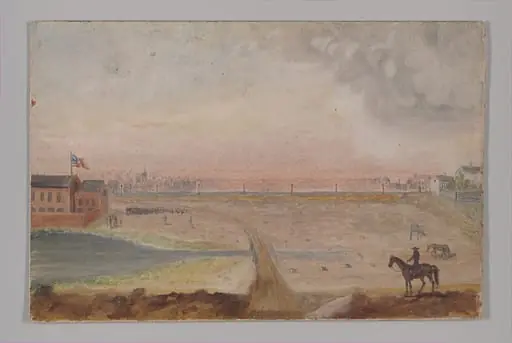
The painting portrays a serene moment at a ferry landing, likely at low tide, where the riverbank is exposed. Wooden stairs lead down to the muddy shore, where two small rowboats are partially beached. Above, a horse-drawn carriage waits on the cobblestone street, suggesting the anticipation of transport or a recent arrival. This depiction emphasizes the unhurried pace of daily life and the functional aspects of urban or semi-urban waterways in the late 19th century.
Technique & Style
Chappel's choice of slate paper as a support for this oil painting is notable, departing from traditional canvas. The exceptionally thin and smooth surface of the paper enabled the artist to achieve fine detail. By using the tip of his brush, Chappel could incise delicate lines and textures, such as the subtle flaking paint on the nearby ferry house. This technique contributes to the work's precise rendering and intimate scale.
Context
As part of the American Wing collection, "Old Ferry Stairs" reflects a common artistic interest in depicting local landscapes and quotidian scenes during the late 19th century in the United States. Artists often turned to familiar subjects like docks, boats, and carriages to capture the character of American life and its evolving infrastructure. This work contributes to a visual record of the era's transportation and riverside activities.
Artist & collection