Artwork
Untitled
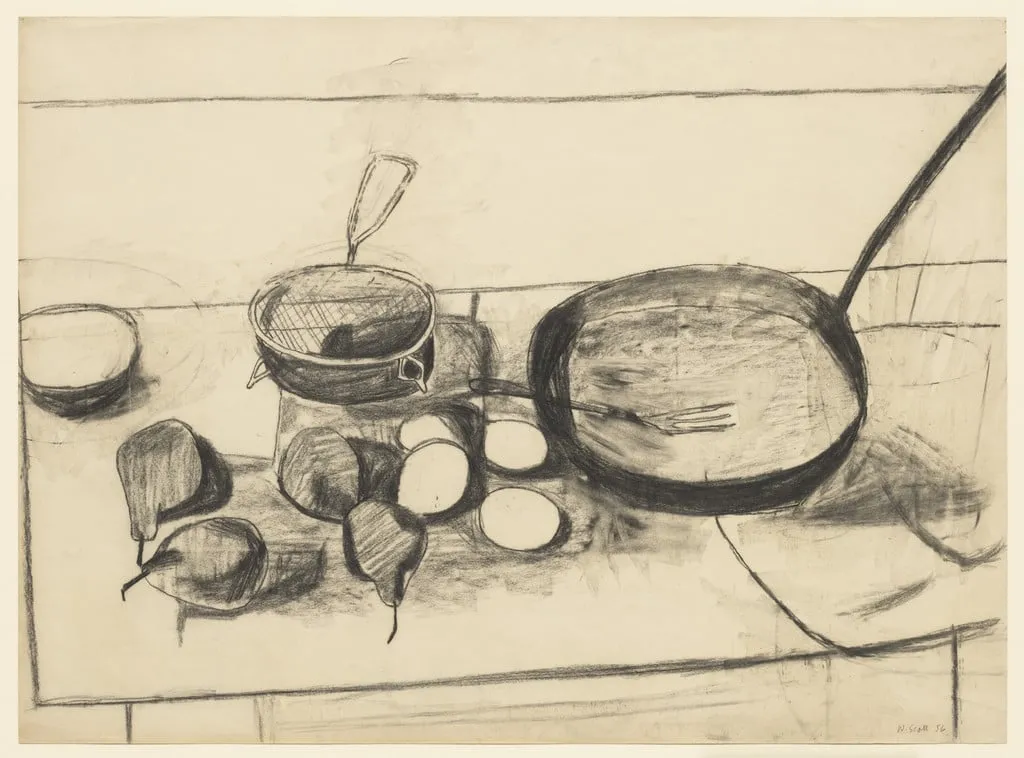
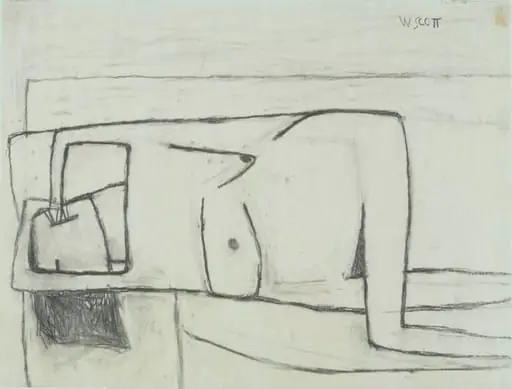
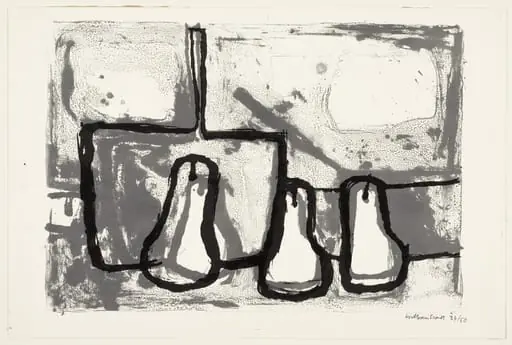
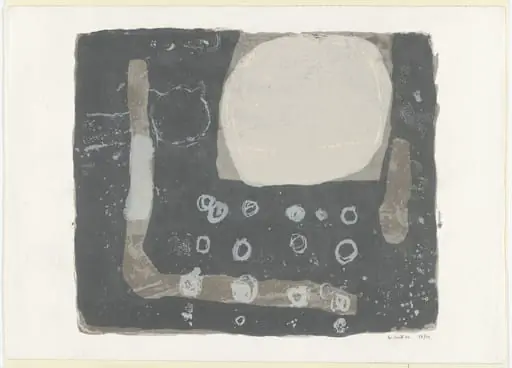
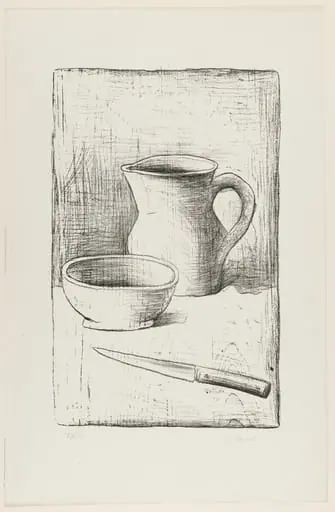
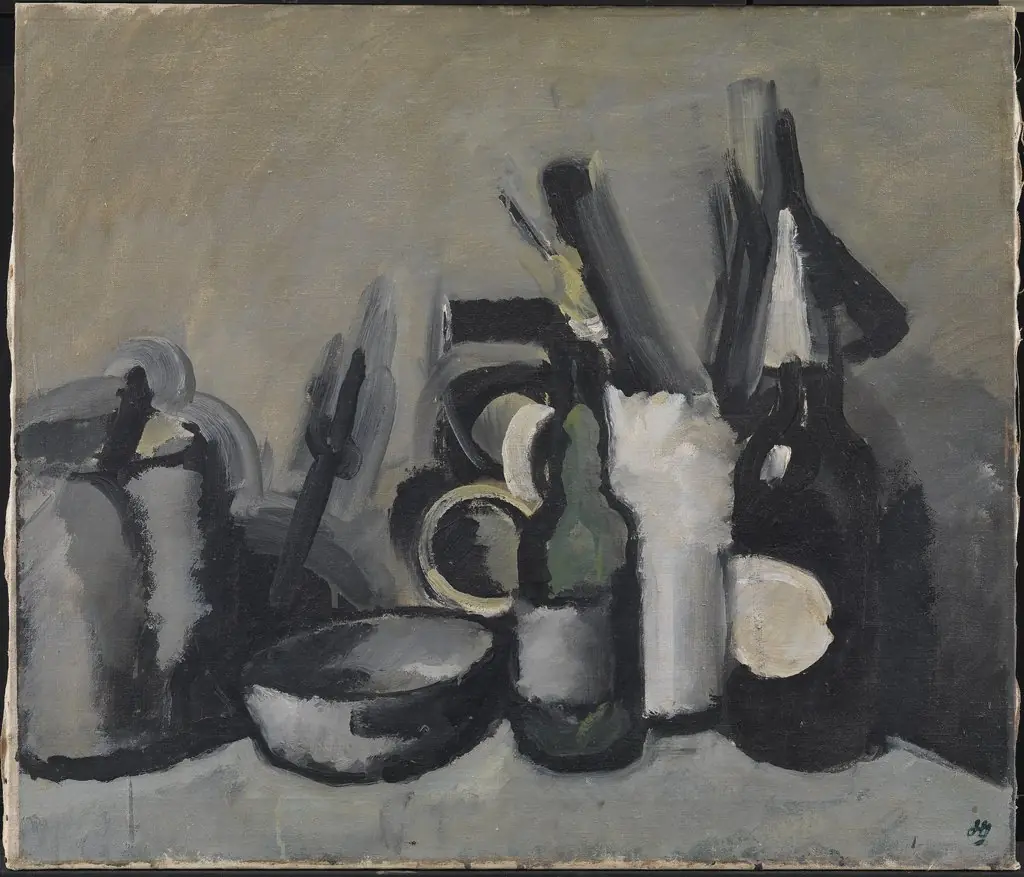
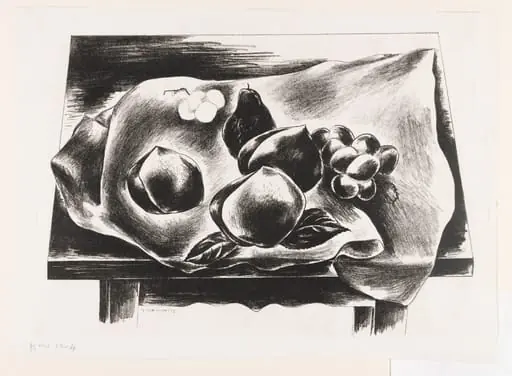
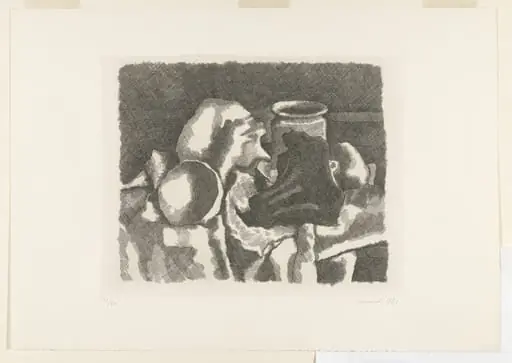
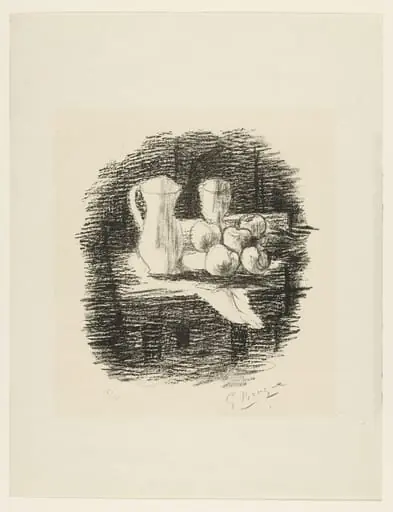
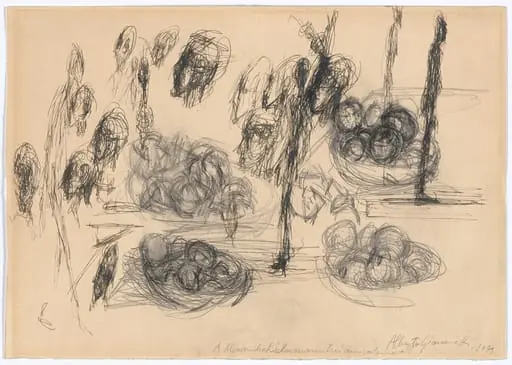
Untitled is a charcoal drawing by William Scott. It dates from 1956 and is held in the collection of the Museum of Modern Art.
About this work
Overview
Executed on paper, it captures a modest still life of kitchen objects with minimal detail and no formal composition.
Created in 1956, this charcoal drawing by William Scott is part of The Museum of Modern Art’s collection. Executed on paper, it captures a modest still life of kitchen objects with minimal detail and no formal composition. The work’s immediacy suggests a spontaneous observation, emphasizing process over finish, and reflects Scott’s interest in everyday subjects rendered through direct, unembellished mark-making.
Subject & Meaning
The drawing depicts common household items—a frying pan, spatula, pot, strainer, onions, and eggs—arranged without hierarchy or narrative. These objects, ordinary and unadorned, suggest a quiet domestic moment. Their placement feels incidental, as if caught mid-preparation, inviting attention to the quiet rhythm of daily life rather than symbolic meaning.
Technique & Style
Scott employed charcoal with loose, gestural strokes, allowing the paper’s texture to remain visible. Shading is subtle, achieved through light scumbling and smudging rather than defined contours. The absence of erasure or refinement reinforces the drawing’s sketchlike quality, prioritizing tactile immediacy over polished finish, characteristic of his approach to material and form.
History & Provenance
The work entered The Museum of Modern Art’s collection following its creation in 1956, likely acquired during a period when the institution was expanding its holdings of postwar drawings. No record of prior ownership or exhibition history is widely documented, suggesting it was retained by the artist or acquired directly from his studio.
Context
In mid-1950s Britain, artists like Scott were turning away from grand abstraction toward intimate, material-focused studies of the mundane. This drawing aligns with a broader interest in the physicality of everyday objects, echoing contemporaneous practices in Europe that valued process, gesture, and the rawness of unmediated observation.
Legacy
Though not widely exhibited, this drawing exemplifies Scott’s consistent engagement with humble subjects and direct drawing methods. It contributes to a quieter strand of postwar British art that valued modesty in scale and material, influencing later generations interested in the expressive potential of simple media and unidealized observation.
Artist & collection