Artwork
Capri
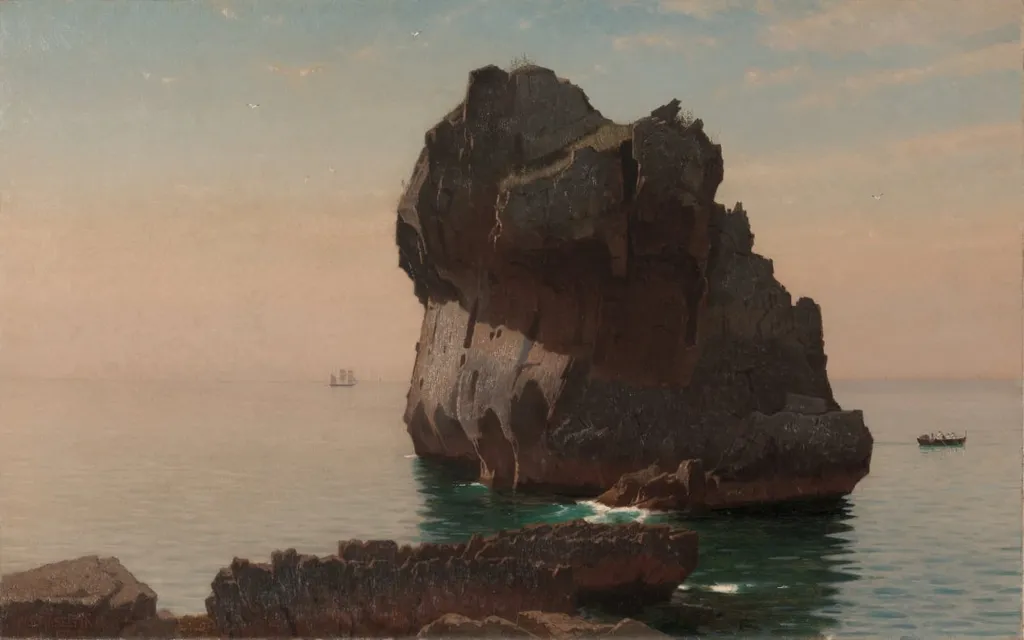
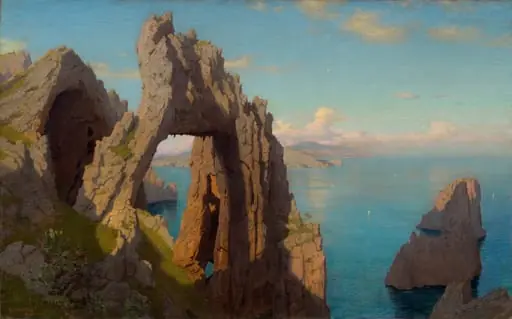
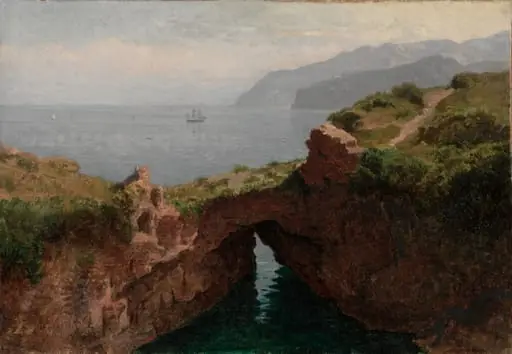
Capri is an unspecified painting by the American Impressionist artist William Stanley Haseltine. It dates from 1869 and is held in the collection of the Cleveland Museum of Art.
About this work
He sketched the volcanic stone, then finished the picture back in his studio.
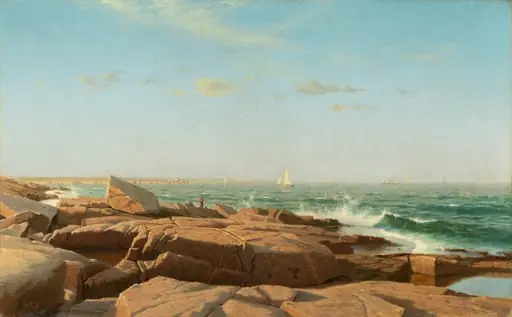
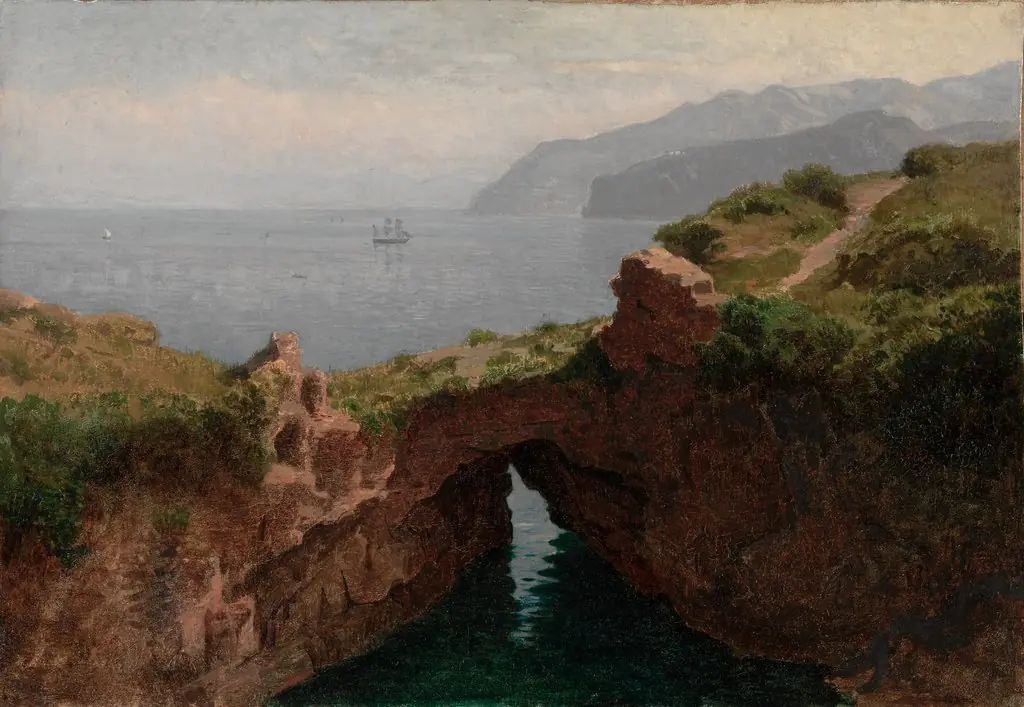
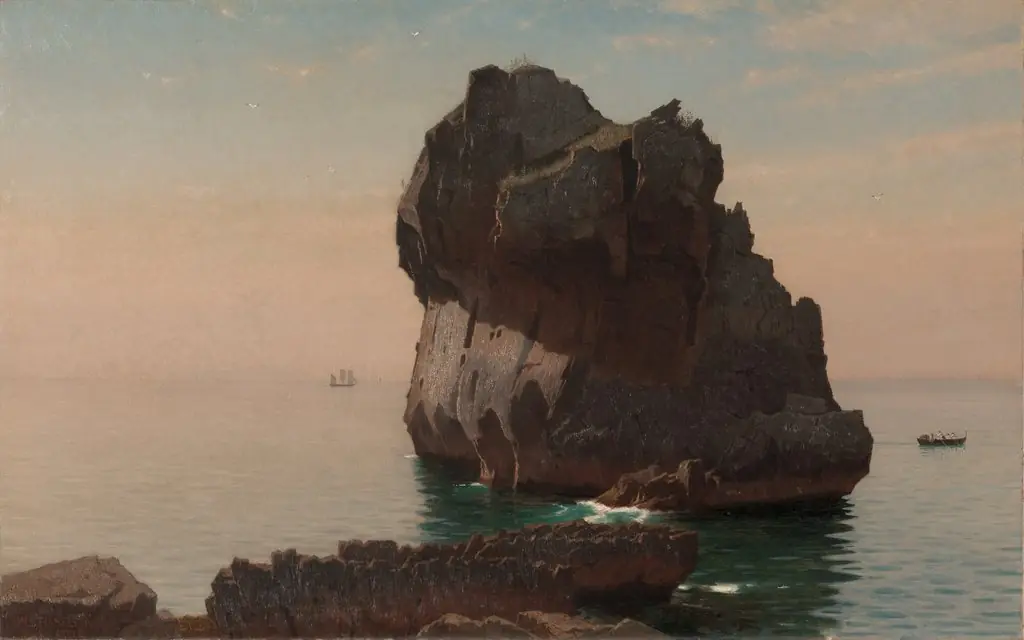
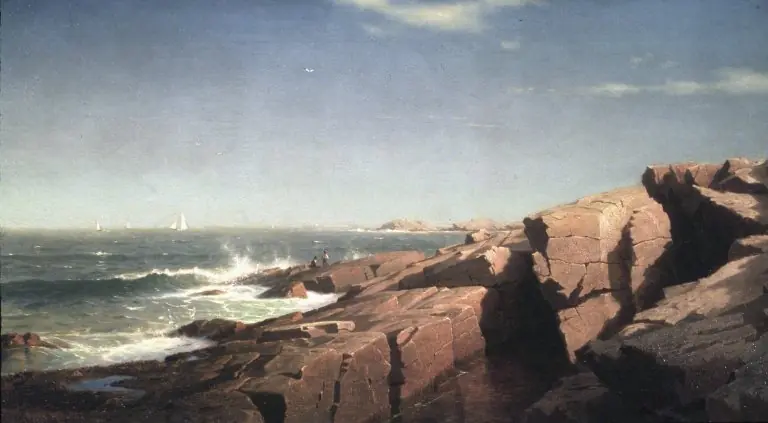
William Stanley Haseltine painted jagged Capri rocks glowing in late sun. The cliffs look almost soft, lit from behind by warm gold. Tiny waves hit their bases in foamy white.
Haseltine visited Capri once in 1869. He sketched the volcanic stone, then finished the picture back in his studio. The colors feel calm, but the shapes are wild.
Next time you’re near Ohio, check the Cleveland Museum of Art for this view.
Overview
William Stanley Haseltine’s oil painting titled *Capri* depicts a cluster of volcanic rock formations on the eastern tip of the Italian island. The composition captures the cliffs bathed in the warm glow of a setting sun, their silhouettes softened by backlighting, while frothy surf laps at their bases. The work reflects the artist’s lifelong interest in rugged coastal scenery.
Subject & Meaning
The scene presents the stark, jagged geology of Capri’s uninhabited shoreline, emphasizing the contrast between the hard, angular stone and the gentle, luminous atmosphere of twilight. By portraying the rocks in a tranquil palette, Haseltine suggests a harmonious relationship between the natural forces of fire‑born stone and the soothing rhythm of the sea.
Technique & Style
Executed in oil on canvas, the painting employs a restrained color scheme of muted earth tones punctuated by golden highlights that convey the late‑day light. Haseltine’s brushwork renders the cliffs with a softened edge, while the foam of the waves is suggested through quick, white strokes, creating a balance between detailed observation and atmospheric impression.
History & Provenance
Haseltine visited Capri in 1869, producing sketches of the volcanic outcrops that later served as the basis for the finished canvas completed in his studio. The work entered the collection of the Cleveland Museum of Art, where it remains on display, offering viewers a glimpse of the artist’s transatlantic engagement with coastal subjects.
Artist & collection