Artwork
Untitled
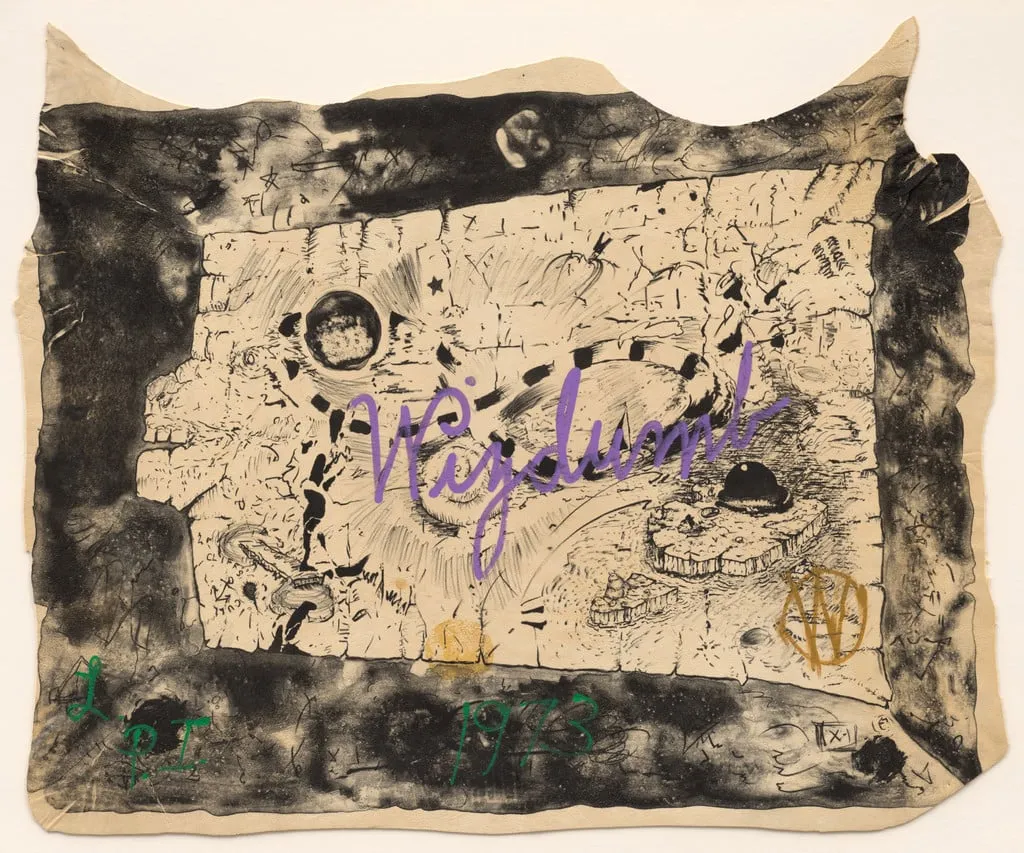
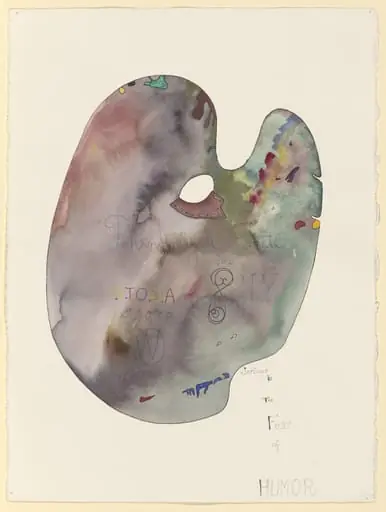
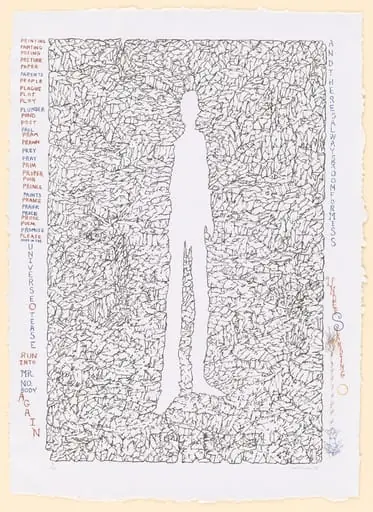
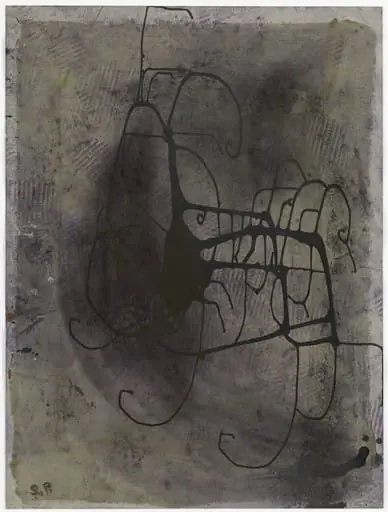
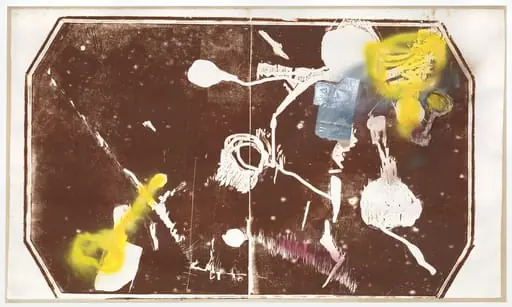
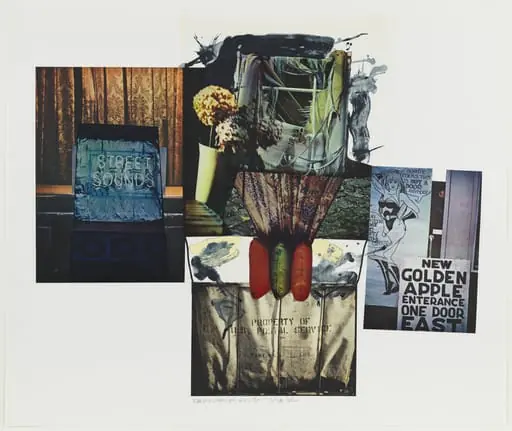
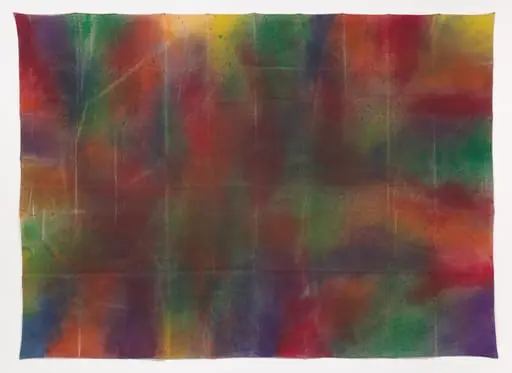
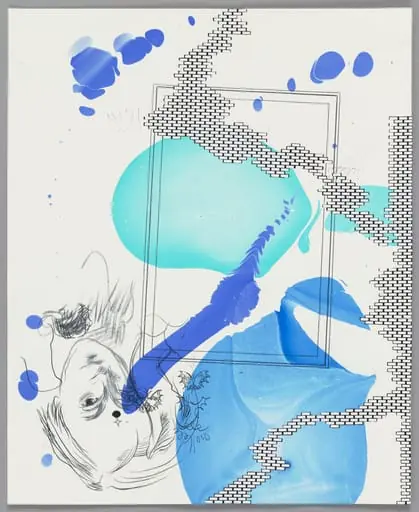
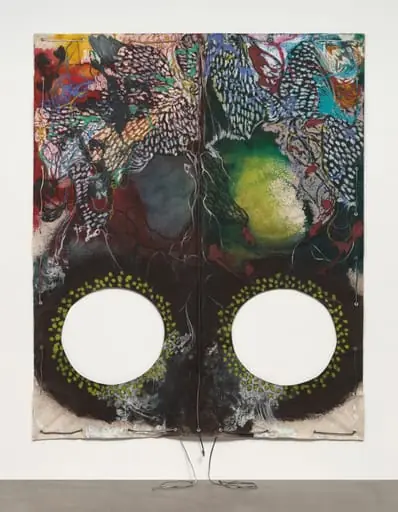
Untitled is an acrylic print by William T. Wiley. It dates from 1972 and is held in the collection of the Museum of Modern Art.
About this work
Overview
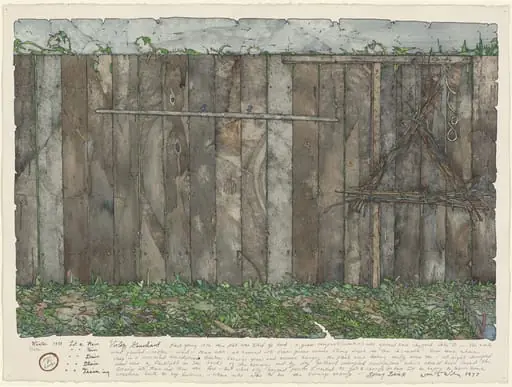
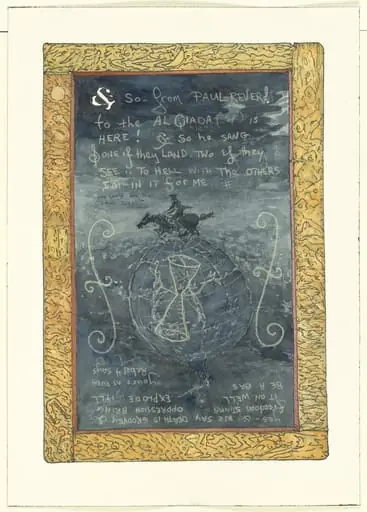
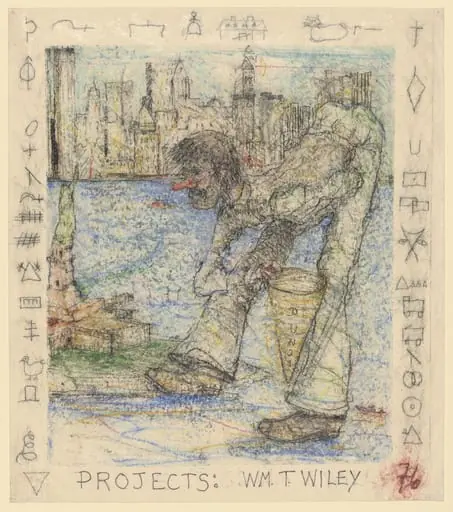
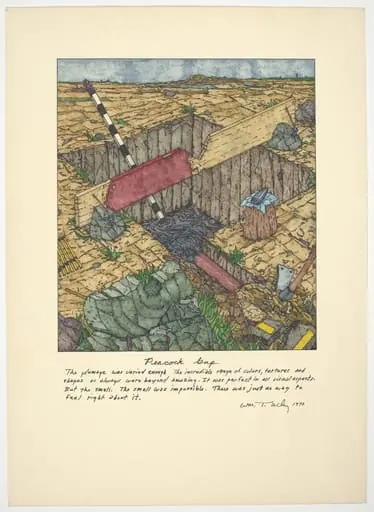
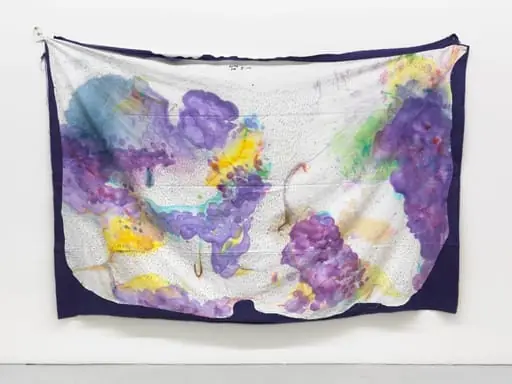
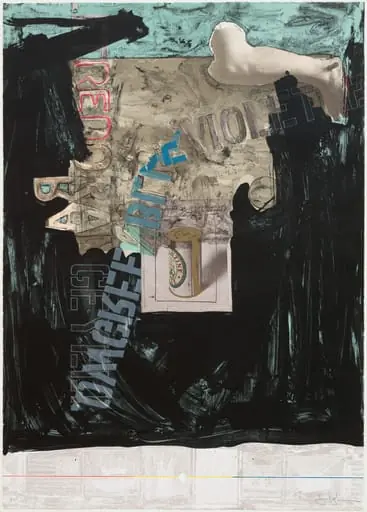
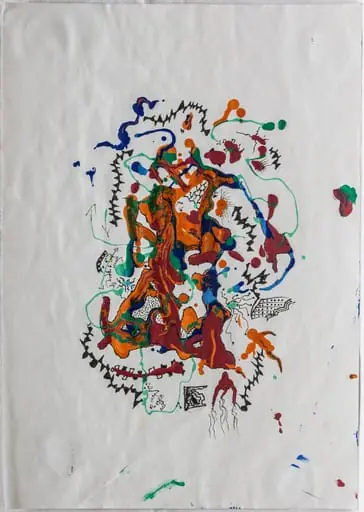
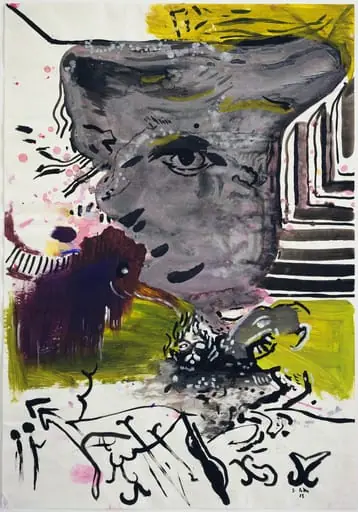
Created in 1972, this lithograph on chamois hide incorporates acrylic paint and manual interventions that disrupt traditional printmaking norms. Wiley treated the surface as a mutable field, blending industrial print techniques with hand-applied, tactile elements. The work resists refinement, embracing material irregularities as part of its conceptual core.
Subject & Meaning
The central composition resembles a fragmented cartographic sketch, populated by abstract symbols, stars, and handwritten phrases such as 'Witchcraft.' These elements suggest personal mythology or coded language, evoking occult or esoteric systems without clear definition. The work invites interpretation but resists fixed meaning, aligning with Wiley’s interest in ambiguity and intellectual play.
Technique & Style
Lithographic ink was applied to chamois, a soft, porous leather, allowing for uneven absorption and unpredictable textures. Acrylic additions were layered over the print, with stains, tears, and smudges deliberately introduced. The result mimics aged artifacts, merging print precision with the spontaneity of drawing and collage, challenging distinctions between medium and process.
History & Provenance
It was produced during his association with the Bay Area Funk movement, which valued eccentricity and material experimentation over formal purity.
This piece emerged from Wiley’s mid-1970s exploration of non-traditional supports and hybrid methods, a period when he moved fluidly between sculpture, print, and installation. It was produced during his association with the Bay Area Funk movement, which valued eccentricity and material experimentation over formal purity. The work’s physical wear suggests intentional aging, reflecting its role in broader conceptual inquiries about authenticity and decay.
Context
Wiley’s approach aligned with post-1960s art trends that questioned institutional norms and elevated the handmade over the polished. His use of humble, non-art materials like chamois reflected a broader interest in craft traditions and domestic textures, positioning his work in dialogue with both countercultural aesthetics and conceptual art’s dematerialization tendencies.
Legacy
The work exemplifies Wiley’s influence on later generations of artists who prioritize material irregularity and conceptual openness in printmaking. Its rejection of pristine surfaces helped expand the boundaries of what print media could encompass, encouraging a generation to treat the page as a site of physical and psychological residue rather than polished presentation.
Artist & collection
Artist
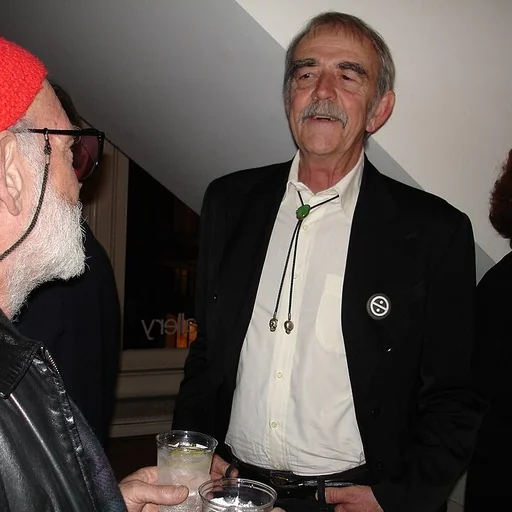
William Thomas Wiley (October 21, 1937 – April 25, 2021) was an American artist. His work spanned a broad range of media including drawing, painting, sculpture, film, performance, and pinball. At least some of Wiley's…