Artwork
Untitled
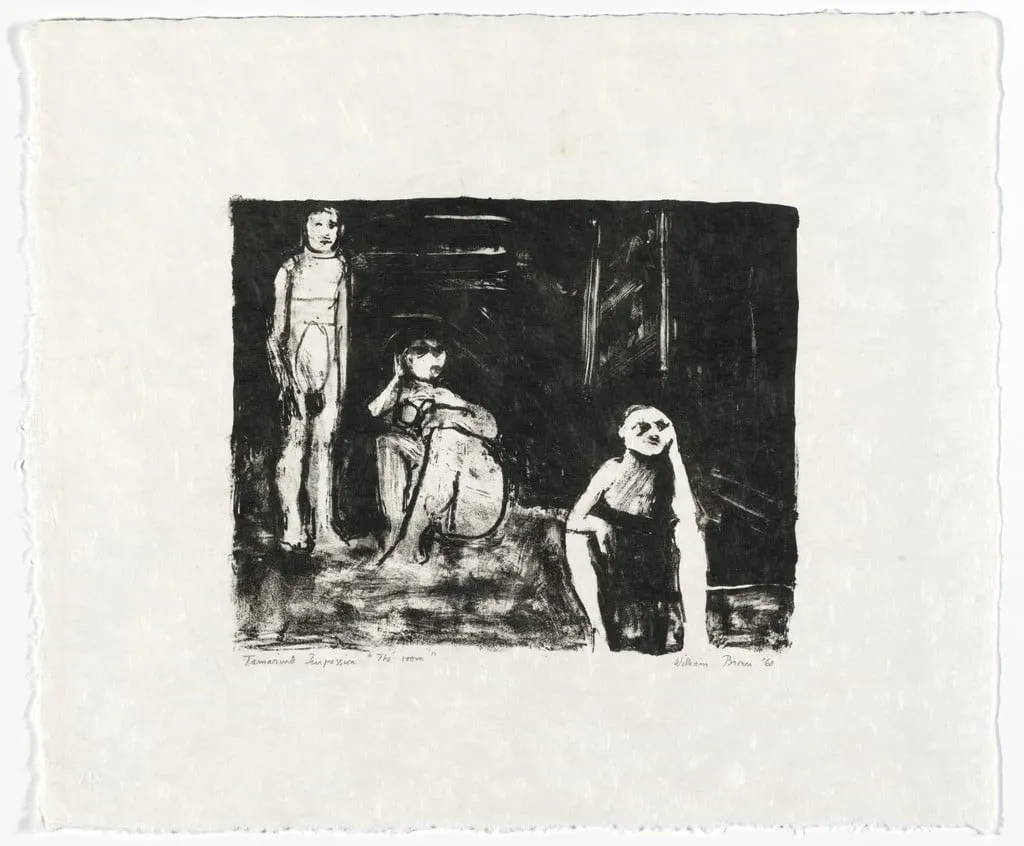
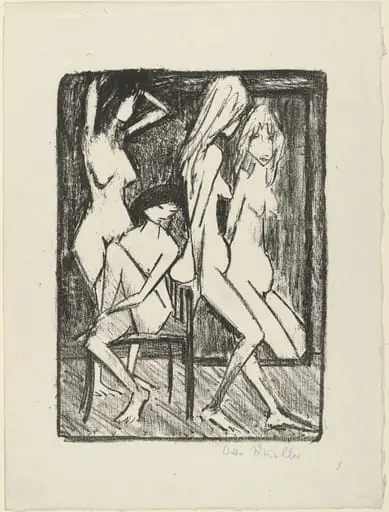
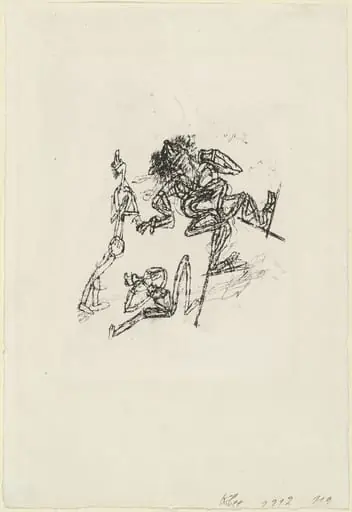
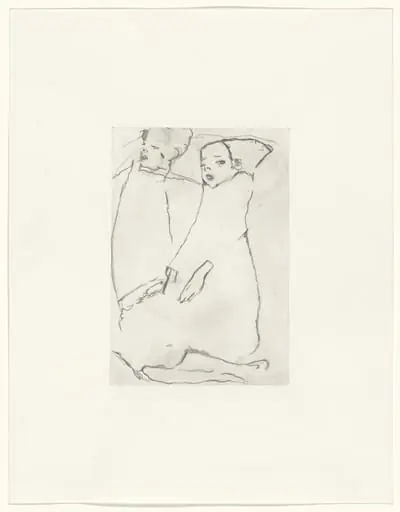
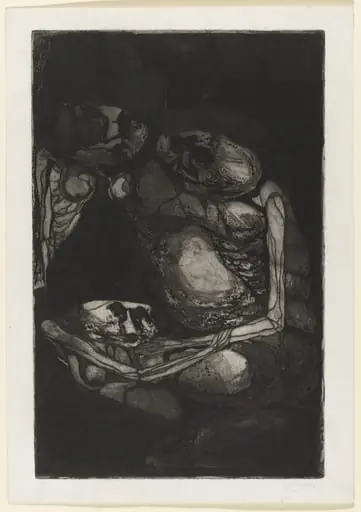
Untitled is an ink print by William Theophilus Brown. It dates from 1960 and is held in the collection of the Museum of Modern Art.
About this work
One stands stiffly in the back, another sits hunched on a chair, and the third leans on a table.
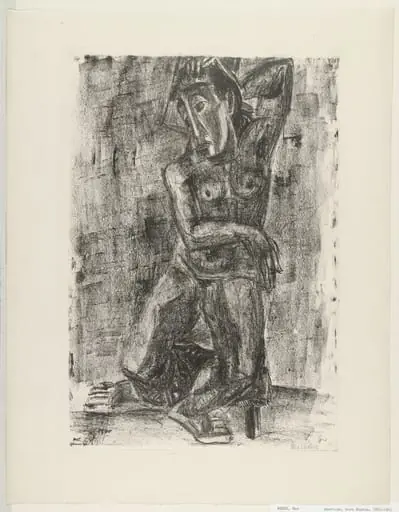
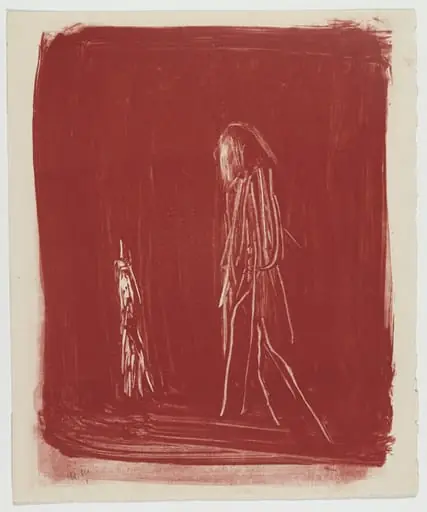
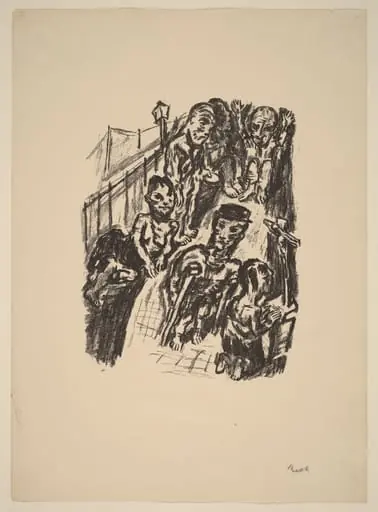
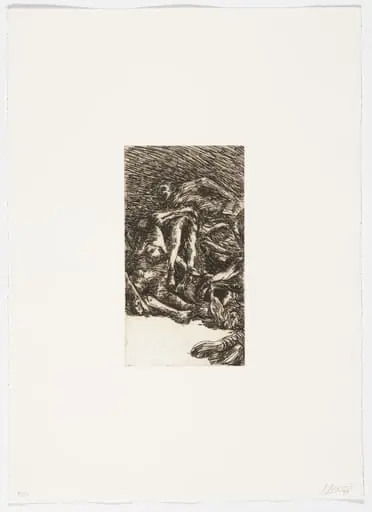
This sketch shows three simple figures in a dim room. One stands stiffly in the back, another sits hunched on a chair, and the third leans on a table. The lines are rough, almost like a quick drawing, and the whole scene feels shadowy and quiet.
The artist signed it in the corner, and the paper has a worn, textured look. The title isn’t given, but the year is 1960.
If you like this style, look up lithography.
Overview
Created in 1960, this lithograph by William Theophilus Brown is a quiet, introspective work from his time in the Bay Area Figurative Movement. Executed in ink on paper, it captures a sparse interior scene with minimal detail, reflecting Brown’s interest in everyday human presence over abstraction. The piece is part of The Museum of Modern Art’s permanent collection, representing a shift in postwar American art toward renewed figuration.
Subject & Meaning
Three figures occupy a dim, undefined space: one stands rigidly at the rear, another sits slumped in a chair, and a third leans on a table. Their postures suggest isolation or fatigue, with no narrative clues or emotional cues. The absence of a title and context invites contemplation rather than interpretation, emphasizing mood over story. The figures feel anonymous, their identities dissolved into the shadows.
Technique & Style
Brown used rough, gestural lines typical of lithographic sketching, allowing the paper’s texture to show through. The ink is applied unevenly, creating areas of deep shadow and faint washes that suggest dim lighting. The composition avoids detail, favoring loose contours and tonal variation. The signature is discreetly placed, reinforcing the work’s unadorned, spontaneous character.
History & Provenance
Produced during Brown’s active years in California, this print emerged from a circle of artists rejecting pure abstraction in favor of observed reality. It entered The Museum of Modern Art’s collection shortly after its creation, reflecting institutional recognition of the Bay Area Figurative Movement. No earlier ownership records are publicly documented, suggesting it was likely acquired directly from the artist or a gallery.
Context
In the late 1950s and early 1960s, artists in the Bay Area, including Brown, reasserted the human figure against the dominance of Abstract Expressionism. Their work drew from observation, memory, and emotional atmosphere rather than formal innovation alone. This lithograph aligns with that ethos—unpolished, intimate, and rooted in the quiet rhythms of domestic life.
Legacy
Brown’s lithographs, including this one, helped broaden the definition of postwar American printmaking by prioritizing psychological tone over technical refinement. While less widely known than his contemporaries, his work contributed to the movement’s lasting influence on figurative art in the decades that followed, particularly in regional art histories of California.
Artist & collection
Artist
William Theophilus Brown (April 7, 1919 – February 8, 2012) was an American artist. He became prominent as a member of the Bay Area Figurative Movement.