Artwork
Lago Avernus
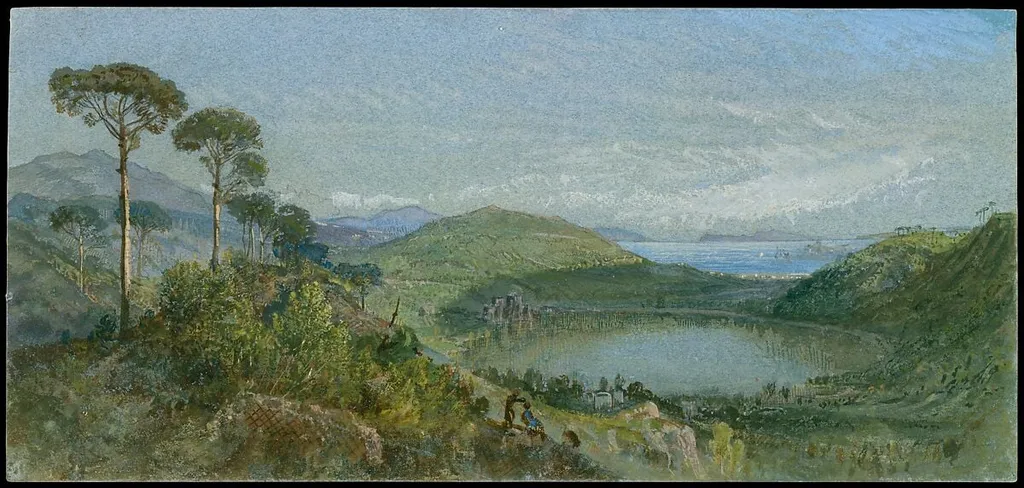
Lago Avernus is a watercolor work on paper by the Hudson River School artist William Trost Richards. It dates from 1868 and is held in the collection of the Metropolitan Museum of Art.
About this work
Overview
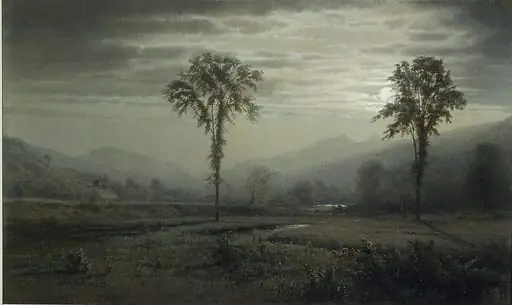
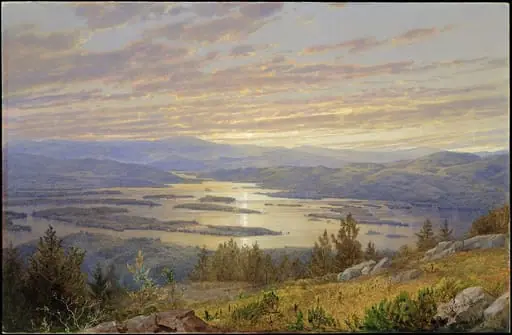
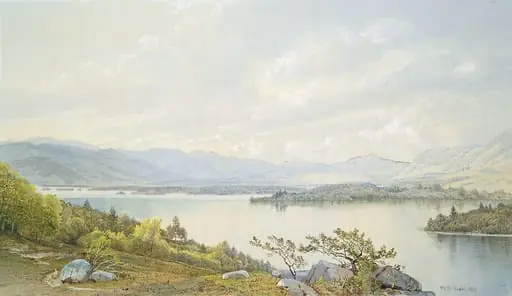
Lago Avernus, executed around 1868 by American landscape painter William Trost Richards, is a watercolor, gouache, and graphite work on blue wove paper. The piece belongs to the American Wing collection and presents a tranquil lakescape framed by low, dark hills, with a solitary tree bending toward the water’s surface.
Subject & Meaning
The composition portrays Lake Avernus, a small body of water traditionally associated with mythic underworld themes, though Richards renders it without overt narrative. The lone tree, positioned at the water’s edge, suggests a quiet observation of the scene, emphasizing solitude and the subtle dialogue between land and water.
Technique & Style
Richards employed thin, overlapping washes of watercolor and gouache that resemble the translucency of stained glass. The blue underlayer of the paper filters through the pigments, creating a cool, mist‑laden atmosphere. Graphite accents define the tree and horizon, while the outdoor execution captures natural light with a restrained, observational quality.
History & Provenance
Created in the late 1860s, Lago Avernus reflects Richards’s period of plein‑air practice, during which he traveled extensively in Europe. The work entered the museum’s American Wing collection through acquisition in the early 20th century, where it remains a representative example of his watercolor oeuvre.
Artist & collection