Artwork
Purgatory Cliff
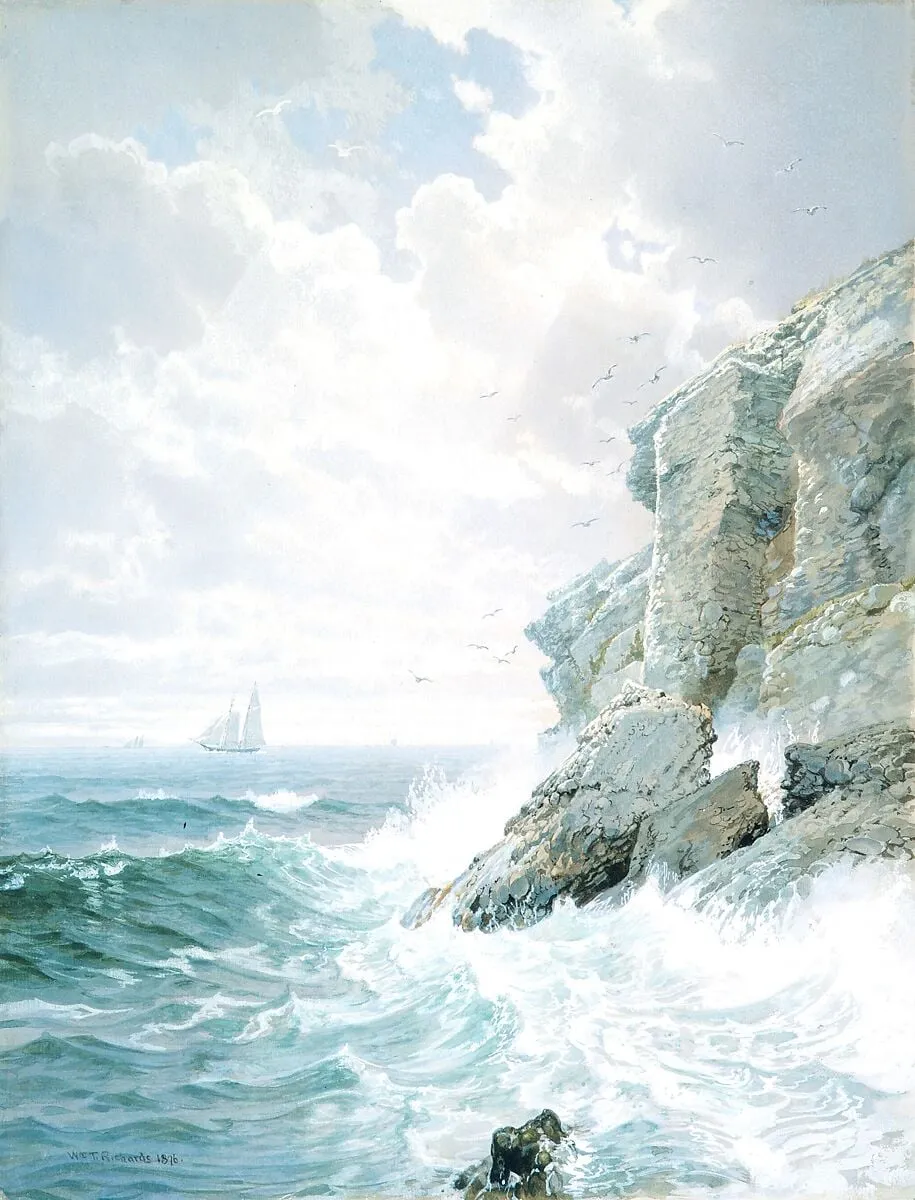
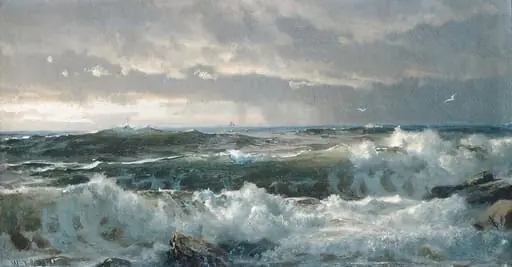
Purgatory Cliff is a watercolor work on paper by the Hudson River School artist William Trost Richards. It dates from 1876 and is held in the collection of the Metropolitan Museum of Art.
About this work
Overview
William Trost Richards’ 1876 work *Purgatory Cliff* is a modest‑sized watercolor and gouache composition on light‑tan wove paper. The scene presents a small boat caught on a steep, cresting wave beneath a turbulent sky, with a cliff rising in the background.
Subject & Meaning
The painting captures a moment of maritime tension: a lone vessel is tilted by a foaming wave, suggesting the precarious balance between human endeavor and the sea’s power. The cliff and stormy atmosphere amplify the sense of isolation and the precariousness of the journey.
Technique & Style
Richards executed the work en plein air, completing it in a single outdoor session on a windy day. He employed a glazing method, layering transparent washes to render the swirling whites and grays of the water, while allowing the paper’s tan ground to show through in places, evoking sunlight on wet sand.
History & Provenance
Created in 1876, the piece entered the American Wing collection of the museum where it is now displayed. Its provenance traces back to the artist’s own studio inventory, though specific ownership changes prior to acquisition are not documented.
Context
During the late nineteenth century, American landscape painters like Richards often sought to depict the sublime aspects of nature. *Purgatory Cliff* reflects this interest, focusing on the dramatic interaction of sea, sky, and rock rather than a panoramic vista.
Artist & collection