Artwork
H Beard Print Collection
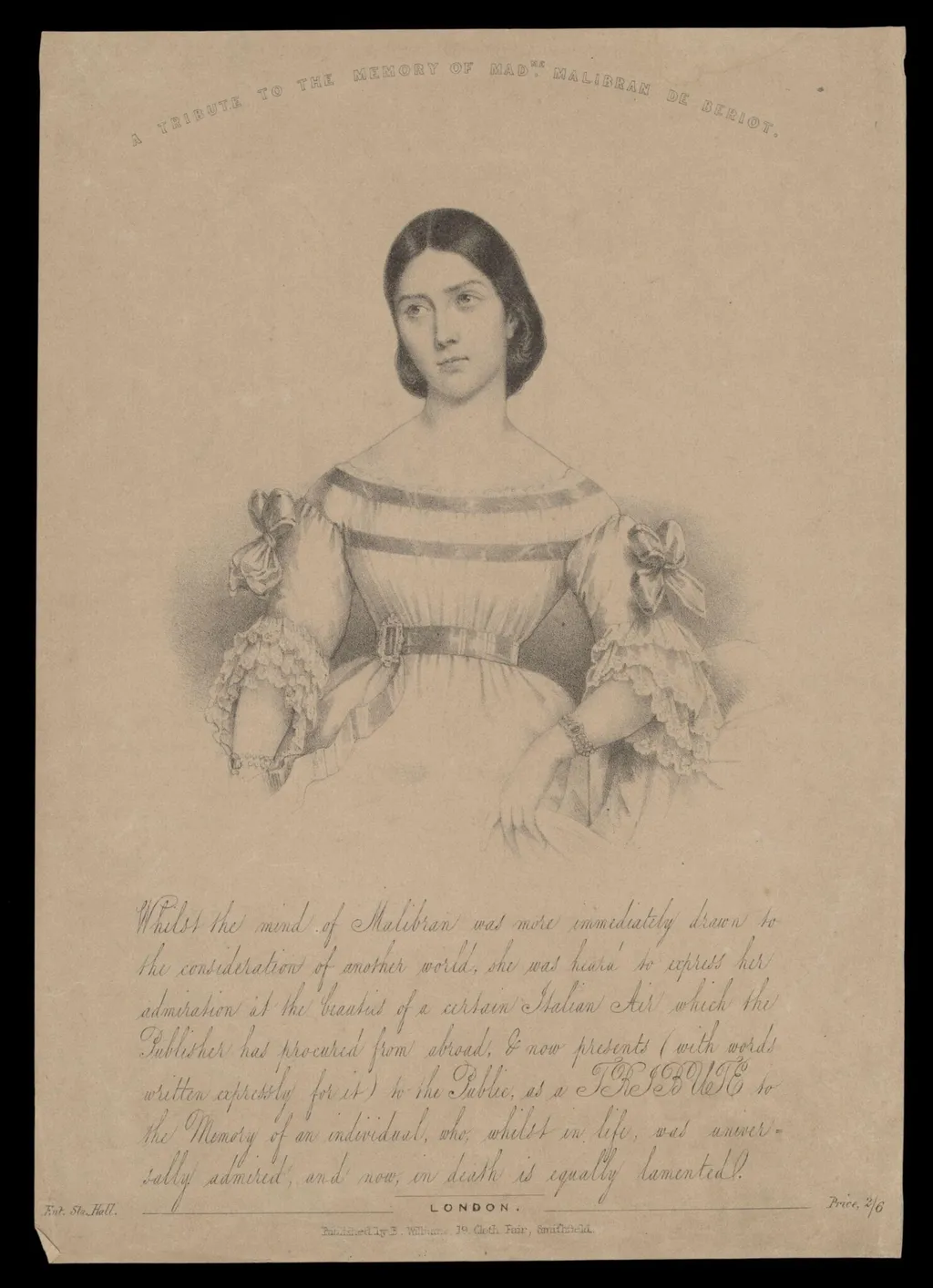
H Beard Print Collection is a print by the Romanticist artist B. Williams. It dates from 1837 and is held in the collection of the Victoria and Albert Museum. This print, published by B.
About this work
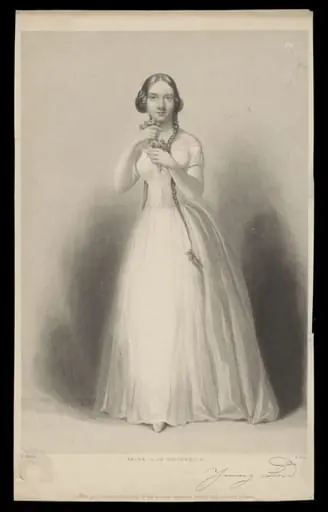
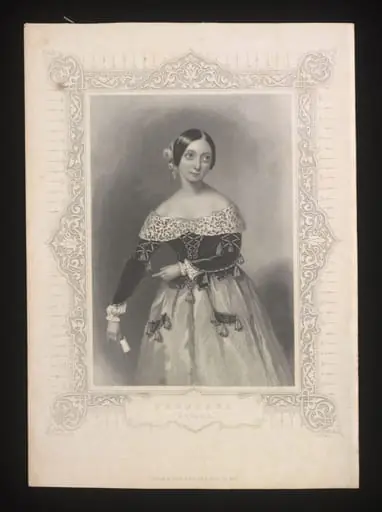
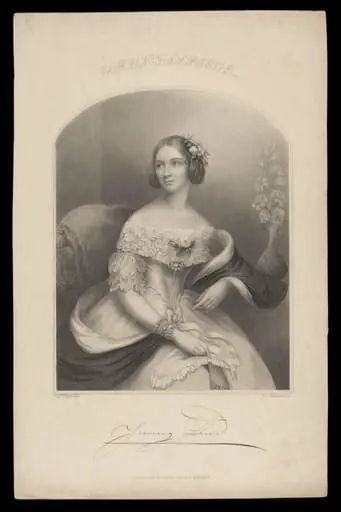
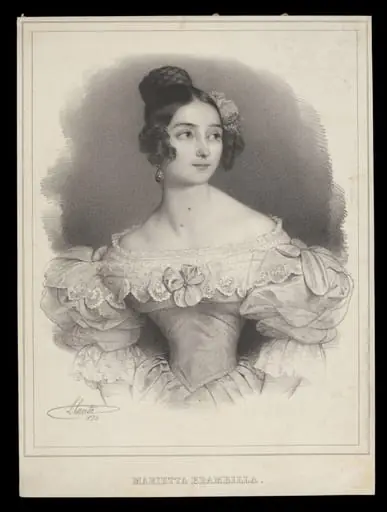
This print shows Maria Malibran with a tribute below.
B. Williams published it around 1837 under Romanticism.
The tribute likely honors her short but brilliant career.
Romanticism often spotlighted bold artists like Malibran.
Prints like this shared news and admiration fast in the 1800s.
Her voice and stage presence made her a legend.
Look up the Victoria and Albert Museum for prints like this.
Overview
This print, published by B. Williams around 1837, portrays the soprano Maria Malibran alongside a textual tribute. Produced during the height of Romanticism, it reflects the era’s fascination with charismatic performers. As a mass-produced image, it served to circulate her likeness and legacy beyond the opera house, reaching audiences who could not attend her performances.
Subject & Meaning
Maria Malibran, celebrated for her powerful voice and commanding stage presence, is depicted with solemn dignity. The accompanying tribute acknowledges her untimely death at age 28 and the profound impact she made in a brief career. The text elevates her not merely as a singer but as a cultural figure whose artistry resonated deeply with contemporaries.
Technique & Style
The print employs engraved lines typical of early 19th-century commercial publishing, with fine detail in Malibran’s features and drapery. The composition balances portraiture with textual homage, aligning with Romantic ideals that fused emotional expression with public reverence. The tone is restrained yet reverent, avoiding theatrical excess while emphasizing gravitas.
History & Provenance
Produced shortly after Malibran’s death in 1836, the print was part of a wave of memorial imagery responding to her sudden passing. B. Williams, a known publisher of theatrical prints, capitalized on public mourning to distribute her image widely. Similar works survive in collections such as the Victoria and Albert Museum, indicating its place in popular visual culture of the time.
Context
In the 1830s, printed portraits of performers were common tools for building fame and preserving memory. Malibran’s international reputation and dramatic life story made her an ideal subject. The print reflects how Romanticism celebrated individual genius and emotional intensity, turning artists into symbols of passion and transience.
Legacy
Though ephemeral in material, this print contributed to the enduring image of Malibran as a legendary figure. It helped sustain her reputation beyond her lifetime, embedding her in the collective memory of 19th-century music lovers. Such prints remain valuable as artifacts of how public admiration was visually constructed before photography became widespread.
Artist & collection
Artist
This artist made prints around 1837, part of a lively print tradition you can still spot in collections today.