Artwork
Untitled
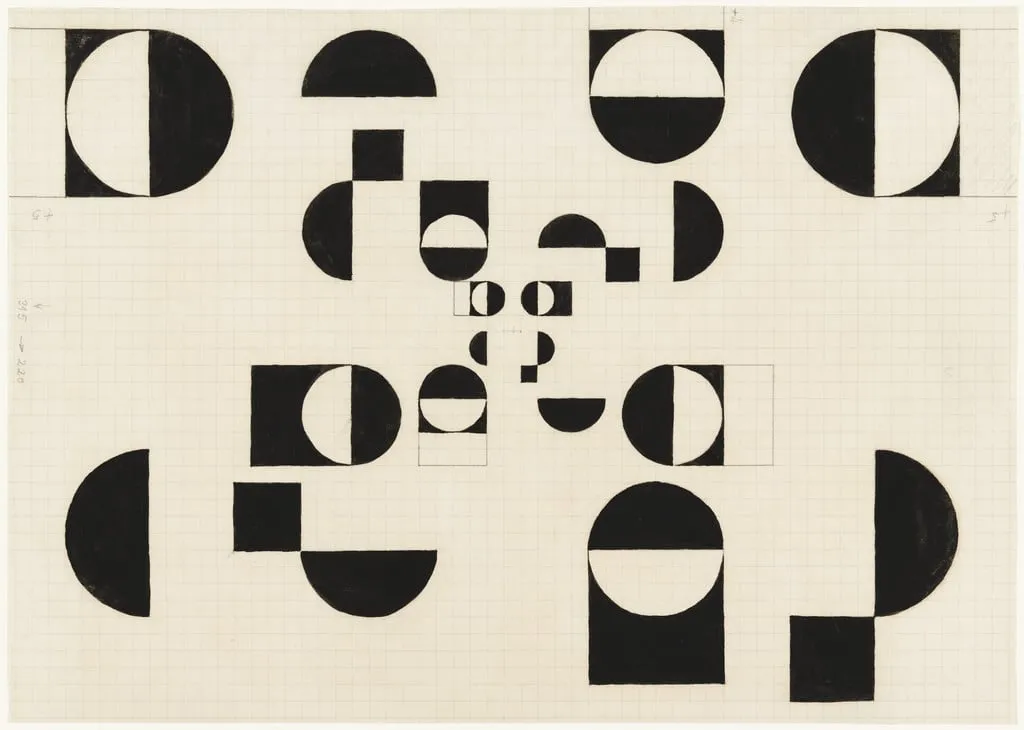
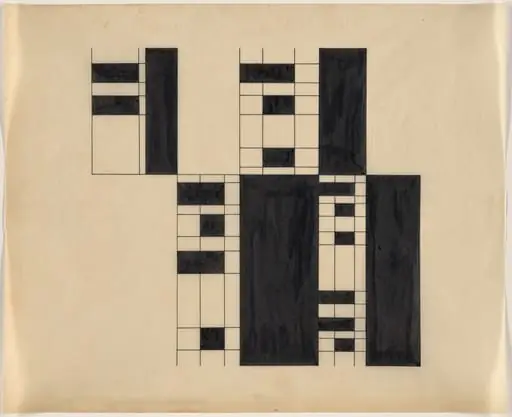
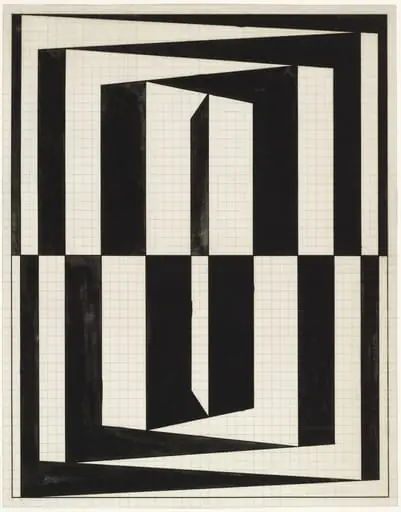
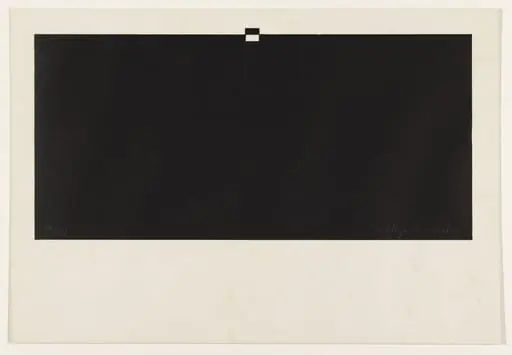
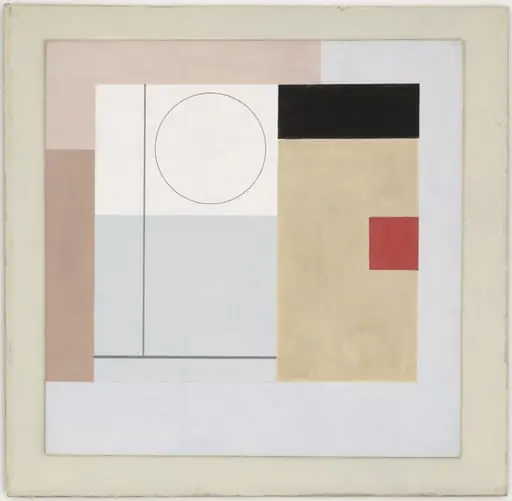
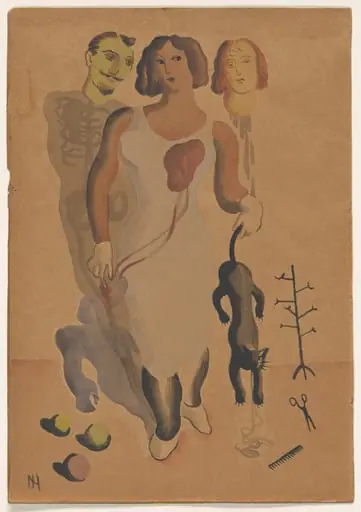
Untitled is a gouache drawing by Willys de Castro. It dates from 1956 and is held in the collection of the Museum of Modern Art.
About this work
Overview
The work’s restrained palette and precise execution reflect a deliberate engagement with structure and spatial relationships.
Created around 1956, this drawing by Willys de Castro combines gouache and pencil on graph paper, embodying the formal inquiries of Brazil’s Neo-Concrete Movement. The work’s restrained palette and precise execution reflect a deliberate engagement with structure and spatial relationships. Its use of a pre-printed grid underscores the artist’s interest in systems, while the hand-applied shapes introduce subtle deviations that disrupt mechanical regularity.
Subject & Meaning
The composition consists of abstract geometric forms—circles, half-circles, and squares—arranged without narrative or symbolic reference. These shapes operate as autonomous elements, inviting attention to their placement, overlap, and negative space. The absence of color or figuration directs focus to the physical presence of the forms and their interaction with the underlying grid, aligning with Neo-Concrete ideals of perceptual experience over representation.
Technique & Style
De Castro employed gouache for its opaque, matte black surfaces and pencil for fine, controlled outlines, both applied with precision over the graph paper’s ruled grid. The contrast between the dense black shapes and the white paper enhances spatial clarity. The grid serves not as a constraint but as a silent partner, amplifying the tension between order and intervention, structure and spontaneity.
History & Provenance
This work emerged during a period of intense experimentation in Brazilian art, when de Castro was actively involved in the Neo-Concrete group’s rejection of rigid geometric abstraction. Though not widely exhibited at the time, it reflects his broader practice bridging visual art and design. Its survival as a small-scale drawing highlights the importance of sketch-like works in the development of his later, more monumental pieces.
Context
In mid-1950s Brazil, artists sought to move beyond the formalism of Concrete art by emphasizing viewer interaction and bodily experience. De Castro’s work, including this drawing, responded to this shift by treating the artwork as an event in space rather than a static image. The graph paper’s industrial origin subtly critiques the mechanization of art, while the hand-drawn forms reclaim agency for the artist’s gesture.
Legacy
This drawing exemplifies de Castro’s contribution to expanding the boundaries of geometric abstraction in Latin America. Its quiet rigor influenced later generations interested in the relationship between structure and perception. Though modest in scale, it remains a key document of Neo-Concrete theory in practice, illustrating how minimal means could provoke complex visual and philosophical responses.
Artist & collection
Artist
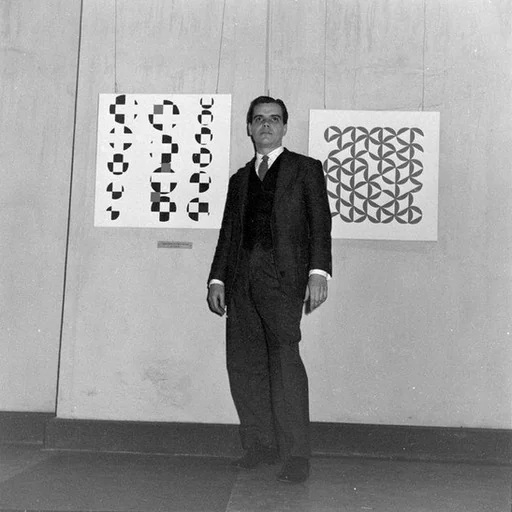
Willys de Castro (February 16, 1926 – June 5, 1988) was a Brazilian visual artist, poet, graphic designer, industrial designer, stage designer and magazine editor.