Artwork
1860 - 1870
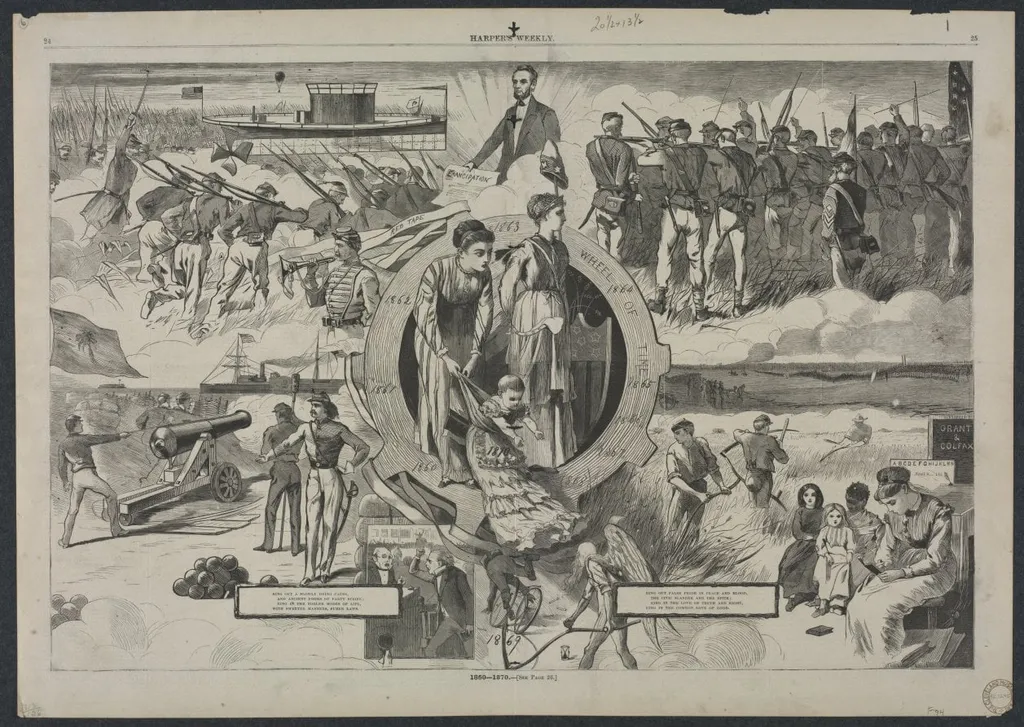
1860 - 1870 is a print by the Impressionist artist Winslow Homer. It dates from 1870 and is held in the collection of the Cleveland Museum of Art.
About this work
Overview
Though often associated with oil and watercolor painting, Homer also produced detailed graphic works for periodicals.
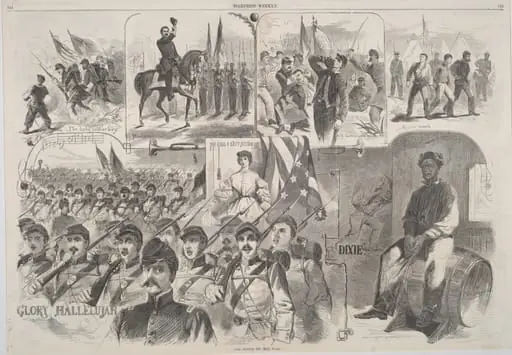
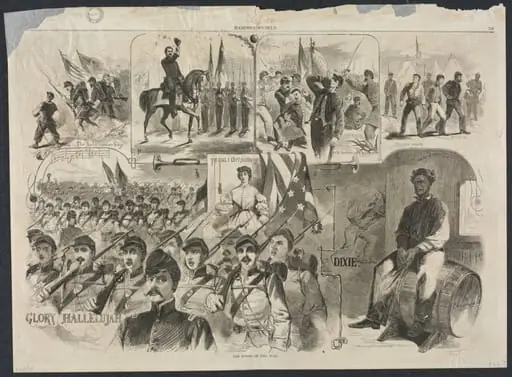
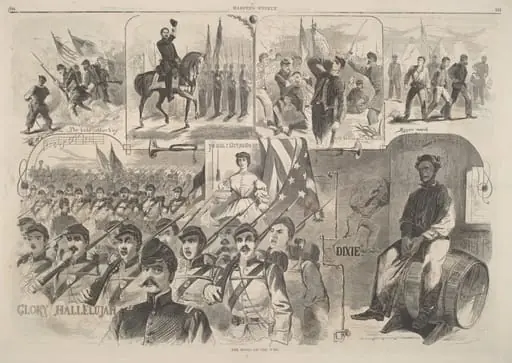
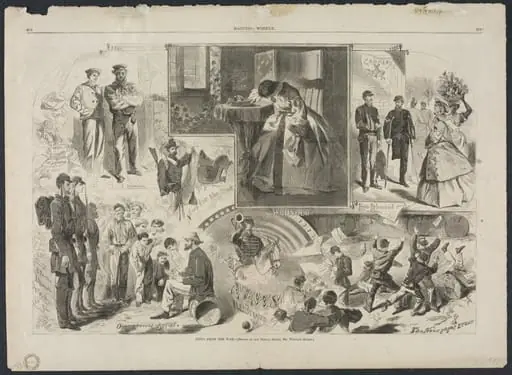
Created in 1870, this print by Winslow Homer captures a moment of transition in post-Civil War America. Though often associated with oil and watercolor painting, Homer also produced detailed graphic works for periodicals. This piece reflects his interest in documenting civilian and military life during a period of national redefinition, blending observation with symbolic elements to convey broader societal shifts.
Subject & Meaning
The scene juxtaposes military activity—soldiers loading cannons and marching—with domestic life: a woman holding a child, a family seated nearby. A central circular form, resembling a gear, does not depict machinery but functions as an emblem of industrialization. Together, these elements suggest the collision of war, labor, and home life, reflecting a nation reconfiguring its identity amid rapid technological and social change.
Technique & Style
Executed in black-and-white ink, the print employs fine linework to render dense, intricate detail. Homer uses tonal contrast and overlapping figures to create depth within a flattened space. The composition is tightly packed, avoiding idealization in favor of observational clarity. This approach aligns with the principles of Realism, emphasizing ordinary moments over dramatic or romanticized narratives.
History & Provenance
The work was produced during Homer’s tenure as a visual chronicler for publications like Harper’s Weekly. It entered the collection of The Cleveland Museum of Art in the 20th century, where it remains part of a broader group of his graphic works. Its preservation reflects institutional recognition of Homer’s contributions beyond painting, particularly his role in shaping visual journalism during the Reconstruction era.
Context
Created shortly after the Civil War, the print responds to a nation grappling with reconstruction, industrial expansion, and shifting gender roles. Civilian and military figures coexist in a single frame, mirroring the blurred boundaries between wartime and peacetime life. The gear symbol, though fantastical, echoes contemporary discourse on progress, making the image a visual commentary on America’s evolving priorities.
Legacy
Homer’s graphic work from this period influenced later illustrators and documentarians by demonstrating how everyday scenes could carry layered meaning. This print, though not widely exhibited, exemplifies his ability to condense complex social themes into a single image. It remains a reference point for understanding how visual media helped shape public perception of postwar American life.
Artist & collection
Artist
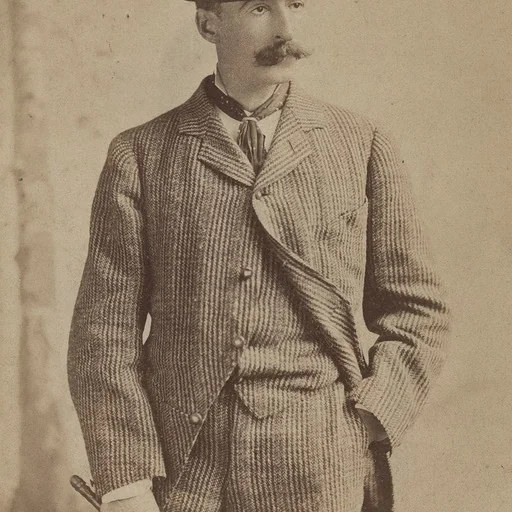
Winslow Homer (February 24, 1836 – September 29, 1910) was an American landscape painter and illustrator, best known for his marine subjects.