Artwork
The Songs of War
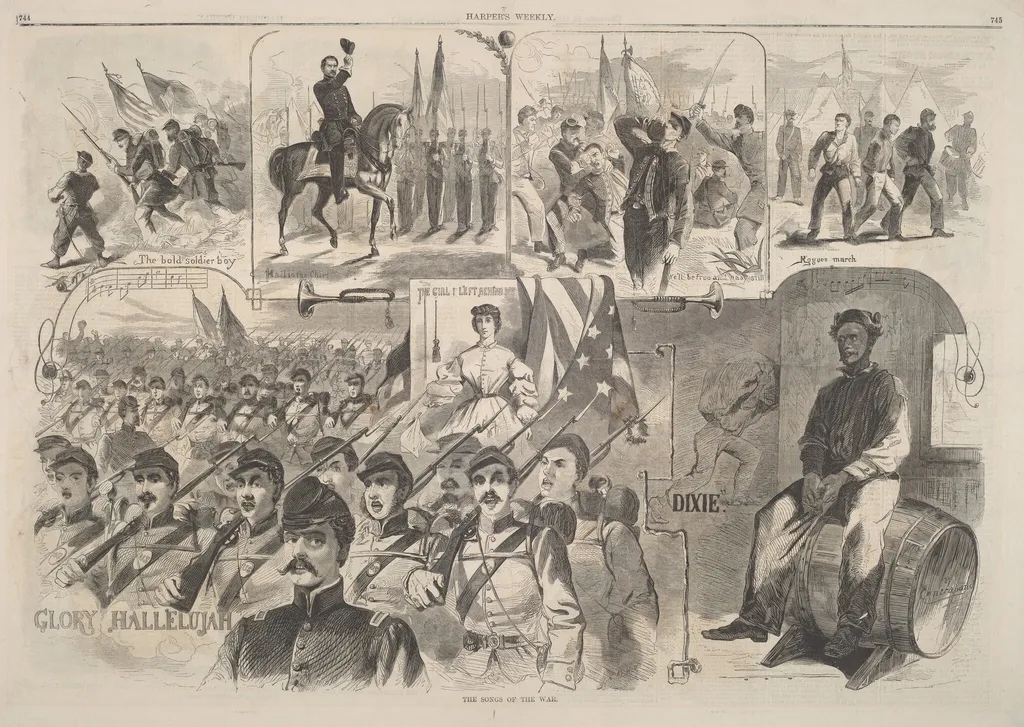
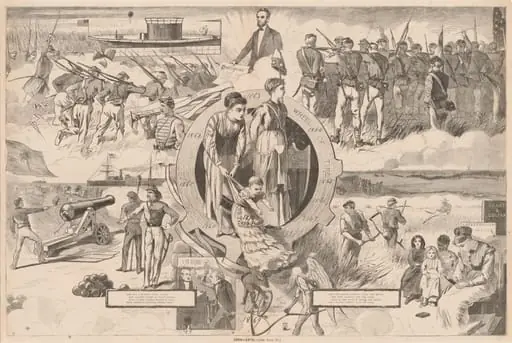
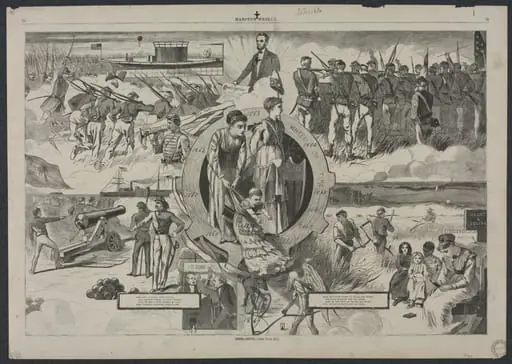
The Songs of War is an ink print by the Impressionist artist American 19th Century. It dates from 1861 and is held in the collection of the National Gallery of Art.
About this work
Overview
This wood engraving, titled The Songs of War, presents a densely composed scene of Civil War-era figures engaged in military and civilian activities.
This wood engraving, titled The Songs of War, presents a densely composed scene of Civil War-era figures engaged in military and civilian activities. Rendered in black and white with precise, linear detail, it combines multiple vignettes—soldiers marching, musicians playing, a woman holding a flag—into a single unified field. The composition suggests a narrative of collective experience, where music and movement serve as threads binding the war’s human elements.
Subject & Meaning
The imagery centers on music as a force sustaining morale during wartime. Figures such as drummers, singers, and flag-bearers imply the role of song in uniting troops and civilians. The presence of both soldiers and non-combatants underscores the war’s reach into daily life. The title frames these scenes not as battle depictions but as acts of endurance, where melody becomes a form of resistance and solidarity.
Technique & Style
Executed as a wood engraving, the work relies on fine, incised lines carved into hardwood to achieve sharp contrasts and intricate detail. The rapid, almost sketch-like quality of the rendering suggests urgency in production, likely intended for mass reproduction in periodicals or broadsides. The absence of tonal gradation emphasizes clarity and legibility, aligning with the medium’s function in timely visual communication.
History & Provenance
Created during or shortly after the American Civil War, the print likely originated from a Northern publishing house aiming to shape public sentiment. Its format and subject align with popular illustrated newspapers of the era, such as Harper’s Weekly, which used wood engravings to document wartime life. Exact authorship and original publication remain undocumented, but its style is consistent with mid-19th-century American printmaking practices.
Context
In the 1860s, printed images were vital for conveying news and emotion to a public with limited access to battlefield reports. Music played a central role in military life, from bugle calls to regimental songs, and visual representations often romanticized or idealized these moments. This engraving reflects a broader cultural effort to frame the war through shared rituals, transforming hardship into collective memory.
Legacy
As a representative of wartime print culture, the work contributes to understanding how visual media shaped public perception of conflict before photography became dominant. Though not widely attributed to a named artist, its survival in archives highlights the role of accessible imagery in preserving the emotional texture of the Civil War, beyond official histories and battlefield records.
Artist & collection

Artist
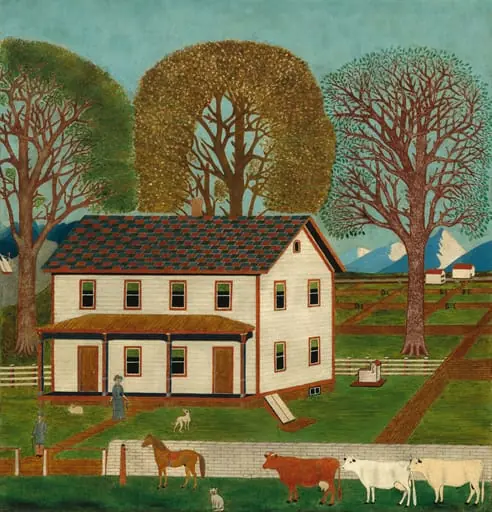
This artist painted everyday American life in the 1800s. Look at *Farmhouse in Mahantango Valley*—a quiet, sunlit scene of rural Pennsylvania. *Boy and Girl* shows two children standing close, their faces turned toward…

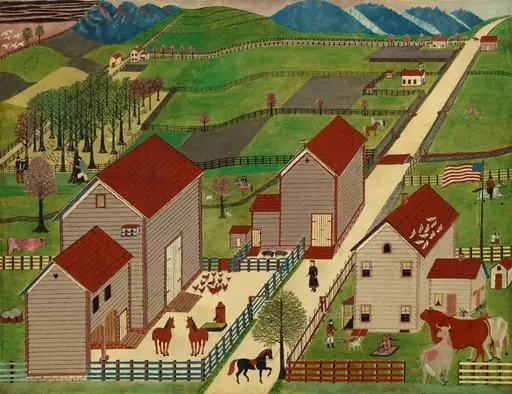
 1860-1870
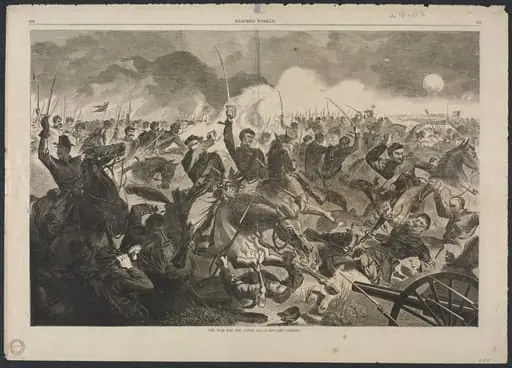 The War for the Union, 1862 - A Cavalry Charge
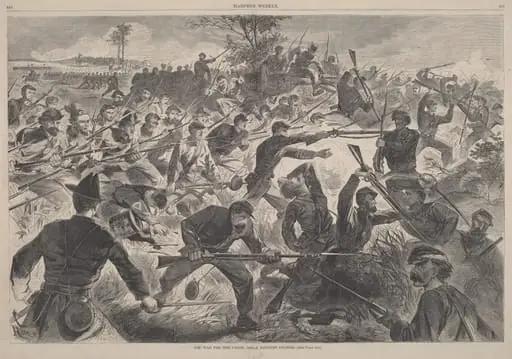 The War for the Union, 1862 - A Bayonet Charge
 1860 - 1870
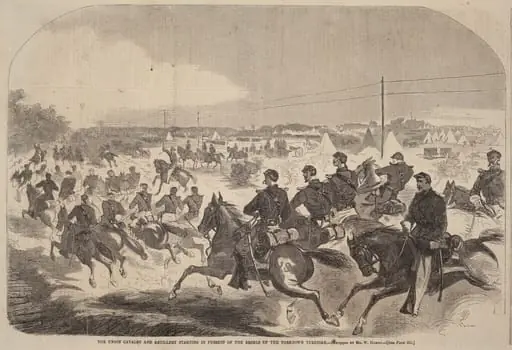 The Union Cavalry and Artillery Starting in Pursuit of the Rebels up the Yorktown Turnpike
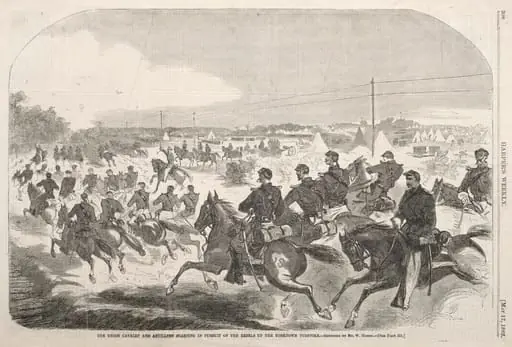 The Union Cavalry and Artillery Starting in Pursuit of the Rebels up the Yorktown Turnpike
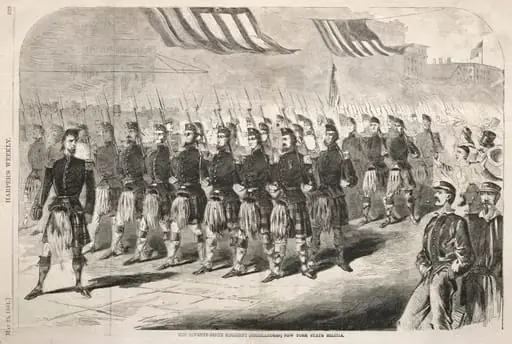 The Seventy-Ninth Regiment (Highlanders) New York State Militia
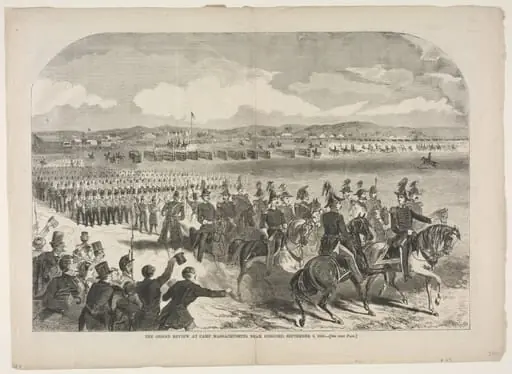 The Grand Review at Camp Massachusetts, near Concord, September 9, 1859