Artwork
Waltz of the Blonde and Waltz of the Brunette
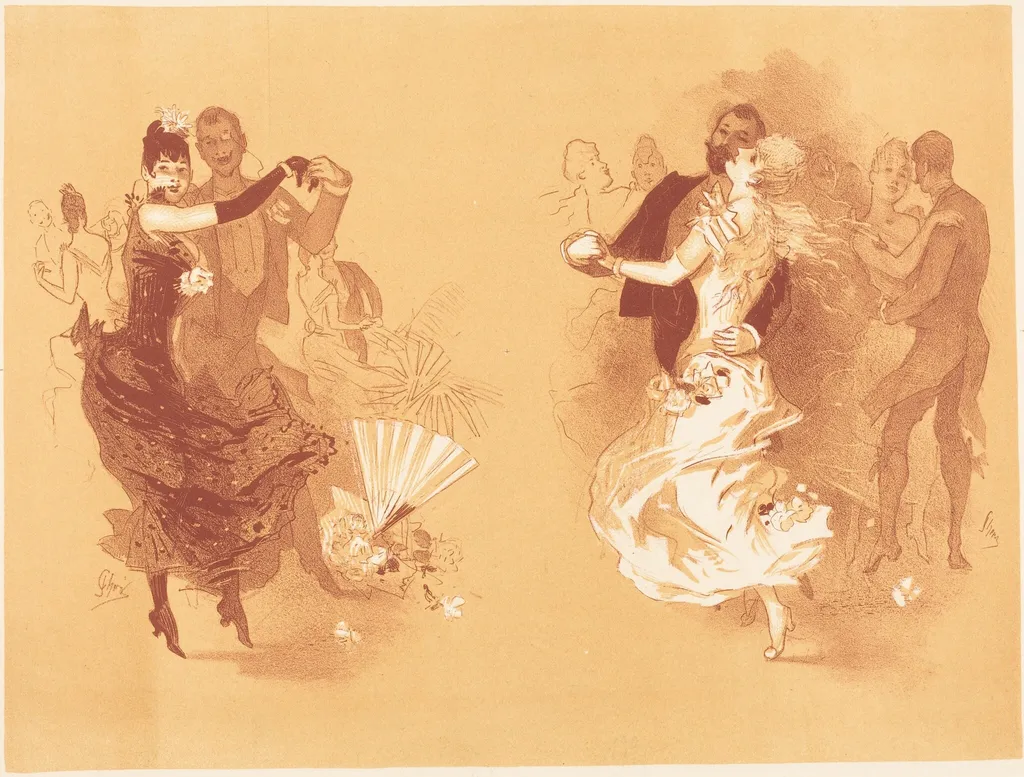
Waltz of the Blonde and Waltz of the Brunette is an ink print by the Romanticist artist Jules Chéret. It dates from 1884 and is held in the collection of the National Gallery of Art.
About this work
Overview
Created around 1884 by Jules Chéret, this colored lithograph on wove paper captures a pair of dancers in motion. Printed primarily in orange tones, the work exemplifies Chéret’s pioneering role in elevating commercial printmaking into a respected art form during the Belle Époque. Its subject—two women dancing—reflects the era’s fascination with public leisure and theatrical performance.
Subject & Meaning
The print portrays a blonde and a brunette dancer mid-waltz, their gestures suggesting rhythm and spontaneity. Dressed in elegant, flowing attire, they embody the freedom and energy of Parisian nightlife. The absence of narrative detail focuses attention on movement and mood, inviting viewers to experience the joy of dance rather than interpret a story.
Technique & Style
Chéret employed lithography to achieve bold, flat planes of color with crisp outlines, a hallmark of his poster style. The limited palette, dominated by orange, enhances the sense of warmth and motion. Lines are fluid and rhythmic, mirroring the dancers’ steps, while the lack of shading emphasizes silhouette and gesture over realism.
History & Provenance
Produced during Chéret’s most prolific period, the print was likely distributed as a commercial poster for a music hall or cabaret. Though originally intended for public display, surviving examples are now held in museum collections. Its preservation reflects growing recognition of lithographic posters as significant cultural artifacts of late 19th-century France.
Context
In 1880s Paris, the rise of entertainment venues like the Moulin Rouge and music halls created demand for eye-catching advertisements. Chéret’s posters, including this one, helped transform public spaces into visual spectacles. His work responded to urbanization and changing social norms, celebrating the visibility and agency of women in public life.
Legacy
Chéret’s approach influenced generations of poster artists across Europe and America. By blending artistic technique with mass communication, he redefined the poster as both advertisement and art. 'Waltz of the Blonde and Waltz of the Brunette' remains a representative example of how commercial imagery captured the spirit of its time without sacrificing aesthetic refinement.
Own this work as a print
Artist & collection

Artist
Jules Chéret (31 May 1836 – 23 September 1932) was a French painter and lithographer who became a master of Belle Époque poster art. He has been called the father of the modern poster.

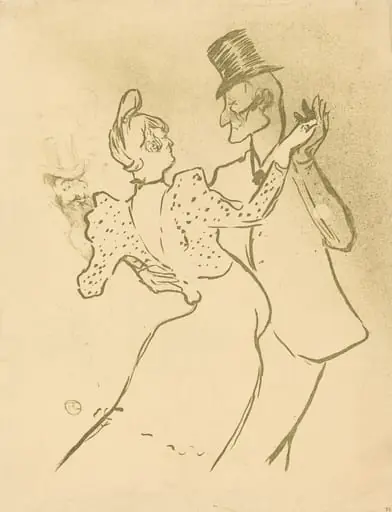 La Goulue
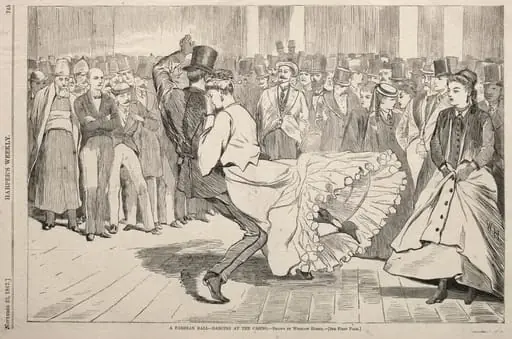 A Parisian Ball - Dancing at the Casino
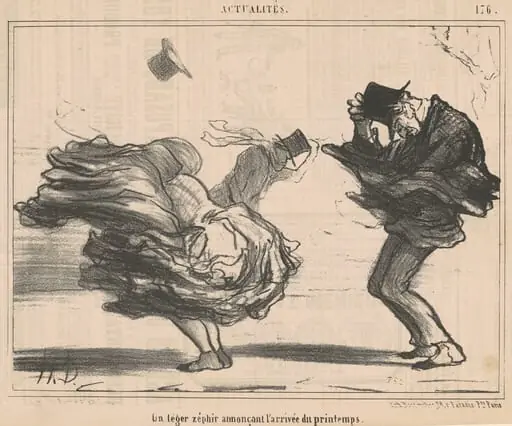 Un léger zéphir annoncant l'arrivée du printemps
 Untitled
 A Parisian Ball - Dancing at the Mabille, Paris
 A Parisian Ball - Dancing at the Mabille, Paris
 Untitled
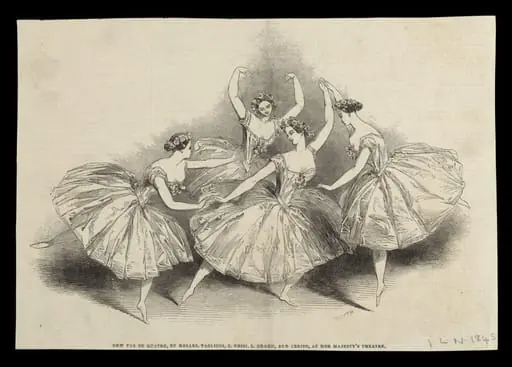 H Beard Print Collection
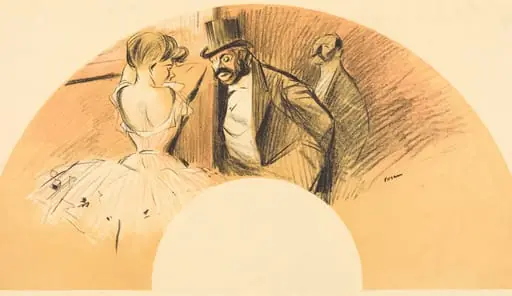 Eventail (pour le bal Gavarni) (Fan (for the Gavarni Ball))
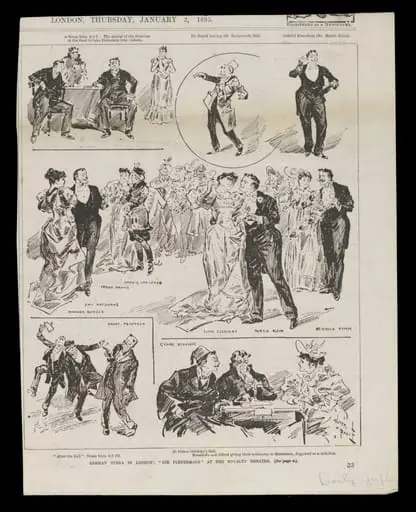 H Beard Print Collection