Artwork
Eight Bells
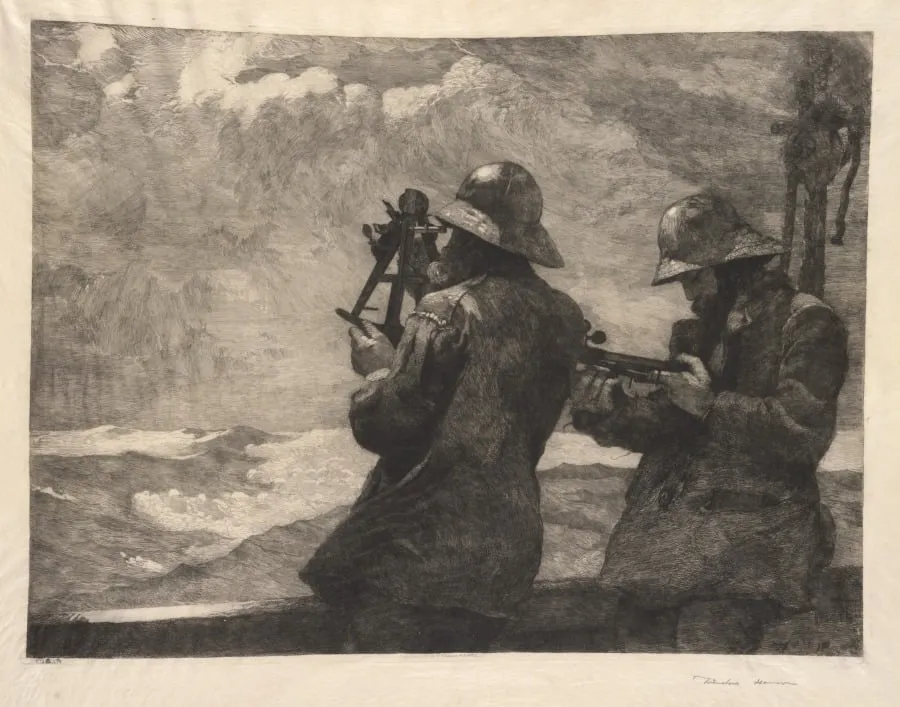
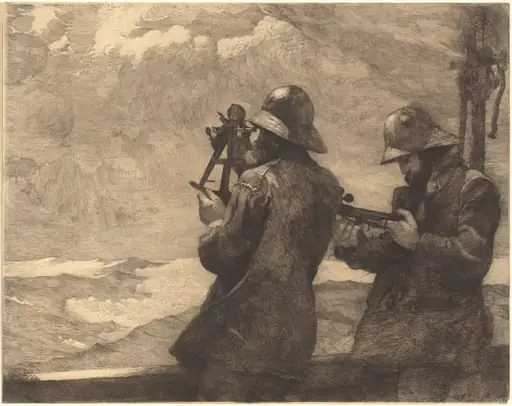
Eight Bells is a print by the Impressionist artist Winslow Homer. It dates from 1887 and is held in the collection of the Cleveland Museum of Art.
About this work
Overview
Winslow Homer’s *Eight Bells* (1887) is an oil painting portraying two sailors aboard a vessel, engaged in the precise act of celestial navigation.
Winslow Homer’s *Eight Bells* (1887) is an oil painting portraying two sailors aboard a vessel, engaged in the precise act of celestial navigation. Created during Homer’s mature period, the work reflects his shift from journalistic illustration to contemplative studio compositions. The scene captures a quiet moment of professional focus amid the sea’s unpredictability, rendered with deliberate weight and texture that emphasize the physicality of paint and the gravity of the sailors’ task.
Subject & Meaning
The two figures, backs to the viewer, are absorbed in using a sextant and spyglass to determine their position at sea. Their anonymity underscores the universality of maritime labor, while their stillness contrasts with the turbulent environment. The title, referencing the ship’s bell signaling the end of a watch, suggests routine discipline amid isolation. The painting conveys not heroism, but the quiet competence required to navigate the ocean’s vastness with limited tools and unyielding conditions.
Technique & Style
Homer employs thick, textured brushwork and a restrained palette dominated by grays, blues, and deep browns to evoke the damp, heavy air of the open sea. Chiaroscuro defines the sailors’ forms against the storm-lit sky, lending volume and tension. The horizon is low, emphasizing the sky’s weight and the men’s vulnerability. Brushstrokes are assertive yet controlled, avoiding romanticism in favor of a tactile, almost sculptural rendering of fabric, metal, and water.
History & Provenance
Painted in 1887 after Homer’s return from several years in Maine, *Eight Bells* was among his first major marine works completed in his studio rather than en plein air. It was acquired by the Cleveland Museum of Art in 1935 from the artist’s estate, having passed through private hands after its initial exhibition. The painting’s journey reflects its growing recognition as a defining example of American realism in the late 19th century.
Context
In the 1880s, American art increasingly turned toward scenes of labor and nature’s indifference, moving away from idealized narratives. Homer’s focus on sailors—neither glorified nor sentimentalized—aligned with broader cultural interests in authenticity and the dignity of skilled work. The painting also responds to advances in maritime navigation, where human judgment remained essential despite emerging technologies.
Legacy
*Eight Bells* influenced later American realists by demonstrating how ordinary moments could carry profound emotional and structural weight. Its restrained composition and emphasis on material presence set a precedent for artists exploring solitude and labor. Though not widely reproduced in its time, it has become a touchstone in discussions of American marine painting and the quiet heroism of everyday endurance.
Artist & collection
Artist
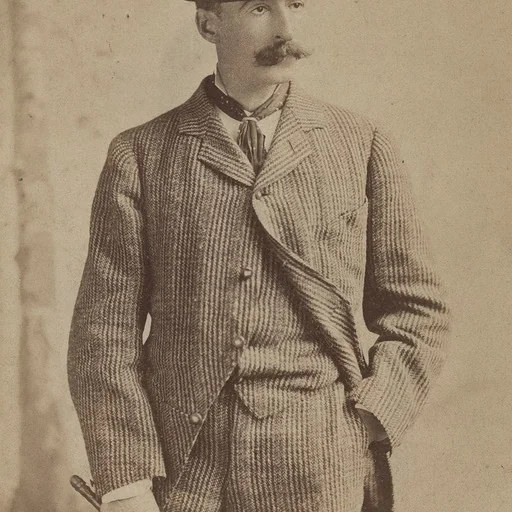
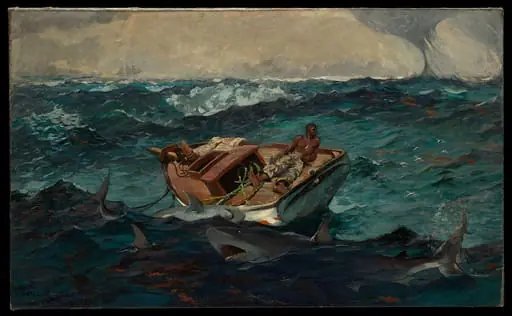
Winslow Homer (February 24, 1836 – September 29, 1910) was an American landscape painter and illustrator, best known for his marine subjects.

![Landscape [Paesaggio], by Carlo Paolo Agazzi](https://artifactworldgallery.com/img/carlo-paolo-agazzi--landscape-paesaggio--e606f4ada87d2052-w320.webp)