Artwork
Fire Fiend - Sheet Music Cover
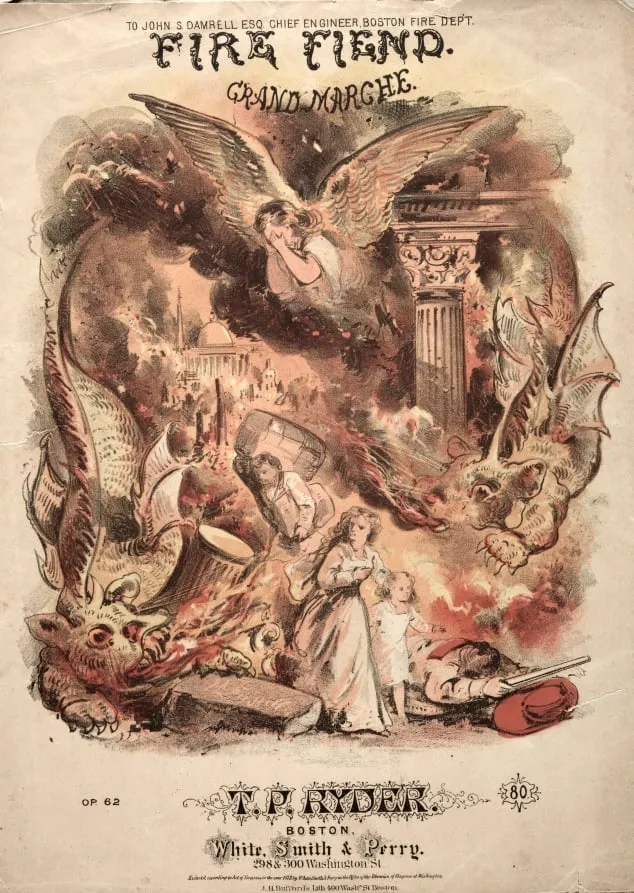
Fire Fiend - Sheet Music Cover is a print by the Impressionist artist Winslow Homer. It dates from 1872 and is held in the collection of the Cleveland Museum of Art.
About this work
The painting shows a devilish figure holding a burning sheet of music. Smoke curls off the flames while the background stays dark. A woman in white stands behind a railing, watching.
This was made for a sheet music cover in the 1870s. It mixes danger with music—unusual for the time. The devil’s grin makes it feel like a warning.
Look up Winslow Homer (American, 1836–1910).
Overview
Created around 1872, *Fire Fiend* is a commercial print designed as a sheet music cover by Winslow Homer, then primarily known for his illustration work.
Created around 1872, *Fire Fiend* is a commercial print designed as a sheet music cover by Winslow Homer, then primarily known for his illustration work. Though later celebrated for his landscapes and marine scenes, Homer was actively engaged in the visual culture of popular media during this period. The piece blends theatrical imagery with musical commerce, reflecting the era’s demand for evocative, emotionally charged designs to attract buyers of printed music.
Subject & Meaning
The cover portrays a demonic figure clutching a sheet of music ablaze, its grin suggesting mockery or menace. A woman in white observes from behind a railing, her stillness contrasting the chaos. The fusion of fire and music implies a warning—perhaps against the seductive or destructive power of art. The devil’s presence transforms music from entertainment into something perilous, tapping into Victorian anxieties about moral corruption through popular culture.
Technique & Style
Homer employed bold, simplified forms and high contrast to maximize visual impact on a mass-produced cover. The devil is rendered with sharp, angular lines, while smoke curls in loose, expressive strokes. The background remains dark and indistinct, focusing attention on the central figures. The woman’s pale dress and rigid posture create a stark foil to the fiery chaos, demonstrating Homer’s skill in conveying narrative through minimal, yet precise, graphic elements.
History & Provenance
Produced during Homer’s transition from illustrator to fine artist, *Fire Fiend* originated as a commercial commission for a music publisher in the early 1870s. Few original prints survive, and its existence is documented through archival records and museum holdings. It reflects the thriving market for illustrated sheet music, where dramatic imagery helped sell compositions to middle-class households. The work remained largely unnoticed in art historical discourse until later reappraisals of Homer’s commercial output.
Context
In the 1870s, sheet music was a dominant form of home entertainment, and publishers competed for attention with vivid covers. Gothic and supernatural themes were common, but Homer’s integration of a literal devil with musical notation was unusual. The image resonated with contemporary fears about moral decay, technological change, and the emotional power of music. It also aligns with broader 19th-century fascination with the occult and the boundary between art and danger.
Legacy
Though not widely exhibited during Homer’s lifetime, *Fire Fiend* has gained recognition as an early example of his narrative precision and psychological depth. It reveals the artist’s engagement with popular culture before his shift to fine art. Scholars now view it as a bridge between commercial illustration and his later, more celebrated works, offering insight into the visual language of 19th-century American domestic life and its underlying tensions.
Artist & collection
Artist
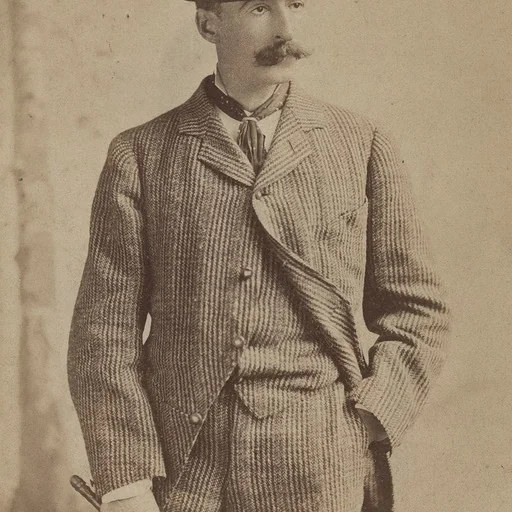
Winslow Homer (February 24, 1836 – September 29, 1910) was an American landscape painter and illustrator, best known for his marine subjects.





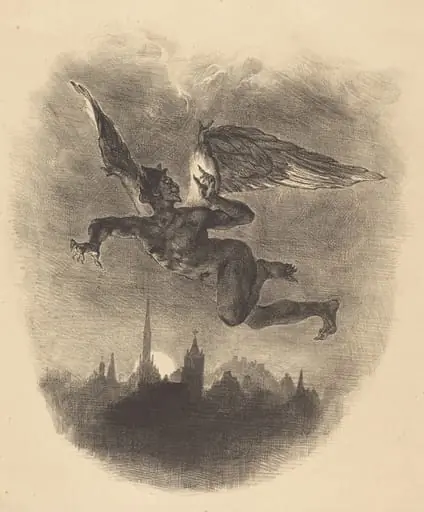
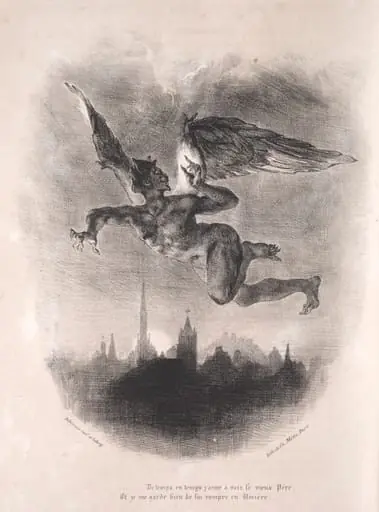 Illustrations for Faust: Méphistophélés in the air
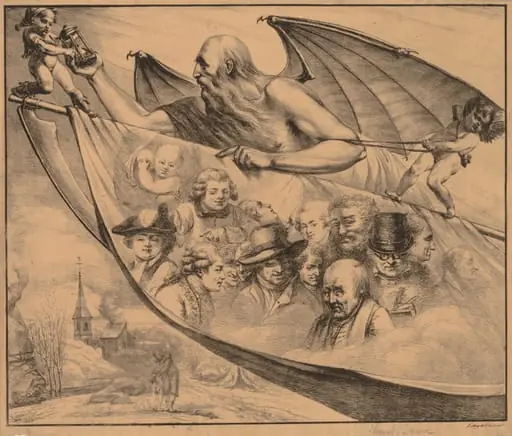 Allegory: Portraits of the Artist at Different Ages
 The Stoning of Saint Stephen
 Politique des Femmes: Ratification des traités
 The Bookplate of the Printer's Devil
 Martyrdom of St. Agatha
 Mephistopheles in the Air
 Ascension du Constitutionnel
 H Beard Print Collection
 Study for The Sleeping Beauty: The Aged King Pleads with the Good Fairy