Artwork
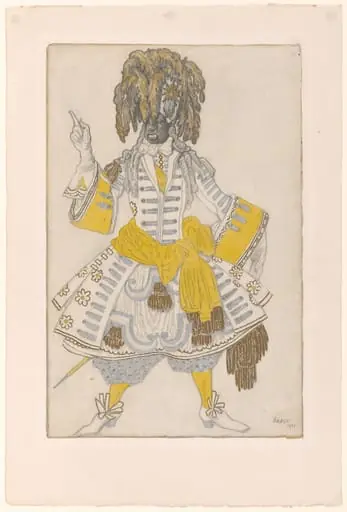
Study for The Sleeping Beauty: The Aged King Pleads with the Good Fairy
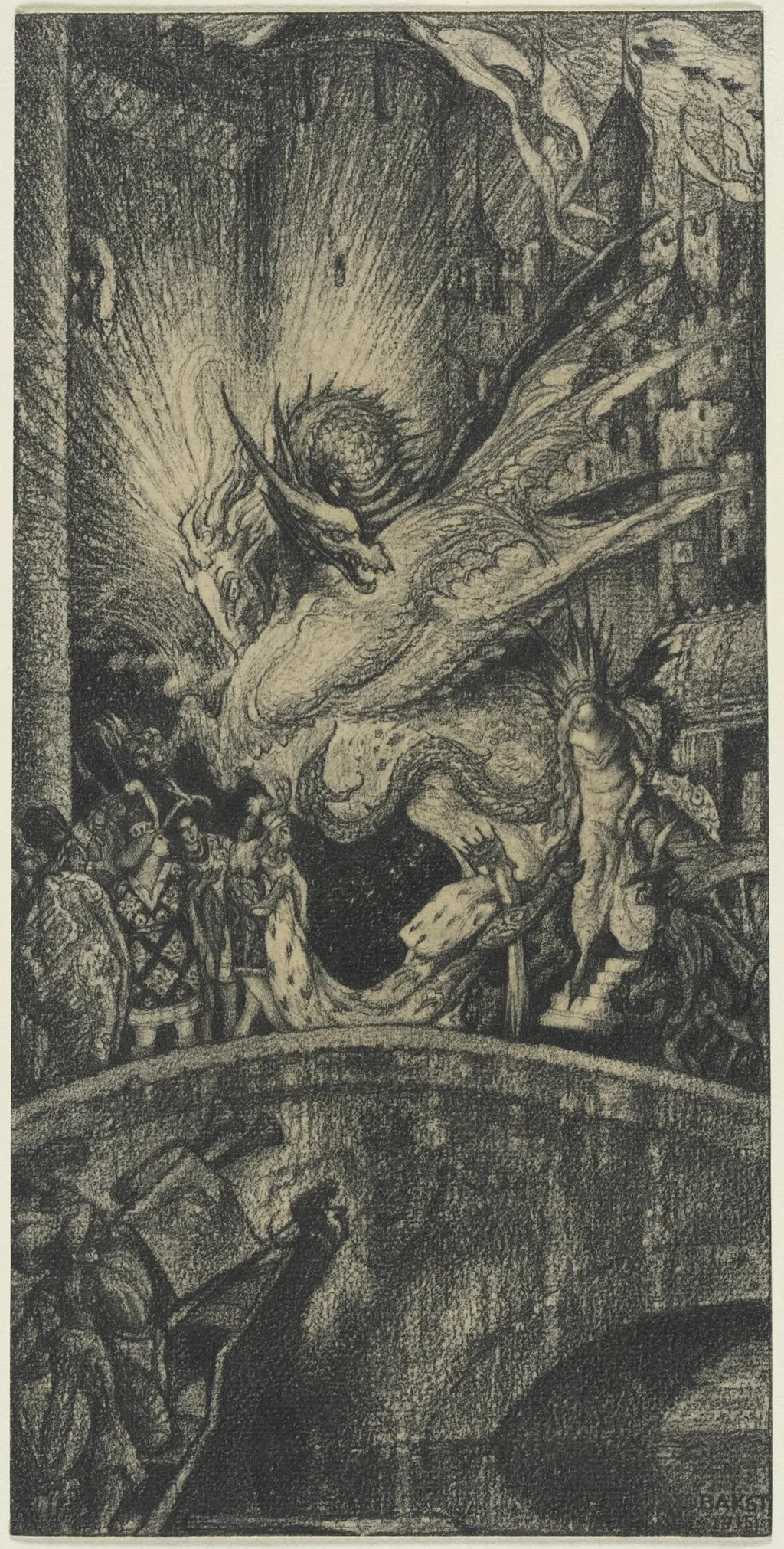
Study for The Sleeping Beauty: The Aged King Pleads with the Good Fairy is a drawing by Léon Bakst. It dates from 1915 and is held in the collection of the Cleveland Museum of Art.
About this work
Overview
Created in 1915 by Russian artist Léon Bakst, this drawing serves as a preparatory study for a stage design intended for a production of The Sleeping Beauty.
Created in 1915 by Russian artist Léon Bakst, this drawing serves as a preparatory study for a stage design intended for a production of The Sleeping Beauty. Though the full ballet was not staged until 1921 as The Sleeping Princess, this sketch captures a pivotal moment in the narrative. Executed in ink and watercolor, the work reflects Bakst’s role as a key visual architect for Sergei Diaghilev’s Ballets Russes, where his designs merged theatricality with exoticized historical motifs.
Subject & Meaning
The scene depicts an elderly king, crowned and clad in ornate robes, kneeling before a celestial fairy. His clasped hands and upward gaze convey supplication, while the fairy, with gentle expression and outstretched wand, embodies benevolent authority. The interaction symbolizes the threshold between mortal vulnerability and magical intervention—a recurring theme in fairy-tale adaptations. Bakst’s choice of this moment emphasizes emotional gravity over spectacle, anchoring fantasy in human vulnerability.
Technique & Style
Bakst employed fluid ink lines and layered watercolor washes to define form and atmosphere. The king’s richly detailed garments contrast with the fairy’s luminous, iridescent wings, rendered in translucent hues that suggest otherworldliness. The dark, loosely sketched background—featuring silhouetted trees and distant architecture—focuses attention on the central figures. His technique balances precision in costume with atmospheric looseness, characteristic of his theatrical designs that prioritized emotional resonance over naturalism.
History & Provenance
This study was produced during Bakst’s tenure with the Ballets Russes, as he developed concepts for a planned revival of The Sleeping Beauty. Though the 1915 production was delayed, the design elements evolved into the 1921 staging titled The Sleeping Princess. The drawing remained in Bakst’s personal archive until entering the collection of The Cleveland Museum of Art, where it now serves as a tangible link to the collaborative, ephemeral world of early 20th-century ballet design.
Context
Bakst’s work emerged amid a broader European fascination with Orientalism and mythic narrative in the arts. His designs for the Ballets Russes rejected realism in favor of stylized, emotionally charged imagery that drew from Byzantine, Persian, and Russian folk traditions. This study reflects a moment when theater design was elevated to fine art, as Diaghilev’s productions redefined the boundaries between painting, costume, and performance in the pre-war cultural landscape.
Legacy
Though the full ballet production has faded from active repertoire, Bakst’s preparatory drawings remain influential for their synthesis of narrative and visual poetry. This study exemplifies how theatrical design could convey psychological depth through color, gesture, and composition. It continues to inform scholarship on early modern stage aesthetics and stands as a testament to the collaborative spirit that defined the Ballets Russes’ enduring impact on 20th-century visual culture.
Artist & collection
Artist
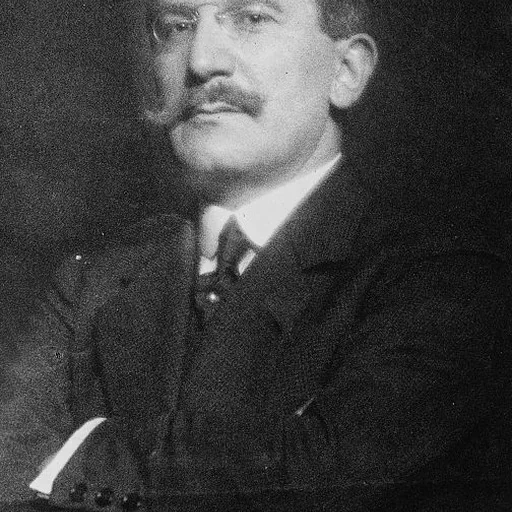
Léon (Lev) Samoylovich Bakst (Russian: Леон (Лев) Самойлович Бакст), born Leyb-Khaim Izrailevich Rosenberg (8 February 1866 – 27 December 1924), was a Russian painter and scene and costume designer of Jewish origin.

 Untitled (The Dream of the Mogul?)
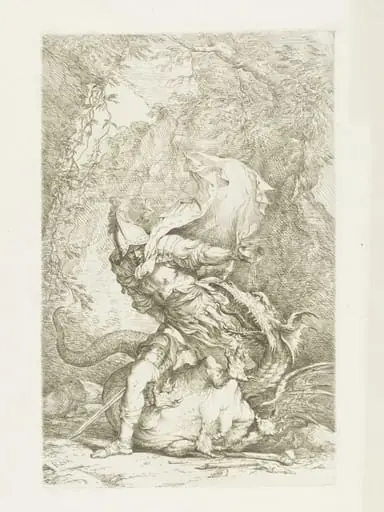 Untitled
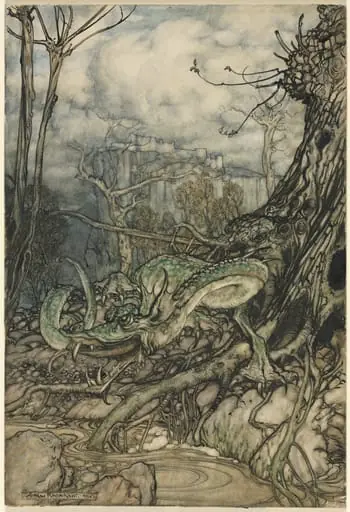 The Green Dragon
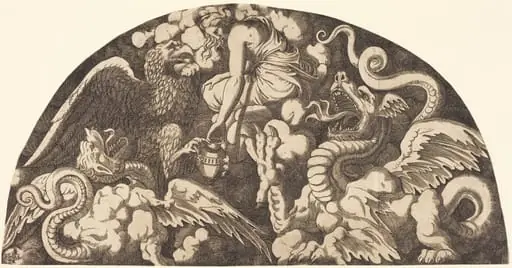 Jupiter Bringing Water of the Styx to Psyche
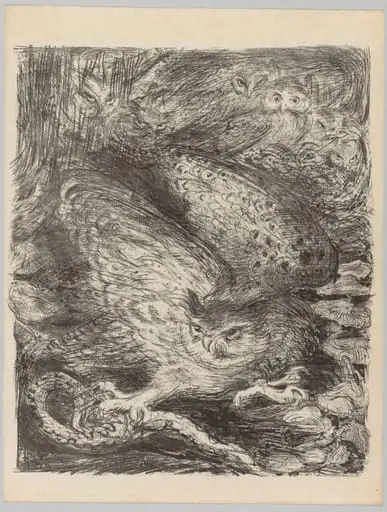 The Vintages!: Seven Owls and a Serpent
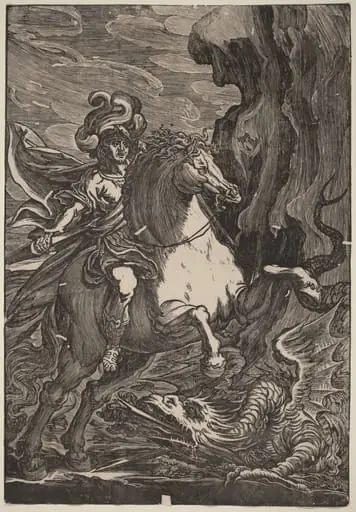 Saint George and the Dragon
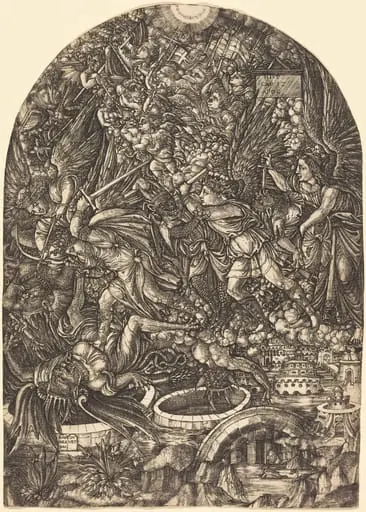 Saint Michael and the Dragon
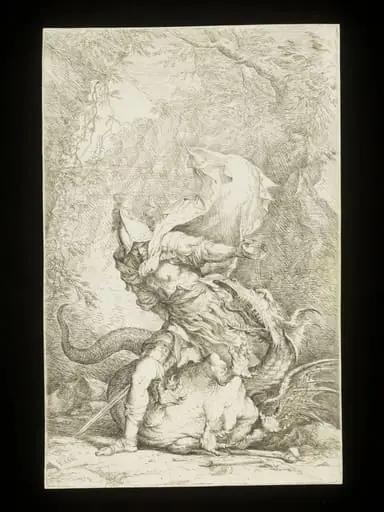 Jason and the Dragon
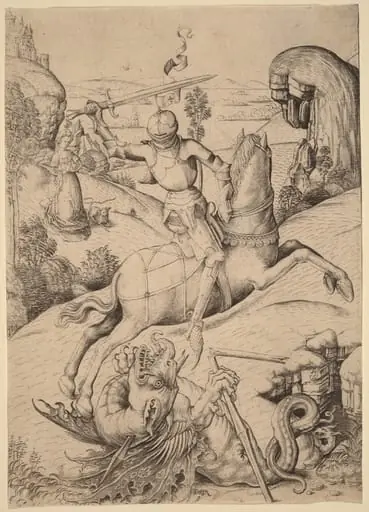 Saint George and the Dragon
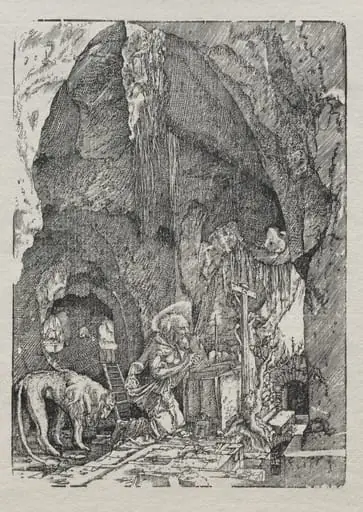 St. Jerome in the Cave
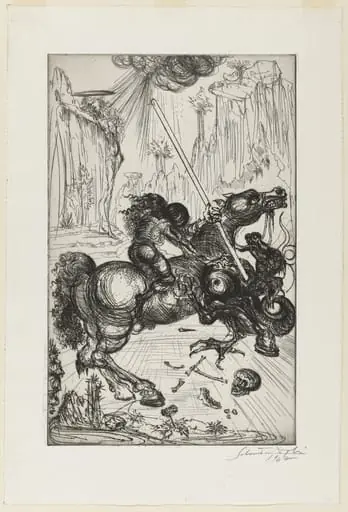 Untitled
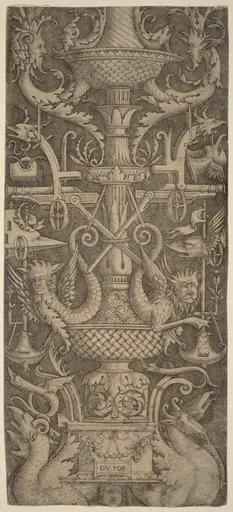 Ornament Panel with Dragons, Masks, and Instruments of War