Artwork
Let me Kiss him for his Mothers - Sheet Music Cover
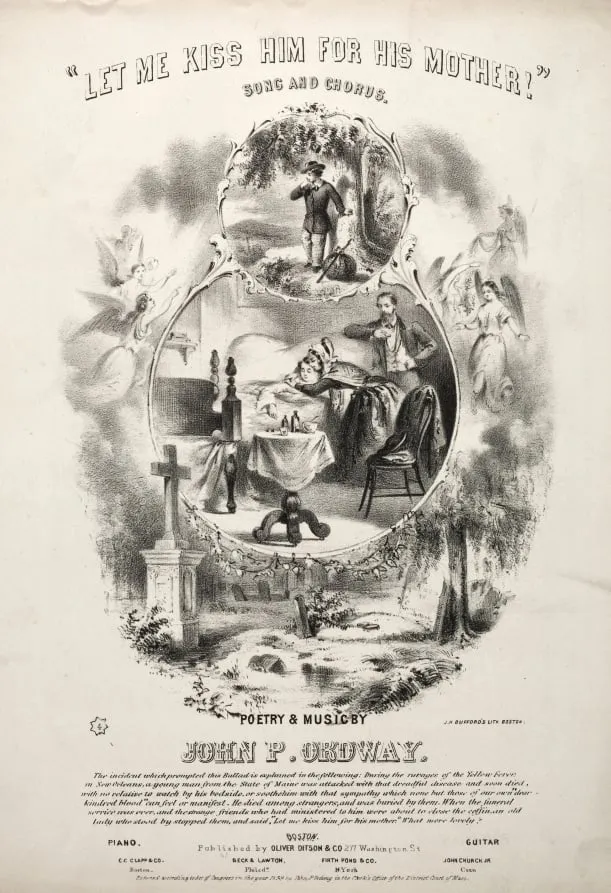
Let me Kiss him for his Mothers - Sheet Music Cover is a print by the Impressionist artist Winslow Homer. It dates from 1859 and is held in the collection of the Cleveland Museum of Art.
About this work
This sheet music cover shows a woman leaning over a soldier.
This sheet music cover shows a woman leaning over a soldier. She kisses his head while he rests, holding his hat. Light falls on her face and his uniform.
Homer made this early in his career. He often drew soldiers and family moments. The scene feels private and tender.
See how soft the shadows are? That’s called chiaroscuro. It means strong light and dark contrast. Look up Winslow Homer (American, 1836–1910).
Overview
Created circa 1859, this sheet music cover is an early example of Winslow Homer’s commercial illustration work. Though later known for marine scenes and American realism, Homer began his career producing images for popular print media. This piece blends sentimental domestic imagery with musical typography, reflecting the era’s demand for emotionally resonant visual content tied to sheet music sales.
Subject & Meaning
The scene portrays a woman gently kissing the head of a resting soldier, who holds his hat loosely in his lap. The intimacy of the gesture—between what appears to be a wife or mother and a soldier home from duty—evokes quiet tenderness amid the uncertainty of war. The moment is unheroic and personal, emphasizing emotional connection over public valor, a recurring theme in Homer’s early work.
Technique & Style
Homer employs chiaroscuro to model forms with soft, directional light that highlights the woman’s face and the soldier’s uniform while deepening the shadows around them. The brushwork is restrained, favoring subtle tonal transitions over sharp detail. Decorative musical notation frames the composition, integrating function with imagery—a hallmark of 19th-century sheet music design.
History & Provenance
This cover was produced during Homer’s formative years as a freelance illustrator in Boston, before his transition to fine art. It likely accompanied a popular song of the period, possibly related to Civil War themes. No definitive record of its original publisher survives, but similar covers were widely distributed through music retailers, making this a common yet now rare artifact of mid-century American visual culture.
Context
In the late 1850s, American illustration flourished alongside rising literacy and mass printing. Sheet music covers served as both advertisements and emotional anchors, often depicting idealized family or military scenes to appeal to civilian audiences during the Civil War. Homer’s work tapped into this market, using domestic sentiment to humanize the war’s distant realities for home-front consumers.
Legacy
Though minor in Homer’s oeuvre, this cover reveals the roots of his enduring interest in quiet human moments. His ability to convey emotional depth through restrained composition and lighting in commercial work foreshadowed his later achievements in painting. It stands as a testament to how illustrative practice informed the development of American realism in the 19th century.
Artist & collection
Artist
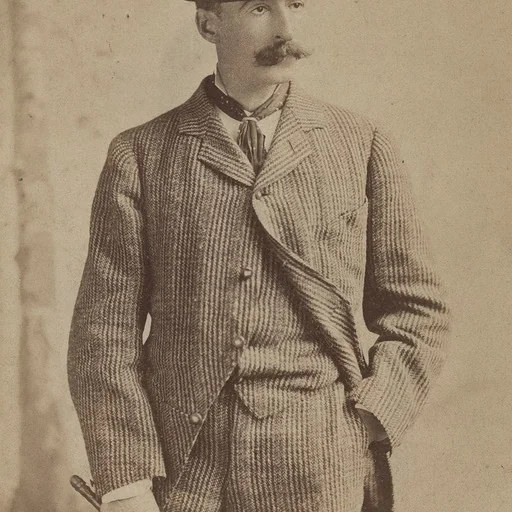
Winslow Homer (February 24, 1836 – September 29, 1910) was an American landscape painter and illustrator, best known for his marine subjects.