Artwork
Taking on Wet Provisions (Schooner Marked Newport, K. W.)
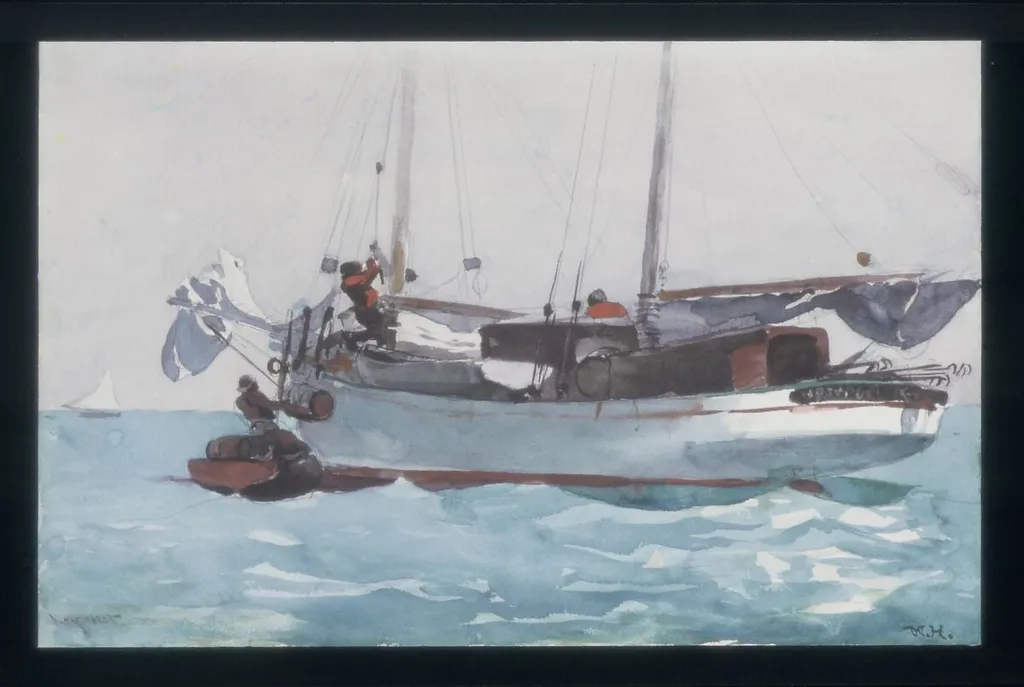
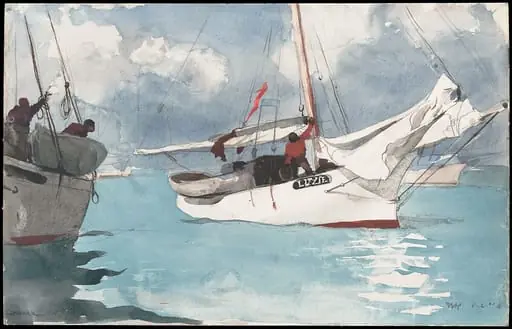
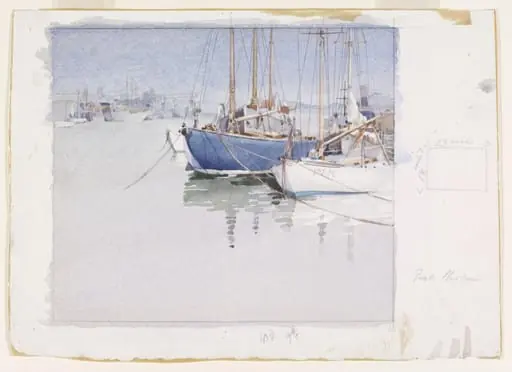
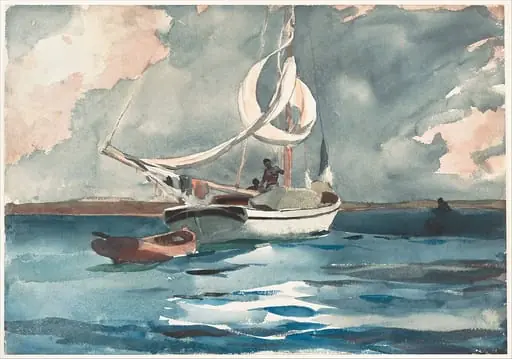
Taking on Wet Provisions (Schooner Marked Newport, K. W.) is a watercolor work on paper by the American Impressionist artist Winslow Homer. It dates from 1903 and is held in the collection of the Metropolitan Museum of Art.
About this work
The painting is titled "Taking on Wet Provisions (Schooner Marked Newport, K.
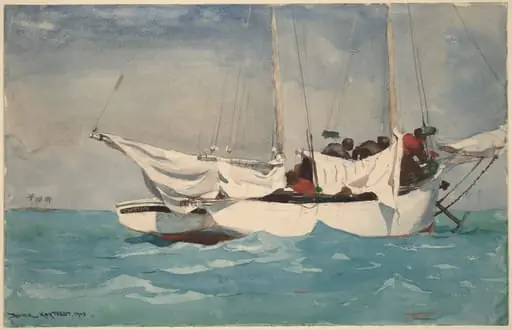
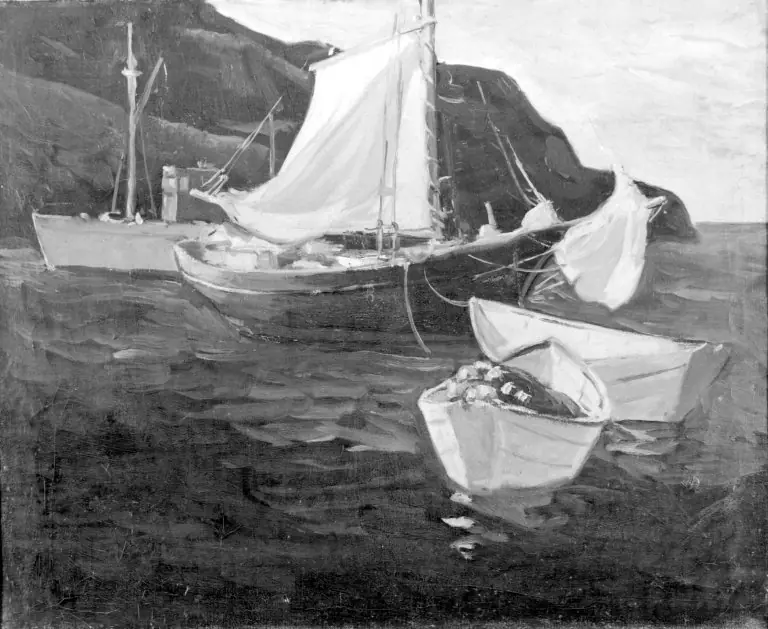
The painting shows a white sailboat on blue water. A small boat is next to the sailboat.
The sailboat has a dark brown deck and a white hull. People are on the boat, and one person is in the small boat.
The painting is titled "Taking on Wet Provisions (Schooner Marked Newport, K. W.)". The artist used watercolor and graphite on paper. You can learn more about artist Winslow Homer (American, 1836–1910).
Overview
This 1903 work by Winslow Homer combines watercolor and graphite on off-white wove paper. Part of a broader series exploring maritime themes, it reflects Homer’s long-standing engagement with coastal life and working vessels. The composition captures a moment of interaction between a schooner and a smaller boat, rendered with the immediacy characteristic of his watercolor technique.
Subject & Meaning
The scene depicts a schooner identified as *Newport, K. W.* receiving supplies from a dinghy. Figures aboard both vessels suggest the practical labor of resupplying at sea, a routine yet essential task for maritime trade. Homer’s focus on such unglamorous moments underscores his interest in the rhythms of seafaring life rather than idealized maritime imagery.
Technique & Style
Homer’s fluid application of watercolor conveys the movement of water and light, while graphite underdrawing defines structural elements like rigging and hull details. The contrast between the schooner’s white hull and the darker deck highlights the vessel’s form, while loose brushwork animates the sea. This approach balances spontaneity with precision, a hallmark of his mature watercolors.
History & Provenance
Created during Homer’s residency in Prouts Neck, Maine, the work stems from his late-career exploration of coastal subjects. Though its early ownership history remains unrecorded, it entered the collection of The Metropolitan Museum of Art in 1929, where it has been preserved as part of the institution’s holdings on American art.
Context
By 1903, Homer had shifted from commercial illustration to fine art, specializing in watercolors that documented rural and maritime America. This work aligns with his broader fascination with human interaction with nature, particularly the challenges of life at sea. The focus on a working schooner reflects his preference for depicting labor over leisure.
Legacy
The painting exemplifies Homer’s contribution to American watercolor, a medium he helped elevate to critical esteem. Its unembellished depiction of maritime labor resonates with his larger body of work, which prioritized authenticity over romanticism. As part of The Met’s collection, it continues to inform studies of 19th-century American art and Homer’s enduring influence.
Artist & collection
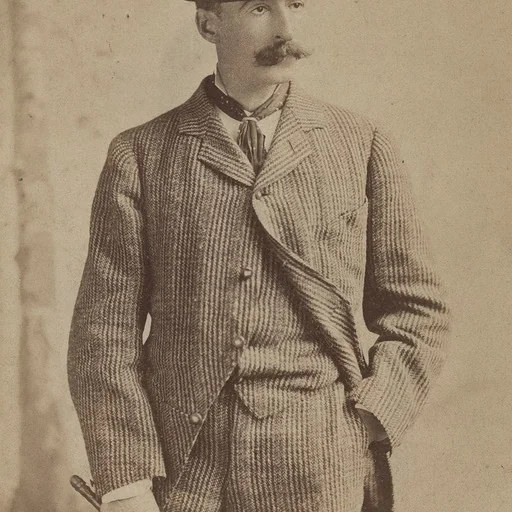
Artist
Winslow Homer (February 24, 1836 – September 29, 1910) was an American landscape painter and illustrator, best known for his marine subjects.